


Saudi Arabia Jumps to 23rd in Global Mining Investment Ranking

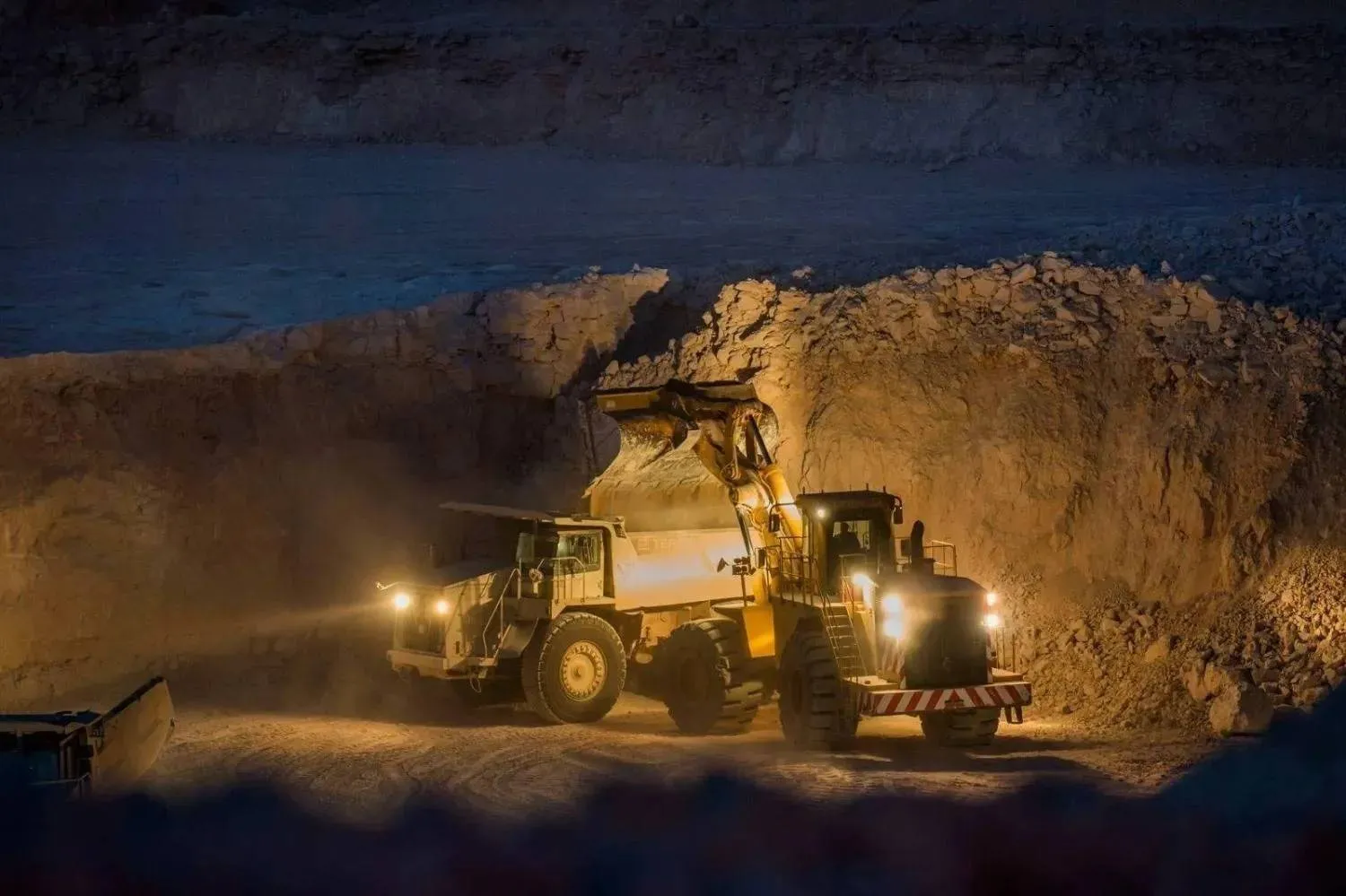
A mining site in Saudi Arabia (Ministry of Industry and Mineral Resources)
TT

Saudi Arabia Jumps to 23rd in Global Mining Investment Ranking

A mining site in Saudi Arabia (Ministry of Industry and Mineral Resources)

Saudi Arabia’s mining sector has vaulted from 104th to 23rd place worldwide in the Fraser Institute’s 2024 Investment Attractiveness Index, marking its biggest leap in the past decade and overtaking leading mining destinations in Asia and Latin America.

The milestone cements the kingdom’s position as one of the world’s fastest-rising mining powers.

The Canada-based institute’s annual survey of mining companies showed Saudi Arabia also climbed sharply in its Policy Perception Index — a measure of the stability and transparency of a country’s regulatory environment — moving from 82nd in 2013 to 20th in 2024.

The rise reflects growing global confidence in the kingdom’s stable legislative and regulatory framework.

Saudi Arabia’s geological potential index recorded a similar leap, jumping from 58th in 2013 to 24th in 2024, underlining the scale of its largely untapped mineral wealth.

The surge has been driven by ongoing geological surveys, recent discoveries and competitive licensing rounds that have drawn interest from major international firms.

Deputy Minister of Industry and Mineral Resources for Mining Affairs Khalid Al-Mudaifer said the performance reflected “a structural transformation” of the sector under the Vision 2030 economic diversification plan.

“In recent years, we have built a globally competitive investment environment for mining, backed by clear regulations, accessible geological data — including one of the most comprehensive geological mapping programs of the Arabian Shield — as well as competitive incentives and world-class infrastructure,” he told Asharq Al-Awsat.

Al-Mudaifer said the government’s focus remained on maximizing the economic value of mineral resources, creating high-quality jobs and localizing industrial supply chains. “Mining has become a key driver of industrial and economic growth, and we will build on this momentum to ensure the sector’s sustainable success,” he added.

He said the Fraser Institute’s 2024 findings underscored the impact of sweeping reforms, from security of tenure to tax rules, environmental legislation, infrastructure and community engagement, which helped place Saudi Arabia in the top quartile of the index for the first time.

Investors surveyed by the institute expressed no concerns about political stability — a factor it cited as one of the kingdom’s strengths — and praised its Mining Exploration Enablement Program as an effective tool for reducing investment risks and boosting early-stage confidence.

Between 2013 and 2024, Saudi Arabia saw dramatic improvements in several key measures, including a 305.8% rise in the clarity and effectiveness of its mining regime — from 17% to 69% — placing it 11th globally.

The clarity of land access for mining improved by 82.2% ranking seventh worldwide, while the rating of labor regulations jumped 102.2% to 91%. The quality of its geological database rose 81.8% to 60%.

The report credited Saudi Arabia’s stable regulations and ambitious reforms with reinforcing its position as a world-class mining investment destination, saying these policies reduced risk, boosted transparency, improved efficiency and expanded access to data — in line with Vision 2030 goals to diversify the economy and develop strategic sectors.

The Fraser Institute’s survey is considered one of the most authoritative global assessments of mining investment climates, used by investors, governments and financial institutions worldwide.



Gold Flashes Past $4,700/oz as Trump Threats Dampen Global Sentiment

(FILES) Gold wafers are displayed at Galeri 24, a state-owned gold retailer, in Surabaya, East Java, on October 16, 2025, as Indonesia's gold price stays near record highs and demand for safe-haven assets remains strong. (Photo by Juni KRISWANTO / AFP)
TT

Gold Flashes Past $4,700/oz as Trump Threats Dampen Global Sentiment

(FILES) Gold wafers are displayed at Galeri 24, a state-owned gold retailer, in Surabaya, East Java, on October 16, 2025, as Indonesia's gold price stays near record highs and demand for safe-haven assets remains strong. (Photo by Juni KRISWANTO / AFP)

Gold jumped past $4,700 per ounce for the first time on Tuesday, while silver traded near a record high, as US President Donald Trump's threats to slap extra tariffs on European allies soured global sentiment and sparked a rush into safe-haven assets.

Spot gold gained 0.7% to $4,699.93 per ounce by 0514 GMT, having hit an all-time high ‌of $4,701.23 earlier. ‌US gold futures for February delivery climbed ‌2.4% ⁠to $4,706.50 per ​ounce, Reuters said.

Spot ‌silver fell 0.4% to $94.27 an ounce, after hitting a record high of $94.72 earlier in the session.

Trump has intensified his push to wrest sovereignty over Greenland from fellow NATO member Denmark, prompting the European Union to weigh hitting back with its own measures.

"Trump's 'disruptive' policy approach to international affairs and desire to see lower interest ⁠rates suit precious metals very well, as reflected by gold and silver's rampant run," ‌said Tim Waterer, KCM Trade's chief ‍market analyst.

"Trump's second term ‍thus far has been a boon for precious metals, with ‍his unconventional approach to politics playing into the hands of gold and silver."

Gold prices have rallied more than 70% since Trump began his second term a year ago.

On Tuesday, gold also found support ​as concerns lingered around the Federal Reserve's independence with the US Supreme Court this week expected to hear ⁠a case around Trump's attempt to fire Fed Governor Lisa Cook.

The Fed is broadly expected to maintain interest rates at its January 27-28 meeting despite Trump's calls for cuts. Gold, which does not yield interest, typically performs well during periods of low interest rates.

Kelvin Wong, a senior market analyst at OANDA, expects the Fed to continue its rate-cut cycle into 2026, citing a sluggish labor market and lackluster consumer sentiment, with the next reduction now being priced further down the calendar in either June or ‌July.

Among other precious metals, spot platinum slid 0.8% to $2,355.60 an ounce, while palladium dropped 0.7% to $1,828.58.


IMF Raises Saudi Arabia’s Growth Forecast to 4.5% in 2026

The Saudi capital, Riyadh (SPA)
TT

IMF Raises Saudi Arabia’s Growth Forecast to 4.5% in 2026

The Saudi capital, Riyadh (SPA)

For the third time in six months, the International Monetary Fund (IMF) has raised its forecast for Saudi Arabia's economic growth for 2025 and 2026, in a sign of a growing robust economy.

The fund is now forecasting the Kingdom's economy, the largest in the Arab world, to grow by 4.3% in 2025 and 4.5% in 2026. This is 0.3 percentage points and 0.5 percentage points respectively higher than the October forecast, according to the IMF’s latest World Economic Outlook Update.

These projections are close to the Saudi government's estimates of 4.4% growth in 2025 and 4.6% this year, stated in the Kingdom’s Pre-Budget Statement for Fiscal Year 2026.

The IMF forecast came after Fitch Ratings affirmed Saudi Arabia’s sovereign credit rating at A+ with a stable outlook, reflecting the Kingdom’s strong fiscal and the momentum of social and economic reforms, according to a report issued by the agency last Friday.

It said the Saudi economy will benefit from higher oil production, as well as the “healthy” prospects for non-oil activities, underpinned by reform, high levels of government and GRE spending, new projects coming on stream and buoyant consumer spending.

Earlier this month, the IMF said next year will be pivotal for the Kingdom thanks to deeper reforms implemented throughout the past years.

It said the resilience shown in 2025 underscores the progress already achieved in reducing the economy’s exposure to oil fluctuations and the sustainability of the Kingdom's financial stability.

Saudi Arabia also built a more diversified and solid economic base, and maintained the growth momentum in its non-oil sector even as oil production falls.

This reflects the ability of the Saudi economy to face market fluctuations, and regional and global challenges.


Oil Gains on Upbeat China Data; Greenland in the Spotlight

A view of Petroleum Industry of Serbia (NIS) oil refinery in Pancevo, Serbia, Thursday, Oct. 9, 2025. (AP Photo/Darko Vojinovic)
TT

Oil Gains on Upbeat China Data; Greenland in the Spotlight

A view of Petroleum Industry of Serbia (NIS) oil refinery in Pancevo, Serbia, Thursday, Oct. 9, 2025. (AP Photo/Darko Vojinovic)

Oil prices rose on Tuesday after better-than-expected Chinese economic growth data boosted optimism about demand, while markets are also watching President Donald Trump's threats to increase US tariffs on European countries because of his desire to buy Greenland.

Brent crude futures rose 19 cents, or 0.3 percent, to $64.13 a barrel by 01:00 GMT. US West Texas Intermediate crude for February, which expires on Tuesday, also rose 25 cents, or 0.4 percent, from Friday's close to $59.69, Reuters reported.

The price of the March West Texas Intermediate crude contract, which is the most traded, also rose by 0.08 cents, or 0.13 percent, to $59.42.

West Texas Intermediate crude contracts were not settled on Monday due to the Martin Luther King Jr. Day holiday in the United States.

“West Texas Intermediate crude is trading slightly higher... supported by fourth-quarter 2025 GDP data released yesterday, which came in better than expected,” said Tony Sycamore, market analyst at IG, in a note. “This resilience from the world's largest oil importer has boosted demand sentiment.”

According to data released on Monday, the Chinese economy grew by 5.0 percent last year, achieving the government's goal by acquiring a record share of global demand for goods to offset weak domestic consumption. This strategy has mitigated the impact of US tariffs, but it is becoming increasingly difficult to maintain.

Government data released on Monday showed that Chinese refinery output rose 4.1 percent year-on-year in 2025, while crude oil production grew 1.5 percent. Both indicators recorded their highest levels ever.

Over the weekend, fears of a renewed trade war escalated after Trump stated that he would impose an additional 10 percent tariff from February 1 on goods imported from Denmark, Norway, Sweden, France, Germany, the Netherlands, Finland, and Britain, rising to 25 percent on June 1 if no agreement is reached on Greenland.

“Contributing to the support of the oil price was the weakness of the US dollar, which resulted from markets selling the dollar in response to President Trump's continued threats to impose tariffs on Greenland,” Sycamore added.

The dollar fell 0.3 percent against major currencies. A weaker dollar makes dollar-denominated oil contracts cheaper for holders of other currencies.

Markets are closely monitoring the Venezuelan oil sector after Trump announced that the United States would take over the management of this sector following the arrest of President Nicolas Maduro.

Multiple trade sources reported that Vitol offered Venezuelan oil to Chinese buyers at discounts of up to about $5 a barrel compared to the price of Brent crude on the Intercontinental Exchange for April delivery.

China is also importing the largest amount of Russian Urals crude since 2023 at prices lower than Iranian oil prices, after India, the largest crude importer, sharply reduced its imports due to Western sanctions and ahead of the European Union's ban on products manufactured from Russian oil, according to trade sources and shipping data.
