

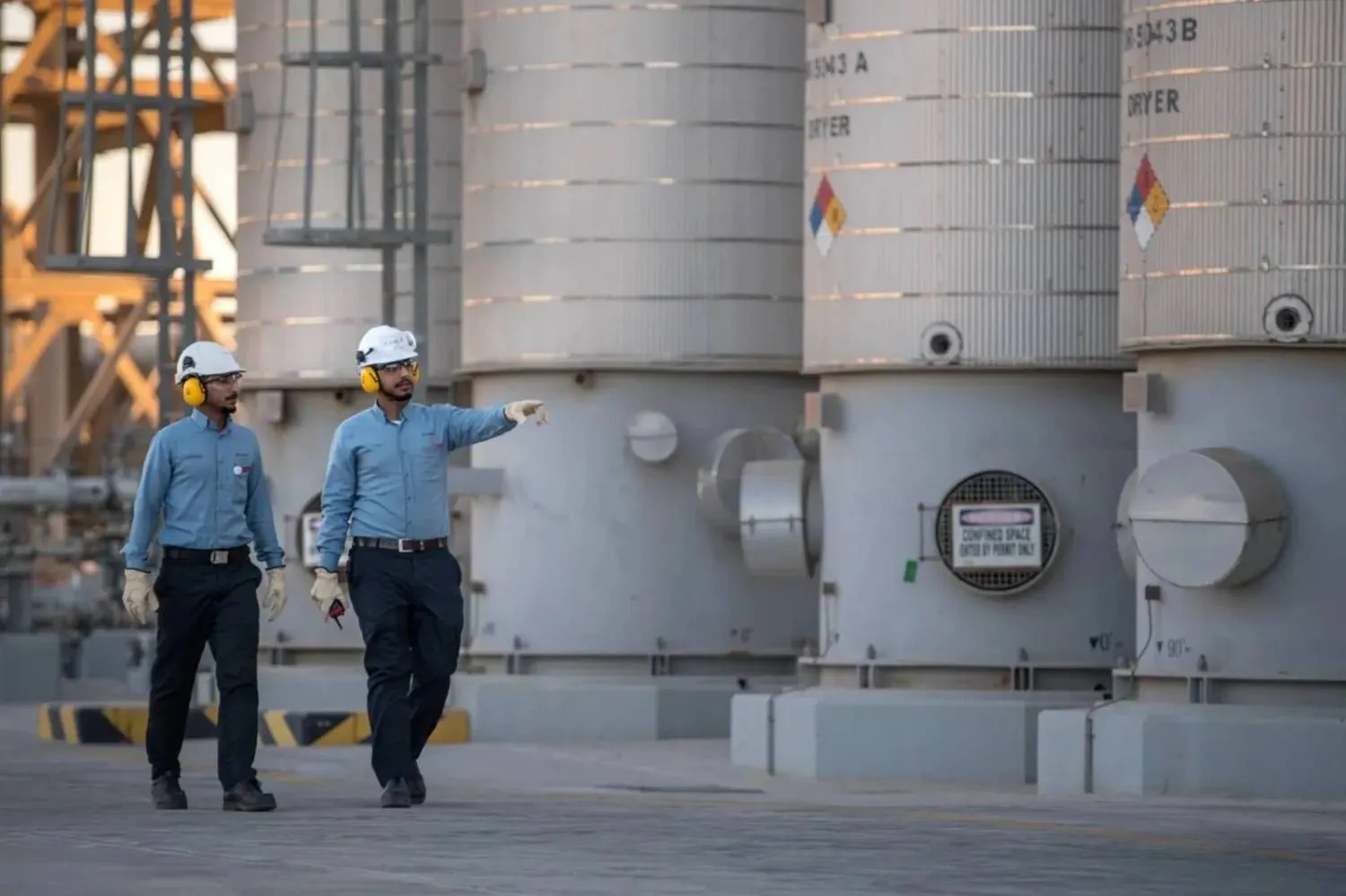

Restructuring Moves SABIC to Reclaim Ground in the Petrochemicals Race

Employees at work in SABIC (The company’s website)
TT

Restructuring Moves SABIC to Reclaim Ground in the Petrochemicals Race

Employees at work in SABIC (The company’s website)

The global petrochemicals industry is grappling with a wave of uncertainty. Sluggish economic growth in key markets, mounting geopolitical tensions, and trade barriers are weighing on demand. Adding to the pressure, Asian producers - particularly in China - are flooding the market with new capacity, intensifying competition and squeezing margins.

For industry giants, survival now depends on swift adaptation. Analysts expect the global petrochemicals market to grow by 3.5 percent this year, but only those companies agile enough to restructure will benefit.

For Saudi Basic Industries Corporation (SABIC), the world’s largest diversified chemicals company, that has meant a bold reset. Earlier this year, SABIC unveiled a restructuring program designed to sharpen competitiveness, streamline operations, and improve financial resilience.

The plan involves reviewing its investment portfolio, exiting non-core activities, and shuttering underperforming assets. Already, SABIC has sold its stake in Bahrain’s Alba, divested its steel arm Hadeed, and closed a plant in the UK. Though the company reported losses of nearly SAR5 billion ($1.33 billion) in the first half of 2025, executives frame these moves as laying the foundation for long-term recovery, innovation, and sustainability.

SABIC remains a heavyweight in the sector. In 2025, it was ranked the world’s second most valuable chemical brand and crowned as the strongest brand in its category, with a valuation of $4.93 billion. At home, it contributes significantly to the Saudi economy, adding SAR4.4 billion ($1.2 billion) to the GDP in 2024.

From Gas Flares to Global Force

SABIC’s journey mirrors Saudi Arabia’s industrial transformation. Founded in 1976 by royal decree, the company was created to turn wasted associated gas into a driver of economic value. Its first major complexes in Jubail during the early 1980s, which produce methanol, polyethylene, and steel, laid the groundwork for an industrial base that fueled job creation and reshaped the national economy.

By 1983, SABIC had made its first international shipments, and a year later, 30 percent of its shares were floated on the Saudi stock market. Through the late 1980s and 1990s, joint ventures with global giants like Shell, ExxonMobil, and Mitsubishi expanded its reach. By 1996, SABIC was the Middle East’s largest listed company, with revenues surpassing $5 billion and exports to more than 100 countries.

The new millennium marked its boldest expansion yet. In 2002, SABIC acquired DSM’s petrochemicals division in the Netherlands, creating SABIC Europe. Five years later, it secured a foothold in North America and Asia by purchasing General Electric’s plastics division. By 2008, SABIC was at its peak, posting net profits of SAR27 billion ($7.2 billion) and ranking among the world’s most profitable petrochemicals firms, with a global presence spanning more than 50 countries.

The Aramco Era

A major shift came in 2019 when Saudi Aramco agreed to purchase a 70 percent stake in SABIC from the Public Investment Fund for $69.1 billion. The deal, closed in 2020, was part of a broader strategy to integrate crude oil with petrochemicals, positioning the Kingdom for the future as global energy demand evolves.

Yet the 2020s brought new headwinds: overcapacity, volatile feedstock prices, tighter environmental regulations, and fluctuating oil markets. These forces eroded profits and pushed SABIC to embark on its current restructuring. According to energy expert Dr. Mohammed Al-Sabban, former senior adviser to the Saudi oil minister, integration with Aramco has already allowed SABIC to cut costs and gain a pricing advantage.

“This period gives SABIC the chance to review its operational expenses, limit losses, and prepare for the next growth cycle,” he told Asharq Al-Awsat.

Market Pressures and Share Performance

The strain is evident in SABIC’s share price. Since 2020, the stock has dropped by nearly 40 percent. It plunged to 62 riyals during the pandemic, rebounded to 139 riyals in 2022, but has since slid to around 57 riyals. Analysts say this mirrors global petrochemical cycles, which oscillate with supply-demand shifts.

Iyad Ghulam, Head of Equity Research at AlAhli Capital, explained that oversupply from China is the main drag. Over the past three years, Chinese producers have ramped up output aggressively - often at thin margins or even losses - to secure self-sufficiency. While global demand is growing at roughly 3 percent annually, supply in some product lines is expanding at more than double that rate, creating a glut that depresses prices.

Plant utilization rates worldwide have already fallen from a healthy 80-85 percent to around 70 percent. Many companies, particularly in Europe, are divesting assets that can no longer compete. SABIC itself announced the sale of certain European operations last quarter.

Looking ahead, Ghulam predicts SABIC’s profits will remain under pressure through 2025 and 2026. Historically, the company earned between 15 and 20 billion riyals annually, but losses in the first half of this year underscore the depth of the downturn. Still, he sees opportunity: “SABIC is trading at around book value, compared to a historical multiple of 1.4 to 1.5. For long-term investors, this could be attractive despite near-term pain.”



Mawani Signs Agreement to Construct Offshore Structures at Ras Al-Khair Port

Mawani Signs Agreement to Construct Offshore Structures at Ras Al-Khair Port
TT

Mawani Signs Agreement to Construct Offshore Structures at Ras Al-Khair Port

Mawani Signs Agreement to Construct Offshore Structures at Ras Al-Khair Port

The Saudi Ports Authority (Mawani) has signed a contract with Singatac Arabia to establish a fabrication center for offshore structures and platforms at Ras Al-Khair Port.

The contract supports the oil and gas industry and includes warehouses for prefabricated parts, specialized welding equipment, systems, and cranes to serve offshore platform and marine structure projects with an investment of SAR139 million across 100,000 square meters, according to SPA.

The project aims to create over 500 direct and indirect jobs, strengthen Ras Al-Khair Port’s operational capabilities and value-added services, expand port capacity, and increase the contribution of exports to the national economy.

Ras Al-Khair Port is distinguished by its strategic location and its ability to efficiently handle a wide range of goods. It features 14 berths with a total capacity of 35 million tons and spans an area of 23 kilometers.


Asian Shares Rise, Tracking Wall Street Gains as Trump Backs Down on Greenland

Traders work in front of screens at Hana Bank in Seoul (EPA)
TT

Asian Shares Rise, Tracking Wall Street Gains as Trump Backs Down on Greenland

Traders work in front of screens at Hana Bank in Seoul (EPA)

Asian shares mostly advanced on Thursday, tracking Wall Street, after US President Donald Trump walked back from imposing tariffs on eight European countries over Greenland and ruled out using military force to take control of the territory.

The future for the S&P 500 gained less than 0.1% and that for the Dow Jones Industrial Average was virtually flat on Thursday, The Associated Press reported.

Tokyo’s Nikkei 225 climbed 1.7% to 53,688.89, with technology stocks leading gains. SoftBank Group jumped 11.6% and equipment maker Disco Corp. soared 17.1%. Advantest, which makes testing equipment for computer chips, surged 5%.

South Korea’s Kospi closed 0.9% higher at 4,952.44 after crossing the 5,000 mark for the first time, as traders cheered. Technology-related stocks drove the rally. Shares of chipmaker SK Hynix picked up 2%, while Samsung Electronics rose 1.9%.

Hong Kong’s Hang Seng edged less than 0.1% higher to 26,600.68. The Shanghai Composite index edged 0.1% higher to 4,122.58.

In Australia, the S&P/ASX 200 gained nearly 0.8% to 8,848.70.

Taiwan’s Taiex rose 1.6%, while India’s Sensex added 0.2%.

US markets logged their biggest losses since October on Tuesday as investors reacted to Trump’s threat over the weekend to slap tariffs of 10% on Denmark, Norway, Sweden, Germany, France, the United Kingdom, the Netherlands and Finland for opposing US control of Greenland, sparking concerns over worsening relationships between the US and its European allies.

But Trump, attending the World Economic Forum in Davos, Switzerland, backed down on Wednesday and said he would not use force to acquire Greenland. The US president also said in a post on his social media site that he had agreed with the head of NATO on a “framework of a future deal” on Greenland and on Arctic security.

The easing tensions drove Wall Street optimism. On Wednesday, the S&P 500 climbed 1.2% to 6,875. The Dow Jones Industrial Average gained 1.2% to 49,077.23, while the Nasdaq composite also rose 1.2%, to 23,224.82.

Halliburton, the oil field services company, jumped 4.1% following stronger-than-expected profits for the latest quarter. United Airlines rose 2.2% also after better-than-expected quarterly profits. Netflix fell 2.2% even as it reported a stronger profit than expected, as investors focused on factors including a slowing growth of subscribers.

The price of gold fell 0.2% to $4,828.70 per ounce, reflecting investors’ reduced worries, after passing the $4,800 mark ahead of Trump’s reversal of stance on Greenland as many flocked to safe-haven assets.

In the bond market, US Treasury yields also eased following lessened fear among investors as well as a calming of Japan’s bond market turmoil. The yield on the 10-year Treasury eased to 4.25% from 4.30% late Tuesday.

Japan’s long-term bond yields surged to records earlier this week after Prime Minister Sanae Takaichi’s decision to call a snap election in February. That sparked concerns over her pledges to cut taxes and increase spending, which could hinder efforts to rein in government debt.

The US dollar rose to 158.75 Japanese yen from 158.27 yen, prompting analysts to speculate that authorities might intervene if the yen falls any further.

The euro rose to $1.1692 from $1.1687.

US benchmark crude oil shed 16 cents to $60.46 per barrel. Brent crude, the international standard, fell 24 cents to $65.00 per barrel.


Goldman Sachs Raises 2026-end Gold Price Forecast to $5,400/oz

A customer waits his turn to trade gold behind a glass window displaying gold prices at a gold shop in Bangkok (EPA)
TT

Goldman Sachs Raises 2026-end Gold Price Forecast to $5,400/oz

A customer waits his turn to trade gold behind a glass window displaying gold prices at a gold shop in Bangkok (EPA)

Goldman Sachs has raised its end-2026 gold price forecast to $5,400 per ounce from $4,900/oz earlier, noting private-sector and emerging market central banks' diversification ​into gold.

Spot gold climbed to a peak of $4,887.82 per ounce on Wednesday. The safe-haven metal has climbed more than 11% so far in 2026, extending a blistering rally that saw it jump 64% last year.

"We assume private sector diversification buyers, whose purchases hedge ‌global policy ‌risks and have driven the ‌upside ⁠surprise ​to our ‌price forecast, don't liquidate their gold holdings in 2026, effectively lifting the starting point of our price forecast," the brokerage said in a note dated Wednesday.

The brokerage also expects central bank buying to average 60 tons in 2026 as ⁠emerging market central banks are likely to continue diversification of ‌their reserves into gold.

Commerzbank, last ‍week, raised its ‍gold price forecast to $4,900 by the end ‍of this year, citing increased safe-haven demand.