


Egypt: Improved Economic Indicators Raise Expectations of Interest Rate Cuts 

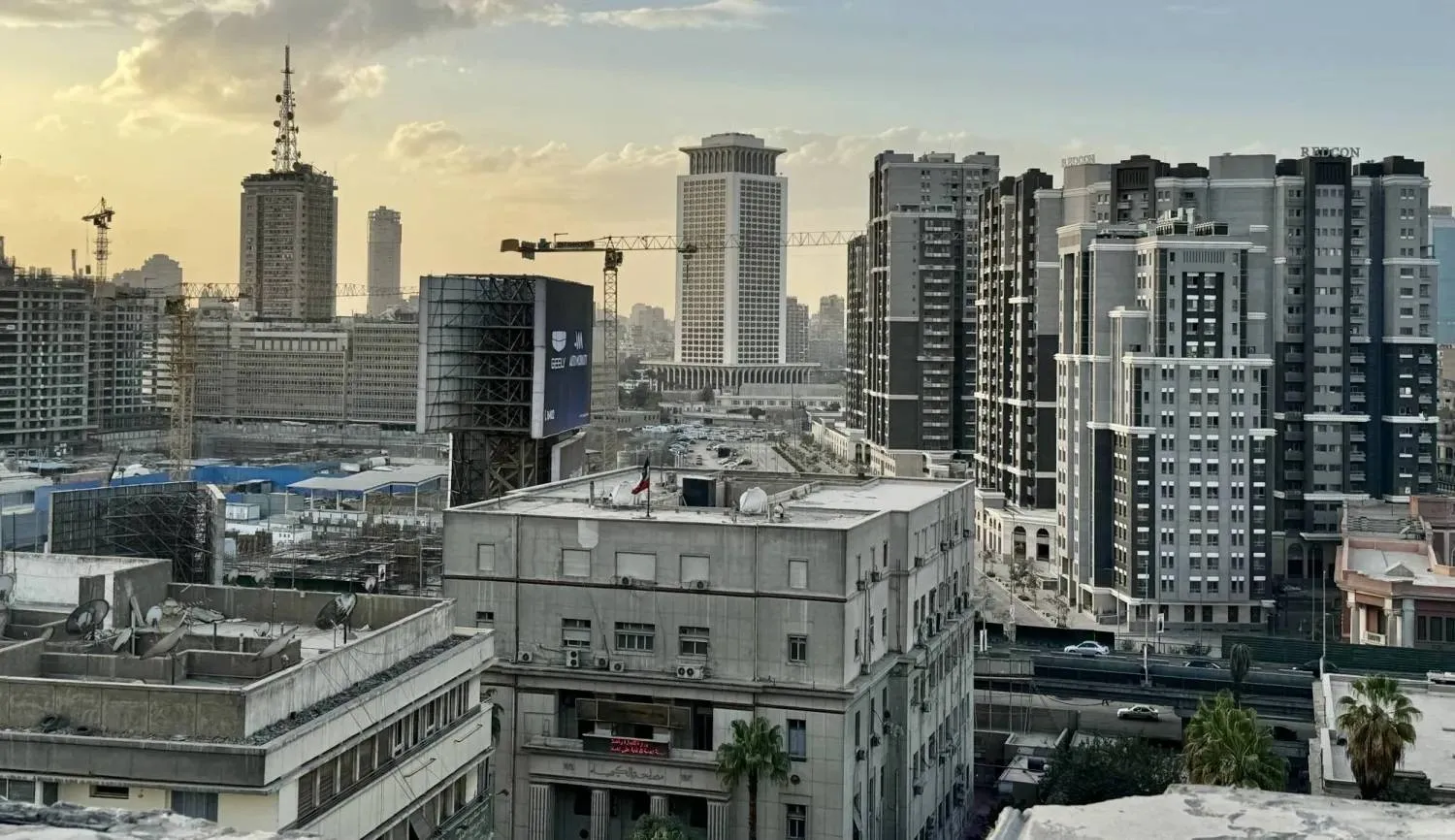
A view of Cairo, Egypt. (Abdelfattah Farag)  
TT

Egypt: Improved Economic Indicators Raise Expectations of Interest Rate Cuts 

A view of Cairo, Egypt. (Abdelfattah Farag)  

Egypt’s business community is looking ahead with optimism to the Central Bank of Egypt’s (CBE) Monetary Policy Committee meeting on Thursday, hoping for further steps to support the macroeconomy.

The past months have seen international and local experts highlight improving indicators, strengthening expectations that the central bank will begin lowering interest rates.

Most analysts agree that a cut is on the horizon, though opinions vary over its size. Forecasts range from a reduction of 1 to 3 percentage points, while prominent businessman Naguib Sawiris has called for a more aggressive 4-point cut.

Optimism stems largely from a string of positive macroeconomic signals. Current interest rates - 24% on deposits and 25% on overnight lending - are widely seen as excessively high.

Economist Ahmed Moati told Asharq Al-Awsat he expects the central bank to cut rates by 2% this week, with scope for further reductions in subsequent meetings.

He pointed to several supporting factors: a stable exchange rate, easing inflationary pressures, rising revenues from tourism and exports, and the US Federal Reserve’s hints at lowering rates. Research by HC Securities and Investment also forecast a 200-basis-point cut, citing macroeconomic improvements and shifting geopolitical dynamics.

Annual urban consumer inflation slowed to 13.9% in July from 14.9% in June, further strengthening the case for easing.

Standard Chartered Bank projects inflation to remain in the 13–17% range and expects Egypt’s policy rate to fall to 19.25% by year-end. The CBE itself, in a May report, projected inflation to fall sharply to between 14–15% in 2025 and 10–12% in 2026, down from nearly 28.4% in 2024.

Sawiris expressed confidence in Egypt’s growth trajectory, predicting GDP expansion of 4% in the second half of the year.

He urged a rate cut of 1–4 percentage points to encourage investment, noting declining inflation, a stronger pound, and a falling dollar. But he also warned of Egypt’s $165 billion external debt burden, suggesting solutions such as selling coastal land for hard currency and accelerating privatization of state-owned firms.

The Egyptian pound has strengthened to EGP 48.30 per dollar, compared with around EGP 52 weeks earlier. Unemployment fell to 6.1% in Q2 2025, down from 6.3% in Q1.

Meanwhile, Egypt’s non-oil private sector showed signs of stabilization in July, with employment rising for the first time in nine months, according to S&P Global’s Purchasing Managers’ Index, which improved to 49.5 from 48.8 in June.

Foreign exchange inflows are also increasing. Standard Chartered noted that portfolio and official investments continue to support confidence in the pound, with expectations that more than half of a $12.5 billion investment pledge from Qatar and Kuwait will be disbursed by year-end.

Remittances surged 60% year-on-year in March, further improving the current account outlook.

According to a Reuters poll of 13 economists, Egypt’s economy likely grew by 4% in the fiscal year ending June 2025, up from earlier projections of 3.8%. Growth in the current fiscal year is expected to reach 4.6%, supported by IMF-backed reforms and a gradual recovery in manufacturing.

Prime Minister Mostafa Madbouly recently declared that Egypt had overcome its recent economic crisis, though he acknowledged that commodity prices remain high relative to improved fundamentals.

“What is needed now is for citizens to actually see lower prices,” he said.


French Economy Likely to Grow at Least 0.8% in 2025, Finance Minister Says

French Minister for Economy, Finance, and Industrial, Energy and Digital Sovereignty Roland Lescure attends the 7th formal meeting of the Franco-Chinese Business Council in Beijing on December 4, 2025. (Reuters)
TT

French Economy Likely to Grow at Least 0.8% in 2025, Finance Minister Says

French Minister for Economy, Finance, and Industrial, Energy and Digital Sovereignty Roland Lescure attends the 7th formal meeting of the Franco-Chinese Business Council in Beijing on December 4, 2025. (Reuters)

Unless there is a sharp reversal in the final three months of the year, the French economy is likely to grow by at least 0.8% in 2025, outpacing the 0.7% that the government had anticipated, Finance Minister Roland Lescure said on Sunday.

"We will most likely exceed the government's growth forecast for this year. We had predicted 0.7%, but I think we will have at least 0.8%. That's good news," Lescure told LCI television.

"So we would really need to have a bad fourth quarter, which I don't believe will happen, for us to be below 0.8%, so 0.8% is within reach," he added.

France's economy grew 0.5% in the third quarter, final data from statistics office INSEE showed in November, reflecting resilience in the euro zone's second-largest economy.


Saudi Real Estate Shifts from Temporary Upswing to Operational Maturity

Real estate projects in Riyadh (SPA) 
TT

Saudi Real Estate Shifts from Temporary Upswing to Operational Maturity

Real estate projects in Riyadh (SPA) 

Saudi Arabia’s listed real estate sector recorded an exceptional and unprecedented transformation in the third quarter of 2025, with profits surging more than sixfold. Total earnings jumped 633.6 percent to $496 million (SAR 1.86 billion), compared with $67.5 million a year earlier, an indication that the industry has entered a phase of sustained operational maturity rather than a short-term cyclical rebound.

The sharp rise reflects the companies’ success in restructuring their product portfolios, enhancing cash flows, and shifting from “paper growth” to revenue-driven expansion supported by project deliveries and operational income.

Sector analysts attributed the leap in profitability to the rollout of major real estate projects in large cities, higher project quality, improved financing conditions, and stronger liquidity.

They noted that the leap aligns with the rapid expansion of Saudi Arabia’s non-oil economy, which now contributes about 56 percent of GDP. This has strengthened demand across residential, commercial, industrial, and office real estate, supporting profit growth alongside recent regulatory reforms.

During the first nine months of 2025, listed real estate firms achieved combined profits of $1.44 billion (SAR 5.4 billion), led by Cenomi Centers, Jabal Omar, and Masar (Umm Al-Qura for Development and Construction) - a 244 percent increase from the same period in 2024.

Financial disclosures show that nine out of sixteen listed developers reported higher profits in Q3, while four companies returned to profitability. Masar topped the sector in Q3 with SAR 516.6 million in earnings, up 341.9 percent year-on-year. Cenomi Centers ranked second with SAR 499.8 million, a rise of 52.2 percent, followed by Dar Al-Arkan, whose profits climbed 89 percent to SAR 255.6 million.

Real estate specialist Abdullah Al-Mousa told Asharq Al-Awsat that the historic profit surge confirms the sector has “entered a stage of operational maturity,” reflecting companies’ improved efficiency, stronger recurring revenues, and the successful transition to asset-operation models.

He identified three key drivers: higher-quality projects and stronger occupancy across income-generating assets; improved financing conditions amid stabilizing interest rates; and the completion of major projects, particularly in Riyadh and Makkah.

Al-Mousa expects continued positive performance in coming quarters, though at a more moderate pace, supported by new strategic projects entering operation, sustained housing demand, rising commercial activity in Riyadh, and ongoing regulatory reforms that reduce risk and attract institutional investment.

Real estate analyst Salman Saeed said the strength of the non-oil economy has sharply boosted demand in housing, retail, industrial, and office markets. He highlighted reforms such as the expansion of the white-land tax and rental-regulation measures, along with significant government support for homeownership, which has raised the share of Saudi citizens owning homes.

Saeed noted that rising demand for commercial and office space, driven by multinational companies relocating to Riyadh, has lifted occupancy rates and diversified developers’ income streams. Some firms also improved results through land sales and divestment of non-core assets, enhancing operational efficiency.


Qatar’s Energy Minister: AI Will Secure Future Demand for LNG

Al-Kaabi speaks at a panel discussion at the Doha Forum 2025. (X)
TT

Qatar’s Energy Minister: AI Will Secure Future Demand for LNG

Al-Kaabi speaks at a panel discussion at the Doha Forum 2025. (X)

Statements by Qatar’s Minister of State for Energy Affairs Saad Al-Kaabi became a focal point at the Doha Forum 2025, opened by Emir Sheikh Tamim bin Hamad Al Thani under the theme “Anchoring Justice: From Promises to Tangible Reality.”

Al-Kaabi delivered an upbeat assessment of the gas sector’s future, insisting he has “no concern whatsoever” about long-term demand thanks to the soaring power needs of artificial intelligence data centers.

Al-Kaabi said global demand for natural gas will remain robust as AI-driven energy consumption accelerates, forecasting that liquefied natural gas (LNG) demand will reach 600–700 million tons annually by 2035. He warned, however, that insufficient investment could constrain future LNG and gas supplies.

“I have absolutely no worries about future gas demand,” he said, adding that AI-related power consumption will be a key driver.

Once fully operational, Qatar’s North Field expansion is expected to produce 126 million metric tons of LNG a year by 2027 - an 85 percent increase from today’s 77 million tons.

He also noted that the first train of the Golden Pass LNG project, a joint venture with ExxonMobil in Texas, is scheduled to begin operations in the first quarter of 2026.

Al-Kaabi argued that oil prices between $70 and $80 per barrel would generate sufficient revenue for companies to invest in future energy needs, while prices above $90 would be “too high.”

He separately cautioned that the Gulf region is witnessing an “excess of real-estate construction,” raising the risk of a property bubble.

The minister hoped that the European Union will address corporate concerns over new sustainability regulations by the end of December.

Gulf Cooperation Council states voiced deep concern on Friday about two proposed EU directives, which tackle corporate sustainability due diligence and sustainability reporting, recently amended by the European Parliament for trilogue negotiations.

The GCC warned that the measures would effectively compel major European and international companies to adopt the EU’s sustainability model, comply with additional human rights and environmental obligations, submit climate-transition plans beyond existing global accords, file detailed sustainability reports, and face penalties for non-compliance.

Qatar has also criticized the due-diligence directive and has threatened to halt gas supplies. The dispute centers on potential fines of up to 5 percent of a company’s global revenue.

Al-Kaabi has repeatedly stated that Qatar will not meet net-zero emissions targets under such conditions.
