


‘Humain Chat’ Powered by ‘Allam B34’: A Bridge for 400 Million Arabic Speakers  

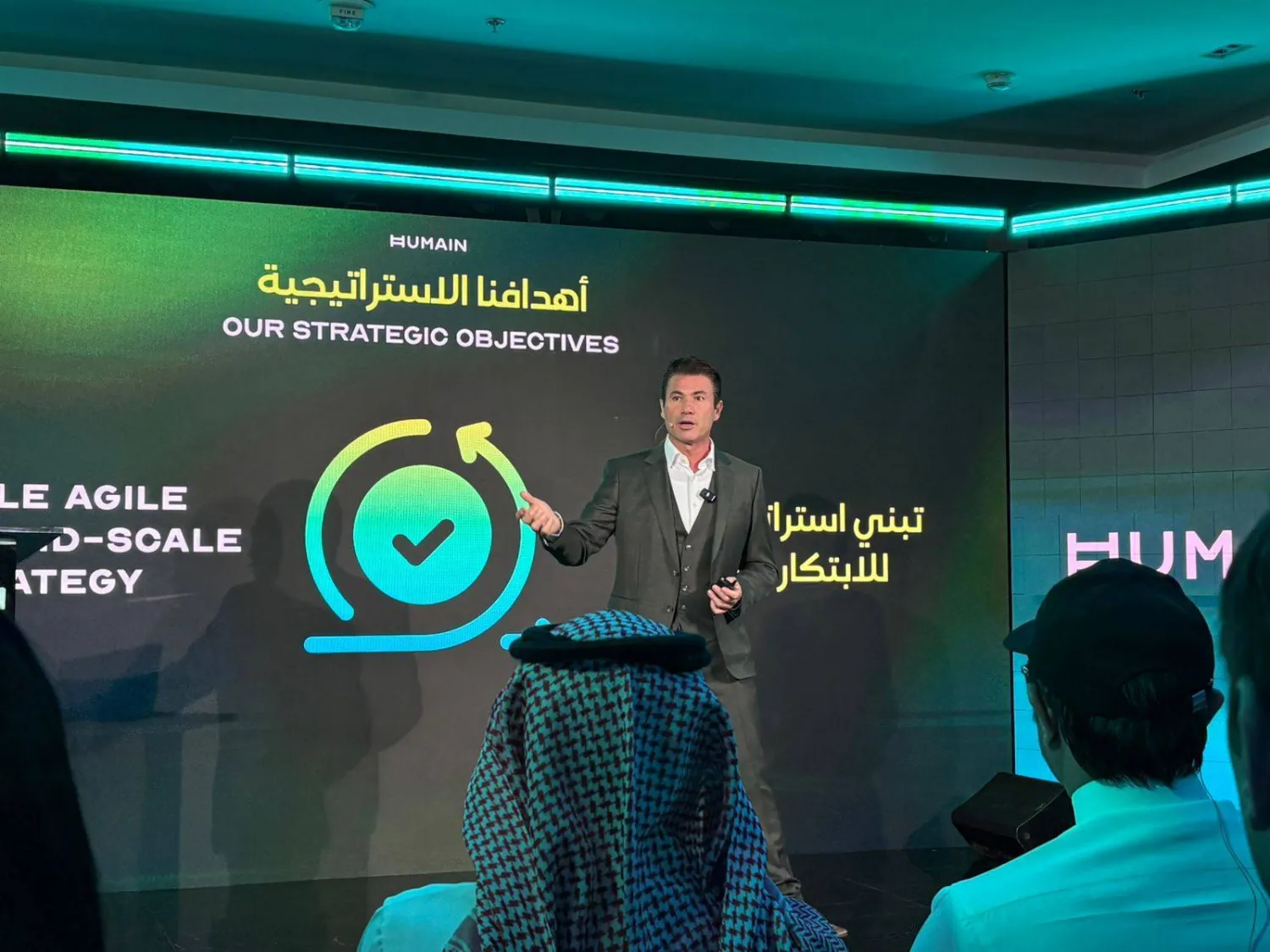
Humain CEO Tareq Amin speaks during the launch event. (Turki Al-Aqaili) 
TT

‘Humain Chat’ Powered by ‘Allam B34’: A Bridge for 400 Million Arabic Speakers  

Humain CEO Tareq Amin speaks during the launch event. (Turki Al-Aqaili) 

In a technology landscape long dominated by Western models, Saudi Arabia has entered the global artificial intelligence (AI) race on its own terms. The launch of Humain Chat, developed by Humain - a company owned by the Public Investment Fund - is more than a technical milestone; it is a sovereign declaration that innovation can be deeply rooted in local identity, and that the digital future can be built by Saudi hands to serve the wider world.

For years, Arabic speakers have felt excluded from the generative AI boom, where global applications often failed to grasp cultural nuance or linguistic depth. That gap may now be closing. From Riyadh, Humain has unveiled Humain Chat, powered by its pioneering Arabic large language model Allam B34, marking a turning point for digital inclusion in the Arab world.

The launch event in Riyadh was led by Humain CEO Tareq Amin, joined by Jonathan Ross, CEO of US-based AI company Groq. Earlier this month, both firms announced the deployment of open-source AI models in Saudi Arabia.

Amin stressed that Humain’s strategy relies on partnerships and agility. “Our business model is built on testing, failing fast, and trying again,” he said, noting that Humain had assembled a world-class team in record time and already serves over 130 global clients. The company, he added, is driven by a global vision rather than a purely local one.

Amin argued that Saudi Arabia has unique assets, including affordable energy, vast land, expanding connectivity, and growing renewable power, that position it to lead the world in AI infrastructure.

“Launching Humain Chat is a source of pride for the Kingdom,” he said, adding: “It proves that globally competitive technologies can be rooted in our language, infrastructure, and values built in Saudi Arabia by Saudi talent.”

Humain Chat is designed for the 400 million Arabic speakers and two billion Muslims worldwide who have been underserved in the AI space. For the first time, users can create content, learn, and communicate in their own language, culture, and context.

The application integrates real-time web search to provide constantly updated information, supports voice input in multiple Arabic dialects, and allows seamless switching between Arabic and English within the same conversation. It also offers a feature to share conversations for collaboration and reuse. Importantly, the platform is fully compliant with Saudi Arabia’s Personal Data Protection Law, as it is hosted entirely on Humain’s domestic infrastructure.

Humain Chat is also the first release in the Humain IQ portfolio, a next-generation suite of AI products blending scientific rigor with responsible design.
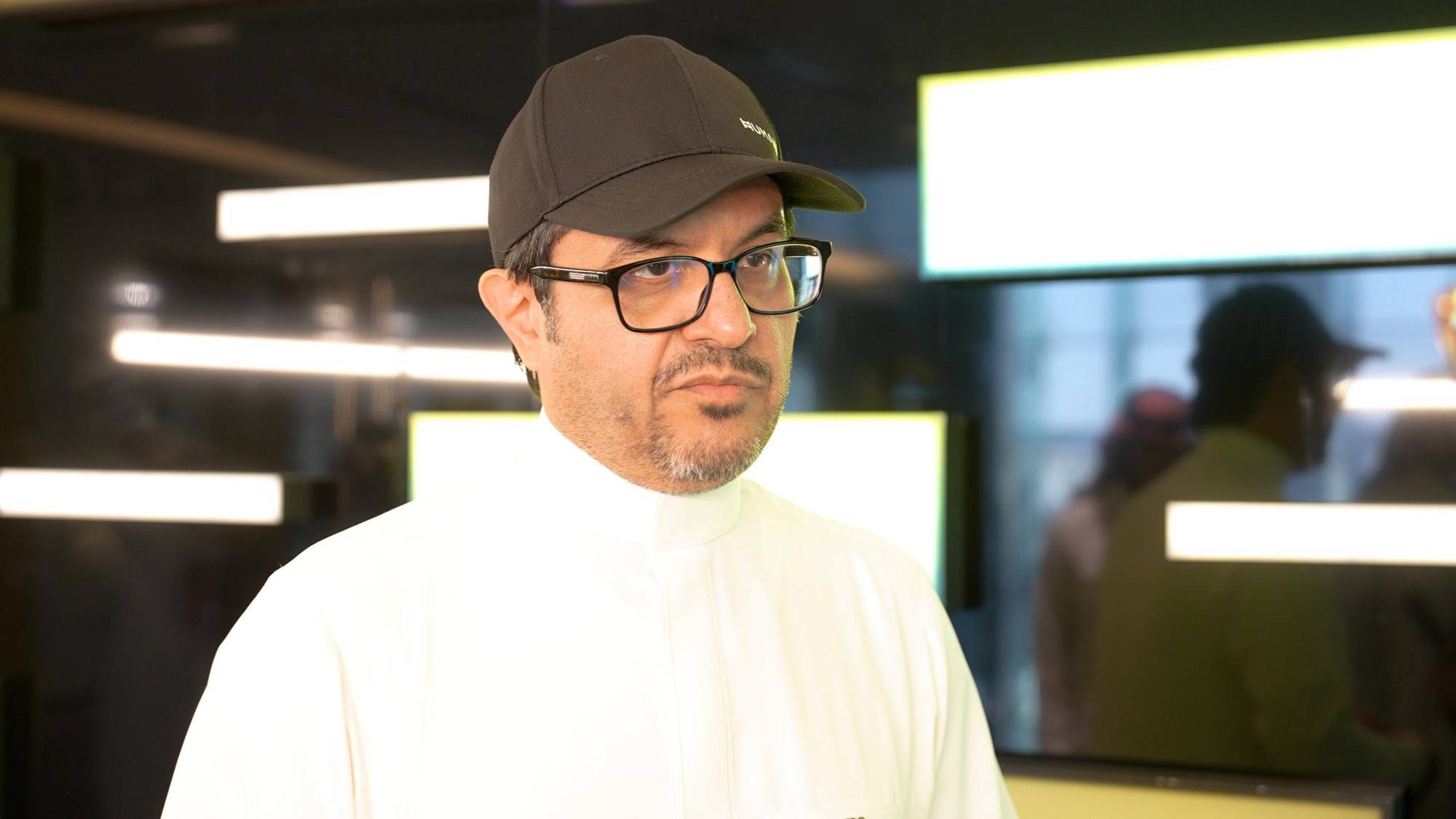
Dr. Yasser Al-Onaizan speaks to Asharq Al-Awsat. (Turki Al-Aqaili)

Allam B34: A Landmark for Arabic AI

Allam B34 builds on models developed by the National Center for AI, under the Saudi Data and AI Authority. Independently benchmarked by Cohere, it is recognized as the most advanced Arabic-language model ever built in the Arab world.

Though Arabic-first, Allam B34 is fully bilingual, trained on one of the largest Arabic datasets ever assembled, and fine-tuned with input from more than 600 experts and 250 reviewers. The result: unmatched fluency in Arabic and sensitivity to Islamic, Middle Eastern, and cultural nuances.

The model was created by a diverse team of over 120 AI specialists, including 35 PhDs, with a 50-50 gender balance. Hosted in Saudi Arabia and built by Saudi and international talent, Allam B34 is both a national achievement and a global offering.

The launch is an invitation to citizens: use it, test it, and help shape it into the world’s leading Arabic AI system. Regional and global rollouts are planned in the coming months.

Building Human Capital: Humain Academy

Alongside the product launch, Dr. Yasser Al-Onaizan, EVP for Data and AI Models at Humain, announced plans for a Humain Academy, aimed at developing local AI talent.

“The human element is the cornerstone of building AI capabilities,” he told Asharq Al-Awsat. The academy will complement government and university efforts, filling gaps through specialized training. It will leverage Humain’s internal expertise and global networks to equip young Saudis with the skills to lead AI projects at home and across the region.

“The academy will start with initial programs and expand step by step,” he said, emphasizing that it forms part of Humain’s social responsibility to empower Saudi youth.

High-Ranking Saudi Delegation to Attend World Economic Forum Meeting in Davos

FILED - 23 January 2020, Switzerland, Davos: The World Economic Forum logo is displayed on a board during a plenary session. Photo: Ciaran McCrickard/World Economic Forum/dpa
TT

High-Ranking Saudi Delegation to Attend World Economic Forum Meeting in Davos

FILED - 23 January 2020, Switzerland, Davos: The World Economic Forum logo is displayed on a board during a plenary session. Photo: Ciaran McCrickard/World Economic Forum/dpa

A high-ranking Saudi delegation led by Minister of Foreign Affairs Prince Faisal bin Farhan bin Abdullah will participate in the World Economic Forum (WEF) Annual Meeting 2026 in Davos, Switzerland, from January 19 to 23.

Alongside Prince Saisal, the delegation includes Saudi Ambassador to the US Princess Reema bint Bandar bin Sultan bin Abdulaziz, Minister of Commerce Majid Al-Kassabi, Minister of Tourism Ahmed Al-Khateeb, Minister of Investment Khalid Al-Falih, Minister of Finance Mohammed Aljadaan, Minister of Communications and Information Technology Abdullah Alswaha, Minister of Industry and Mineral Resources Bandar Alkhorayef, and Minister of Economy and Planning Faisal Alibrahim.

Prince Faisal affirmed that the Kingdom’s participation in the World Economic Forum 2026, themed "A Spirit of Dialogue," demonstrates its commitment to international cooperation in addressing economic challenges.

He stressed the importance of maintaining regional peace, supporting sustainable development, and enhancing global economic partnerships.

In a statement to the Saudi Press Agency (SPA), Prince Faisal also highlighted the importance of public-private collaboration to achieve prosperity and security.

He noted that the Kingdom is broadening cooperation with international partners to better confront economic and environmental challenges while focusing on building institutional and human capacities to adapt to rapid transformations.

Prince Faisal stated that the Kingdom views the Davos 2026 forum as a vital opportunity to strengthen cooperation in building institutional and human capacities, essential pillars for adapting to rapid global economic shifts.

Saudi Arabia is focused on developing innovative solutions in technology and scientific research, he said.

As for Aljadaan, he affirmed that Saudi Arabia's participation in the 56th World Economic Forum stems from its commitment to strengthening international cooperation and addressing global economic challenges.

In a statement to SPA, Aljadaan pointed to the Kingdom's growing influence in shaping global economic trends, driven by its robust economy and regional and international standing.

He emphasized that the Kingdom will use this platform, which brings together government, business, and academic leaders, to explore ways to promote global stability and growth.

The minister stated that this year's forum focuses on five key global challenges: building trust and cooperation, identifying new drivers for sustainable growth, investing in human capital, ensuring the responsible use of technology and innovation, and integrating environmental sustainability into economic models. Discussions will also cover the impacts of artificial intelligence, digital transformation, and cybersecurity on global industries.

Al-Khateeb affirmed that Saudi Arabia's participation in the 2026 World Economic Forum aligns with its leadership in strengthening international cooperation and building partnerships that translate dialogue into tangible results.

Al-Khateeb told SPA that this participation extends the Kingdom's approach to opening joint investment opportunities in vital sectors, particularly tourism. He noted that Saudi Arabia has become a new global tourism powerhouse and a rapidly developing model for creating competitive destinations, reflecting its growing prominence on the international map.

Participation in Davos will highlight the importance of developing tourism experiences and service quality to ensure sustainable growth that balances high demand with added value, while preserving cultural identity and natural resources, the minister added.

As for Alswaha, he said the Kingdom’s participation is supported and enabled by Custodian of the Two Holy Mosques King Salman bin Abdulaziz Al Saud and Prince Mohammed bin Salman bin Abdulaziz Al Saud, Saudi Crown Prince and Prime Minister, and embodies the Kingdom's leadership in fostering shared solutions and strengthening global dialogue on technological innovation and sustainable growth, in alignment with the objectives of Saudi Vision 2030.

In a statement to SPA, the minister explained that the Kingdom's participation aims to convey its national experience in transitioning to the smart era and showcase its notable achievements in building a competitive, technology- and AI-driven economy. It also seeks to broaden international cooperation and open new pathways for partnerships and investments with leading global technology companies and private-sector leaders.


Fitch Affirms Saudi Arabia’s Credit Rating at ‘A+’ with Stable Outlook

FILE PHOTO: The Fitch Ratings logo is seen at their offices at Canary Wharf financial district in London,Britain, March 3, 2016. REUTERS/Reinhard Krause/File Photo
TT

Fitch Affirms Saudi Arabia’s Credit Rating at ‘A+’ with Stable Outlook

FILE PHOTO: The Fitch Ratings logo is seen at their offices at Canary Wharf financial district in London,Britain, March 3, 2016. REUTERS/Reinhard Krause/File Photo

Fitch Ratings has affirmed Saudi Arabia’s sovereign credit rating at A+ with a stable outlook, according to a report issued by the agency on Friday.

The agency said the Kingdom’s credit profile reflects the strength of its fiscal position, noting that its government debt-to-GDP ratio and net sovereign foreign assets are significantly stronger than the medians for both the “A” and “AA” rating categories.

Fitch also highlighted Saudi Arabia’s substantial financial buffers, including deposits and other public sector assets.

The ratings agency projected real GDP growth of 4.8% in 2026 and expects the fiscal deficit to narrow to 3.6% of GDP by the end of 2027.

Fitch also said non-oil revenues are expected to continue benefiting from strong economic activity and improved revenue efficiency.

The agency praised the momentum of economic reforms, including the updated investment system and the continued opening of the real estate and equity markets to foreign investors.


Oil Prices Rise 1% as Supply Risks Remain in Focus

The Nave Photon, carrying crude oil from Venezuela, is docked at Port Freeport in Freeport, Texas, US, January 15, 2026. REUTERS/Antranik Tavitian
TT

Oil Prices Rise 1% as Supply Risks Remain in Focus

The Nave Photon, carrying crude oil from Venezuela, is docked at Port Freeport in Freeport, Texas, US, January 15, 2026. REUTERS/Antranik Tavitian

Oil prices rose over 1% on Friday as supply risks remained in focus despite the receding likelihood of a US military strike against Iran.

Brent crude was up 84 cents, or 1.3%, to $64.60 a barrel at 1413 GMT, on course for a fourth consecutive weekly gain. US West Texas Intermediate was up 80 cents, or 1.4%, to $59.99.

At those levels, Brent was on course for a 2% weekly gain and WTI for a 1.4% gain. Brent ⁠was up a little more than $1 at its intraday peak as investors continue to weigh the potential for supply outages should tensions in the Middle East escalate, Reuters reported.

"While geopolitical tensions in the Middle East have eased, they have not disappeared, and market participants remain concerned about potential supply disruptions," said UBS analyst Giovanni Staunovo.

Both benchmarks hit multi-month highs this week ⁠after protests flared up in Iran and US President Donald Trump signaled the potential for military strikes, but lost over 4% on Thursday as Trump said that Tehran's crackdown on the protesters was easing, allaying concerns of possible military action that could disrupt oil supplies.

"Above all, there are worries about a possible blockade of the Strait of Hormuz by Iran in the event of an escalation, through which around a quarter of seaborne oil supplies flow," Commerzbank analysts said in a note.

"Should there be signs of a sustained easing on ⁠this front, developments in Venezuela are likely to return to the spotlight, with oil that was recently sanctioned or blocked gradually flowing onto the world market."

Meanwhile, analysts expect higher supply this year, potentially creating a ceiling for the geopolitical risk premium on prices.

"Despite the steady drumbeat of geopolitical risks and macro speculation, the underlying balance still points to ample supply," said Phillip Nova analyst Priyanka Sachdeva.

"Unless we see a genuine revival in Chinese demand or a meaningful bottleneck in physical barrel flows, oil looks range-bound, with Brent broadly hovering between $57 and $67."
