Saudi Investment Minister Signs MoU in Hong Kong to Attract Strategic Investmentshttps://english.aawsat.com/business/5181111-saudi-investment-minister-signs-mou-hong-kong-attract-strategic-investments
Saudi Investment Minister Signs MoU in Hong Kong to Attract Strategic Investments
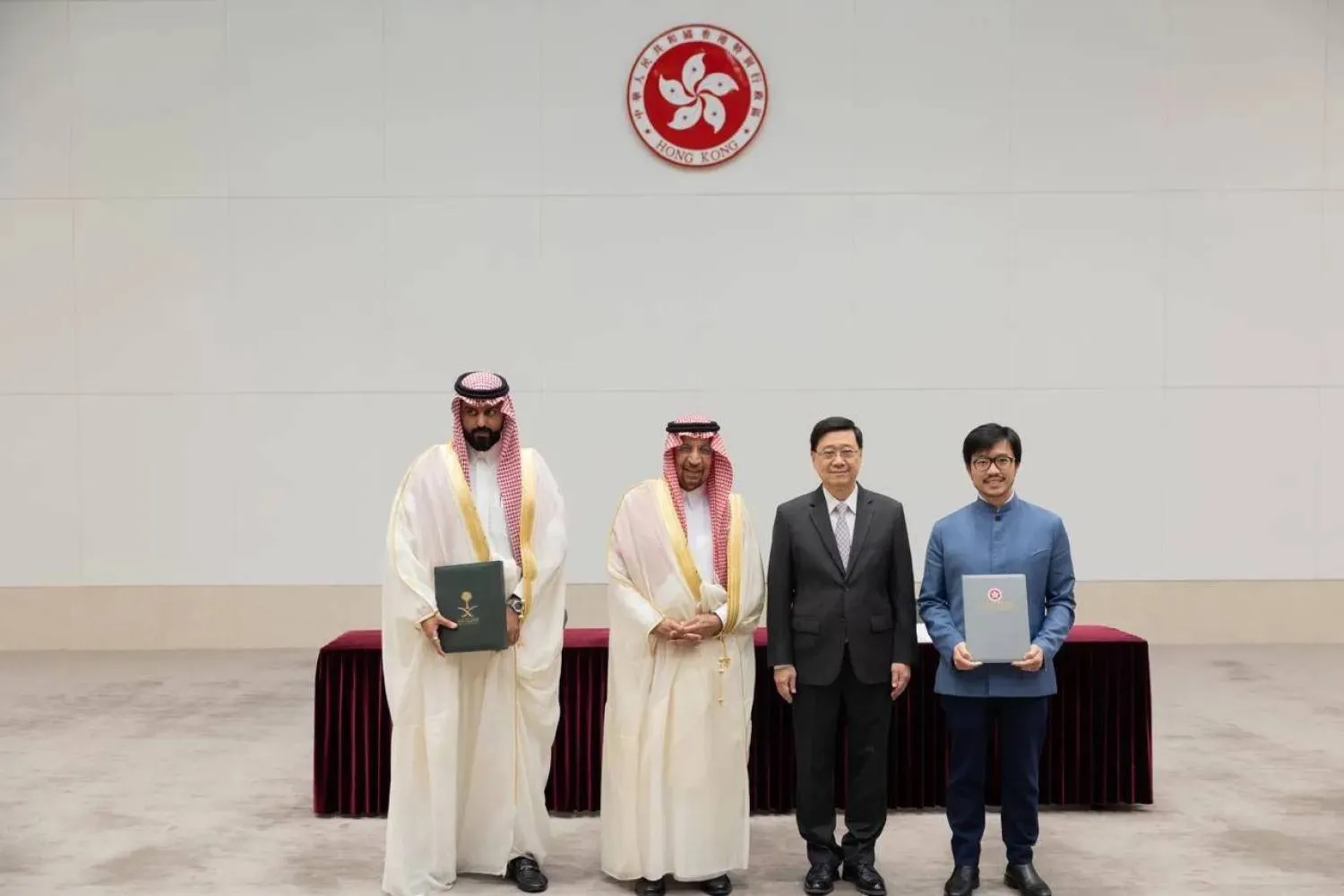
Al-Falih after signing the memorandum of understanding with the Belt and Road Office (Minister’s account on X).
Saudi Minister of Investment, Eng. Khalid Al-Falih, announced the signing of a memorandum of understanding with the Belt and Road Office of the Hong Kong Special Administrative Region Government of the People’s Republic of China. The agreement aims to expand cooperation, strengthen economic relations, and attract high-value investments in promising sectors, in line with the goals of Vision 2030.
Writing on his account on X, Al-Falih said he had met with senior executives of major Chinese banks as well as the Chairwoman of the Silk Road Fund. Discussions focused on investment opportunities tailored to each bank’s areas of expertise, with particular emphasis on infrastructure, agriculture, and enhancing trade relations between the two countries.
The minister also met with Wang Qingxian, Governor of Anhui Province, to discuss strengthening economic ties, promoting sustainable development, and exploring investments in areas of shared interest. He noted that he reviewed Anhui’s experience in empowering large Chinese industrial companies to expand into global markets.
As part of his tour, Al-Falih visited the Xinyi Glass factory, where he observed technological advancements in production processes and the precision standards applied to high-quality manufacturing. He described the company as a key player in industrial innovation and one of the world’s leading glass producers.
In the automotive sector, Al-Falih held talks with Yin Tongyue, Chairman of Chery Automobile, learning about the company’s global expansion strategy and adoption of smart technologies. He also toured Chery’s manufacturing facilities and research and development center, where the company presented its vision for the future of electric vehicles and smart mobility.
The minister further visited the headquarters of Gotion, a leading battery manufacturer, and met with its Chairman, Li Zhen. Their discussions explored developments in the sector and opportunities to invest in next-generation electric vehicle battery technologies, particularly in light of surging global demand and the shift toward clean energy.
The High Cost of Hormuz: $37 Billion Shock Exposes Iraq’s Economic Vulnerabilityhttps://english.aawsat.com/business/5287019-high-cost-hormuz-37-billion-shock-exposes-iraq%E2%80%99s-economic-vulnerability
The High Cost of Hormuz: $37 Billion Shock Exposes Iraq’s Economic Vulnerability
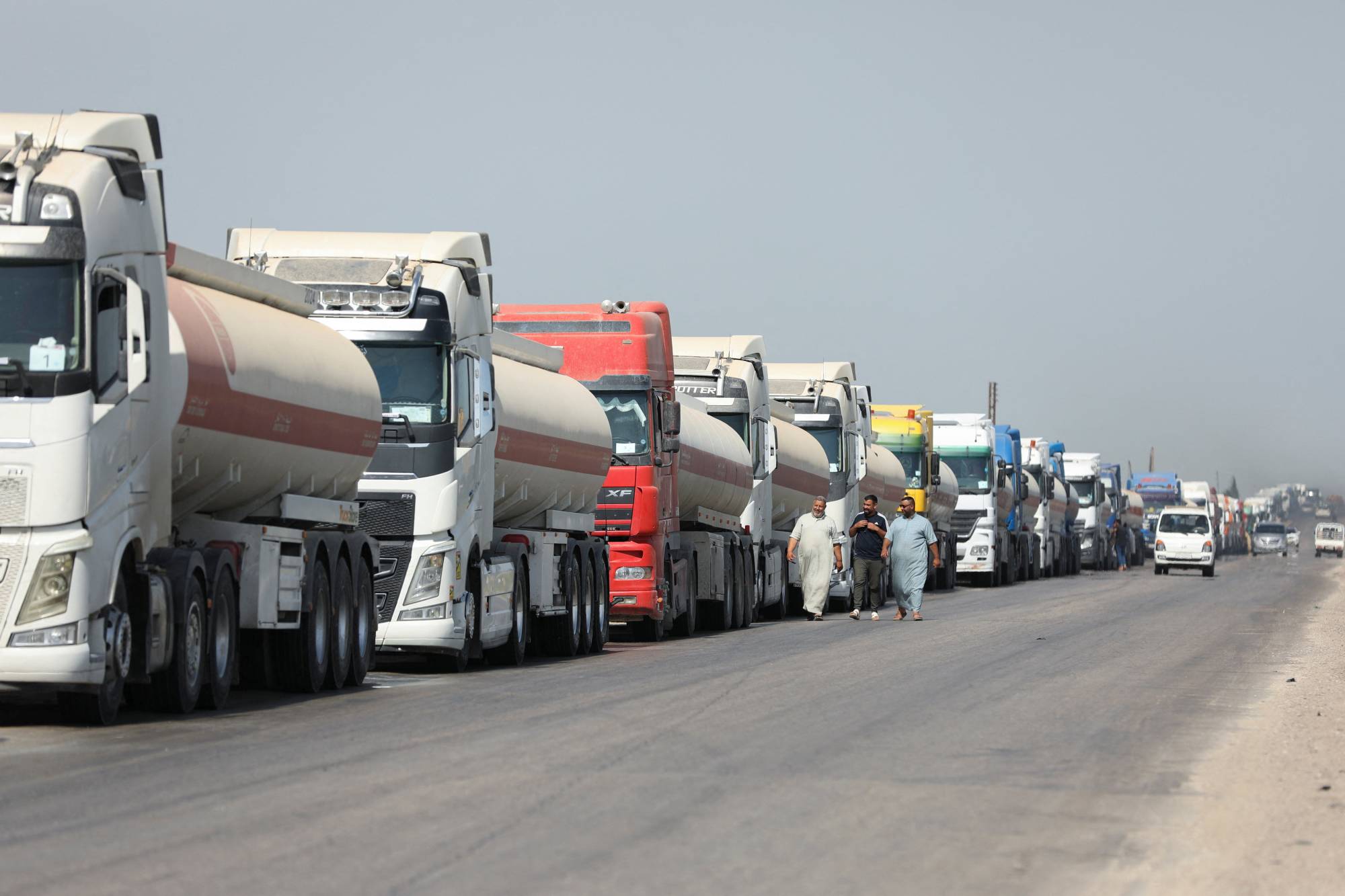
A drone view shows oil trucks arriving from Iraq on their way to the Baniyas oil terminal, Syria, May 14, 2026. (Reuters)
The recent regional war and the closure of the Strait of Hormuz have pushed Iraq’s economy into one of its most serious crises in decades. The massive financial losses are more than just another consequence of regional conflict; they have exposed Iraq’s near-total dependence on a single maritime export route.
As Baghdad struggles to finance public-sector salaries through domestic borrowing and the use of foreign-exchange reserves, the crisis has renewed scrutiny of years of poor planning, corruption, and political obstruction of strategic projects, such as the Basra-Aqaba oil pipeline, initiatives that could have provided alternative export routes and a safety net for the country’s most important source of income.
Financial and energy analysts estimate Iraq’s losses at more than $37 billion, a severe blow to an economy that relies overwhelmingly on oil revenues.
The disruption has forced authorities to draw on domestic debt and accumulated reserves to cover monthly salary and pension obligations estimated at roughly $6.5 billion.
Slow recovery
Although the conflict appears to be winding down and the Oil Ministry has expressed optimism about resuming production, energy experts caution that Iraqi oil fields may require months to return to their prewar output levels.
Before the crisis, Iraq produced more than 4.2 million barrels per day, including approximately 3.5 million barrels exported to international markets.
Observers said the consequences extend beyond the immediate financial shock caused by the freezing of oil revenues. The conflict revealed a “dangerous strategic vulnerability”: Iraq’s overwhelming reliance on southern Gulf export terminals and the Strait of Hormuz as the sole outlet for its most valuable resource.
The crisis has also revived debate over decades of mismanagement and inadequate planning in one of the country’s most vital economic sectors.
Oil trucks arrive from Iraq, on their way to the Baniyas oil terminal, in Qamishli, Syria, May 11, 2026. (Reuters)
A single export gateway
Over previous decades, Iraq possessed several overland export routes, including the Kirkuk–Ceyhan pipeline to Türkiye, the Iraq-Saudi pipeline, and the historic Kirkuk-Haifa and Kirkuk-Baniyas lines. Most have been out of service for years because of wars, political instability, and security challenges.
Successive governments sought to revive export diversification. Among the most significant proposals was the Basra-Aqaba pipeline, championed during the administration of former Prime Minister Mustafa Al-Kadhimi. The project would transport crude oil from southern Iraq to Jordan’s Red Sea port of Aqaba.
Energy specialists regard it as a strategic asset that could have reduced Iraq’s dependence on Gulf shipping routes. Political disputes and regional pressures, however, prevented its implementation.
Limited alternatives
As the crisis intensified and oil revenues dwindled, Iraq attempted to expand exports through Türkiye, Syria, and Jordan. Energy experts said those efforts achieved only marginal results.
Contrary to reports that Iraq was exporting oil through 700 tanker trucks through Syria, former Oil Ministry spokesman Asim Jihad said exports through Syrian territory amount to no more than 200 tankers per day.
He told Asharq Al-Awsat that Iraq is exporting fuel oil rather than crude oil through Syria to avoid bottlenecks at producing fields.
Such shipments, he added, are operationally complex and generate only limited revenue compared with normal export volumes.
On the northern route, Jihad noted that Iraq exports between 150,000 and 200,000 barrels per day through the Kurdistan Region’s pipeline to the port of Ceyhan in Türkiye.
Meanwhile, the older federal pipeline linking Kirkuk to Ceyhan remains out of service because of extensive damage that has yet to be repaired.
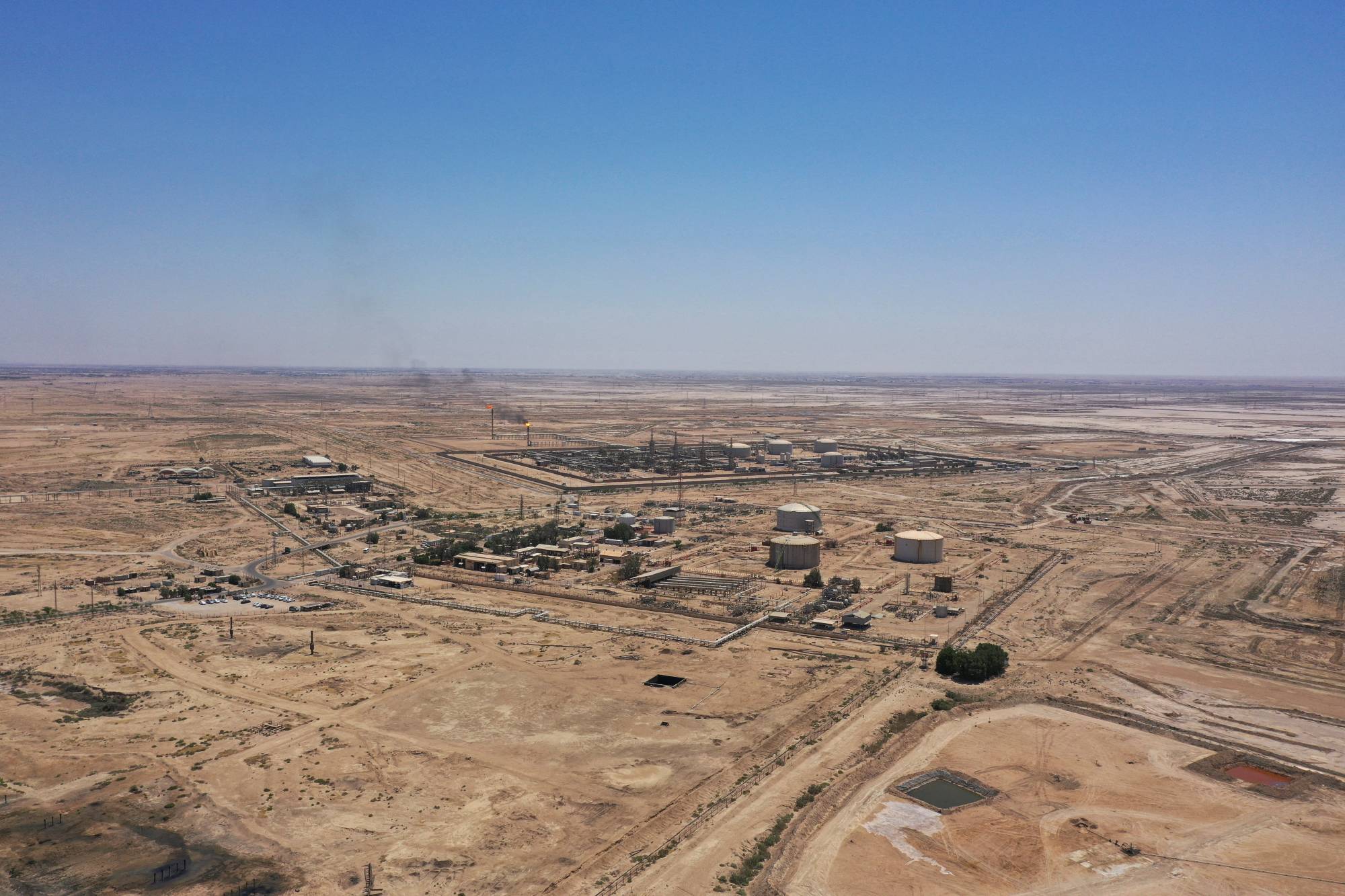
A drone view shows the Rumaila oil field in Basra, Iraq, June 8, 2026. (Reuters)
Jihad expressed little optimism that Iraq can establish major alternative export corridors outside the Gulf in the near future, citing time constraints, high costs, and political complications.
He also voiced uncertainty about negotiations with Ankara over future export agreements through Ceyhan, particularly as existing arrangements are set to expire at the end of July.
“The only option left for Iraq is to hope that no new conflict erupts in the Gulf that would once again close the Strait of Hormuz and deprive the country of its primary source of income,” he added.
Cost of the blockade
The Eco Iraq Observatory estimated that Iraq has lost roughly 350 million barrels of oil exports since the Strait of Hormuz was closed on February 28, representing missed sales worth approximately $37.7 billion at average market prices during the period.
According to the organization, Iraq had been exporting between 103 million and 107 million barrels of crude oil per month before the closure. Export losses reached 84.4 million barrels in March, 93.1 million in April, 92.8 million in May, and 79.6 million in June.
Eco Iraq argued that the “New Levant” initiative — a regional economic integration project involving Iraq, Jordan, and Egypt — has become a strategic necessity.
The plan envisions deeper economic cooperation, infrastructure links, and alternative export routes, including the shipment of Iraqi oil through Jordan to Egyptian ports, reducing dependence on geopolitically vulnerable maritime corridors.
Crude Prices Drop, Most Stocks Rise on 'Positive' US-Iran Talkshttps://english.aawsat.com/business/5287017-crude-prices-drop-most-stocks-rise-positive-us-iran-talks
Crude Prices Drop, Most Stocks Rise on 'Positive' US-Iran Talks
A pump jack operates near a crude oil reserve in the Permian Basin oil field near Midland, Texas, US February 18, 2025. REUTERS/Eli Hartman/File Photo
Oil prices fell Monday on optimism over US-Iran peace talks, with mediators flagging a "roadmap" to a final agreement, while most equities rose thanks to another healthy start for tech firms.
After a meeting planned for Friday was cancelled owing to fighting between Israel and Hezbollah, the negotiations finally got underway on Sunday in Switzerland with teams led by US Vice President JD Vance and Iran's Mohammad Bagher Ghalibaf.
Traders remain in buoyant mood after news that the two foes had ended their conflict, which had sent energy costs soaring and stoking inflation, sending shivers through the global economy.
There were initial jitters following reports that Iran had called off the talks over US President Donald Trump's threat to carry out more strikes if Hezbollah kept attacking Israel, but mediators Pakistan and Qatar said the talks took place in "a positive and constructive atmosphere".
The mood improved as Qatar and Pakistan announced progress, which aim to address Tehran's nuclear program and reopen the Strait of Hormuz, through which a fifth of oil and gas pass.
The two said the United States and Iran agreed to set up a "communication line" to avoid incidents in the crucial waterway, and "the High Level Committee has agreed upon a roadmap towards reaching a final deal within 60 days, laying the foundation for the immediate commencement of further technical talks".
Iranian Foreign Minister Abbas Araghchi added on X that "mediation has delivered major progress to end Lebanon War".
Both main oil contracts fell in early trade, while most stock markets advanced.
Tokyo climbed two percent, Seoul was up more than one percent and Taipei jumped 2.7 percent.
The gains came on the back of another rally in tech firms, particularly chipmakers including South Korea's SK hynix, Taiwan's TSMC and Japan's Advantest.
Sydney, Wellington and Jakarta also advanced, though there were losses in Hong Kong, Shanghai and Singapore.
"Following the positive response last week to reports of a US-Iran ceasefire, markets are likely to open with a cautious tone to start the new week as it remains clear that the situation in the Middle East remains fragile," said National Australia Bank's Skye Masters.
"The dollar is likely to remain supported, the oil price could swing either way but at current levels the risk is for a lift higher."
Sterling remained under pressure after suffering selling following Thursday's election of UK Labor politician Andy Burnham that ramped up expectations he will oust beleaguered Prime Minister Keir Starmer.
The embattled premier "is expected to announce on Monday that he will step down as prime minister after overwhelming pressure from Labor MPs to make way for Andy Burnham", Britain's Guardian newspaper said.
Investors were nervous that Burnham could introduce fresh spending plans that would add to the country's already huge debt pile.
Gold Rebounds from One-Week Low as Iran Cites Progress in Peace Talkshttps://english.aawsat.com/business/5287000-gold-rebounds-one-week-low-iran-cites-progress-peace-talks
Ingots of 99.99 percent pure gold in a workroom during production at Krastsvetmet precious metals plant in the Siberian city of Krasnoyarsk, Russia, June 16, 2026. (Reuters)
TT
TT
Gold Rebounds from One-Week Low as Iran Cites Progress in Peace Talks
Ingots of 99.99 percent pure gold in a workroom during production at Krastsvetmet precious metals plant in the Siberian city of Krasnoyarsk, Russia, June 16, 2026. (Reuters)
Gold rebounded from a more than one-week low on Monday, as oil prices fell after Iran cited progress in US-Iran peace talks, though bets of higher interest rates after hawkish US Federal Reserve signals weighed on the metal's outlook.
Spot gold was up 0.8% at $4,194.99 per ounce, as of 0608 GMT, after falling to its lowest level since June 11 on Friday. US gold futures for August delivery fell 0.8% to $4,213.10.
The first round of talks between high-ranking US and Iranian officials in Switzerland ended Monday, with an Iranian foreign ministry spokesperson saying good progress has been made, according to Iran's Press TV.
A joint statement from mediating nations Qatar and Pakistan said the US and Iran agreed to a roadmap toward a final deal within 60 days.
"The current situation in Switzerland is quite different from a few hours ago when the two sides were squabbling, but now it seems they're making some progress," said Edward Meir, an analyst at Marex.
"We're going to be trading on geopolitical guidelines for a little while longer, but the situation is fluid so perhaps best to watch the action from the sidelines for now."
Brent crude futures fell more than 1% after the announcement. Elevated oil prices stoke inflation concerns and raise expectations of higher interest rates. Gold tends to lose appeal when rates are high, as it does not yield interest.
Meanwhile, Fed Chair Kevin Warsh's emphasis on inflation in last week's press conference, without any more-nuanced commentary about what might clear the bar for a rate hike, led investors to conclude an increase was coming soon.
Nine of the Fed's 19 policymakers believe they will need to raise the policy rate this year.
Traders see an 89% chance of a rate hike in December, from 61% before the Fed's meeting, according to the CME FedWatch Tool.
Spot silver rose 2.4% to $66.48 per ounce, platinum gained 0.7% to $1,675.91, and palladium was up 1.8% at $1,280.45.
لم تشترك بعد
انشئ حساباً خاصاً بك لتحصل على أخبار مخصصة لك ولتتمتع بخاصية حفظ المقالات وتتلقى نشراتنا البريدية المتنوعة