


Oil Rises on Weaker Dollar and Russian Supply Disruptions

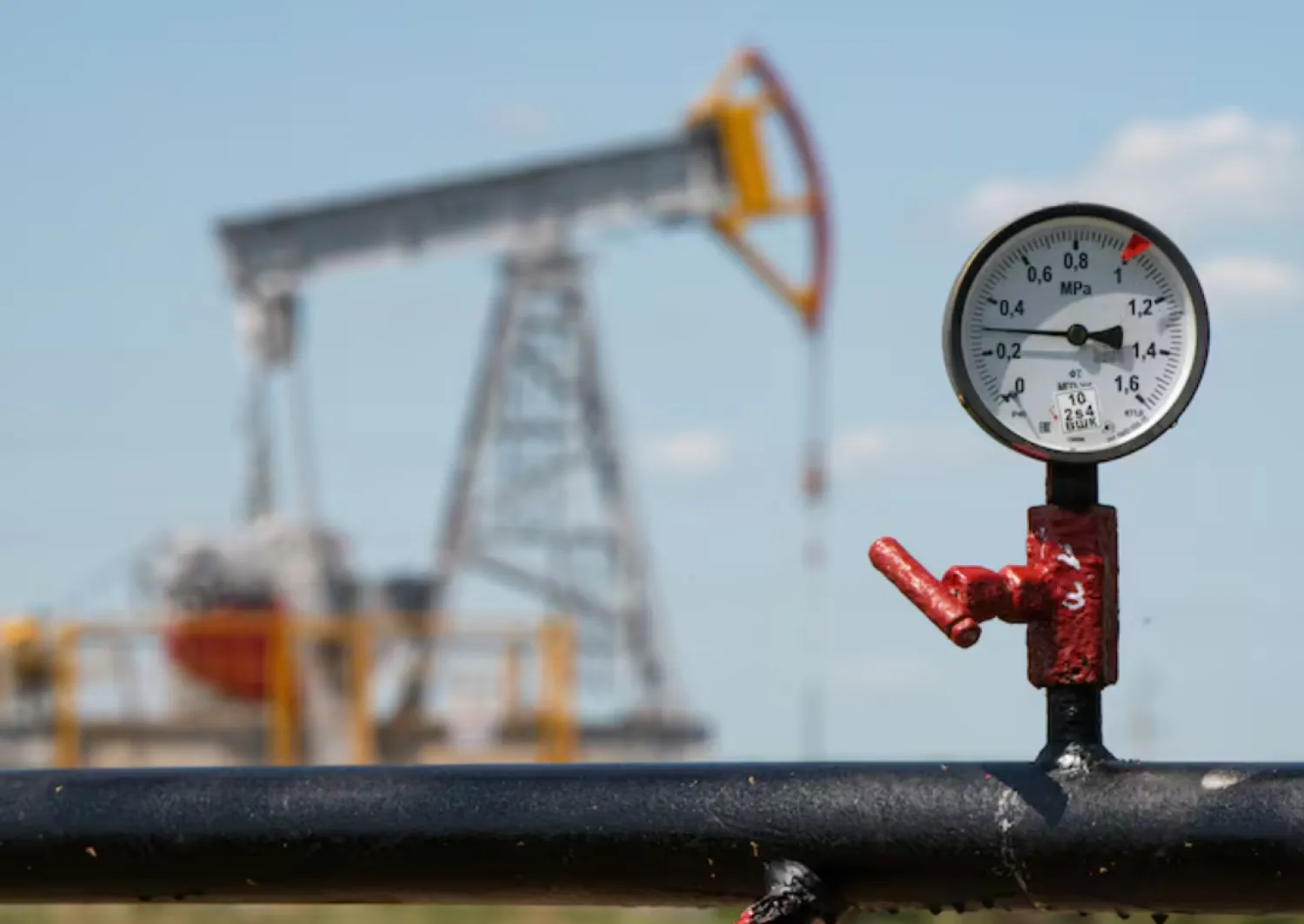
A view shows a pressure gauge near oil pump jacks outside Almetyevsk, in the Republic of Tatarstan, Russia July 14, 2025. REUTERS/Stringer/File Photo
TT

Oil Rises on Weaker Dollar and Russian Supply Disruptions

A view shows a pressure gauge near oil pump jacks outside Almetyevsk, in the Republic of Tatarstan, Russia July 14, 2025. REUTERS/Stringer/File Photo

Oil prices rose by more than 1% on Monday on concern over supply disruptions stemming from intensified Russia-Ukraine airstrikes as well as a weaker dollar.

Brent crude was up 83 cents, or 1.2%, at $68.31 a barrel by 1215 GMT. US West Texas Intermediate crude also rose 83 cents, or 1.3%, to $64.84. Trading is expected to be muted because of a US public holiday.

Brent and WTI crude registered their first monthly declines in four months in August, losing 6% or more on increased supply from the OPEC+ producer group, Reuters reported.

"Crude fell in August and has started September with no clear direction within established ranges as fears of a fourth-quarter supply glut are offset by geopolitical tensions," said Ole Hansen, head of commodity strategy at Saxo Bank.

Investors were focused on Beijing, where Chinese President Xi Jinping, Russian counterpart Vladimir Putin and Indian Prime Minister Narendra Modi are attending a regional summit. Also on the radar was OPEC+ meeting on September 7, Hansen added.

Markets remain concerned about Russian oil flows, with weekly shipments from its ports dropping to a four-week low of 2.72 million barrels per day (bpd), according to tanker tracker data cited by ANZ analysts.

Ukrainian President Volodymyr Zelenskiy vowed on Sunday to retaliate with more strikes deep inside Russia after Russian drone attacks on power facilities in northern and southern Ukraine. Both countries have intensified airstrikes in recent weeks, targeting energy infrastructure and disrupting Russian oil exports.

A Reuters poll on Friday showed that oil prices are unlikely to gain much from current levels this year, as rising output from top producers adds to the risk of a surplus and US tariff threats weigh on demand growth.

Coming out of the summer season, oil inventories should rise in the last quarter of 2025 and the first quarter of 2026, HSBC analysts said in a note, with a surplus of 1.6 million barrels per day in the fourth quarter.

Elsewhere, the US labor market report this week will give a read on the economy's health and test investor confidence that interest rate cuts are coming soon, a view that has strengthened appetite for riskier assets such as commodities.

Ahead of the data, the dollar was close to a five-week low on Monday, making oil less expensive for buyers using other currencies.



Euro Zone Yields Fall after Iran Raises Prospect of Hormuz Reopening

Euro banknotes (Reuters)
TT

Euro Zone Yields Fall after Iran Raises Prospect of Hormuz Reopening

Euro banknotes (Reuters)

Euro zone bond yields fell for a second straight day on Tuesday, hitting their lowest in almost two weeks after Iran raised the prospect of reopening the Strait of Hormuz and Washington hinted it could restart talks with Tehran, pushing oil prices lower.

Germany's 10-year bond yield, the benchmark for the bloc, fell 1 basis point to 3.44% after rising as much as 4 bps earlier in the session. It fell 7 bps on Monday as energy prices retreated.

A senior Iranian official told Reuters that the strait, which carried about a fifth of global energy supplies before the war, could reopen within seven days if the US also lifts its blockade of Iranian ports.

The official added that Iran's delegation to a UN meeting in New York this week has full authority to revive diplomacy over the conflict.

US Secretary of State Marco Rubio told NBC's "Today" show that Washington was open to speaking with Tehran.

The dip in energy prices helped pull yields lower globally after a surge in recent weeks fuelled by expectations of further interest-rate hikes to combat energy-driven inflation. Traders are pricing in around 35 bps of additional European Central Bank tightening this year, down from 40 bps on Friday.

Germany's two-year bond yield, which is sensitive to interest-rate expectations, fell 1 bp to 3.19%, following a 6-bp drop on Monday.

Rabobank senior rates strategist Lyn Graham-Taylor said lower oil prices following the Iranian comments were weighing on bond yields.

Brent crude futures were last down 1% to $100 a barrel after earlier falling to $97.40, the lowest in two weeks.


Libya's NOC Says Sharara Crude Pipeline Closure Losses at 130,000 bpd

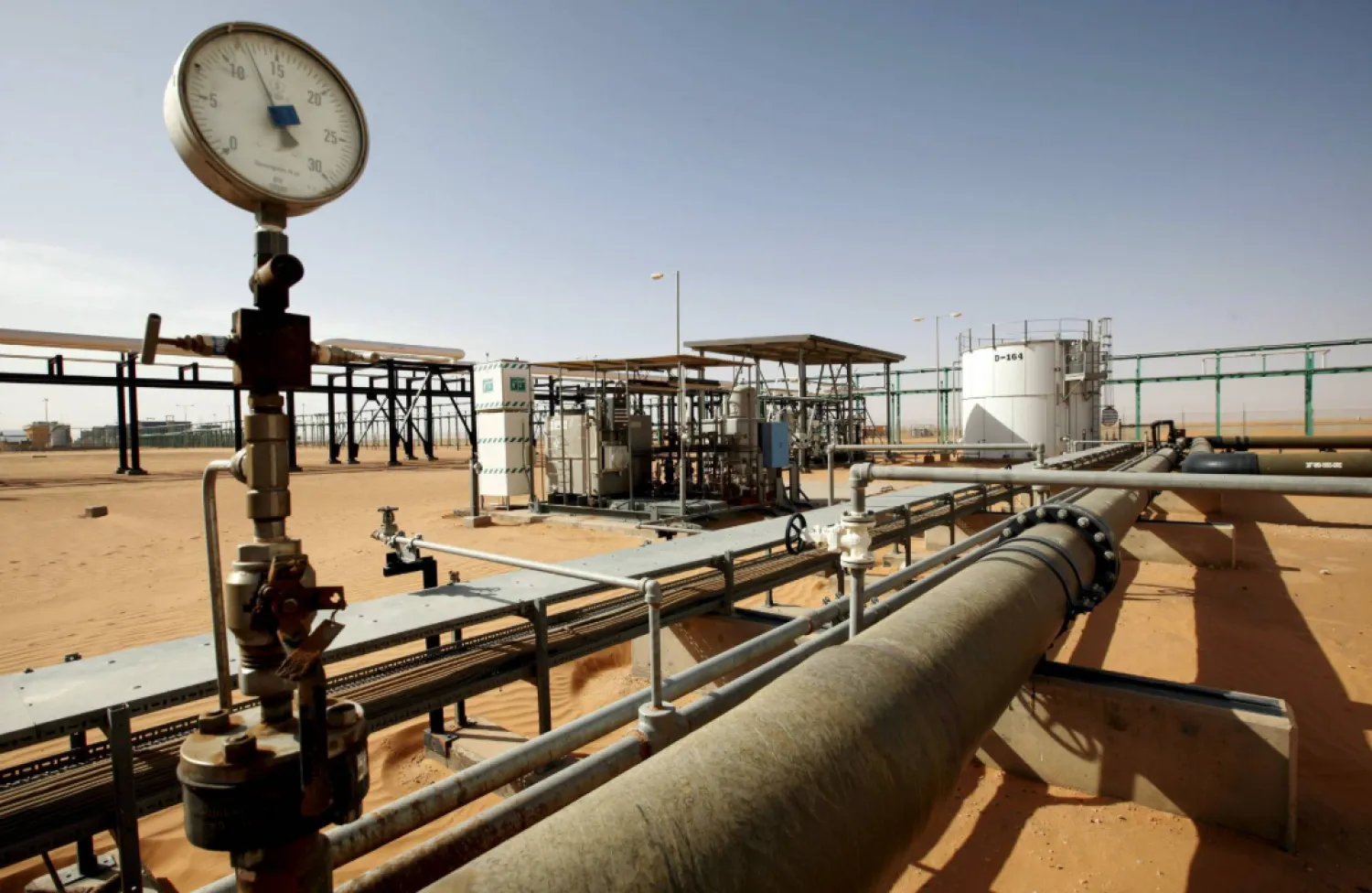
General view of the Sharara oil field in Libya (Reuters)
TT

Libya's NOC Says Sharara Crude Pipeline Closure Losses at 130,000 bpd

General view of the Sharara oil field in Libya (Reuters)

Libya's National Oil Corporation said on Tuesday that the Sharara-Zawiya crude loading pipeline closure has led to daily losses of about 130,000 barrels per day, Reuters reported.

An armed military group closed valve seven on the Sharara crude pipeline to Zawiya port on Monday, resulting in a significant decline in production at the Sharara oilfield, the National Oil Corporation said in a statement.


Sources: Saudi Arabia Restarts East-West Oil Pipeline

FILE PHOTO: A model of an oil pump is seen in front of a Saudi Arabian flag in this illustration taken January 9, 2026. REUTERS/Dado Ruvic/Illustration/File Photo
TT

Sources: Saudi Arabia Restarts East-West Oil Pipeline

FILE PHOTO: A model of an oil pump is seen in front of a Saudi Arabian flag in this illustration taken January 9, 2026. REUTERS/Dado Ruvic/Illustration/File Photo

Saudi Arabia has restarted operations at its East-West Pipeline and could resume exports from the Red Sea port of Yanbu later on Tuesday, three sources briefed on the matter said.

Drone attacks forced Saudi Arabia to shut its East-West Pipeline on September 13, halting crude loadings at the kingdom's Yanbu port.

The resumption of supplies on Tuesday helped to drive selling on global oil markets, traders said. Brent crude futures fell by more than $2 a barrel to its lowest since September 8.

Two trading sources said traders were getting ready for Saudi oil loadings by moving tankers to Egypt's Mediterranean Port Said for ship-to-ship transfers and also to Sidi Kerir.