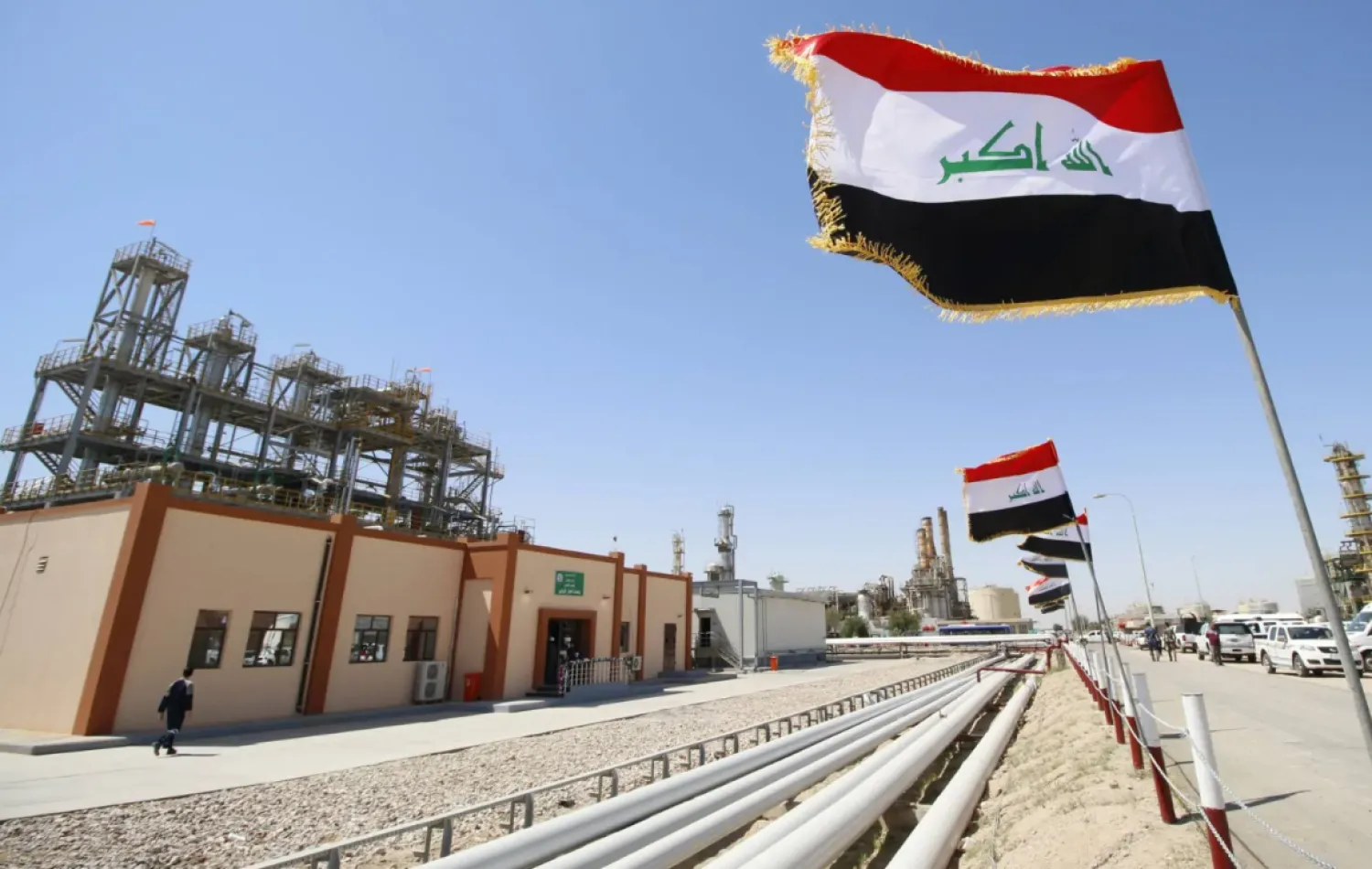
Iraqi Oil Exports via Türkiye Ceyhan Pipeline to Resume at 180,000–190,000 bpd

A view shows the al-Shuaiba oil refinery in southwest Basra, Iraq April 20, 2017. Reuters
TT

Iraqi Oil Exports via Türkiye Ceyhan Pipeline to Resume at 180,000–190,000 bpd

A view shows the al-Shuaiba oil refinery in southwest Basra, Iraq April 20, 2017. Reuters

Iraqi oil minister Hayan Abdel-Ghani expects oil exports via Türkiye's Ceyhan pipeline to resume at about 180,000–190,000 barrels per day, Kurdistan broadcaster Rudaw reported on Friday.

Oil exports from Iraq's Kurdistan region to Türkiye are due to resume on Saturday after an interruption of more than two years.

Baghdad has come under US pressure to resume the Kurdish oil flows as US President Donald Trump seeks to cut Iranian oil exports to zero under a maximum pressure campaign against Tehran. The reopening of the pipeline also comes as OPEC+ producers boost output to gain market share, according to Reuters.

A source told Reuters that Kurdistan's Ministry for Natural Resources sent a notification to oil companies operating in Kurdistan about the planned startup.

The Kurdistan Regional Government and the Iraqi oil ministry did not immediately respond to emailed requests for comment. Flows through the Kirkuk-Ceyhan pipeline were halted in March 2023 when the International Chamber of Commerce ordered Türkiye to pay Iraq $1.5 billion in damages for unauthorised exports by the Kurdish regional authorities.


Tunisian Tourism Slows in Fallout of Middle East War

 Tourists ride while taking part in kitesurfing in Tunisia's southern island of Djerba on May 5, 2026. (AFP)
Tourists ride while taking part in kitesurfing in Tunisia's southern island of Djerba on May 5, 2026. (AFP)
TT

Tunisian Tourism Slows in Fallout of Middle East War

 Tourists ride while taking part in kitesurfing in Tunisia's southern island of Djerba on May 5, 2026. (AFP)
Tourists ride while taking part in kitesurfing in Tunisia's southern island of Djerba on May 5, 2026. (AFP)

In Tunisia, May usually heralds the start of the summer tourism boom, but as the Middle East war wreaks havoc on the region, the season is opening on uneasy footing.

Industry officials blame the fallout from the conflict, which has sent oil prices and travel costs skyrocketing, even thousands of miles away in Tunisia's idyllic island of Djerba.

Anane Kamoun, director of the Royal Garden Palace hotel on the island, said reservations have fallen by about half this year at his establishment.

"When oil prices rise, airfares rise, and that's when tourists start reconsidering the cost," said Kamoun.

"When airfares increase by 70 or 80 euros, it's a significant amount, and tourists begin looking for alternatives."

The price of kerosene has doubled since the beginning of the year, forcing companies to raise flight prices, with some even cancelling flights with little profit.

The tourism industry, which accounts for 10 percent of Tunisia's GDP, is also bracing for a blow to the job market, where it normally employs about 400,000 Tunisians.

- Signs of resilience -

Last year, a record 1.2 million tourists visited Djerba, a five-percent rise compared to the previous year and slightly above the previous high set in 2019 before the pandemic, said Hichem Mahouachi, the regional representative of Tunisia's national tourism office.

Officials had hoped for growth of up to eight percent this year, Mahouachi added, but the latest regional developments have clouded hopes for another record year.

Even so, Mahouachi pointed to signs of resilience.

Airlines have scheduled 5,600 flights to Djerba between April and September -- a 3.3 percent increase from a year earlier, with connections from 16 mostly European countries, he said.

Some destinations will likely be more impacted by disruptions than others -- especially long-haul routes that are more vulnerable to higher fuel costs, Mahouachi added.

However, Tunisia holds a major advantage: the Mediterranean country is just a two-hour flight from most European capitals.

"The increase in kerosene prices will not be felt in the same way as for long-haul travel," Mahouachi said. "Tunisia may even benefit from that."

"Tunisia is considered one of the safest destinations in the Mediterranean basin," the official added.


Gold Extends Decline as Inflation Woes Weigh on Rate Cut Bets

Gold supports some stablecoins (Reuters)
TT

Gold Extends Decline as Inflation Woes Weigh on Rate Cut Bets

Gold supports some stablecoins (Reuters)

Gold prices slipped for a second consecutive session on Wednesday as war-led inflation concerns weighed on expectations for interest rate cuts, with markets also watching the upcoming Trump-Xi meeting.

Spot gold was down 0.6% to $4,686.99 per ounce at 09:05 a.m. EDT (1305 GMT). US gold futures gained 0.2% to $4,694.70.

US producer prices increased more than expected in April, posting their biggest gain since early 2022, the latest indication that inflation was accelerating amid the Iran war.

"Inflation remains sticky and so, the expectations for higher rates for longer was reinforced, and that's been pressuring gold the last two days," said Peter Grant, vice president and senior metals strategist at Zaner Metals.

Gold is often viewed as a hedge against inflation, but higher interest rates tend to pressure the non-yielding metal. Data on Wednesday showed that US consumer inflation increased further in April, with the annual rate posting its largest gain in three years, Reuters reported.

The US central bank last month left its benchmark overnight interest rate in the 3.50% to 3.75% range. Traders have largely priced out a US rate cut this year, according to CME Group's FedWatch. Donald Trump embarks on the first visit by a US president to China in nearly a decade eager to snag some deals, maintain a fragile trade truce with the world's second-largest economy, and prop up public approval ratings bruised by his war with Iran. Meanwhile, India raised import tariffs on gold and silver to 15% from 6%, as part of efforts to curb overseas purchases of the metals and ease pressure on the country's foreign exchange reserves. India is the world's second-largest consumer of precious metals.

The news about higher import duties in India has created some demand concerns and could pose a long-term headwind, Grant said.

Spot silver fell 0.2% to $86.70 per ounce, after hitting a two-month high earlier in the session.

Platinum lost 0.3% to $2,120.20, after hitting its highest level since March 17. Palladium was down 0.4% at $1,484.10.


Saudi Vacant Properties Face Fees as Market Awaits Supply Increase

One of the projects of the National Housing Company in Jeddah (the company)
TT

Saudi Vacant Properties Face Fees as Market Awaits Supply Increase

One of the projects of the National Housing Company in Jeddah (the company)

Following the adoption on Wednesday of the executive regulations governing fees on vacant properties, the Saudi real estate market is awaiting a new phase aimed at increasing residential and commercial supply by encouraging owners of unused units to put them into use or offer them for rent or sale, in a regulatory move intended to curb hoarding and achieve greater balance between supply and demand in major cities.

The step comes as part of a package of real estate reforms led by the government to enhance the efficiency of real estate assets and improve the housing environment, in line with directives from Crown Prince and Prime Minister Mohammed bin Salman, under the goals of Vision 2030 aimed at building a more sustainable and better regulated real estate market.

On Wednesday, the Ministry of Municipalities and Housing announced the adoption of the executive regulations for fees on vacant properties as a regulatory instrument to be activated when vacancy criteria are met, with the cities and geographic areas subject to implementation to be announced later in accordance with approved standards.

Real Estate Assets

The regulations aim to improve the efficiency of real estate asset utilization, stimulate the use of vacant properties, increase supply, and strengthen balance in the local market. The annual fee on vacant properties was set as a percentage of fair rental value, not exceeding 5 percent of the building’s value.

The fees will be determined within a specific geographic area of a city by ministerial decision, based on indicators including vacancy rates, rising property prices, housing costs, and supply and demand dynamics.

Vacant properties are defined as buildings located within the urban boundary that remain unused for an extended period without acceptable justification, in a manner that affects the availability of sufficient supply in the real estate market.

As for the “vacancy period,” the regulations apply to occupiable buildings within geographic areas subject to implementation if they remain vacant for six months during the reference year, whether continuously or intermittently.

Bringing Units Back Into Circulation

Real estate specialists told Asharq Al-Awsat that the adoption of the executive regulations for vacant property fees represents a qualitative shift in regulating the Saudi market by pushing owners of unused assets to put them into use instead of leaving them closed for long periods.

They noted that the new fees would help bring residential and commercial units back into circulation and improve the efficiency of utilizing real estate inventory, particularly in major cities witnessing growing demand for rentals and housing.

The specialists said the next stage could witness a gradual increase in real estate supply as more owners move toward leasing or selling to avoid annual fees, which would help ease the pace of price increases and achieve a better balance between supply and demand.

They added that the Saudi real estate market is “entering a more mature phase based on operational efficiency and the actual investment of assets, supported by new legislation and ongoing reforms aimed at limiting monopolistic practices and enhancing sustainability in the real estate sector.”

Encouraging Property Owners

Abdul Nasser Al-Abdullatif, chief executive of Raoud Real Estate, told Asharq Al-Awsat that the adoption of the executive regulations for vacant property fees “represents an important regulatory step toward enhancing the efficiency of the real estate market, particularly given the presence of a number of unused residential and commercial units despite growing demand for rentals.”

He said the objective of the fees “is not limited to the financial aspect, but is primarily aimed at encouraging property owners to invest in unused assets and reintroduce them into the market instead of leaving them closed for long periods.”

He expected the regulations to contribute to “increasing rental supply in the coming period, as continued vacancy of units will impose direct financial burdens on owners, pushing a segment of investors to offer their properties for rent or sale, which could gradually help ease pressure on rental prices, particularly in major cities with high demand.”

Identifying Vacancies

Al-Abdullatif said the effects of the decision would not appear immediately “because the real estate market responds gradually to new regulations, in addition to the fact that the extent of the impact will depend on the efficiency of implementation mechanisms, the accuracy of identifying vacant units, and the extent of owners’ compliance with the regulations.”

He added that the Saudi real estate market is moving toward a more mature and better regulated phase, supported by modern legislation, housing programs, and urban transformation initiatives. He expects the coming years to witness greater focus on improving the operational efficiency of real estate assets and maximizing their economic benefit, which would positively contribute to increasing supply and achieving better market balance.

Additional Supply

For his part, real estate specialist Ahmed Omar Basodan told Asharq Al-Awsat that the adoption of the new regulations reflects a clear direction toward improving the efficiency of real estate assets and revitalizing the rental market by injecting more idle supply within urban areas in cities.

Basodan said property owners would come under pressure under the new regulations and would have no option but to lease at reasonable prices appropriate to each area and neighborhood, rather than waiting for higher prices using the same previous approach. He stressed that real estate investment would increasingly move toward utilization rather than hoarding.

He added that the real estate market would gradually add further supply in the coming period and that owners “will reconsider holding vacant properties, which means a balance between supply and demand and lower prices, which is what the government is seeking in the next phase.”