

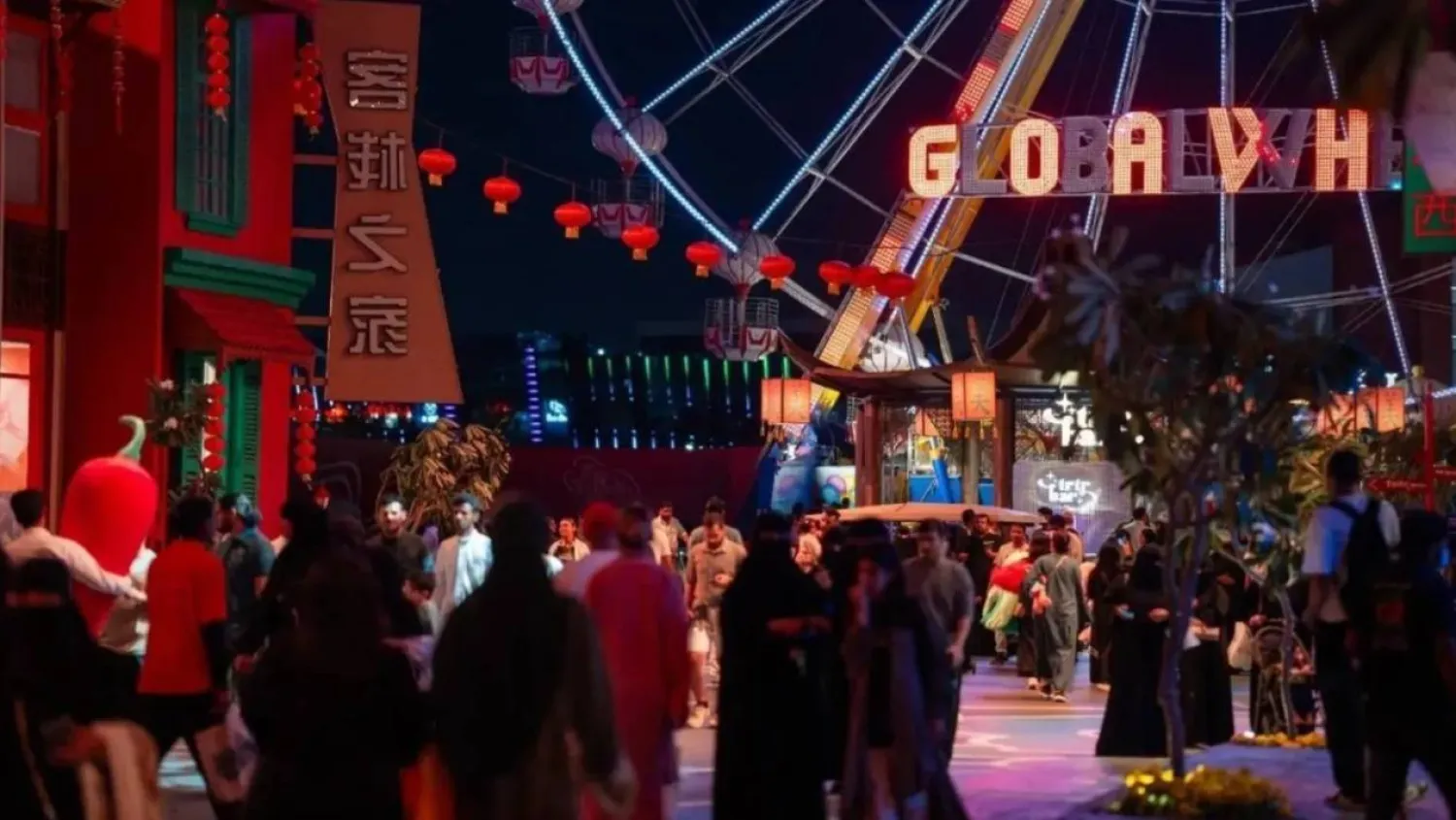

World Bank Says Tourism in Saudi Arabia is About ‘Opportunity, Culture and Progress’

A tourism and entertainment spot in Saudi Arabia. SPA
TT

World Bank Says Tourism in Saudi Arabia is About ‘Opportunity, Culture and Progress’

A tourism and entertainment spot in Saudi Arabia. SPA

The World Bank has said that until recently tourism in Saudi Arabia mainly concentrated on religious sites. Yet, that is rapidly changing through the partnership between the World Bank Group and the Kingdom.

Rafeef Abdelrazek, The World Bank’s Senior Urban Development Specialist, said that under Vision 2030, “tourism is becoming more than just travel – it’s about opportunity, culture, and progress.”

She added that WBG, which has long recognized the productive potential of the tourism sector in the Kingdom, “has been helping Saudi Arabia with its tourism strategy for a decade, providing technical assistance to stakeholders at national, regional, and local levels.”

“Together we have worked on advancing tourism’s potential while preserving natural assets and cultural heritage and avoiding overconsumption and negative effects on communities.”

Through targeted steps Saudi Arabia advanced in the ranking of the World Economic Forum’s Travel & Tourism Development Index (TTDI) to 33 out of 170 countries in 2021 from 43 in 2019, Abdelrazek stated.

The Bank continues to support the Ministry with capacity building and technical advisory on strategic issues such as sustainability, smart city and disruptive technologies in tourism, competitiveness, and resilience.

“Like other productive industries, tourism needs an enabling environment and resources –sufficient infrastructure, services and skilled people. While it can create opportunities, it can also affect livability like housing affordability, traffic, and pollution levels,” Abdelrazek said.

She added that “these factors should be balanced to ensure the sector remains productive and does not become a burden on authorities, residents, resources, and landscapes. It is with this foresight that the Royal Commission for AlUla (RCU), and Diriyah Gate Development Authority (DGDA) and Diriyah Company (DC) have been engaging the WBG.”

She stressed that AlUla’s stunning landscape is a crossroad of history. The Bank has been supporting the RCU on the revitalization of the region and the development of a sustainable tourism economy, contributing to economic growth and local jobs.

Recently, the Bank conducted an extensive baseline assessment of the development process with the RCU focusing on urban and spatial development, tourism and economic sustainability, cultural heritage, and social and environmental sustainability, she added.

Diriyah, known as the birthplace of the Kingdom, aims to be a sustainable city that is mixed use and walkable, Abdelrazek said. “DGDA and DC have been working with the WBG to implement sustainable and inclusive best practices and policies to enable heritage-based urban regeneration and economic growth through a people-centric approach.”

She stressed that Diriyah is targeting 180,000 new jobs to emerge from this large-scale development investment. With WBG technical assistance, DC has developed a job creation and local economic development (LED) framework with a recently launched job creation program that partners with universities and national programs.

“The program aims to bring the community and fresh graduates from the area into the job market through upskilling and training, and in turn bridge the skills gap and ensure there’s a ready local workforce for the tourism assets and offerings under development,” she stated.

“The first pilot successfully trained members from the local community culminating in internships and jobs at the Bab Samhan Hotel, a real estate asset developed by DC and leased out to the private sector to manage,” Abdelrazek added.



Egypt Reaffirms Solidarity With Gulf States Against Iranian Attacks

Egyptian President Abdel Fattah al-Sisi visits Qatar and meets Emir Sheikh Tamim bin Hamad Al Thani on Tuesday. Egyptian Presidency/Handout
TT

Egypt Reaffirms Solidarity With Gulf States Against Iranian Attacks

Egyptian President Abdel Fattah al-Sisi visits Qatar and meets Emir Sheikh Tamim bin Hamad Al Thani on Tuesday. Egyptian Presidency/Handout

Egypt renewed its solidarity with Gulf states in the face of repeated Iranian attacks as President Abdel Fattah al-Sisi made another Gulf tour on Tuesday, visiting Qatar and Bahrain.

Sisi said Egypt was making intensive efforts to preserve regional stability and reduce the current tensions and escalation, stressing the importance of resolving crises through peaceful means.

Sisi visited Bahrain on Tuesday, where he was received upon arrival in Manama by King Hamad bin Isa Al Khalifa and members of the Egyptian embassy.

The Egyptian president reiterated his country’s support for the security and stability of Bahrain and condemned what he described as unjustified attacks on the kingdom’s territory.

He said the attacks represented a flagrant violation of international law and a dangerous escalation threatening regional security and stability.

Egyptian presidential spokesperson Mohamed el-Shennawy said Sisi had renewed Egypt’s rejection of any attempt to undermine the security and stability of Bahrain, Gulf Cooperation Council states or other Arab countries.

Sisi affirmed Egypt’s full solidarity with those countries and said Cairo stood beside them in any measures they took to safeguard their sovereignty and protect their peoples’ resources.

“The security of Arab states is an extension of Egyptian national security,” he said.

During the visit, Sisi praised what he described as Bahrain’s wisdom under the leadership of King Hamad bin Isa in working to preserve regional stability.

The Bahraini king welcomed Sisi to what he called his second home and expressed appreciation for Egypt’s support for Bahrain and the close fraternal relations between the two countries.

He also praised Egypt’s support for the security and stability of GCC and Arab states, stressing the need for continued close consultation and coordination between Bahrain and Egypt to preserve regional peace and stability and confront common challenges.

The two leaders discussed ways to continue joint efforts to reduce regional tensions and restore stability.

Doha visit

Sisi also visited Doha on Tuesday and met Qatar’s Emir Sheikh Tamim bin Hamad Al Thani, offering his condolences over the death of Sheikh Hamad bin Khalifa.

Sisi prayed that Qatar would be protected from harm and continue to enjoy security, stability and prosperity under Sheikh Tamim’s leadership.

The Qatari emir expressed his deep appreciation for Sisi’s visit and condolences, highlighting the close ties between Egypt and Qatar and the historic bonds between their peoples.

He said he hoped the Egyptian and Qatari sides would continue working to develop their relations and expand cooperation in the coming period.

The Egyptian president has held several calls with Gulf leaders since the Iran war began on Feb. 28, during which he affirmed Egypt’s readiness to provide all possible forms of support to safeguard the security of the Gulf and the wider region.

Sisi visited Saudi Arabia and Bahrain in March to express solidarity and condemn Iranian attacks against Arab states.

He also made a Gulf tour that month that included the United Arab Emirates and Qatar, during which he reiterated the need for an immediate end to the escalation and a return to serious dialogue and diplomatic means to resolve outstanding regional disputes.

In a related development, Egypt on Tuesday strongly condemned missile attacks targeting Saudi Arabia, saying they represented a dangerous escalation that threatened the kingdom’s security and territorial integrity and undermined efforts to reduce tensions and maintain regional security and stability.

In a statement, the Egyptian Foreign Ministry said it completely rejected all attacks targeting the security and sovereignty of Saudi Arabia or threatening the security and stability of countries in the region.

It renewed Egypt’s full solidarity with the kingdom and said Cairo stood beside Riyadh in confronting any threat to its security or territorial integrity.

Foreign Ministry condemnations

In separate statements issued on Sunday, the Egyptian Foreign Ministry condemned Iranian attacks involving missiles and drones that targeted Oman, Jordan, Kuwait, Bahrain, Qatar and the United Arab Emirates.

Cairo described the attacks as a dangerous development that violated the sovereignty of Arab and Gulf states and further heightened regional tensions.

It stressed the need to prioritize political solutions and comply with international law in a manner that preserved regional security and stability.

Egypt also condemned on Tuesday the targeting of two Emirati oil tankers as they passed through the Strait of Hormuz.

It described the incident as a serious violation of international law and a direct threat to maritime security, navigational safety and the free movement of trade through one of the world’s most important waterways.

Egypt said it rejected all acts targeting civilian vessels and facilities or endangering maritime security and global energy supplies.

It called for compliance with international law and an end to practices that could inflame tensions and broaden the regional escalation.

Cairo also expressed full solidarity with the United Arab Emirates and said it stood beside the country in confronting any threat to its security and interests.


FII Institute Announces Landmark 10th Anniversary Edition in Riyadh

 FII Institute and its global network have helped facilitate and spotlight more than $250 billion in investments and initiatives - SPA
FII Institute and its global network have helped facilitate and spotlight more than $250 billion in investments and initiatives - SPA
TT

FII Institute Announces Landmark 10th Anniversary Edition in Riyadh

 FII Institute and its global network have helped facilitate and spotlight more than $250 billion in investments and initiatives - SPA
FII Institute and its global network have helped facilitate and spotlight more than $250 billion in investments and initiatives - SPA

The Future Investment Initiative (FII) Institute will celebrate its 10th anniversary with FII10, taking place in Riyadh from October 26 to 29, 2026, under the theme “The Power of Legacy.”

“The Power of Legacy is not simply about celebrating the past decade,” said FII Institute CEO Princess Dr. Maha Bint Mishari Bin Abdulaziz. “It is about understanding how the decisions, investments, and partnerships we make today will shape generations to come, SPA reported.

FII10 represents both a reflection on what has been achieved and a commitment to what comes next.”

While the program themes and agenda will be revealed in the months ahead, FII10 will address the most pressing issues shaping the future of investment and humanity, creating a platform for bold ideas, meaningful partnerships, and transformative action.

Marking a defining milestone for one of the world’s leading global platforms for investment, innovation, and international dialogue, FII10 will celebrate a decade of impact while exploring the forces that will shape the next era of investment, growth, and global cooperation.

As artificial intelligence, technological disruption, shifting geopolitical dynamics, and evolving capital markets reshape economies and societies at unprecedented speed, the need for long-term thinking and trusted global dialogue has never been greater.

Since its inception, FII Institute and its global network have helped facilitate and spotlight more than $250 billion in investments and initiatives, demonstrating the power of convening capital, ideas, and leadership to create meaningful impact.

Today, FII Institute has grown into a year-round global platform, supported by more than 45 strategic partners from around the world and a thriving international membership community comprising thousands of members representing business, government, investment, academia, and innovation ecosystems across every region.


How Saudi Arabia's Buffers Shielded Its Economy from the Fires of War

Saudi flags fly along a street in the Saudi capital. (Asharq Al-Awsat)
TT

How Saudi Arabia's Buffers Shielded Its Economy from the Fires of War

Saudi flags fly along a street in the Saudi capital. (Asharq Al-Awsat)

At a time when the conflict between the United States and Iran plunged the region into one of its most severe periods of tension in years, closed the Strait of Hormuz, and drove up oil prices as well as shipping and insurance costs, Fitch Ratings reaffirmed Saudi Arabia's sovereign credit rating at A+ with a Stable outlook. The decision raises a fundamental question: How did the Saudi economy manage to preserve its financial resilience in the midst of the crisis?

The answer extends well beyond higher oil prices. It lies in a comprehensive framework of reforms built up over many years, including the creation of financial and logistical buffers, the diversification of funding sources, the development of energy infrastructure, and the strengthening of the private sector, all of which have made the economy far more capable of absorbing external shocks.

As the international financial and business community awaits the International Monetary Fund Executive Board's comprehensive report on its 2026 Article IV Consultation with Saudi Arabia, due later this month, data released by the Fund's mission, together with figures from the Saudi Central Bank and the Kingdom's balance of payments, reveal how the Saudi economy weathered one of the most challenging geopolitical tests in recent years.

Alternative Arteries

When Tehran announced the closure of the Strait of Hormuz, through which roughly one-fifth of global oil trade passes, many expected Gulf oil exports to face widespread disruption. Saudi Arabia, however, had been preparing for such a scenario for decades by building an integrated system to safeguard its oil exports without relying solely on the Strait.

That strategy included expanding the East-West Pipeline, which transports crude oil to the Red Sea ports of Yanbu, increasing its carrying capacity, establishing strategic storage facilities in key markets around the world, and maintaining the world's largest spare oil production capacity.

When the crisis erupted, this system enabled Saudi Aramco to continue honoring its export commitments. The company increased supplies through the pipeline, drew on its overseas inventories, and utilized part of its spare production capacity, limiting the decline in shipments and mitigating the impact of the Strait's closure on Saudi oil exports.

Why Did Inflation Remain Low?

Although the conflict pushed up global oil prices as well as shipping and marine insurance costs, the transmission of those shocks to the domestic economy remained limited compared with many other economies.

This was largely due to efficient supply chains, the stability of the Saudi riyal's peg to the US dollar, ample strategic reserves of essential goods, and fiscal and monetary policies that helped preserve market stability.

As a result, the International Monetary Fund expects average inflation in Saudi Arabia to reach only about 2.3 percent in 2026, a level that remains low compared with most advanced and emerging economies.

Current Account Surplus

At first glance, the conflict might have been expected to weaken Saudi Arabia's external accounts. Yet first-quarter data told a different story. The Kingdom recorded a $4.1 billion current account surplus, its first in nearly two years following a prolonged period of deficits, compared with a $8.2 billion deficit in the fourth quarter of 2025.

This turnaround resulted from a twofold equation. Although oil export volumes declined because of the disruption, higher prices offset much of the shortfall. At the same time, imports slowed amid shipping disruptions, while the travel balance improved as spending by visitors within the Kingdom increased.

An aerial view of the Saudi capital. (Reuters)

The Tools That Reinforced Stability

The current account surplus was only one factor underpinning the economy's resilience. Saudi Arabia also entered the crisis equipped with a range of financial strengths that helped preserve stability. The data point to several key pillars:

Reallocation of External Assets: Investment operations by government entities and Saudi Arabia's sovereign wealth fund recorded a sharp increase in the liquidation of foreign assets during the first quarter of 2026. Assets sold or repatriated totaled approximately $22.6 billion, up from just $4 billion in the fourth quarter of 2025, an increase of 460 percent. This sharp rise reflects an accelerated redeployment of external liquidity into the domestic economy.

Stable Reserve Assets: While government entities significantly increased the monetization of foreign assets, the Saudi Central Bank's reserve assets remained robust and stable, standing at SAR 1.862 trillion (approximately $496.5 billion) at the end of the first quarter, up 9.32 percent year over year. This illustrates an efficient allocation of financing roles. Rather than drawing directly on the Kingdom's official foreign exchange reserves, government entities chose to rebalance their investment portfolios and monetize part of their overseas assets to finance domestic projects, strengthening Saudi Arabia's financial buffers and reinforcing the foundations of its sovereign creditworthiness.

Sovereign Creditworthiness: These indicators in the balance of payments and the level of reserve assets were directly reflected in the Kingdom's sovereign credit profile. In their 2026 reviews, the major global credit rating agencies reaffirmed the structural strength of the Saudi economy and its high degree of resilience to regional geopolitical shocks. Fitch Ratings and S&P Global Ratings both affirmed Saudi Arabia's A+ rating with a Stable outlook, while Moody's maintained its Aa3 rating.

According to the agencies' reports, these ratings are fundamentally supported by the Kingdom's substantial net foreign sovereign assets and financial reserves, which provide external payment coverage well above that of similarly rated countries. They also reflect the growing resilience of the non-oil economy and Saudi Arabia's ability to secure alternative sources of financing for Vision 2030 projects without drawing down its core monetary reserves.

Proactive Financing: Before the crisis escalated, the government leveraged its strong credit profile and relatively low public debt, equivalent to 34.4 percent of GDP, to secure $13 billion in external financing during the first quarter, according to the National Debt Management Center's announcement in January. An additional $14 billion was raised through international sukuk issuances, commercial loans, and bond offerings by major Saudi banks and corporations, which also benefited from the Kingdom's strong sovereign credit standing. As a result, total external borrowing by Saudi residents reached $27 billion.

Investment Flows: The investment sector likewise reflected the depth of global institutional confidence. Contrary to the capital flight often seen during periods of geopolitical tension, the Saudi stock market experienced no wave of foreign investor withdrawals. Instead, nonresident investors remained net buyers of Saudi equities, recording net purchases of $2.4 billion during the first half of 2026, bringing their total holdings to more than $110 billion. This was accompanied by exceptional resilience in foreign direct investment, which posted $1.8 billion in net inflows during the first quarter alone, supported by growing confidence in the ongoing economic and legislative reforms under Vision 2030.

Banking Sector: The strength of the banking sector also enhanced the economy's ability to weather the period of heightened tensions. Saudi banks maintained high levels of capitalization and liquidity while private sector lending continued to expand, ensuring businesses and projects retained access to financing despite turbulence in global markets. The International Monetary Fund considers the soundness of the financial sector to have been one of the principal pillars supporting economic stability throughout the crisis.

A participant at a conference organized by the International Monetary Fund in cooperation with the Ministry of Finance in Riyadh. (Photo by Turki Al Aqili)

What Has Vision 2030 Changed?

Perhaps the best way to measure the success of Saudi Arabia's reforms is to ask a hypothetical question: What if the current crisis had occurred before the launch of Vision 2030?

At that time, the economy depended far more heavily on oil revenues, while financing tools and liquidity management options were considerably more limited. The contribution of non-oil activities was also substantially smaller than it is today.

Today, however, the economy rests on a far more diversified foundation, encompassing non-oil revenues, domestic and international debt markets, a strong banking sector, the Public Investment Fund, substantial foreign reserves, and advanced logistics infrastructure. Together, these elements have provided the Kingdom with a robust financial safety net, enabling it to absorb the shock without experiencing major disruptions.

The IMF's Assessment

The International Monetary Fund's 2026 mission concluding statement documented the Saudi economy's positive indicators, affirming that the economy has demonstrated a high degree of adaptability and a clear capacity to withstand external shocks. The Fund attributed this resilience to the structural strength of the national economy, the continued development of logistics infrastructure, and the ongoing expansion and diversification of the Kingdom's productive base and non-oil sectors.

At the same time, the IMF lowered its forecast for Saudi Arabia's economic growth in 2026 to 1.7 percent, a reduction of 0.3 percentage points from its previous projection. However, it raised its forecast for 2027 to 5.5 percent.

The downward revision does not reflect underlying weakness in the Saudi economy as much as it reflects the impact of the regional environment. Despite recording growth of approximately 3 percent in the first quarter of 2026, continued geopolitical tensions and higher shipping and insurance costs could weigh on the pace of economic activity during the remainder of the year.

Challenges Remain

Despite the strength of Saudi Arabia's financial and logistical buffers, a prolonged period of regional tensions could pose additional challenges. These include higher transportation and insurance costs, slower global trade, the possible postponement of certain investments, and mounting pressure on major development projects should energy and logistics costs remain elevated. For this reason, the International Monetary Fund emphasizes that continued structural reforms, a greater role for the private sector, and stronger productivity will remain essential to sustaining growth in the years ahead.

Resilience Has Become Economic Policy

The experience of recent months shows that what Saudi Arabia faced was not merely an oil crisis or a passing geopolitical test. Rather, it was a comprehensive test of the economy's ability to absorb and manage shocks. The convergence of a current account surplus, the redeployment of external assets, the preservation of strong foreign reserves, the securing of low-cost financing, and the continued inflow of investment demonstrates that sovereign liquidity management has become an integral part of a comprehensive economic strategy rather than a temporary response to crises.

As the International Monetary Fund's final report is awaited, the message emerging from Saudi Arabia's experience is clear: investment in economic resilience has become one of the Kingdom's most important sovereign assets, and perhaps its most valuable one, in a world increasingly marked by geopolitical and economic shocks.