


G20 Risk Watchdog Warns of Potential for Financial Market Crash 

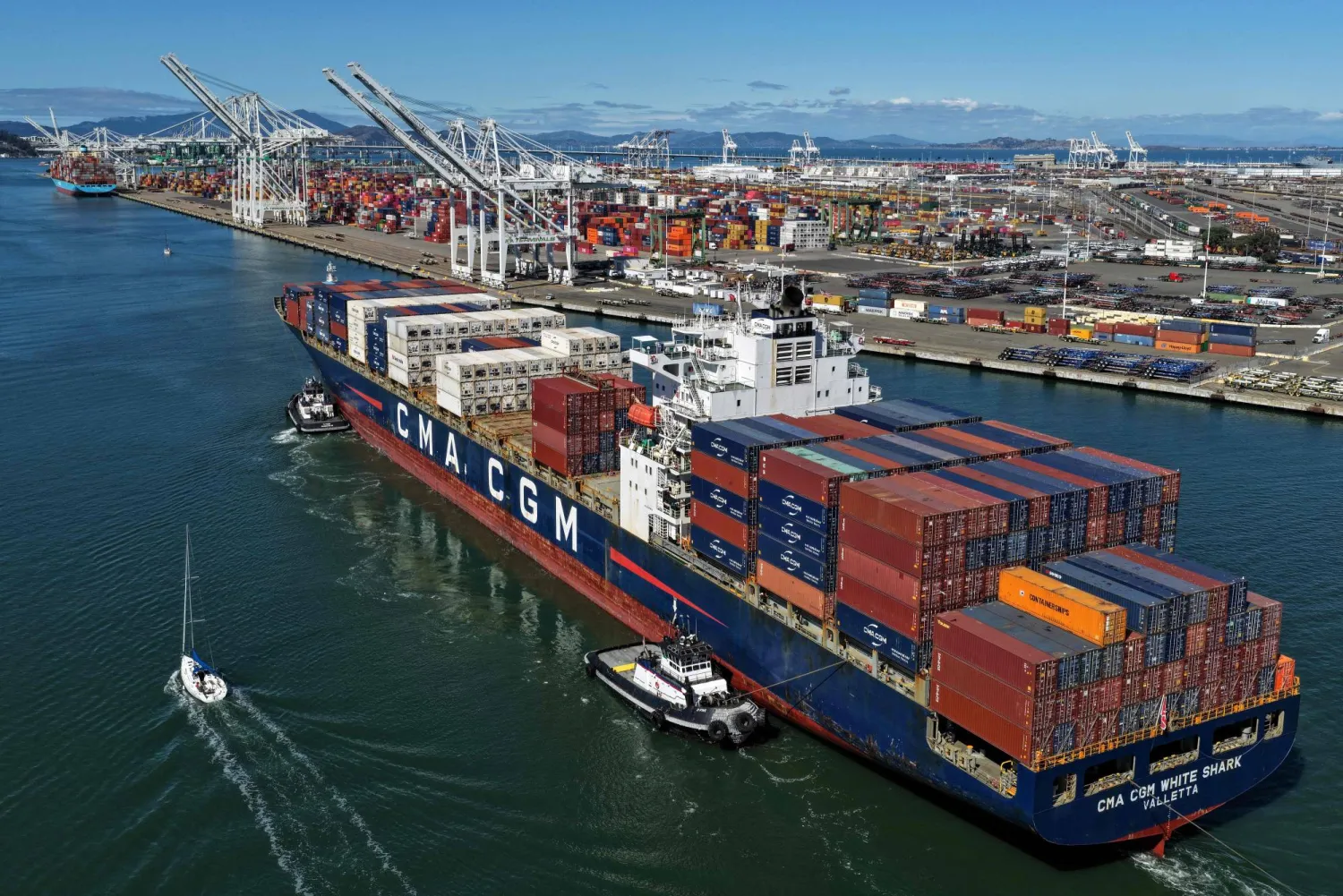
In an aerial view, a container ship arrives at the Port of Oakland on October 10, 2025 in Oakland, California. (Getty Images/AFP)
TT

G20 Risk Watchdog Warns of Potential for Financial Market Crash 

In an aerial view, a container ship arrives at the Port of Oakland on October 10, 2025 in Oakland, California. (Getty Images/AFP)

The latest surge in global share prices and other assets has left markets susceptible to a crash given the current uncertain economic and geopolitical backdrop, the G20's risk watchdog said on Monday.

Financial Stability Board (FSB) Chair, Andrew Bailey, told G20 ministers in a letter the elevated risks made maintaining multilateral cooperation crucial. Not just to prevent crises, but also to support sustainable economic growth.

"While most jurisdictions have seen a rebound in financial markets in recent months, valuations could now be at odds with the uncertain economic and geopolitical outlook, leaving markets susceptible to a disorderly adjustment," the letter dated October 8 and published ahead of G20 meetings in Washington this week, said.

That warning came just days before US President Donald Trump's threat of "massive" new tariffs on China in retaliation for Beijing tightening rare earth restrictions triggered Wall Street's biggest fall in nearly six months.

Bailey also pointed to the ongoing rise in sovereign debt levels, adding that vulnerabilities in the financial system remain high.

"The need for global standards and cooperation therefore remains abundantly clear," the letter said.

In response to the elevated risks, the FSB, which groups central banks and financial regulators from the Group of 20 Economies, will "pivot" its focus, Bailey said.

It will shift it from policy development to monitoring and facilitating the implementation of agreed global financial reforms, which have not been completely achieved.

"The effectiveness of these measures depends on their timely, consistent and comprehensive implementation across all jurisdictions," Bailey said.



Indonesia Plans a Bill to Redenominate Rupiah Currency

Stacks of Indonesian rupiah banknotes equivalent to 800 million USD is displayed in the lobby of the Attorney General's Office building during the handover of assets recovered from the corruption case involving the provision of Crude Palm Oil export facilities, in Jakarta on October 20, 2025. (Photo by BAY ISMOYO / AFP)
TT

Indonesia Plans a Bill to Redenominate Rupiah Currency

Stacks of Indonesian rupiah banknotes equivalent to 800 million USD is displayed in the lobby of the Attorney General's Office building during the handover of assets recovered from the corruption case involving the provision of Crude Palm Oil export facilities, in Jakarta on October 20, 2025. (Photo by BAY ISMOYO / AFP)

Indonesia's finance ministry said it is planning a new bill to redenominate the rupiah in an effort to improve economic efficiency, maintain stability and improve the currency’s credibility.

"The bill on redenomination is a carryover draft bill that is planned to be finalized in 2027," a ministry regulation reviewed on Saturday showed.

The plan to slash zeroes from the currency has been discussed in past years, Reuters reported.

The last time the government submitted a draft to Parliament was in 2013. It proposed slashing three zeroes of the rupiah banknote, but the draft was shelved. It was not immediately clear how many digits would be removed under the latest redenomination plan.


China’s Central Bank Buys Gold for 12th Straight Month

A woman wearing a face mask walks on a street in Beijing, China, 06 November 2025.  EPA/WU HAO
A woman wearing a face mask walks on a street in Beijing, China, 06 November 2025. EPA/WU HAO
TT

China’s Central Bank Buys Gold for 12th Straight Month

A woman wearing a face mask walks on a street in Beijing, China, 06 November 2025.  EPA/WU HAO
A woman wearing a face mask walks on a street in Beijing, China, 06 November 2025. EPA/WU HAO

China's central banks added gold to their reserves for the 12th consecutive month in October, data from the People's Bank of China showed on Friday.

China's gold reserves increased from 74.06 to 74.09 fine troy pounds at the end October. This compares to 72.8 million ounces a year ago, a 1.8% increase.

According to the PBOC, the value of gold held by the PBOC was $297.21 billion at the end last month compared with $283.29 billion in September.

Gold spot was just above $4000 per ounce Friday, as the safe haven gained traction in the face of a weaker US dollar and as bets grew on the Federal Reserve cutting rates by December.

Gold prices were also supported by concerns over a long-term US shutdown, and the uncertainty surrounding US tariffs, according to Reuters.

In October, gold reached a new record of $4,381 an ounce.

Beijing has cut the value added tax for gold purchased via the Shanghai Gold Exchange or the Shanghai Futures Exchange.

China still hasn't released official data on gold production for the last quarter, so analysts are left without an update.

The PBOC halted their 18-month gold buying spree in May 2024. The central bank began buying gold again in November of that same year.


Oil Heads for Second Weekly Loss on Lingering Oversupply Concerns

Panamanian-flagged Caribbean Glory vessel with a capacity of 2 million barrels of oil, loads crude oil at a TLU (Tanker Loading Unit) in the Gulf of Morrosquillo, operated by Cenit, owned by Ecopetrol, in Covenas, Colombia October 1, 2025. REUTERS/Nelson Bocanegra
TT

Oil Heads for Second Weekly Loss on Lingering Oversupply Concerns

Panamanian-flagged Caribbean Glory vessel with a capacity of 2 million barrels of oil, loads crude oil at a TLU (Tanker Loading Unit) in the Gulf of Morrosquillo, operated by Cenit, owned by Ecopetrol, in Covenas, Colombia October 1, 2025. REUTERS/Nelson Bocanegra

Oil prices rose on Friday but remained on track for a second consecutive weekly loss after three days of declines on worries about excess supply and slowing US demand.

Brent crude futures rose 50 cents, or 0.8%, to $63.88 a barrel by 1243 GMT. US West Texas Intermediate crude was up 51 cents, or 0.9%, at $59.94.

Both benchmarks are poised to register weekly declines of more than 1.5% as leading global producers raise output.

"The market continues to weigh a rising oil surplus against mixed macro," said SEB analyst Ole Hvalbye, Reuters reported.

An unexpected US inventory build of 5.2 million barrels reignited oversupply fears this week, said IG Markets analyst Tony Sycamore.

US crude stocks rose more than expected on higher imports and reduced refining activity while gasoline and distillate inventories declined, the Energy Information Administration said on Wednesday.

Concern over the effects of the longest government shutdown in US history also pressured oil prices.

The Trump administration has ordered flight reductions at major airports because of a shortage of air traffic controllers while private reports are pointing to a weaker US labor market in October.

The Organization of the Petroleum Exporting Countries and its allies, known collectively as OPEC+, decided on Sunday to increase output slightly in December. However, the group also paused further increases for the first quarter of next year, wary of a supply glut.

European and US sanctions on Russia and Iran, meanwhile, are disrupting supplies to the world's largest importers, China and India, providing some support for global markets.

China's crude imports in October rose 2.3% from September and were up 8.2% from a year earlier at 48.36 million tons, customs data showed, against a backdrop of high utilisation rates at refineries in the world's largest oil importer.

"China kept importing elevated amounts of crude in October," UBS analyst Giovanni Staunovo said. "That move keeps those barrels away from the OECD, where inventories remain low."

Swiss commodities trader Gunvor said on Thursday that it had withdrawn its proposal to buy the foreign assets of Russian energy company Lukoil after the US Treasury called it Russia's "puppet" and signalled that Washington opposed the deal.

"Gunvor scrapping its Lukoil assets purchase suggests the US is maintaining its maximum pressure campaign against Russia, and potential strict enforcement of sanctions on Rosneft and Lukoil," said Vandana Hari at oil market analysis provider Vanda Insights.