


Saudi Arabia Moves to Integrate Stablecoins, Expand Real Estate Funds

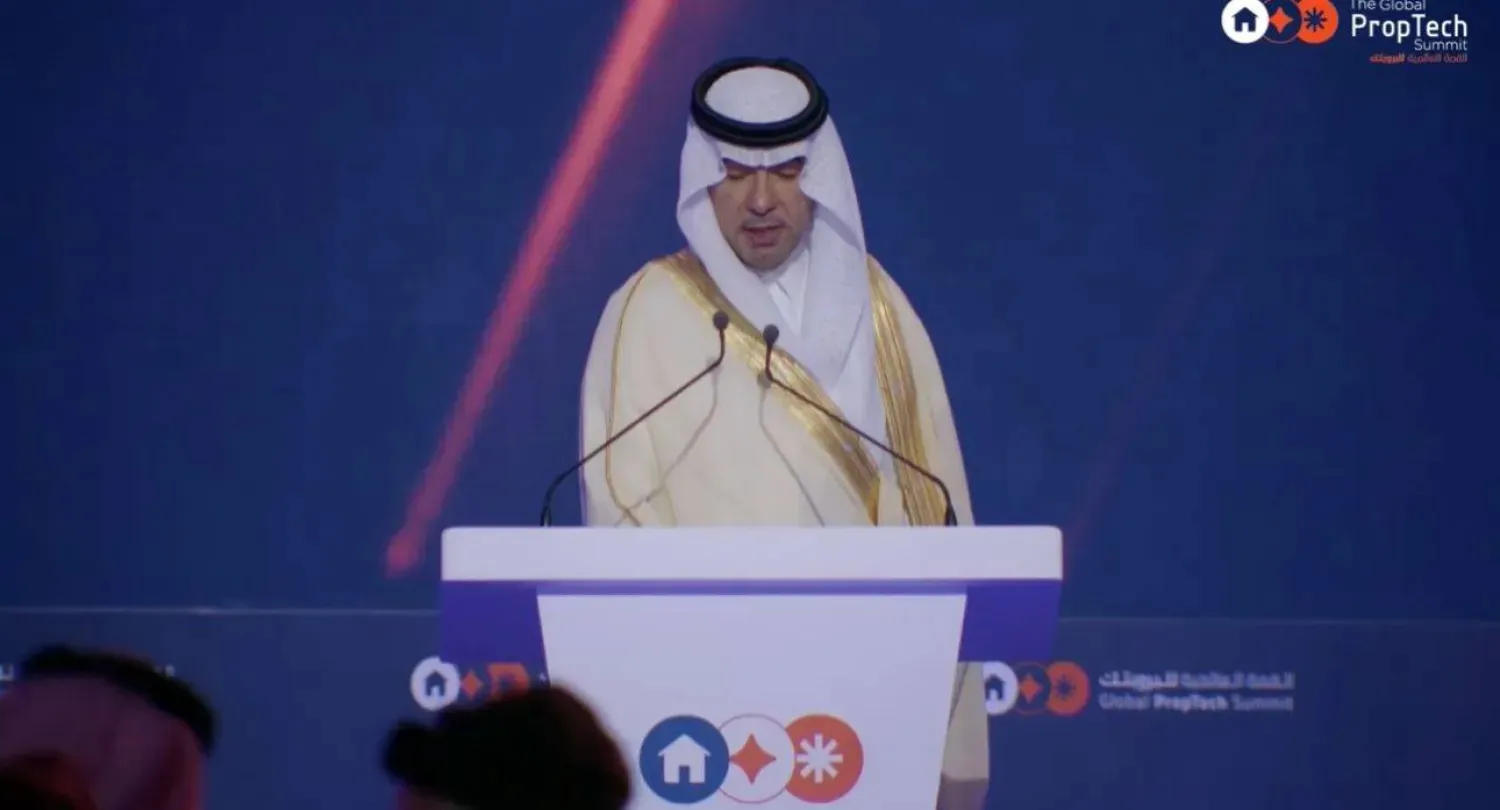
Saudi Minister of Municipal, Rural Affairs and Housing Majid Al-Hogail delivers a speech at the World PropTech Summit 2025 in Riyadh (General Real Estate Authority)
TT

Saudi Arabia Moves to Integrate Stablecoins, Expand Real Estate Funds

Saudi Minister of Municipal, Rural Affairs and Housing Majid Al-Hogail delivers a speech at the World PropTech Summit 2025 in Riyadh (General Real Estate Authority)

Saudi Arabia is taking steps to strengthen its global position in investment and finance by integrating stablecoins into its financial system and expanding the real estate funds sector, a move designed to increase capital inflows and facilitate both domestic and foreign investment.

“We look forward to introducing stablecoins in the Kingdom soon, in partnership with the Capital Market Authority and the Central Bank,” said Saudi Minister of Municipal, Rural Affairs and Housing Majid Al-Hogail during his speech at the World PropTech Summit 2025 in Riyadh on Sunday.

Al-Hogail stressed that stablecoins have become a new foundation for the movement of value worldwide. Their total market capitalization has exceeded SAR 1.125 trillion (USD 300 billion), representing nearly three-quarters of all blockchain-based transactions globally.

He explained that the world is witnessing a redefinition of financial infrastructure. Over the past year, transactions involving cryptocurrencies and stablecoins reached SAR 33.75 trillion, including SAR 4.5 trillion in September 2025 alone, according to data from the Bank for International Settlements.

This transaction volume, he noted, is about five times greater than that of PayPal and approaches the global settlement capacity of Visa.

Al-Hogail pointed out that major financial hubs such as Dubai, Singapore, New York, London, and Zurich have already established regulatory frameworks for stablecoins, thanks to their high transparency, low friction, and automated transaction verification.

He further highlighted the importance of building secure and efficient financial settlement systems, saying: “We look forward to seeing stablecoins in the Kingdom soon, in partnership with the Capital Market Authority and the Central Bank. We also aim to expand participation in the regulatory sandbox to keep the Saudi real estate market among the most innovative and competitive in the world.”

Meanwhile, Chairman of the Capital Market Authority Mohammed Al-Kuwaiz said that the size of real estate funds in the Kingdom is approaching SAR 300 billion. This makes them the largest investment class within the asset management sector, which has surpassed SAR 1.2 trillion. He added that these funds cover commercial, residential, office, and land assets.

Al-Kuwaiz also highlighted the growing role of the debt market as a modern financing tool in the real estate sector. Debt issuances have exceeded SAR 35 billion (USD 9.3 billion) domestically and internationally, surpassing equity financing.

As for venture capital, the volume of managed assets reached approximately SAR 5 billion (USD 1.3 billion), while investment in proptech remains limited at SAR 35 million (USD 9.3 million).

Canada and Germany Sign Landmark LNG Deal to Boost Europe’s Energy Security

Canadian Prime Minister Mark Carney arrives to Parliament Hill in Ottawa on Tuesday, May 26, 2026. (Sean Kilpatrick/The Canadian Press via AP)
TT

Canada and Germany Sign Landmark LNG Deal to Boost Europe’s Energy Security

Canadian Prime Minister Mark Carney arrives to Parliament Hill in Ottawa on Tuesday, May 26, 2026. (Sean Kilpatrick/The Canadian Press via AP)

Canada and Germany’s state-owned energy firm SEFE said on Wednesday they had reached what Canada described as its first LNG supply ‌deal with a European buyer, underscoring efforts on both sides to diversify energy trade amid global market uncertainty.

Earlier, sources familiar with the matter said Canada will sign the agreement with Germany’s SEFE group — Securing Energy for Europe — for supplies from the proposed Ksi Lisims export facility on the coast of British Columbia, the AP reported.

The sources spoke on condition of anonymity because they were not authorized to speak ahead of Wednesday’s announcement.

Up to 1 million metric tons of liquefied natural gas per year will be exported under the agreement.

The agreement comes as Canadian Prime Minister Mark Carney has set a target of doubling non-US trade within a decade.

Energy-rich Canada currently exports almost all of its oil and gas to the United States.

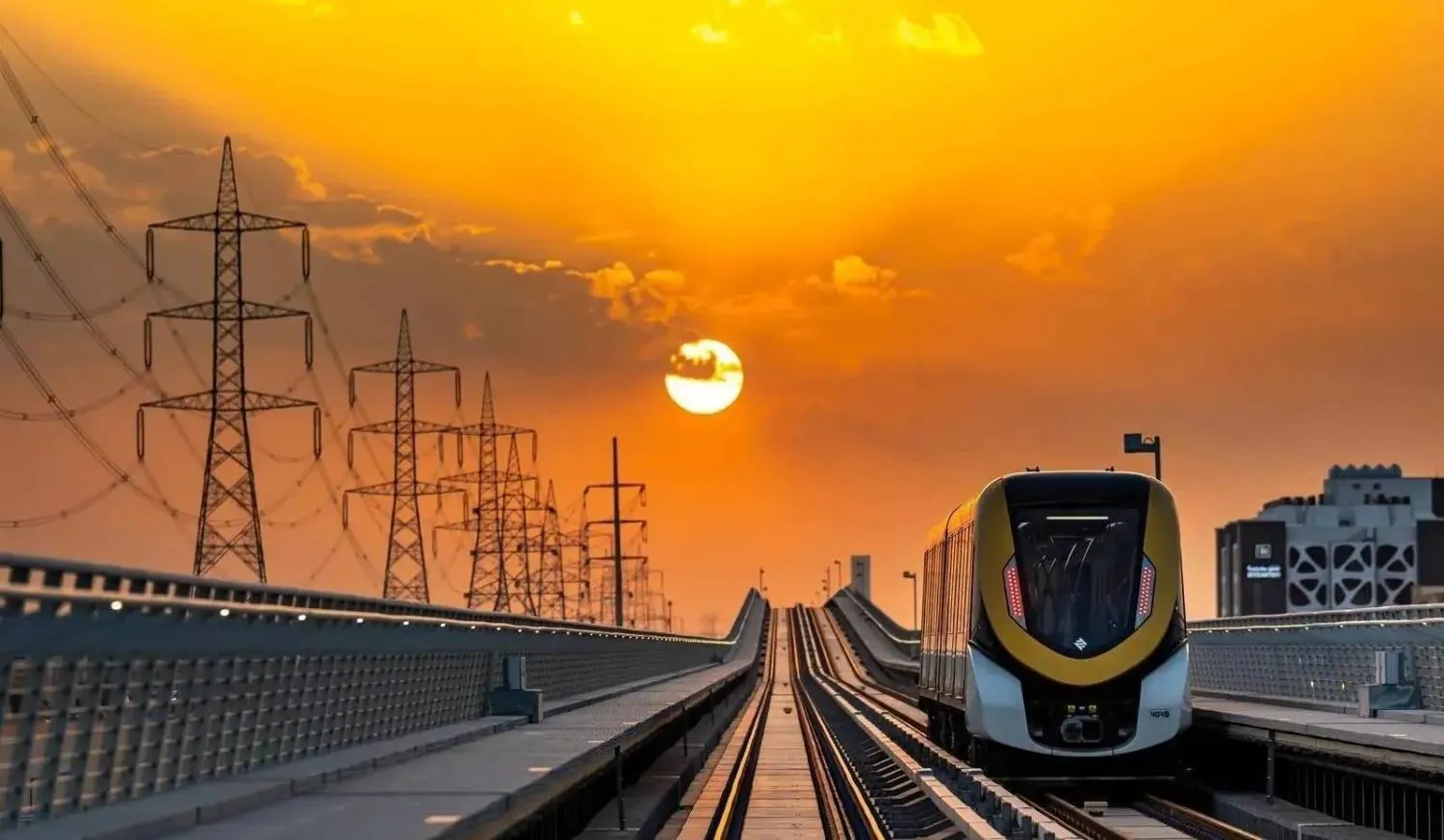
British Columbia Premier David Eby said earlier on Tuesday that a deal to supply Canadian LNG to Germany would mark a key step towards the partners behind the Ksi Lisims project taking a final investment decision on the CA$10 billion ($7.2 billion) plant and export terminal.

Ksi Lisims, located on Pearse Island near the border with Alaska, has secured the permits it requires, but the consortium has yet to make a final investment decision that would allow construction to begin.

Eby said securing long-term offtake agreements with buyers is a crucial step before the project can move forward.

The partnership has already signed supply agreements with a subsidiary of Shell and France’s TotalEnergies.

SEFE is a major German energy company. It was previously the German subsidiary of Gazprom before Berlin nationalized it in 2022 as Europe struggled with an energy crisis tied to the war in Ukraine.

After European countries backed Ukraine, Russia sharply reduced natural gas supplies, triggering an energy crisis that fueled inflation and forced some factories to scale back or shut down because of soaring energy prices.

Before the war, Germany was one of the largest importers of Russian gas in Europe.

Germany continues to rely on LNG imports as part of its efforts to replace Russian pipeline gas supplies.


BP's Ousted Chairman: 'I Won't Let a False Narrative Go Undisputed'

FILE PHOTO: Vehicles drive past a BP (British Petroleum) petrol station in Liverpool, Britain, February 7, 2023. REUTERS/Phil Noble/File Photo
TT

BP's Ousted Chairman: 'I Won't Let a False Narrative Go Undisputed'

FILE PHOTO: Vehicles drive past a BP (British Petroleum) petrol station in Liverpool, Britain, February 7, 2023. REUTERS/Phil Noble/File Photo

Albert Manifold on Wednesday hit out after being sacked as chairman of British energy giant BP, saying that he would "not allow a false narrative to go unchallenged.”

"I dispute entirely the characterization of my conduct," he said in an emailed statement to the Financial Times and other financial media, one day after BP unexpectedly removed him after less than one year in the role.

The group cited "serious concerns" about governance standards, oversight and conduct at the company.

"I was removed without warning and without explanation," Manifold said.

"During my time as chairman I worked to drive genuine change at BP -- cutting costs, challenging excess, and holding the organization to higher standards."

According to anonymous sources quoted by the Financial Times, other directors viewed Manifold as too aggressive and believed he exerted excessive control over the company.

Amanda Blanc, a senior independent director, had said that while he "helped bring a welcome focus and pace to BP's transformation,” the board had "been surprised and disappointed to learn of governance oversight and conduct issues it deems unacceptable.”

BP faced a shareholder backlash at its annual meeting last month as investors rejected a resolution that would have reduced its climate reporting requirements.

Some of the investor discontent was directed at Manifold, with 82 percent of shareholders voting in favor of his election -- below the near-unanimous support typically received by directors.

He had become chairman in October, replacing Helge Lund, who departed after a major reset at the British energy giant that saw it shelve carbon-reduction targets to focus on fossil fuel output.


Türkiye Curbs Russian Urals Imports as Prices Rise

Crude oil tanker near the port city of Nakhodka, Russia (Reuters)
TT

Türkiye Curbs Russian Urals Imports as Prices Rise

Crude oil tanker near the port city of Nakhodka, Russia (Reuters)

Türkiye is set to cut imports of Russia's Urals crude from Baltic and Black Sea ports this month to the lowest level in almost one and a half years, according to data from LSEG, Kpler and trading sources.

Türkiye is the largest importer of seaborne Russian crude in the Mediterranean and the world's third-largest after India and China. It mainly buys Urals and only occasionally other grades.

Kpler data shows Türkiye's Urals imports are expected to average about 161,000 barrels per day this month, down from 189,000 bpd on ⁠average in January-April ⁠and 302,000 bpd in May 2025.

The drop comes despite reduced crude supply from the Gulf, which has pushed global oil prices higher.

"Türkiye is used to Russian crude at a significant discount. They were not prepared to buy the grade at such high price levels," a ⁠trader at a major Western firm said.

Two other sources said the fall in Urals shipments to Türkiye in April and May was driven by stronger demand in Asia, particularly in India. "There was not much available in the market,” one trader said.

As a result, seaborne Urals exports to Türkiye are set to fall to their lowest since at least January 2025, LSEG data shows.

The decline is partly offset by higher Turkish imports of ⁠CPC Blend from ⁠the Caspian region, a grade sourced from both Russia and Kazakhstan depending on the cargo.

Following the outbreak of the Iran war, the premium for Urals on a delivered ex-ship basis in Indian ports rose as high as $8 per barrel against Brent, before easing to about $2 to $4 per barrel.

That remains well above levels seen before the conflict.

Russia increased crude loadings from its western ports by around 9% in the first half of May to 2.35 million to 2.4 million bpd from about 2.2 million bpd on average in April.