



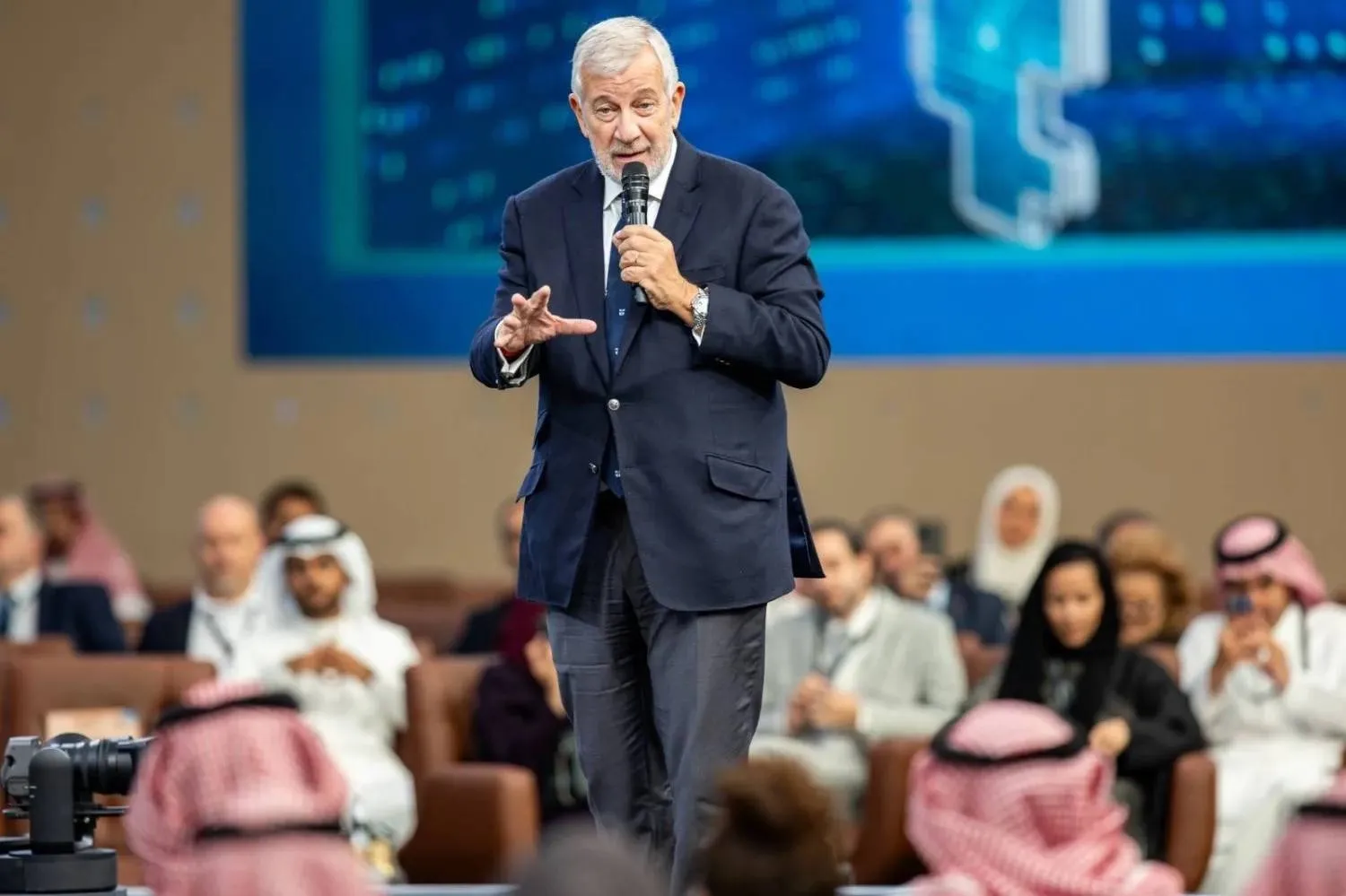

The closing sessions of the ninth edition of the Future Investment Initiative (FII) showcased the accelerating growth of Saudi Arabia’s investment landscape, highlighting a 20% surge in the asset management sector over the past year.
The expansion was driven by a broader range of investment categories and a growing investor base, pushing total assets under management to about 1.2 trillion riyals ($320 billion) amid a clear boom in private credit, real estate, and venture capital.
Discussions at the event also reflected the major strides made by the Saudi financial market, now ranked among the world’s top 10 by market capitalization, which has exceeded $2.7 trillion.
The diversity of investment instruments and the growing number of listed companies have reinforced the Kingdom’s position as an open regional financial hub and a key player in driving global liquidity and investment flows.
Delivering the closing remarks at FII9, Richard Attias, Chairman of the Executive Committee and Acting CEO of FII Institute, reflected on the foresight and leadership of Crown Prince Mohammed bin Salman, whose realization of Vision 2030 is heralding an era of collective prosperity unlike any seen before.
Attias called on the world to continue this “global movement” toward shared prosperity, noting that the journey will continue over the next five years with upcoming editions in Tokyo, Miami, Milan, and Istanbul.
He described the 10th anniversary of the FII as a “landmark milestone” in the evolution of what has become the world’s leading platform for dialogue on the future of the global economy.
Innovation in Focus
On the final day of the conference, Yazeed Al-Humied, Deputy Governor and Head of Middle East and North Africa Investments at the Public Investment Fund (PIF), said total assets under management in Saudi Arabia have topped 1.1 trillion riyals ($293 billion).
He stressed that PIF plays a key role in boosting national economic growth and developing the local capital market.
The progress and transformation we’ve seen in recent years have truly been remarkable, he said, revealing that PIF paid 700 million riyals in fees to registered asset managers in 2024.
Al-Humied said the Fund’s efforts focus on four main priorities: promoting product innovation, developing emerging asset managers, attracting major global firms, and nurturing local talent.
He noted that PIF continues to develop innovative products and solutions across various asset classes and financial markets to expand investor options.
For example, through investment in the BlackRock Middle East Infrastructure Fund, the Kingdom attracted 75 billion riyals ($20 billion) in foreign direct investment, which was deployed into key projects including Aramco’s gas pipeline, he said.
He also pointed to the launch of new exchange-traded funds (ETFs) aimed at attracting more foreign investment and diversifying institutional portfolios, adding that the Fund has introduced three ETFs over the past two years across eight global markets.
Growth in Fixed-Income Instruments
Mohammed El-Kuwaiz, Chairman of the Saudi Capital Market Authority (CMA), confirmed that the asset management sector grew by around 20% last year, driven by diversified products and investment classes that support projects and market development despite a relatively stable capital market.
El-Kuwaiz said the growth in managed assets stemmed from the variety of investment sectors and products, including real estate, fixed-income instruments, and venture capital, the fastest-growing segments within Saudi Arabia’s asset management industry.
He added that the expanding investor base also helped drive growth, with third-party managed assets now outpacing those linked to PIF, bringing total managed assets this year to about 1.2 trillion riyals ($320 billion).
He noted that the private credit sector recorded the fastest growth rate among all investment types, doubling its managed assets over the past year, reflecting rising demand for credit and emerging opportunities, particularly in low-risk, yield-generating segments.
Private credit assets now stand at around 5 billion riyals ($1.3 billion), a relatively modest portion of the total 1.2 trillion-riyal asset management industry, he added.
Expanding the Investor Base
Meanwhile, Khalid Al-Hussan, CEO of the Saudi Stock Exchange “Tadawul Group,” said the Saudi market has become one of the world’s top 10 by market capitalization, with listed equities now exceeding $2.7 trillion and more than 380 companies traded.
The market also features a robust bond market and multiple fund platforms.
He said this transformation underscores the sweeping structural shift taking place in the Saudi market toward diversification and global integration, in line with Vision 2030.
Before Vision 2030, the market focused solely on local equities with fewer than 100 listed companies and a market cap below $400 billion, Al-Hussan said, adding that the market now is a diverse, open, and globally connected marketplace with integrated equity and debt channels.”
He added that the market’s regulatory framework continues to evolve under Vision 2030, expanding access, deepening liquidity, and introducing new alternative assets and investment opportunities.
Foreign ownership in the Saudi market has now exceeded $110 billion, with participation from more than 4,400 qualified foreign investors, he said, underscoring ongoing efforts to broaden the investor base and enhance market accessibility.


