


China’s Exports Suffer Worst Downturn Since Feb as Tariffs Hammer US Demand 

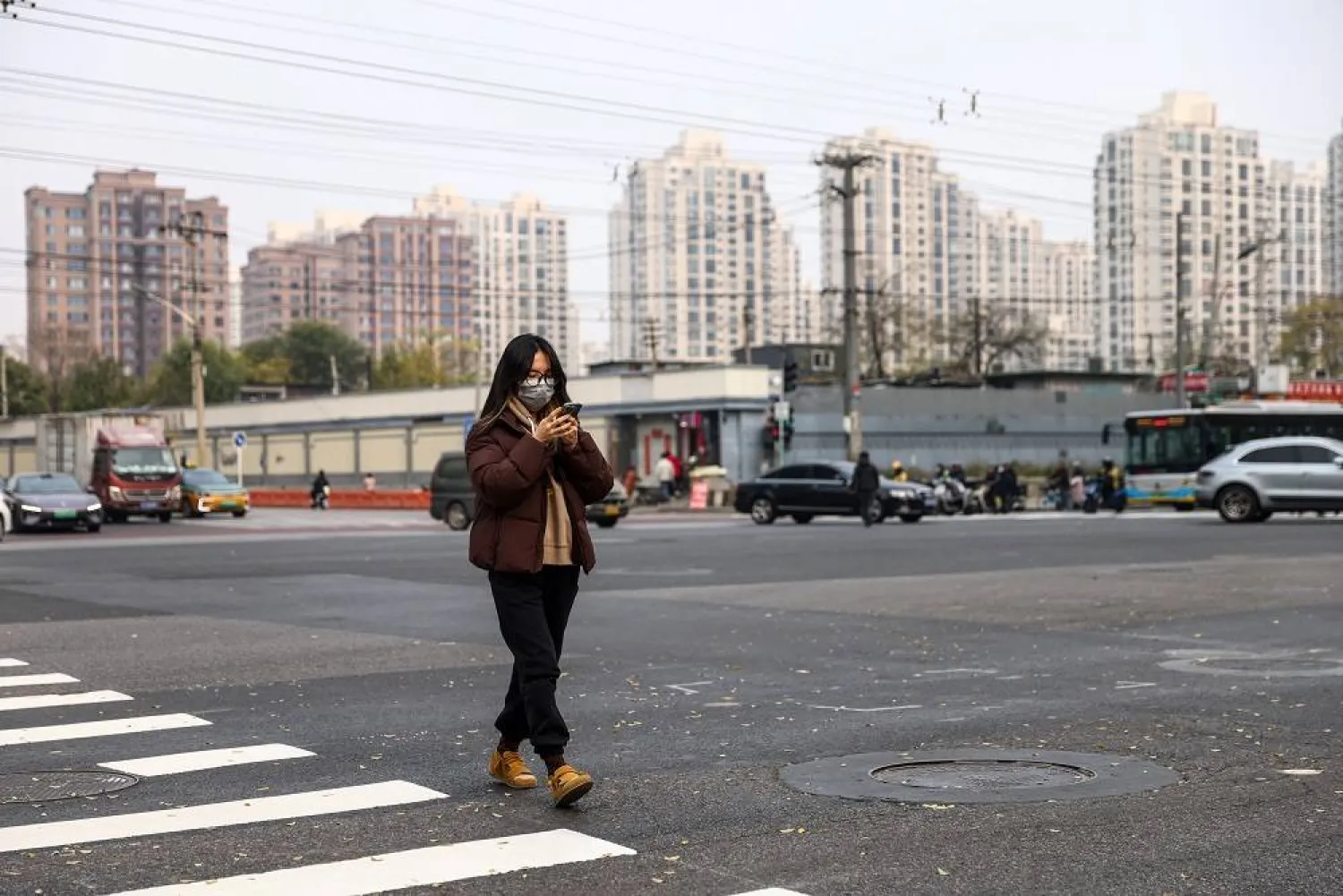
A woman wearing a face mask walks on a street in Beijing, China, 06 November 2025. (EPA)
TT

China’s Exports Suffer Worst Downturn Since Feb as Tariffs Hammer US Demand 

A woman wearing a face mask walks on a street in Beijing, China, 06 November 2025. (EPA)

Chinese exports unexpectedly fell in October after months of front-loading US orders to beat President Donald Trump's tariffs, in a stark reminder of the manufacturing juggernaut's reliance on American consumers even as it woos buyers elsewhere.

The world's second-largest economy has pushed hard to diversify its export markets since Trump won last November's presidential election, bracing for a resumption of the trade war that dominated his first term in office, and seeking closer trade ties with Southeast Asia and the European Union.

But no other country comes close to matching China's sales of more than $400 billion in goods to the US each year, a loss that economists estimate has cut China's export growth by around 2 percentage points, or roughly 0.3% of GDP.

The October customs data on Friday underlined that point, as China's outbound shipments shrank 1.1%, the worst performance since February, reversing from an 8.3% rise in September, and missing a forecast for 3.0% growth in a Reuters poll.

"Last month's weakness was driven by a broad-based slowdown in shipments to non-US markets," said Zichun Huang, China economist at Capital Economics, adding that while shipments to the US fell sharply, a rise in exports to transit hubs such as Vietnam suggested producers were still trying to beat the duties and move inventory to the US.

To be sure, the latest figure was affected by a high base from last October when exports grew at their fastest pace in over two years, as factories began rushing inventory to major markets in anticipation of Trump making a comeback to the White House.

However, most analysts largely agreed Chinese manufacturers had pushed as many goods into the world as possible for now.

"Exports through Vietnam to the US will decelerate once the frontloading is over, and we're there. So I think it's going to be much tougher for China in the fourth quarter, which means it's going to be tougher in the first half of 2026 as well," said Alicia Garcia-Herrero, chief economist for the Asia-Pacific at Natixis.

Chinese exports to the US tumbled 25.17% year-on-year, the data showed, while those to the European Union and Southeast Asian economies - big trading partners with whom policymakers have sought to bolster ties amid tariff tensions with Washington - grew by just 0.9% and 11.0%, respectively.

"I think the PMI was already warning us that Chinese exports cannot continue to grow forever, and it's not only because of the US but because the global economy is slowing," Garcia-Herrero said.

The official purchasing managers' index fell to a six-month low, with factory owners reporting a marked drop in new export orders.

Woei Chen Ho, economist at UOB Singapore, said the US-China trade truce struck by the two leaders earlier this month would stabilize the outlook in the near-term, but forecast that "both countries will try to reduce their interdependence and we're going to see the US share of China trade, especially exports, drop."

Tensions between China and the US unexpectedly spiked in early October, after Trump threatened 100% levies on Chinese goods in response to Beijing dramatically expanding its export controls on rare earth metals.

The mood eased after Trump met with Chinese President Xi Jinping last week in South Korea, when both sides agreed to extend their trade truce - previously scheduled to expire on November 10 - for another year.

Still, US-bound Chinese goods will face an average tariff rate around 45%, above the 35% level that some economists say wipes out Chinese manufacturers' profit margins.

China's trade surplus came in at $90.07 billion in October, from $90.45 billion a month prior, and missing a forecast of $95.6 billion.

WEAK DOMESTIC DEMAND

Insufficient domestic demand remains a hurdle, however.

That was underlined by the data on imports, which expanded at their slowest pace in five months, up 1.0% compared to 7.4% growth in September and a 3.2% forecast rise.

Officials said last month China will aim to raise the percentage of household consumption of GDP "significantly" over the next five years, after a key conclave of the ruling Communist Party's Central Committee mapped out economic and policy goals for 2026-2030.

"Now that export momentum has weakened, China may need to rely more on domestic demand," said Zhang Zhiwei, chief economist at Baoyin Capital Management. "Fiscal policy is expected to be more aggressive in the first quarter of 2026."

China's imports of soybeans, crude oil, and iron ore rose in October from a year earlier, with record soybean purchases from South America attributed to crushers rushing to buy before potential price spikes in Brazil caused by missed China-US shipments, while energy imports were supported by competitive prices.

But copper purchases, key to the construction sector, dropped as consumers shied away from restocking due to high prices for the metal and as a prolonged property downturn continues to crimp demand.



UN's FAO: World Food Prices Fall for 3rd Month in November

FILE PHOTO: Prices of food are displayed at the Borough Market in London, Britain May 22, 2024. REUTERS/Maja Smiejkowska/File Photo
TT

UN's FAO: World Food Prices Fall for 3rd Month in November

FILE PHOTO: Prices of food are displayed at the Borough Market in London, Britain May 22, 2024. REUTERS/Maja Smiejkowska/File Photo

World food commodity prices fell for a third consecutive month in November, with all major staple foods except cereals showing a decline, the United Nations' Food and Agriculture Organization said on Friday.

The FAO Food Price Index, which tracks a basket of globally traded food commodities, averaged 125.1 points in November, down from a revised 126.6 in October and the lowest since January, Reuters reported.

The November average was also 2.1% below the year-earlier level and 21.9% down from a peak in March 2022 following Russia's full-scale invasion of Ukraine, the FAO said.

The agency's sugar price reference fell 5.9% from October to its lowest since December 2020, pressured by ample global supply expectations, while the dairy price index dropped 3.1% in a fifth consecutive monthly decline, reflecting increased milk production and export supplies.

Vegetable oil prices fell 2.6% to a five-month low, as declines for most products including palm oil outweighed strength in soy oil.

Meat prices declined 0.8%, with pork and poultry leading the decrease, while beef quotations stabilized as the removal of US tariffs on beef imports tempered recent strength, the FAO said.

In contrast, the FAO's cereal price benchmark rose 1.8% month-on-month. Wheat prices increased due to potential demand from China and geopolitical tensions in the Black Sea region, while maize prices were supported by demand for Brazilian exports and reports of weather disruption to field work in South America.

In a separate cereal supply and demand report, the FAO raised its global cereal production forecast for 2025 to a record 3.003 billion metric tons, compared with 2.990 billion tons projected last month, mainly due to increased wheat output estimates.

Forecast world cereal stocks at the end of the 2025/26 season were also revised up to a record 925.5 million tons, reflecting expectations of expanded wheat stocks in China and India as well as higher coarse grain stocks in exporting countries, the FAO said.


World Bank Forecasts 4.3% Growth for Saudi Economy, Supported by Non-Oil Activities

The Saudi flag. Asharq Al-Awsat
TT

World Bank Forecasts 4.3% Growth for Saudi Economy, Supported by Non-Oil Activities

The Saudi flag. Asharq Al-Awsat

The World Bank affirmed on Thursday that Saudi Arabia's economy has gained significant momentum for 2026-2027, driven by robust non-oil sector expansion under Vision 2030.

In a report titled “The Gulf’s Digital Transformation: A Powerful Engine for Economic Diversification,” the World Bank said growth is expected to persist in the Kingdom with non-oil activities expanding by 4% on average.

The report lifted its forecast for Saudi Arabia’s real GDP growth to 3.8% in 2025 compared to a 3.2% last October.

The forecast represents a major upward revision affirming the resilience of the Saudi economy and its ability to absorb external volatility. It also indicates growing confidence in the effectiveness of ongoing structural reforms within Vision 2030.

On Tuesday, Saudi Arabia approved its state budget for 2026, projecting real GDP growth of 4.6% in 2026.

The report showed that in the Kingdom, economic momentum is strengthening across oil and non-oil sectors with non-oil activities expanding by 4% on average and oil activities expanding by 5.4%, bringing overall real growth to an average of 4.3%.

It said oil activities grew by 1.7% y/y in the first half of 2025, benefiting from the phase-out of OPEC+ voluntary production cuts starting in April 2025.

At the financial level, the fiscal deficit between 2025 and 2027 is projected to remain at an average of 3.8% of GDP.

Meanwhile, the current account balance slightly recovered, settling at 0.5% of GDP in the first quarter of 2025 against -2.6% in the second half of 2024.

The report said real GDP growth remained stable at 3.6% y/y in the first half of 2025, thanks to the stabilization of the oil sector and sustained non-oil growth.

Non-oil activities expanded by 4.8% over the period, in line with the performance of 2024 while non-oil growth was driven by the wholesale, retail trade, restaurants, and hotels sector (+7.5% y/y in the first half of 2025), consolidating the role of hospitality and tourism as engines of economic diversification.

The report also indicated that oil activities grew by 1.7% y/y in the first half of 2025, benefiting from the phase-out of OPEC+ voluntary production cuts starting in April 2025.

These trends are expected to persist in 2026-2027, with non-oil activities expanding by 4% on average and oil activities expanding by 5.4%, bringing overall real growth to an average of 4.3%.

Job Market and Inflation
The report said the labor market mirrors the stabilization of the real economy and is rapidly becoming more inclusive to women.

Overall unemployment decreased by 0.7 point between the first quarter of 2024 and the first quarter of 2025, with the female unemployment rate dropping from 11.8% to 8.1% over the same period.

Also, inflation remained low and stable in Saudi Arabia, settling at an average of 2.2% in the first half of 2025.

However, price increases have been concentrated in the housing and utilities sector as rental prices have become a key issue, largely because rental supply has failed to match demographic growth, especially in Riyadh.

While this reflects the government’s efforts to dynamize the Kingdom’s urban centers, the price increases prompted the government to freeze rental prices in Riyadh for the next five years, as anticipated increases in housing supply should help control rental prices.

Finally, the report said Saudi Arabia’s external position stabilized in the second half of 2024 and the first quarter of 2025.

Although net foreign direct investment has remained relatively stable, the World Bank has emphasized that recent changes in foreign ownership regulations in Saudi Arabia, coupled with continued structural reforms, are positive steps to attract greater flows of foreign direct investment (FDI).


Visa Relocates European Headquarters to London's Canary Wharf

FILE PHOTO: A drone view of London's Canary Wharf financial district, two days before the government presents its critical pre-election budget, in London, Britain March 3, 2024. REUTERS/Yann Tessier/File Photo
TT

Visa Relocates European Headquarters to London's Canary Wharf

FILE PHOTO: A drone view of London's Canary Wharf financial district, two days before the government presents its critical pre-election budget, in London, Britain March 3, 2024. REUTERS/Yann Tessier/File Photo

Visa is relocating its European headquarters to London's Canary Wharf financial district, the Canary Wharf Group said on Friday.

The firm is leasing 300,000 square feet on a 15-year term at One Canada Square, and is set to relocate from Paddington in the summer of 2028, the group added.

Canary Wharf Group, which runs the wider financial district and is co-owned by QIA and Canada's Brookfield, was hit hard by the pandemic-induced fall in office demand.

The area is now enjoying a rebound as more firms push staff to return to office, Reuters reported.

"Canary Wharf continues to attract a diverse range of global businesses. We are delighted to welcome Visa who have chosen the Wharf for their European headquarters as the best location to support their business growth," Shobi Khan, Canary Wharf Group CEO, said.

JPMorgan Chase last week unveiled a plan to build a tower in the Canary Wharf financial district that will contribute 9.9 billion pounds ($13.2 billion) over six years to the local economy - including the cost of construction - and create 7,800 jobs.

Qatar's sovereign wealth fund is revising plans for a revamp of its HSBC skyscraper in the east London district to retain more office space, Reuters reported in November.