
Saudi Arabia is cementing its position as a rising global power in the market for critical minerals, declaring the sector the “third pillar” of its national economy.
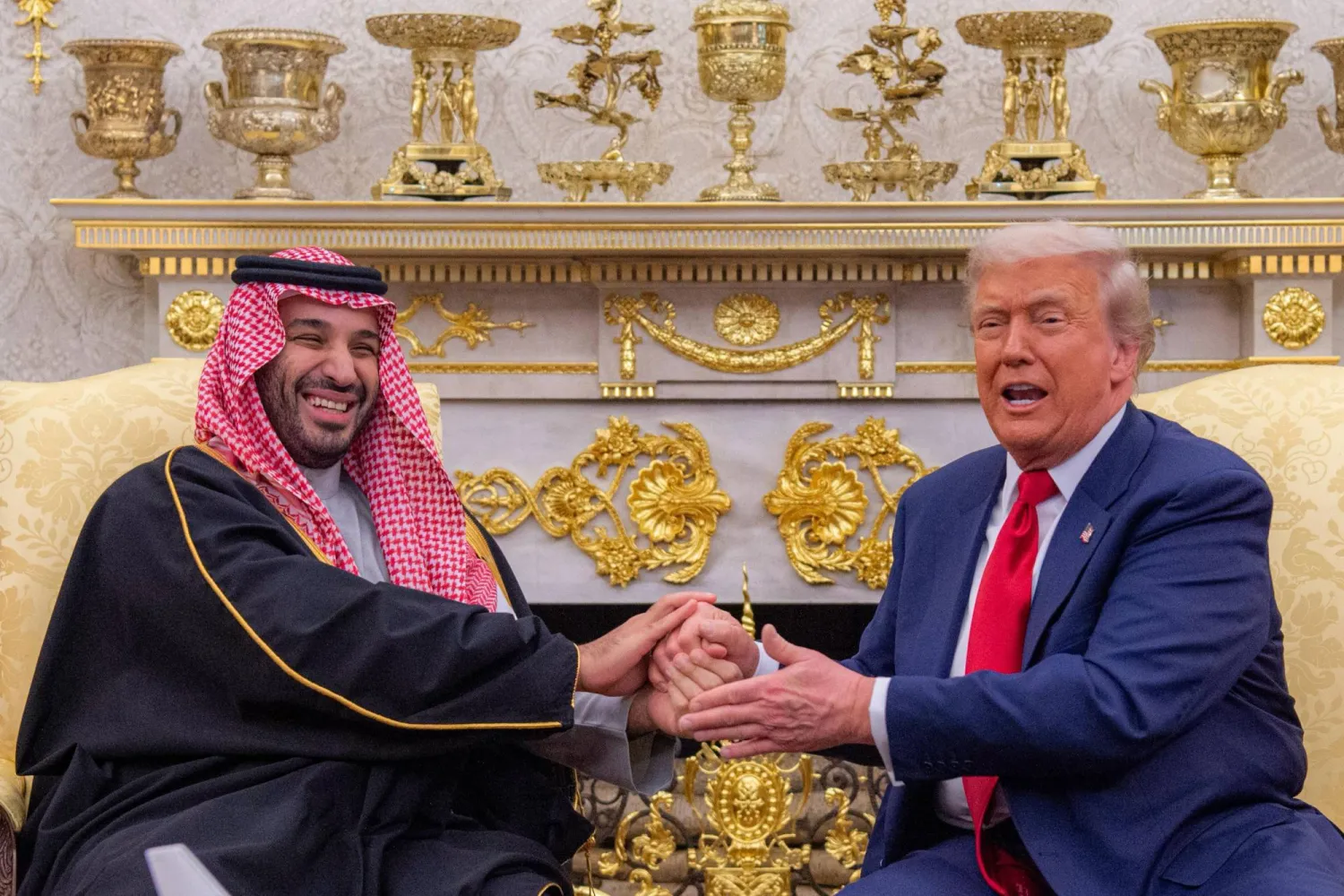
The strategy centers on converting an estimated 2.5 trillion dollars in mineral wealth into geopolitical and economic leverage, placing the Kingdom at the center of Washington’s attention and on the agenda of talks between Crown Prince Mohammed bin Salman, Prime Minister of Saudi Arabia, and US President Donald Trump.
In a sign of deepening cooperation, US Energy Secretary Chris Wright said in Riyadh earlier this year that the United States and Saudi Arabia were close to signing a preliminary agreement for cooperation in energy and civilian nuclear technology.
He said the partnership would focus on building a commercial nuclear energy industry in the Kingdom.
These issues top the agenda, with reports saying the Crown Prince and Trump are expected to sign a framework for nuclear cooperation during their White House meeting.
This comes as the discussion on traditional and future energy security intersects with the security of supply chains for critical minerals.
Saudi Energy Minister Prince Abdulaziz bin Salman has repeatedly said the Kingdom is pressing ahead with its national civilian nuclear program, including the construction of its first nuclear power plant.
He said the goal is to diversify the energy mix, support sustainable development and secure clean supplies while adhering to the highest safety standards, cooperating with the International Atomic Energy Agency and building national expertise.
The grand strategy: inside and outside the Kingdom
Saudi Arabia’s mining and minerals sector is emerging as one of the world’s most attractive, offering a unique competitive edge through low costs, abundant raw materials, a flexible incentive structure and access to competitive financing.
The sector plays a critical role in global economic development, from providing basic infrastructure to enabling green technologies such as electric vehicles and solar panels. In the Kingdom, domestic demand for metals exceeds local supply, highlighting significant opportunities for import substitution.
The economic transformation under way is also expected to sharply increase demand from resource-intensive manufacturing sectors, including industrial machinery, electrical equipment and automotive production.
Key sector targets:
• 75 billion dollars in expected contribution to GDP by 2035
• 1.3 trillion dollars in potential mineral resources, recently revised to 2.5 trillion dollars
• 48 minerals identified across the Kingdom
• Saudi Arabia is the world’s fourth-largest importer of metal products
• Imports targeted to fall to 11.5 billion dollars by 2035 from 19 billion dollars
The broad strategy
Saudi Arabia is pursuing two parallel tracks to anchor this transformation. The domestic track aims to position the Kingdom as a major regional mining hub through a new mining law, generous incentives and 75 billion dollars in new investments over the next decade.
This has attracted extensive partnerships with global firms such as the US companies Alcoa and Mosaic.
Alcoa has been a key partner of Saudi Arabian Mining Company (Maaden) in the aluminum sector, participating in the integrated aluminum project at Ras Al Khair Industrial City, one of the largest and most efficient complexes in the world. Mosaic, the world’s biggest producer of phosphate fertilizers and potash, partnered with Maaden to establish the Kingdom’s giant phosphate project through Maaden Waad Al Shamal Phosphate Company.
The external track is led by the Kingdom’s new investment arm, Manara Minerals, a joint venture launched in 2023 between the Public Investment Fund and Maaden.
Manara aims to acquire stakes in copper, nickel, lithium and rare earth assets worldwide to secure long-term supplies for domestic industries, including electric vehicles and defense.
It has already made major moves, including a 10 percent, 2.5-billion-dollar stake in Brazil’s Vale Base Metals, and has entered advanced negotiations to acquire stakes in copper assets in Zambia and Pakistan’s Reko Diq project.
Analysts say Manara’s international investments provide geographic diversification that reduces the risk of supply disruptions caused by political instability or sanctions.
Saudi Energy Minister Prince Abdulaziz bin Salman and Wright exchange documents related to their strategic cooperation memorandum.
The strategic partnership
Securing supply chains for critical minerals has become a strategic meeting point with the United States. The relationship evolved into a structured partnership in 2025 through a series of high-level meetings.
In April 2025, Secretary Wright visited Riyadh and met Prince Abdulaziz bin Salman for broad strategic talks that laid the groundwork for cooperation in energy and infrastructure.
This was followed by the signing of a strategic cooperation memorandum between the Saudi ministries of energy and industry and minerals in May 2025.
Saudi Industry and Mineral Resources Minister Bandar Alkhorayef then traveled to Washington in August for talks with Wright on strengthening mining cooperation.
In October, Alkhorayef met US Deputy Energy Secretary James Danly in Riyadh, where the two sides reaffirmed plans to deepen collaboration in supply chains, processing and advanced technologies. The US delegation was invited to the Future Minerals Forum 2026.
US Interior Secretary Doug Burgum also met Saudi energy and business leaders in Riyadh earlier this month, writing on X that the goal was to ensure America’s independence in minerals.
The summit between the Crown Prince and the US president underscores the Kingdom’s shift from a traditional oil producer to an investment and geopolitical heavyweight with the ability to secure global strategic resources.
Cooperation on critical minerals, alongside progress in civilian nuclear energy, is expected to strengthen the long-term strategic partnership between Riyadh and Washington.