


UK Defines Rules for Business with Syria as Firms Explore Post-sanctions Market

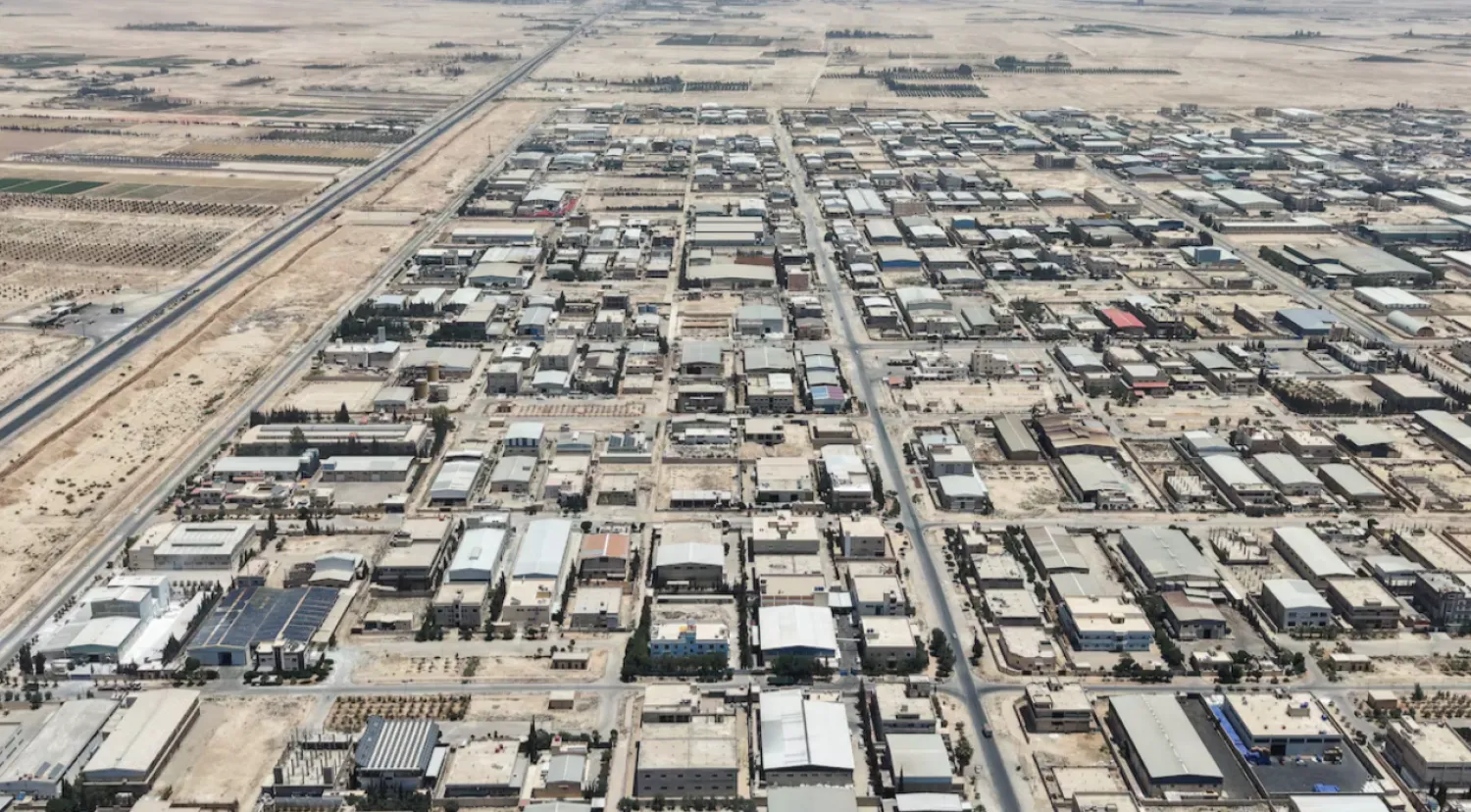
A drone view shows Adra industrial city in Damascus, Syria, July 10, 2025. REUTERS/Stringer
TT

UK Defines Rules for Business with Syria as Firms Explore Post-sanctions Market

A drone view shows Adra industrial city in Damascus, Syria, July 10, 2025. REUTERS/Stringer

Britain on Tuesday set out rules for companies and banks considering investing in Syria, responding to growing interest from businesses after Western powers rolled back sanctions to support reconstruction. Syria is seeking to rebuild after the collapse of former president Bashar al-Assad last December, which brought to an end his family's decades-long rule. His overthrow has prompted Britain and the United States to ease sanctions and advise companies considering investing, Reuters reported.

In guidance published on Tuesday, the British government noted the commercial opportunities and said it is supportive of "businesses investing, trading, and operating in Syria, where that activity is compliant with UK legislation, and where the end destination is Syria."

It stressed compliance with sanctions law, export controls and anti-money laundering rules. It also outlined licensing routes, including general licences and humanitarian exemptions.

The government warned of high risks, however, including corruption and sanctions evasion. In April, Britain lifted sectoral sanctions, reopening energy, transport and finance, while Washington terminated its Syria sanctions program in June under new waivers. The EU has also eased measures tied to reconstruction.

A World Bank report predicted the cost of Syria's reconstruction at $216 billion, saying the figure was a "conservative best estimate".



Aramco Transfers Full Ownership of PRefChem to Malaysia’s Petronas

FILE PHOTO: Saudi Aramco logo and stock graph are seen through a magnifier displayed in this illustration taken September 4, 2022. REUTERS/Dado Ruvic/Illustration/File Photo
TT

Aramco Transfers Full Ownership of PRefChem to Malaysia’s Petronas

FILE PHOTO: Saudi Aramco logo and stock graph are seen through a magnifier displayed in this illustration taken September 4, 2022. REUTERS/Dado Ruvic/Illustration/File Photo

Saudi Aramco and Petroliam Nasional Berhad (PETRONAS) have announced the signing of an agreement for the transfer of Aramco’s equity stakes in Pengerang Refining Company Sdn. Bhd. and Pengerang Petrochemical Company Sdn. Bhd. (collectively, “PRefChem”), located within the Pengerang Integrated Complex, Pengerang, Johor in Malaysia to PETRONAS.

“Subject to customary closing conditions, the transfer will make PRefChem a wholly owned and operated subsidiary of the PETRONAS Group,” a joint statement said Monday.

“Full ownership of PRefChem enables Petronas to further enhance operational alignment and flexibility across its value chain while harnessing its international supply network and integrated operating model to support continued reliability across varying market conditions,” said the statement.

“For Aramco, the transaction supports the strategic optimization of its downstream portfolio, providing the company with additional flexibility to pursue investments aligned with its downstream strategy,” it added.

The transaction was concluded on mutually agreed terms, reflecting the evolving strategic priorities of both parties. Aramco and Petronas will actively explore commercial arrangements following the transfer, including coordinated crude oil supply, technology exchange, and integrated product distribution, building on their multi-decade partnership.

The two companies said they will remain focused on delivering operational excellence and sustained value for stakeholders and the communities they serve.


India Turns to Latin American, African Oil After Hormuz Disruption

 A worker holds a nozzle to pump fuel in a vehicle at a petrol pump in New Delhi, India, May 19, 2026. (Reuters)
A worker holds a nozzle to pump fuel in a vehicle at a petrol pump in New Delhi, India, May 19, 2026. (Reuters)
TT

India Turns to Latin American, African Oil After Hormuz Disruption

 A worker holds a nozzle to pump fuel in a vehicle at a petrol pump in New Delhi, India, May 19, 2026. (Reuters)
A worker holds a nozzle to pump fuel in a vehicle at a petrol pump in New Delhi, India, May 19, 2026. (Reuters)

Indian refiners turned to imports from Latin America and Africa after supplies from the Middle East were disrupted as the Israeli-US war on Iran restricted shipping in the Strait of Hormuz, data provided by trade sources show.

Refiners in the world's third-largest oil importer and consumer bought most of their crude from the nearby Middle East until the war broke out at the end of February.

In April and May, Indian refiners raised imports ‌from Venezuela, Brazil, Angola ‌and Nigeria to make up the shortfall, as well ‌as ⁠continuing to buy ⁠Russian oil, preliminary data from Kpler show.

Last month, India skipped purchases from Iraq as exports were halted, while it received Iranian oil after a gap of seven years following a temporary waiver granted by Washington to help stabilize global oil prices.

New Delhi reduced imports from Russia by about 29.4% from March to 1.6 million barrels per day as Nayara Energy shut its 400,000-bpd ⁠refinery for maintenance, the data showed.

However, in May, ‌India is due to get about ‌1.9 million bpd of Russian oil and about 41,000 bpd of Iraqi oil, preliminary data ‌from Kpler showed.

Overall, India imported 4.57 million bpd oil in ‌April, unchanged from March, but down 15.5% from a year earlier, the data showed.

Imports from the United Arab Emirates rebounded in April to 669,700 bpd from 230,600 bpd in March while intake of Saudi Arabian oil stayed at about 619,500 bpd, ‌the data showed.

The UAE and Saudi Arabia are the only Gulf producers with pipelines that export crude bypassing ⁠the Strait ⁠of Hormuz, while Kuwait, Iraq, Qatar, and Bahrain rely on the waterway for shipments.

The share of the Organization of the Petroleum Exporting Countries, including the UAE as its member during the month, in India's imports rose to 45.2% in April from about 30% in March, the data showed. The UAE exited OPEC in May.

Higher imports from the UAE helped arrest a decline in the Middle East's share of India's imports, while the share of Russian oil declined to about 35% from nearly 50%.

Russia remained India's top oil supplier, followed by the UAE and Saudi Arabia. Brazil was the fourth-largest supplier, while Venezuela ranked fifth. Venezuela is on course to become the fourth-largest supplier in May, Kpler data showed.


Asian Shares Mostly Gain and Oil Prices Fall After Trump Says Peace Talks on Iran War Are Proceeding

 People walk in front of an electronic stock board showing Japan's Nikkei index at a securities firm Monday, May 25, 2026, in Tokyo. (AP)
People walk in front of an electronic stock board showing Japan's Nikkei index at a securities firm Monday, May 25, 2026, in Tokyo. (AP)
TT

Asian Shares Mostly Gain and Oil Prices Fall After Trump Says Peace Talks on Iran War Are Proceeding

 People walk in front of an electronic stock board showing Japan's Nikkei index at a securities firm Monday, May 25, 2026, in Tokyo. (AP)
People walk in front of an electronic stock board showing Japan's Nikkei index at a securities firm Monday, May 25, 2026, in Tokyo. (AP)

Asian shares mostly rose Monday and oil prices plunged after US President Donald Trump said talks on ending the war with Iran are progressing.

Japan's benchmark Nikkei 225 surged 2.8% to 65,130.03. Australia's S&P/ASX 200 added 0.4% to 8,692.00. The Shanghai Composite gained 0.8% to 4,143.97.

Trading was closed in South Korea and Hong Kong for local holidays. Markets will be closed in the US on Monday for Memorial Day.

Trump said negotiations with Iran were “proceeding in an orderly and constructive manner.” Meanwhile, regional officials told The Associated Press on Sunday that the United States is close to reaching a deal with Iran that would end the war, reopen the Strait of Hormuz and see Iran give up its stockpile of highly enriched uranium,

Reopening the Strait of Hormuz will help decide the direction of oil prices. The closure has prevented oil tankers from exiting the Gulf and delivering crude to customers worldwide. Japan, for instance, imports almost all its oil, most of it through the strait.

“Markets are rapidly transitioning from pricing geopolitical fear toward pricing a potential peace dividend as Hormuz reopening expectations pressure oil and the dollar lower,” analyst Stephen Innes said in a commentary.

Early Monday, benchmark US crude was down $5.52 at $91.08 a barrel. Brent crude, the international standard, sank $5.56 to $97.08 a barrel.

In currency trading, the US dollar declined to 158.91 Japanese yen from 159.16 yen. The euro cost $1.1639, up from $1.1605.

Friday on Wall Street, stocks finished their eighth straight winning week, the best such streak since 2023. That’s even though a survey showed US consumers are feeling even worse about the economy than before.

The S&P 500 added 0.4% and pulled closer to its all-time high set in the middle of last week. The Dow Jones Industrial Average rose 0.6%, and the Nasdaq composite gained 0.2%.

Recent earnings reports from US companies that topped analysts’ expectations also helped markets. But worries about inflation have pushed bond yields higher worldwide.

The yield on the 10-year Treasury edged down to 4.56% Friday from 4.57% late Thursday, but it remains well above its 3.97% level from before the war.