


World Bank Forecasts 4.3% Growth for Saudi Economy, Supported by Non-Oil Activities

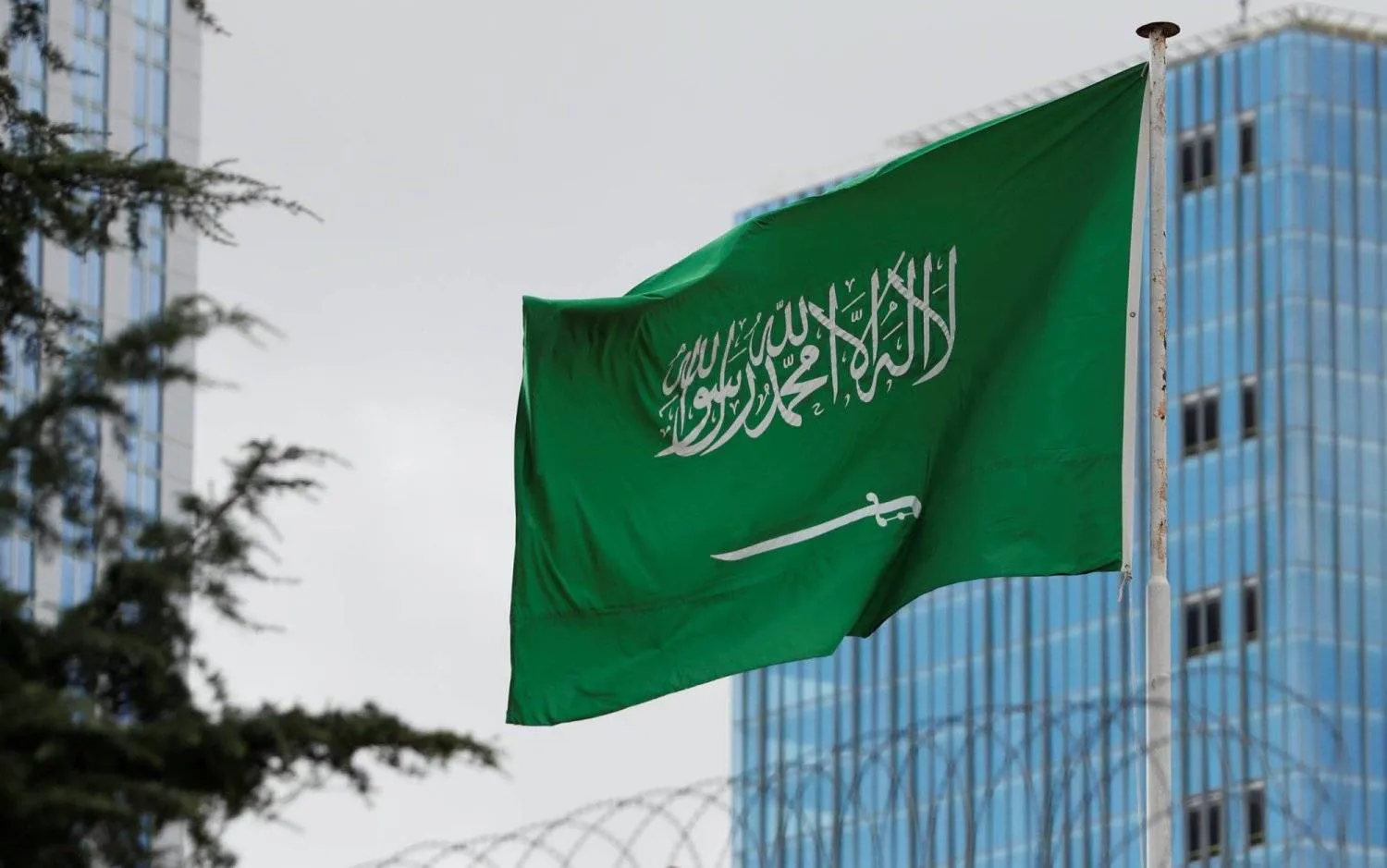
The Saudi flag. Asharq Al-Awsat
TT

World Bank Forecasts 4.3% Growth for Saudi Economy, Supported by Non-Oil Activities

The Saudi flag. Asharq Al-Awsat

The World Bank affirmed on Thursday that Saudi Arabia's economy has gained significant momentum for 2026-2027, driven by robust non-oil sector expansion under Vision 2030.

In a report titled “The Gulf’s Digital Transformation: A Powerful Engine for Economic Diversification,” the World Bank said growth is expected to persist in the Kingdom with non-oil activities expanding by 4% on average.

The report lifted its forecast for Saudi Arabia’s real GDP growth to 3.8% in 2025 compared to a 3.2% last October.

The forecast represents a major upward revision affirming the resilience of the Saudi economy and its ability to absorb external volatility. It also indicates growing confidence in the effectiveness of ongoing structural reforms within Vision 2030.

On Tuesday, Saudi Arabia approved its state budget for 2026, projecting real GDP growth of 4.6% in 2026.

The report showed that in the Kingdom, economic momentum is strengthening across oil and non-oil sectors with non-oil activities expanding by 4% on average and oil activities expanding by 5.4%, bringing overall real growth to an average of 4.3%.

It said oil activities grew by 1.7% y/y in the first half of 2025, benefiting from the phase-out of OPEC+ voluntary production cuts starting in April 2025.

At the financial level, the fiscal deficit between 2025 and 2027 is projected to remain at an average of 3.8% of GDP.

Meanwhile, the current account balance slightly recovered, settling at 0.5% of GDP in the first quarter of 2025 against -2.6% in the second half of 2024.

The report said real GDP growth remained stable at 3.6% y/y in the first half of 2025, thanks to the stabilization of the oil sector and sustained non-oil growth.

Non-oil activities expanded by 4.8% over the period, in line with the performance of 2024 while non-oil growth was driven by the wholesale, retail trade, restaurants, and hotels sector (+7.5% y/y in the first half of 2025), consolidating the role of hospitality and tourism as engines of economic diversification.

The report also indicated that oil activities grew by 1.7% y/y in the first half of 2025, benefiting from the phase-out of OPEC+ voluntary production cuts starting in April 2025.

These trends are expected to persist in 2026-2027, with non-oil activities expanding by 4% on average and oil activities expanding by 5.4%, bringing overall real growth to an average of 4.3%.

Job Market and Inflation
The report said the labor market mirrors the stabilization of the real economy and is rapidly becoming more inclusive to women.

Overall unemployment decreased by 0.7 point between the first quarter of 2024 and the first quarter of 2025, with the female unemployment rate dropping from 11.8% to 8.1% over the same period.

Also, inflation remained low and stable in Saudi Arabia, settling at an average of 2.2% in the first half of 2025.

However, price increases have been concentrated in the housing and utilities sector as rental prices have become a key issue, largely because rental supply has failed to match demographic growth, especially in Riyadh.

While this reflects the government’s efforts to dynamize the Kingdom’s urban centers, the price increases prompted the government to freeze rental prices in Riyadh for the next five years, as anticipated increases in housing supply should help control rental prices.

Finally, the report said Saudi Arabia’s external position stabilized in the second half of 2024 and the first quarter of 2025.

Although net foreign direct investment has remained relatively stable, the World Bank has emphasized that recent changes in foreign ownership regulations in Saudi Arabia, coupled with continued structural reforms, are positive steps to attract greater flows of foreign direct investment (FDI).



Saudi Arabia’s Non-Oil Exports Rise by 20.7% in November

King Abdulaziz Port in Dammam (SPA) 
TT

Saudi Arabia’s Non-Oil Exports Rise by 20.7% in November

King Abdulaziz Port in Dammam (SPA) 

Data released by Saudi Arabia’s General Authority for Statistics (GASTAT) showed that the Kingdom’s non-oil exports (including re-exports) increased by 20.7% in November compared with the same month in 2024.

This rise coincided with a marked improvement in the surplus of the merchandise trade balance, which grew by 70.2%, driven by higher total exports and a slight decline in imports.

According to the report, the main contributor to the growth in non-oil exports was the sector of “machinery, electrical equipment and parts,” which topped the list of exported goods, accounting for 24.2% of total non-oil exports.

Re-exports also played a pivotal role, recording a surge of 53.1%, supported by an increase of more than 81% in exports of electrical equipment within this category.

Meanwhile, national non-oil exports (excluding re-exports) grew by 4.7%, while oil exports rose by 5.4%. Notably, the share of oil exports in total exports declined to 67.2%, compared with 70.1% in November last year.

Imports recorded a slight decline of 0.2% compared with November 2024, which directly contributed to raising the coverage ratio of non-oil exports to imports to 42.2%. These figures had a positive impact on the merchandise trade balance, whose surplus rose by 70.2%.

China remained Saudi Arabia’s leading trading partner, accounting for 13.5% of total exports and 26.7% of total merchandise imports. The United Arab Emirates and Japan ranked second and third among the Kingdom’s top export destinations, while the United States and the United Arab Emirates followed China in the list of import sources.

In terms of customs gateways, King Abdulaziz Port in Dammam emerged as the main entry point for imports, with a share of 22.8%. Meanwhile, King Abdulaziz International Airport in Jeddah ranked first among the Kingdom’s main gateways for non-oil exports, accounting for 17.2% of total export operations in this sector.


Saudi Arabia, Kuwait Discuss Projects and Unified Tax Framework in Divided Zone

Kuwait’s Undersecretary of the Ministry of Oil, Sheikh Dr. Nimer Fahad Al-Malik Al-Sabah, and Saudi Arabia’s Assistant Minister of Energy Mohammed Al-Brahim during the meeting. (KUNA)
TT

Saudi Arabia, Kuwait Discuss Projects and Unified Tax Framework in Divided Zone

Kuwait’s Undersecretary of the Ministry of Oil, Sheikh Dr. Nimer Fahad Al-Malik Al-Sabah, and Saudi Arabia’s Assistant Minister of Energy Mohammed Al-Brahim during the meeting. (KUNA)

Saudi Arabia and Kuwait have discussed major projects and the establishment of a unified mechanism for tax procedures in the Divided Zone, during a meeting of the Permanent Joint Saudi-Kuwaiti Committee held on Sunday at its headquarters in Al-Khafji, Saudi Arabia.

The meeting, co-chaired by Kuwait’s Undersecretary of the Ministry of Oil, Sheikh Dr. Nimer Fahad Al-Malik Al-Sabah, and Saudi Arabia’s Assistant Minister of Energy, Mohammed Al-Brahim, reviewed progress in creating a unified tax framework aimed at providing a clear regulatory structure for relevant authorities, improving revenue organization, boosting procedural efficiency, and ensuring fairness and transparency in line with shared interests.

The meeting examined reports on petroleum operations in the onshore and offshore areas of the Divided Zone, including strategic plans, current and future projects, potential challenges to implementation, and the use of advanced technologies in oil operations, environmental and safety initiatives, development plans, and national workforce training.

According to the Kuwaiti Ministry of Oil, the meeting forms part of ongoing efforts to implement the memorandum of understanding signed between the two countries on December 24, 2019, strengthening bilateral coordination and serving their strategic interests in the Divided Zone.

The committee reviewed completed procedures for the evacuation of Chevron Saudi Arabia from its sites in the Al-Zour area. The Kuwaiti government officially took over the locations on January 20, reflecting a high level of institutional cooperation between the two sides.

The meeting addressed efforts to allocate dedicated routes at the Al-Nuwaiseeb and Al-Khafji border crossings for joint operations personnel, including the opening of a new lane and the provision of technical infrastructure, which has facilitated staff mobility and eased logistical challenges.

Officials further reviewed development and investment plans for onshore and offshore fields, emphasizing the need to accelerate implementation and provide full support for engineering and technical works.

Sheikh Nimer Al-Sabah stressed the importance of holding regular committee meetings to monitor petroleum operations, address challenges, and advance strategic projects. He praised the close cooperation between Kuwait’s Ministry of Oil and Saudi Arabia’s Ministry of Energy, as well as joint operations involving the Kuwait Gulf Oil Company, Aramco Gulf Operations Company, and Chevron Saudi Arabia.


Saudi Private Sector Commissions International Firm to Improve Cost Efficiency 

Officials meet at the headquarters of the Federation of Saudi Chambers in Riyadh. (Asharq Al-Awsat)
TT

Saudi Private Sector Commissions International Firm to Improve Cost Efficiency 

Officials meet at the headquarters of the Federation of Saudi Chambers in Riyadh. (Asharq Al-Awsat)

The Saudi private sector has commissioned an international consulting firm to conduct a comprehensive study on the business environment and rising operating costs faced by commercial enterprises, sources told Asharq Al-Awsat.

The move aims to identify practical solutions to curb rising financial burdens on companies operating in the Kingdom.

According to the sources, the study will analyze key challenges in the business landscape stemming from higher operating expenses, which are increasingly affecting the sustainability and competitiveness of businesses in both domestic and international markets.

The Federation of Saudi Chambers (FSC) is expected to share the study’s findings with relevant authorities to support the development of more effective future policies.

The federation has called on all chambers of commerce to contribute to the cost of the study, underscoring its importance in supporting implementation and maximizing its impact on the commercial sector and member interests.

Since the launch of Vision 2030, the Saudi government has implemented wide-ranging reforms and introduced amendments to legislation, regulations, and policies. These efforts aim to identify and address obstacles facing the private sector.

Ministers and senior officials regularly meet with business leaders at the Federation of Saudi Chambers to outline government strategies and discuss the most pressing challenges confronting the private sector.

The federation works systematically to identify barriers through meetings and workshops designed to strengthen communication with government entities and facilitate problem-solving.

Vision 2030 underscores coordination among government bodies and national programs to enhance service quality for companies, improve the business environment, unlock underutilized economic sectors, and attract foreign investment.

The strategy highlights the importance of collaboration among the public, private, and non-profit sectors, as well as international partners, to achieve its objectives.

With a “thriving economy” as one of its three core pillars, Vision 2030 focuses on economic diversification, strengthening local content, and fostering innovative opportunities through an investment-friendly environment for both domestic and foreign investors.
