
Defying Trump, EU Hits X with $140 Million

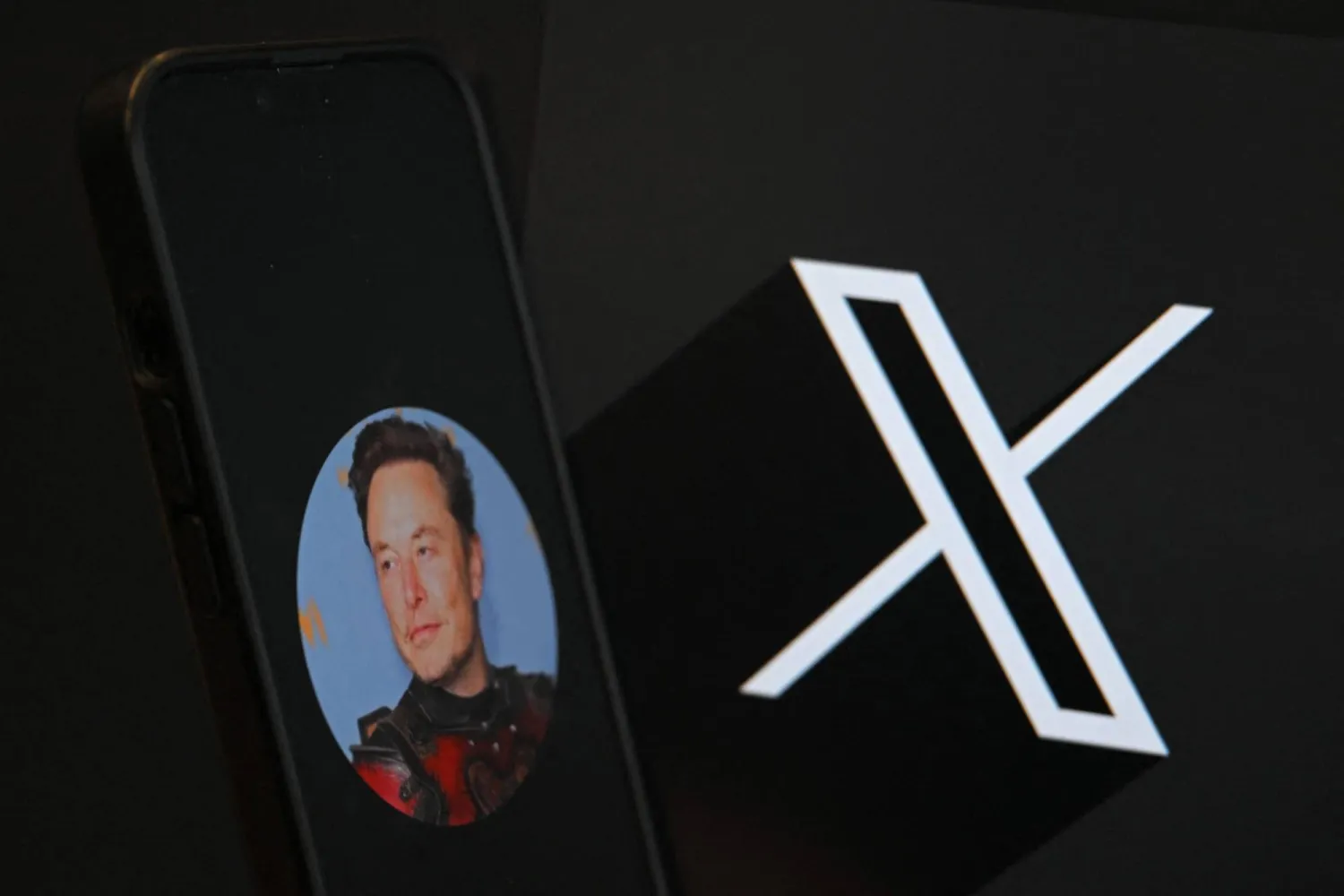
(FILES) This illustration photograph shows the logo of social network X (formerly Twitter) and a photograph of CEO of social network X, Elon Musk displayed on a smartphone in Brussels on September 27, 2024. (Photo by Nicolas TUCAT / AFP)
TT

Defying Trump, EU Hits X with $140 Million

(FILES) This illustration photograph shows the logo of social network X (formerly Twitter) and a photograph of CEO of social network X, Elon Musk displayed on a smartphone in Brussels on September 27, 2024. (Photo by Nicolas TUCAT / AFP)

Elon Musk's social media company X was fined 120 million euros ($140 million) by EU tech regulators on Friday for breaching online content rules, the first sanction under landmark legislation that once again drew criticism from the US government.

X's rival TikTok staved off a penalty with concessions, according to Reuters.

Europe's crackdown on Big Tech to ensure smaller rivals can compete and consumers have more choice has been criticized by the administration of US President Donald Trump, which says it singles out American companies and censors Americans.

The European Commission, the EU's executive, said its laws do not target any nationality and that it is merely defending its digital and democratic standards, which usually serve as the benchmark for the rest of the world.

The EU sanction against X followed a two-year-long investigation under the bloc's Digital Services Act (DSA), which requires online platforms to do more to tackle illegal and harmful content.

The EU's investigation of ByteDance's social media app TikTok led to charges in May that the company had breached a DSA requirement to publish an advertisement repository allowing researchers and users to detect scam advertisements.

The European Commission's tech chief Henna Virkkunen said X's modest fine was proportionate and calculated based on the nature of the infringements, their gravity in terms of affected EU users and their duration.

“We are not here to impose the highest fines. We are here to make sure that our digital legislation is enforced and if you comply with our rules, you don't get the fine. And it's as simple as that,” she told reporters.

“I think it's very important to underline that DSA is having nothing to do with censorship,” Virkkunen said.

She said forthcoming decisions on companies which have been charged with DSA violations are expected to take a shorter time than the two years for the X case.

“I'm really expecting that we will do the final decisions now faster,” she said.

Ahead of the EU decision, US Vice President JD Vance said on X: “Rumors swirling that the EU commission will fine X hundreds of millions of dollars for not engaging in censorship. The EU should be supporting free speech not attacking American companies over garbage.”

TikTok, which pledged changes to its ad library to be more transparent, urged regulators to apply the law equally and consistently across all platforms.

EU regulators said X's DSA violations included the deceptive design of its blue checkmark for verified accounts, the lack of transparency of its advertising repository and its failure to provide researchers access to public data.

The Commission said the investigation into the dissemination of illegal content on X and measures taken to combat information manipulation and a separate probe into TikTok's design, algorithmic systems and obligation to protect children continue.

DSA fines can be as high as 6% of a company's annual global revenue.


Saudia to Launch Riyadh-Kozhikode Flights in February

Saudi Arabian Airlines plane, is seen at the airport of the Red Sea resort of Sharm el-Sheikh, Egypt, August 9, 2021. Picture taken through a window. REUTERS/Mohamed Abd El Ghany/File Photo
TT

Saudia to Launch Riyadh-Kozhikode Flights in February

Saudi Arabian Airlines plane, is seen at the airport of the Red Sea resort of Sharm el-Sheikh, Egypt, August 9, 2021. Picture taken through a window. REUTERS/Mohamed Abd El Ghany/File Photo

Saudia Airlines has added Kozhikode, India, to its network of scheduled international destinations, marking its seventh destination in the country alongside Bangalore, Mumbai, Kochi, Delhi, Hyderabad, and Lucknow, as part of the airline’s strategy to reach new international markets, connect the Kingdom to the world through its modern fleet, and strengthen its global competitive position, SPA reported.

Flights to Kozhikode will begin on February 1, 2026, with four weekly departures from King Khalid International Airport in Riyadh.

Reservations are available through the airline’s website and mobile applications.

The addition of Kozhikode further expands Saudia's growing operational network, which now covers over 100 destinations across four continents and operates more than 550 domestic and international flights daily.


Egypt Signs Renewable Energy Deals Worth $1.8 Billion

The Wolf Moon, the first supermoon of 2026, lights up the night sky in Cairo, Egypt, January 3, 2026. REUTERS/Mohamed Abd El Ghany
TT

Egypt Signs Renewable Energy Deals Worth $1.8 Billion

The Wolf Moon, the first supermoon of 2026, lights up the night sky in Cairo, Egypt, January 3, 2026. REUTERS/Mohamed Abd El Ghany

Egypt has signed renewable energy deals worth a combined $1.8 billion, state TV reported on Sunday.

Among the deals were contracts with Norwegian renewable energy developer Scatec and China's Sungrow.

Egypt hopes to have renewable energy reach 42% of its electricity generation mix by 2030, but officials say the goal will be ⁠at risk without more international support.

The first project will be the construction by Scatec of a solar energy plant to generate electricity and energy storage stations in Upper Egypt's Minya, ⁠an Egyptian cabinet statement said.

It would have a generation capacity of 1.7 gigawatts supported by battery storage systems with total capacity of 4 gigawatt hours.

A second project will be a Sungrow factory to manufacture energy storage batteries at the Suez Canal Economic Zone. A share of the factory's output ⁠would be supplied to the first project, the cabinet said.

The deals also include power purchase agreements, with Scatec signing a deal for total capacity of 1.95 gigawatts and 3.9 gigawatt hours of battery storage systems, the Norwegian company said in a statement.


Iraq Says Gas Flaring to Reach Zero by End-2028

Iraq’s Prime Minister Mohammed Shia al-Sudani inspects the electricity ministry pavilion at the Iraq Energy Exhibition and Conference
TT

Iraq Says Gas Flaring to Reach Zero by End-2028

Iraq’s Prime Minister Mohammed Shia al-Sudani inspects the electricity ministry pavilion at the Iraq Energy Exhibition and Conference

Iraq’s Prime Minister Mohammed Shia al-Sudani stated on Saturday that the government is moving forward with the development of clean and renewable energy sectors.

Speaking at the opening of the Iraq Energy Exhibition and Conference, al-Sudani said Iraq has made significant progress in capturing associated gas, with the rate of flaring reduced by more than 72%.

He said flaring will be fully eliminated by the end of 2028.

“We have infrastructure projects at the level of the Ministry of Oil that ensure export capacity and the diversification of export outlets,” al-Sudani said, according to the Iraqi News Agency.

He added that Iraq is holding talks with international companies to invest in associated gas and free gas in oil fields and exploration blocks, expressing hope that the conference would help reinforce this direction. He said the government has also moved toward establishing a permanent platform to secure Iraq’s gas needs through imports or future exports.

Al-Sudani stated that the Ministry of Electricity is working to increase power generation under an ambitious plan that exceeds 57,000 megawatts through the Siemens and GE project.

He added that the ministry is also advancing renewable energy projects, both large and small, with a plan at the district and subdistrict levels in Baghdad and other provinces to transition to renewable energy, which is expected to be implemented by next summer.

He said the government is placing strong emphasis on both conventional and renewable energy in a way that ensures sustainable development.

Al-Sudani stated that the exhibition showcases Iraq’s position as a promising market with significant opportunities in the energy sector, through various projects, partnerships, and investment opportunities.

He said the government has made significant progress in boosting energy production through major oil projects in partnership with global companies, including TotalEnergies and BP, adding that talks are ongoing with ExxonMobil, Chevron, and other international firms.

Talks with Chevron

Iraq’s Oil Minister Hayan Abdul Ghani said talks are underway with Chevron regarding the West Qurna 2 oil field, which is operated by Lukoil and represents the company’s largest foreign asset.

Chevron and Exxon Mobil are among the potential bidders for Lukoil’s overseas assets following the imposition of US sanctions on the Russian oil producer.

Speaking to reporters after the opening of the energy exhibition and conference, Abdul Ghani stated that negotiations with Chevron over the West Qurna 2 field in Basra province are ongoing.

He added that Basra Oil Company, the second partner in the field, has not yet taken over operations following Lukoil’s withdrawal.

Al-Sudani opened the 11th edition of the Iraq Energy Exhibition and Conference in Baghdad on Saturday, with the participation of more than 450 local, Arab, and international companies specializing in energy and investment.

The event runs for three days.

The Iraqi Company for Exhibitions and Commercial Services said the conference, held at the Baghdad International Fairgrounds from Jan. 10 to 12, will feature panel discussions, specialized workshops, and meetings aimed at supporting the energy sector and expanding partnership and investment opportunities, with participation from more than 450 companies.

Iranian gas

Iraq’s Ministry of Electricity said there are no indications that Iranian gas supplies will resume soon.

A ministry spokesperson stated that media outlets were notified via a message from Iran on Telegram, which indicated that gas supplies had been halted due to low temperatures and Tehran’s domestic gas needs.

Iraq announced in December that Iranian gas supplies had ceased, resulting in the shutdown of some power generation units and load reductions at others. The Ministry of Electricity said the grid lost between 4,000 and 4,500 megawatts as a result.

Iran supplies between 30% and 40% of Iraq’s gas and electricity needs.

Electricity ministry officials previously stated that peak winter demand in Iraq reaches approximately 48,000 megawatts, while domestic production stands at around 27,000 megawatts, forcing the country to rely on imports to bridge the gap.