
Saudi Arabia’s listed real estate sector recorded an exceptional and unprecedented transformation in the third quarter of 2025, with profits surging more than sixfold. Total earnings jumped 633.6 percent to $496 million (SAR 1.86 billion), compared with $67.5 million a year earlier, an indication that the industry has entered a phase of sustained operational maturity rather than a short-term cyclical rebound.
The sharp rise reflects the companies’ success in restructuring their product portfolios, enhancing cash flows, and shifting from “paper growth” to revenue-driven expansion supported by project deliveries and operational income.
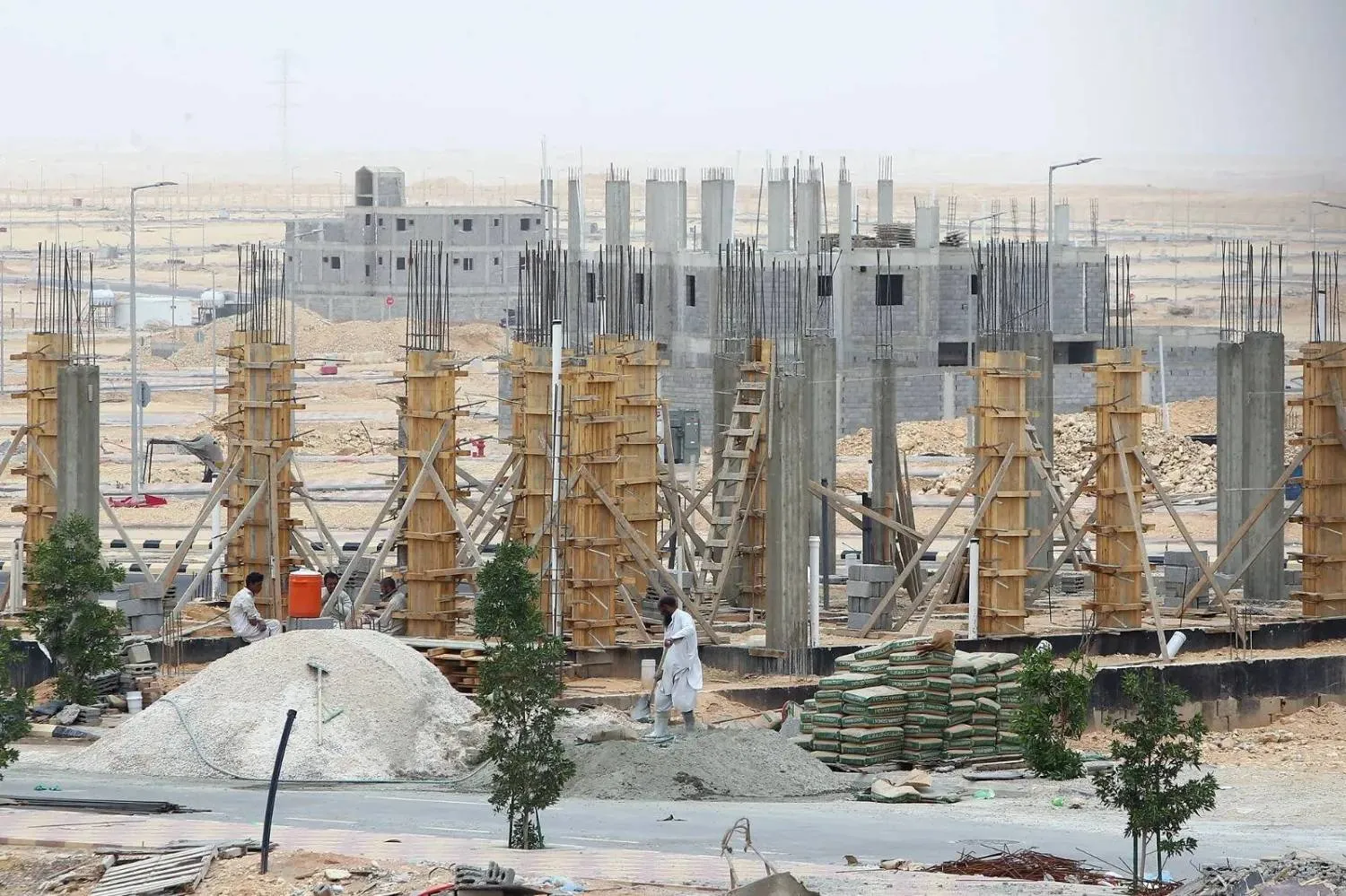
Sector analysts attributed the leap in profitability to the rollout of major real estate projects in large cities, higher project quality, improved financing conditions, and stronger liquidity.
They noted that the leap aligns with the rapid expansion of Saudi Arabia’s non-oil economy, which now contributes about 56 percent of GDP. This has strengthened demand across residential, commercial, industrial, and office real estate, supporting profit growth alongside recent regulatory reforms.
During the first nine months of 2025, listed real estate firms achieved combined profits of $1.44 billion (SAR 5.4 billion), led by Cenomi Centers, Jabal Omar, and Masar (Umm Al-Qura for Development and Construction) - a 244 percent increase from the same period in 2024.
Financial disclosures show that nine out of sixteen listed developers reported higher profits in Q3, while four companies returned to profitability. Masar topped the sector in Q3 with SAR 516.6 million in earnings, up 341.9 percent year-on-year. Cenomi Centers ranked second with SAR 499.8 million, a rise of 52.2 percent, followed by Dar Al-Arkan, whose profits climbed 89 percent to SAR 255.6 million.
Real estate specialist Abdullah Al-Mousa told Asharq Al-Awsat that the historic profit surge confirms the sector has “entered a stage of operational maturity,” reflecting companies’ improved efficiency, stronger recurring revenues, and the successful transition to asset-operation models.
He identified three key drivers: higher-quality projects and stronger occupancy across income-generating assets; improved financing conditions amid stabilizing interest rates; and the completion of major projects, particularly in Riyadh and Makkah.
Al-Mousa expects continued positive performance in coming quarters, though at a more moderate pace, supported by new strategic projects entering operation, sustained housing demand, rising commercial activity in Riyadh, and ongoing regulatory reforms that reduce risk and attract institutional investment.
Real estate analyst Salman Saeed said the strength of the non-oil economy has sharply boosted demand in housing, retail, industrial, and office markets. He highlighted reforms such as the expansion of the white-land tax and rental-regulation measures, along with significant government support for homeownership, which has raised the share of Saudi citizens owning homes.
Saeed noted that rising demand for commercial and office space, driven by multinational companies relocating to Riyadh, has lifted occupancy rates and diversified developers’ income streams. Some firms also improved results through land sales and divestment of non-core assets, enhancing operational efficiency.