French Economy Likely to Grow at Least 0.8% in 2025, Finance Minister Says

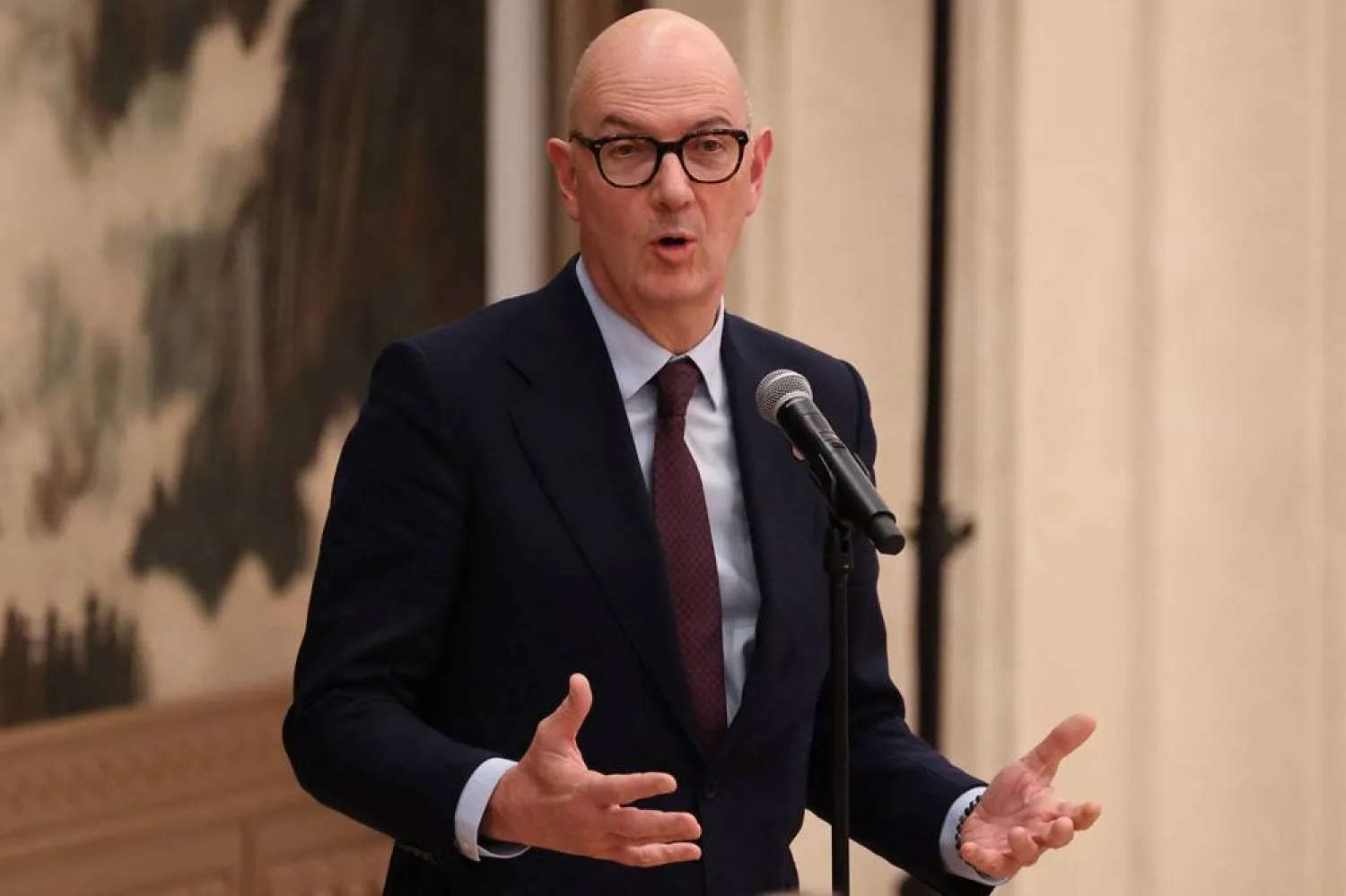
French Minister for Economy, Finance, and Industrial, Energy and Digital Sovereignty Roland Lescure attends the 7th formal meeting of the Franco-Chinese Business Council in Beijing on December 4, 2025. (Reuters)
TT

French Economy Likely to Grow at Least 0.8% in 2025, Finance Minister Says

French Minister for Economy, Finance, and Industrial, Energy and Digital Sovereignty Roland Lescure attends the 7th formal meeting of the Franco-Chinese Business Council in Beijing on December 4, 2025. (Reuters)

Unless there is a sharp reversal in the final three months of the year, the French economy is likely to grow by at least 0.8% in 2025, outpacing the 0.7% that the government had anticipated, Finance Minister Roland Lescure said on Sunday.

"We will most likely exceed the government's growth forecast for this year. We had predicted 0.7%, but I think we will have at least 0.8%. That's good news," Lescure told LCI television.

"So we would really need to have a bad fourth quarter, which I don't believe will happen, for us to be below 0.8%, so 0.8% is within reach," he added.

France's economy grew 0.5% in the third quarter, final data from statistics office INSEE showed in November, reflecting resilience in the euro zone's second-largest economy.


SAMA Licenses Two Companies to Provide Open Banking Services

SAMA Licenses Two Companies to Provide Open Banking Services
TT

SAMA Licenses Two Companies to Provide Open Banking Services

SAMA Licenses Two Companies to Provide Open Banking Services

The Saudi Central Bank (SAMA) announced the licensing of “Altknwlwjya aljadydh llhulul albrmjyh” and “lyn tknwlwjyz Company Saudi Arabia litqniyat nuzum almaelumat” to conduct payment services by providing account information—one of the services associated with open banking.

The licenses were granted following the successful completion of the regulatory sandbox phase under SAMA’s supervision.

The decision reflects SAMA’s ongoing efforts to support and enable the financial sector, enhance the efficiency and flexibility of financial transactions, and promote innovation in financial services. This aims to advancing financial inclusion and expanding access to financial services across all segments of society.

SAMA emphasizes the importance of dealing exclusively with authorized financial institutions. To view licensed and permitted financial institutions, visit SAMA's official website.


UK Suffers OECD's Biggest Growth Downgrade as Iran War Pushes Up Energy Costs

This overhead view shows buildings along the River Thames in London on March 25, 2026. (Photo by JUSTIN TALLIS / AFP)
TT

UK Suffers OECD's Biggest Growth Downgrade as Iran War Pushes Up Energy Costs

This overhead view shows buildings along the River Thames in London on March 25, 2026. (Photo by JUSTIN TALLIS / AFP)

Britain's economic ‌growth prospects this year received the sharpest downgrade of any major economy in the OECD's interim forecast update on Thursday following the US-Israeli war ​on Iran, while inflation is set to rise faster too.

The Paris-based international body cut its 2026 forecast for British economic growth by half a percentage point to 0.7%, compared with a 0.4 percentage point downgrade for the euro zone and a 0.3 percentage point upgrade for the United States.

"Planned fiscal tightening and higher energy prices ‌are anticipated to keep ‌growth subdued in the United ​Kingdom, ‌though the ⁠impact ​will be ⁠attenuated by lower policy rates next year," Reuters quoted the OECD as saying in its report.

Following are further highlights from the report and other context:

Britain's growth forecast for 2027 is unchanged at 1.3%.

Britain's inflation forecast for 2026 is revised up by 1.5 percentage points from December to 4.0%, the ⁠biggest upward revision of any large, advanced ‌economy.

UK inflation in 2027 ‌is forecast to be 2.6%, 0.5 percentage ​points higher than in ‌December and above the Bank of England's 2% target.

Poorer UK households spend more on gas and electricity than in other rich countries, though total energy spending makes up a smaller share of UK inflation than elsewhere.

The OECD expects the ‌BoE to keep interest rates unchanged this year then cut in Q1 2027 as inflation ⁠eases.

⁠Britain's Office for Budget Responsibility, in forecasts finalized just before the start of the conflict, predicted GDP growth of 1.1% this year and 1.6% in 2027.

The BoE this month forecast inflation would rise to 3.0-3.5% over the next couple of quarters.

Prime Minister Keir Starmer has made boosting growth and reducing the cost of living top goals for his government.

Finance minister Rachel Reeves said the forecasts showed the war in the Middle East ​was affecting Britain but ​she would still focus on "regional growth, embracing AI and innovation, and establishing a closer relationship with the EU."


Gold Drops More than 1% as Markets Assess Mideast Ceasefire Prospects

FILED - 16 March 2023, Bavaria, Munich: Gold bars and coins lie on the table at the Precious metal dealership Pro Aurum. Photo: Sven Hoppe/dpa
TT

Gold Drops More than 1% as Markets Assess Mideast Ceasefire Prospects

FILED - 16 March 2023, Bavaria, Munich: Gold bars and coins lie on the table at the Precious metal dealership Pro Aurum. Photo: Sven Hoppe/dpa

Gold prices fell on Thursday, weighed down by increased expectations of US Federal Reserve rate hikes this year as elevated oil prices stoked inflation worries, with investors awaiting clarity on Middle East de-escalation efforts.

Spot gold fell 1.2% to $4,451.47 per ounce by 0811 GMT. US gold futures for April delivery lost 2.3% to $4,448.

"You're ‌seeing an ‌acceleration of the idea that... this war will ‌mean ⁠inflation and inflation ⁠will mean a response from central banks, which will mean higher interest rates," said Ilya Spivak, head of global macro at Tastylive.

Brent crude futures climbed back above $100 a barrel on concerns that protracted fighting in the Middle East will further disrupt energy flows.

Higher crude prices tend to fuel inflation, and while rising inflation typically boosts gold's appeal ⁠as a hedge, high interest rates weigh on ‌demand for the non-yielding asset.

Markets see ‌a 37% chance of a US rate hike by December this year ‌with almost no chance of a cut now, according to ‌CME Group's FedWatch Tool. Before the conflict, markets were expecting at least two rate cuts.

US President Donald Trump said Iran was desperate to make a deal to end nearly four weeks of fighting, contradicting the Iranian foreign ‌minister who said his country was reviewing a US proposal but had no intention of holding talks ⁠to wind down ⁠the conflict.

"In the next 24 to 48 hours, (gold prices) will just be about reacting to headlines about negotiations," said Kyle Rodda, a senior financial market analyst at Capital.com.

"The really big moves will happen probably at the start of next week when it becomes clearer whether the US launches a ground invasion in Iran over the weekend."

Trump has vowed to hit Iran harder if Tehran fails to accept that the country has been "defeated militarily", White House press secretary Karoline Leavitt said on Wednesday.

Spot silver fell 2.7% to $69.36 per ounce. Spot platinum was down 2.3% at $1,874.90, while palladium dropped 2.5% to $1,387.53.