

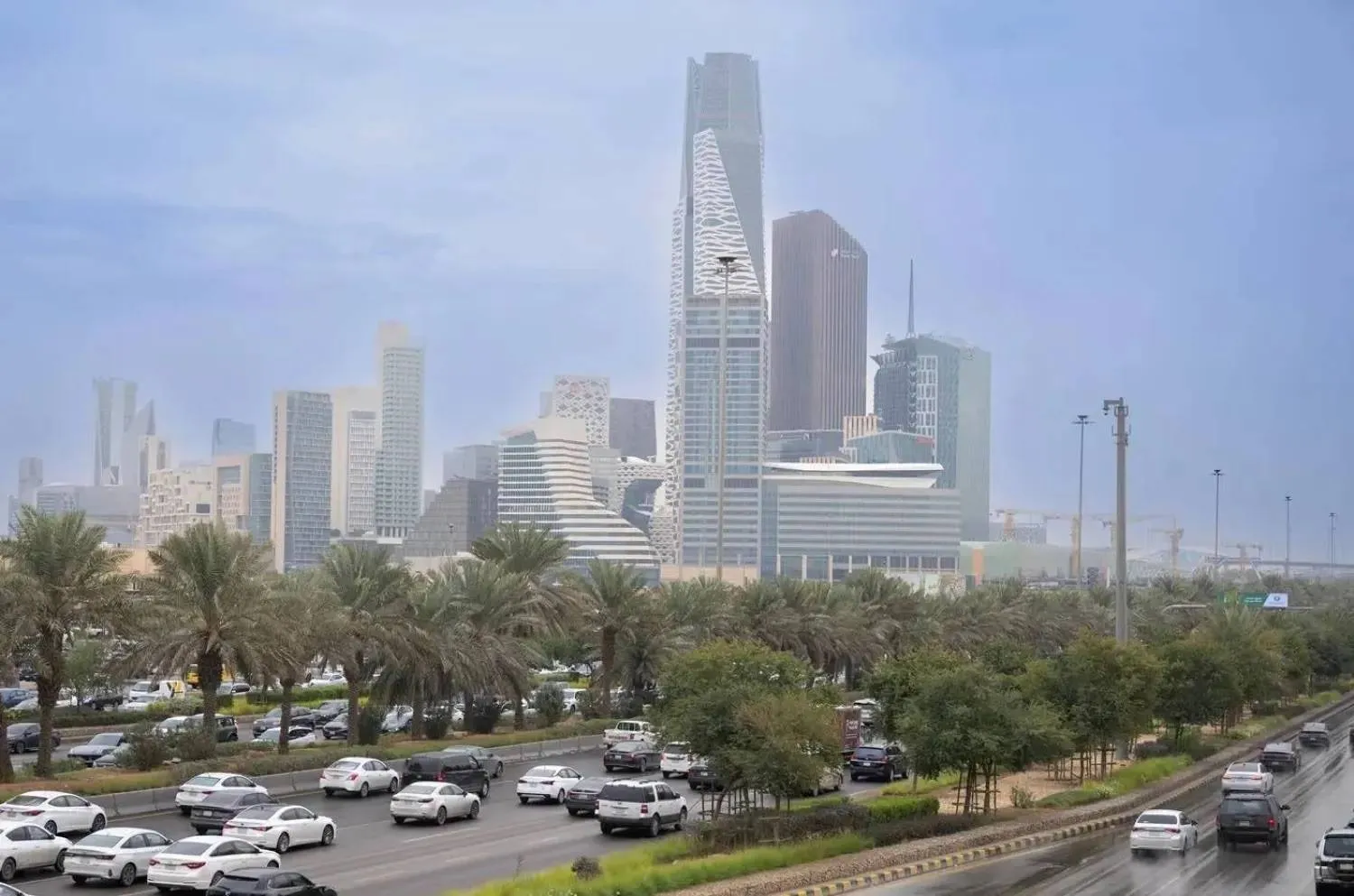

Non-Oil Activities Account for Half of Saudi Economic Growth Momentum

Photo of the Saudi capital (SPA) 
TT

Non-Oil Activities Account for Half of Saudi Economic Growth Momentum

Photo of the Saudi capital (SPA) 

The Saudi economy posted real growth of 4.8% in the third quarter of 2025 compared with the same period of the previous year, reflecting the Kingdom’s sustained economic momentum. Non-oil activities were the primary engine of expansion, while seasonally adjusted real GDP rose 1.4% from the second quarter of 2025.

According to the final data released by the General Authority for Statistics (GASTAT), the annual growth figure came in slightly below the flash estimate published last October, which had projected a 5% increase. Even so, it remains the strongest quarterly performance recorded in 2025.

Non-oil activities delivered the largest contribution to overall annual growth, adding 2.4 percentage points, or 50% of the total 4.8% expansion. This outpaced the contribution from oil activities, which added 2.0 percentage points. The Authority revised its estimate for non-oil growth downward to 4.3% (from 4.5% in the flash estimate), while slightly raising its estimate for oil-sector growth to 8.3% (from 8.2%) for the previous quarter.

This improvement coincided with the gradual ramp-up in oil production following the expiration of voluntary cuts by the OPEC+ alliance at the end of August. Saudi Arabia increased its output by approximately 547,000 barrels per day starting in September, followed by an additional 137,000 barrels per day from November onward.

Both government activities and net taxes on products made modest positive contributions of 0.2 percentage points each.

On a quarterly, seasonally adjusted basis, oil and non-oil activities contributed 0.8 and 0.3 percentage points, respectively.

All economic sectors recorded positive annual growth. Oil refining emerged as the fastest-growing activity in the third quarter, rising 11.9% year-on-year and 3.9% quarter-on-quarter. It was followed by crude oil and natural gas activities, which grew 7.3% annually and 3.2% quarterly. Electricity, gas, and water services also posted gains of 6.4% year-on-year and 1.0% quarter-on-quarter.

From the expenditure perspective, performance varied between annual and quarterly comparisons. Final private consumption increased 2.6% year-on-year, but slipped 0.6% from the previous quarter. Conversely, final government consumption declined 3.1% annually, while increasing 1.4% quarter-on-quarter.

Gross fixed capital formation fell 0.7% year-on-year, but rebounded strongly on a quarterly basis with a 6.2% increase, indicating a pickup in investment spending during the third quarter.

Regarding foreign trade, the overall performance was buoyed by a significant surge in exports, which climbed 18.4% year-on-year and 7.5% quarter-on-quarter, reflecting strong external demand for Saudi products. Imports rose 4.3% annually, but edged down 1.2% on a quarterly basis.



Citibank Closes UAE Branches Temporarily as Precautionary Measure

A photograph shows Dubai's skyline with the Burj Khalifa at the center on March 11, 2026. (Photo by FADEL SENNA / AFP)
TT

Citibank Closes UAE Branches Temporarily as Precautionary Measure

A photograph shows Dubai's skyline with the Burj Khalifa at the center on March 11, 2026. (Photo by FADEL SENNA / AFP)

Citibank will close its branches and financial centers in the United Arab Emirates through March 14 as a precautionary measure, the bank's website showed on Thursday, following a wave of banks sending staff home as the crisis in the Middle East deepens.

The ⁠US bank plans ⁠to reopen all affected branches on March 16, but the branch in the Mall of the Emirates in central Dubai, will remain open ⁠during this period, it said.

Earlier this week, Citi told its staff to evacuate offices in the Dubai International Financial Centre (DIFC) and Dubai's Oud Metha neighborhood, telling them to work from home until further notice.

HSBC, another major global bank, has closed all branches in ⁠Qatar ⁠until further notice, according to a customer notice, saying the measure was to ensure the safety of staff and customers.

Banks across the region have stepped up precautions after Iran threatened banking interests linked to the US and Israel.


OPEC: Ongoing Geopolitical Developments Warrant Close Monitoring of Markets

OPEC's report focused on February market conditions prior to the Feb. 28 conflict outbreak (Reuters)
TT

OPEC: Ongoing Geopolitical Developments Warrant Close Monitoring of Markets

OPEC's report focused on February market conditions prior to the Feb. 28 conflict outbreak (Reuters)

The Organization of Petroleum Exporting Countries (OPEC) has maintained, for the seventh consecutive month, its 2026-2027 global oil demand growth projections unchanged.

OPEC kept its forecast for global oil demand growth at 1.38 million bpd for 2026 and at 1.3 million bpd for 2027.

The Iran war has severely impacted global supply chains, as the Gulf region is crucial to the world's oil and gas supply.

The war sent oil prices surging close to $120 a barrel on Monday before they later eased to around the low $90s, as markets weighed the risk of wider disruption against hopes the conflict might still be contained.

OPEC's report focused on February market conditions prior to the Feb. 28 conflict outbreak, therefore, not reflecting the war’s impact on the volume or price of oil.

“Ongoing geopolitical developments warrant close monitoring, although their impact, if any, on the growth forecast may be too early to determine,” OPEC said ⁠in the report, referring to economic growth.

OPEC also ⁠said output by the wider OPEC+, which includes the Organization of the Petroleum Exporting Countries plus other producers such as Russia, averaged 42.72 million bpd in February, up 445,000 bpd from January, citing secondary sources.

Crude oil production by OPEC rose by 164,000 bpd in February compared to January 2026, reaching around 28.63 million bpd, according to the group's latest Monthly Oil Market Report.

The largest output increase came from Venezuela, while Nigeria recorded the biggest decline last month.

And for the second month, OPEC kept its forecast for the growth of oil supply of non-OPEC countries at 630,000 bpd in 2026, and at 610,000 bpd in 2027.

Early this month, the eight OPEC+ countries agreed to a modest oil output boost of 206,000 bpd for April, a decision framed as a response to steady market fundamentals and global economic growth.

The eight members had raised production quotas by about 2.9 million bpd from April through December 2025, roughly 3% of global demand, before pausing increases for January to March 2026 due to seasonal weakness.


IMF Says it Has Made Progress in Pakistan Funding Talks

Students ride on motorbikes with their parents while heading to schools, after the government announced that schools would close for two weeks, starting March 16, following austerity measures to save fuel amid the US-Israeli conflict with Iran, in Karachi, Pakistan, March 10, 2026. REUTERS/Akhtar Soomro
TT

IMF Says it Has Made Progress in Pakistan Funding Talks

Students ride on motorbikes with their parents while heading to schools, after the government announced that schools would close for two weeks, starting March 16, following austerity measures to save fuel amid the US-Israeli conflict with Iran, in Karachi, Pakistan, March 10, 2026. REUTERS/Akhtar Soomro

The International Monetary Fund said on Wednesday it has made "considerable progress" in talks with Pakistan ⁠over its funding ⁠facilities and that discussions will continue.

"While considerable progress was made ⁠in the discussions, these will continue in the coming days, including to more fully assess the impact of recent global developments on Pakistan’s economy ⁠and ⁠the EFF-supported (Extended Fund Facility) program," IMF advisor Iva Petrova said in the statement.

Pakistan is in an ongoing $7 billion IMF program.

Tanker drivers in Pakistan said they were facing long waits at depots due to a shortage of fuel, as the government played down fears of another rise in prices.

The US-Israeli war with Iran has disrupted shipping and damaged oil and gas facilities in the Middle East, raising global oil prices as countries scramble to deal with concerns over supply.

Dozens of tankers, which supply fuel across Pakistan, were seen parked at the side of the road on Tuesday at depots near Lahore, the capital of Punjab, the country's most populous province.

Last week, the government in Islamabad hiked prices by about 20 percent, triggering long lines and panic buying at filling stations across the country.
