


Venezuela's Oil Facilities Unscathed in US Strike

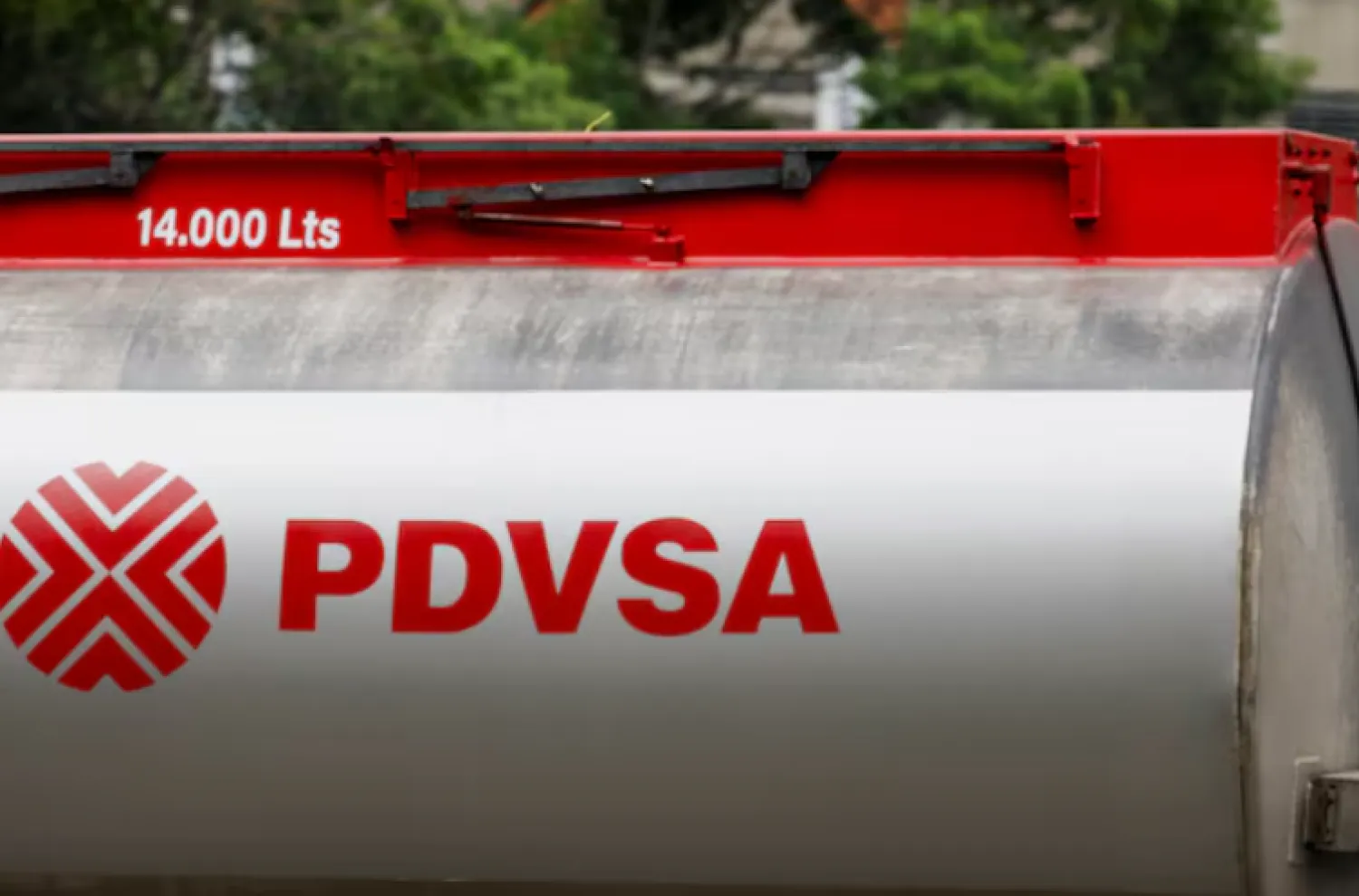
The logo of Venezuelan state oil company PDVSA is seen on a fuel tank truck, in Caracas, Venezuela May 14, 2025. REUTERS/Leonardo Fernandez Viloria
TT

Venezuela's Oil Facilities Unscathed in US Strike

The logo of Venezuelan state oil company PDVSA is seen on a fuel tank truck, in Caracas, Venezuela May 14, 2025. REUTERS/Leonardo Fernandez Viloria

Venezuela's state-run oil production and refining were operating normally on Saturday ​and suffered no damage from a US strike to extract the country's president, two sources with knowledge of the operations of energy company PDVSA said.

US forces captured President Nicolas Maduro, US President Donald Trump said, after months of pressuring ‌him over accusations ‌of drug-running and illegitimacy ‌in ⁠power.

The ​port ‌of La Guaira near Caracas, one of the country's largest but one not used for oil exports, was reported to have suffered severe damage, one of the sources said.

Trump in December announced a blockade ⁠of oil tankers entering or leaving the country and ‌the US seized two ‍cargoes of Venezuelan oil.

That ‍lowered the OPEC country's exports last ‍month to about half of the 950,000 barrels per day (bpd) it shipped in November, according to monitoring data and internal documents.

The US measures ​prompted many vessel owners to divert away from Venezuelan waters, which has ⁠rapidly increased PDVSA's inventories of crude and fuel.

PDVSA has been forced to slow down deliveries at ports and store oil on tankers to avoid crude output or refining cut-backs.

PDVSA's administrative system also has not fully recovered from a cyberattack in December that forced it to isolate terminals, oilfields and refineries from its central system and to ‌resort to written records to continue operations.


Gulf Stocks Rise on Hopes for Renewed US-Iran Diplomacy

An investor looks up at screens displaying stock information at the Dubai Financial Market, June 17, 2013. REUTERS/Jumana El Heloueh/File Photo
TT

Gulf Stocks Rise on Hopes for Renewed US-Iran Diplomacy

An investor looks up at screens displaying stock information at the Dubai Financial Market, June 17, 2013. REUTERS/Jumana El Heloueh/File Photo

Gulf stock markets rose in early trade on Thursday, buoyed by hopes that diplomatic efforts between the United States and Iran could resume after the two sides exchanged recriminations this week.

Qatar's prime minister is due to visit Tehran on Thursday in an effort to revive diplomacy after Washington pledged to increase economic pressure on Iran by targeting its trading partners with sanctions.

Meanwhile, Iran and Oman are finalizing details ‌of an agreement ‌on control of the Strait ‌of ⁠Hormuz, a senior ⁠Iranian source said on Wednesday. Iran's Revolutionary Guards said the two countries had agreed on how to share management of the strategic waterway, which links major Gulf oil producers to global markets.

Saudi Arabia's benchmark index edged up 0.1%, with most stocks in positive territory. National Industrialization Company climbed 3.6%, while oil giant Saudi Aramco gained 0.5%.

Saudi Aramco has offered additional crude for September loading outside the Strait of Hormuz, four sources familiar with the matter said on Wednesday, after the producer sold at least 4 million barrels to China this month.

Dubai's main index rose 0.4%, with most constituents advancing. Etihad Energy gained 2.9%, while ⁠Emirates Central Cooling Systems added 1.3%.

Abu ‌Dhabi's benchmark climbed 0.3%, ‌supported by a 1.3% increase in conglomerate Alpha Dhabi ‌Holding and a 1.2% rise in First Abu Dhabi ‌Bank , the United Arab Emirates' largest lender.

Qatar's index gained 0.5%, led by communication and energy shares. Telecoms operator Ooredoo advanced 1.9% and Qatar Gas Transport rose 1%.
QatarEnergy ‌has issued a spot tender to sell light and full-range naphtha cargoes on a ⁠free-on-board ⁠basis from Ras Laffan port, located inside the Strait of Hormuz, traders said. A document reviewed by Reuters on Wednesday confirmed the tender.


Oil Extends Losses on Hopes Middle East Talks Could Ease Supply Woes

A worker rests next to an oil pump on a sunny day in Baku, Azerbaijan, June 16 , 2015. (Reuters)
TT

Oil Extends Losses on Hopes Middle East Talks Could Ease Supply Woes

A worker rests next to an oil pump on a sunny day in Baku, Azerbaijan, June 16 , 2015. (Reuters)

Oil prices fell more than $1 on Thursday, extending a streak of losses, on expectations that talks between Iran and Qatar might open the Strait of Hormuz and reduce supply disruptions from the Middle East war.

Brent crude futures were down $1.36, or 1.55%, to $86.48 a barrel at 0800 GMT, in line for a fourth day of declines. West Texas Intermediate crude futures fell $1.40, or 1.7%, to $80.83, in line for a fifth ‌day of ‌losses, Reuters reported.

"Oil has weakened again today as the market prices ‌in ⁠rising expectations that a ⁠deal could materialize which would increase shipping numbers through the Strait of Hormuz," KCM chief market analyst Tim Waterer said.

"If Hormuz were to reopen more fully, a further leg lower in crude is possible, but the market is unlikely to price a complete return to pre-conflict levels overnight."

Qatar's prime minister will head to Iran on Thursday to relaunch diplomatic talks to end the conflict, which is nearly six ⁠months old.

The visit comes as the war nears its ‌sixth month with fighting largely paused but ‌no diplomatic breakthrough in sight. Both sides are at odds over control of the Strait ‌of Hormuz, a chokepoint for global oil supplies that Tehran has used ‌as leverage.

The strait, which handled about one-fifth of global daily oil and liquefied natural gas supplies before the conflict began in late February, has been at the center of concerns over global energy supplies because of its critical role as a transit route for exports ‌from major Gulf producers. Shipping traffic at the strait rose slightly on Wednesday despite the standoff, data showed.

A senior Iranian ⁠source on Wednesday ⁠said Iran and Oman were working on finalizing details of an agreement to control the Strait of Hormuz, after Iran's Revolutionary Guards said the two countries had agreed how to share the waterway.

The US has halted its attacks on Iran for about a month and is seeking to impose greater economic pressure on Iran, which has raised investors' expectations for an easing of the Gulf supply disruptions.

"At the heart of the dispute remains Iran's nuclear program and that is unlikely to be resolved quickly ... Iran also understands the importance of its geographical position and the leverage that the Strait of Hormuz provides, so the risk of prolonged uncertainty remains," said Priyanka Sachdeva, head of market insights at Phillip Nova.


Gold Drifts Higher, Eyes on Fed Chair Warsh's Comments

AFP_A worker displays a one kilogram gold bullion bar at the ABC Refinery in Sydney
TT

Gold Drifts Higher, Eyes on Fed Chair Warsh's Comments

AFP_A worker displays a one kilogram gold bullion bar at the ABC Refinery in Sydney

Gold prices drifted higher on Thursday as so-called dollar debasement fears lingered, while attention shifted to highly anticipated remarks from US Federal Reserve Chair Kevin Warsh this week.

Spot gold was up 0.4% at $4,611.16 per ounce by 0630 GMT. US gold futures rose 0.3% to $4,664.50, Reuters reported.

The dollar-debasement narrative, coupled with concerns about the US budget deficit, remains supportive of gold in the medium term, said Kelvin Wong, a ‌senior market ‌analyst at OANDA.

Gold prices rose over 5% ‌last ⁠week after the ⁠US Treasury's move to expand buybacks of older long-dated bonds, which renewed dollar-debasement fears.

Warsh's remarks at the annual Jackson Hole symposium in Wyoming on Friday are expected to be closely watched for further direction.

"The market is awaiting the speech for greater clarity on how the Fed will navigate the current economic landscape. ⁠If he does not provide specific forward-looking monetary ‌policy guidance, current market pricing for ‌rate hikes is likely to remain largely unchanged," Wong said.

Markets see ‌a 36.1% probability of a September US rate hike and ‌a 72.1% chance by December, according to the CME FedWatch Tool.

Data on Wednesday showed that annual US inflation held steady in July, well above the Fed's 2% target, and the unexpected pause in the ‌decline from a recent Iran war-induced peak is likely to intensify the central bank's debate ⁠over whether rates ⁠should be lifted or held steady. On the geopolitical front, Qatar's prime minister will visit Tehran to relaunch diplomacy after the US and Iran traded recriminations over Washington's promise to increase economic pressure on Tehran.

Gold is considered a hedge against geopolitical and economic risks, but higher interest rates can diminish its appeal as it pays no interest.

"The $4,700 area remains an important short-term barrier. Gold may need to consolidate within the $4,500–$4,700 range before developing fresh momentum," said Linh Tran, market analyst at XS.com.

Spot silver gained 1% to $68.77, platinum rose 0.5% to $1,837.48 and palladium firmed 0.1% to $1,329.81.
