
Saudi PIF Tops List of Sovereign Funds Worldwide in 2025

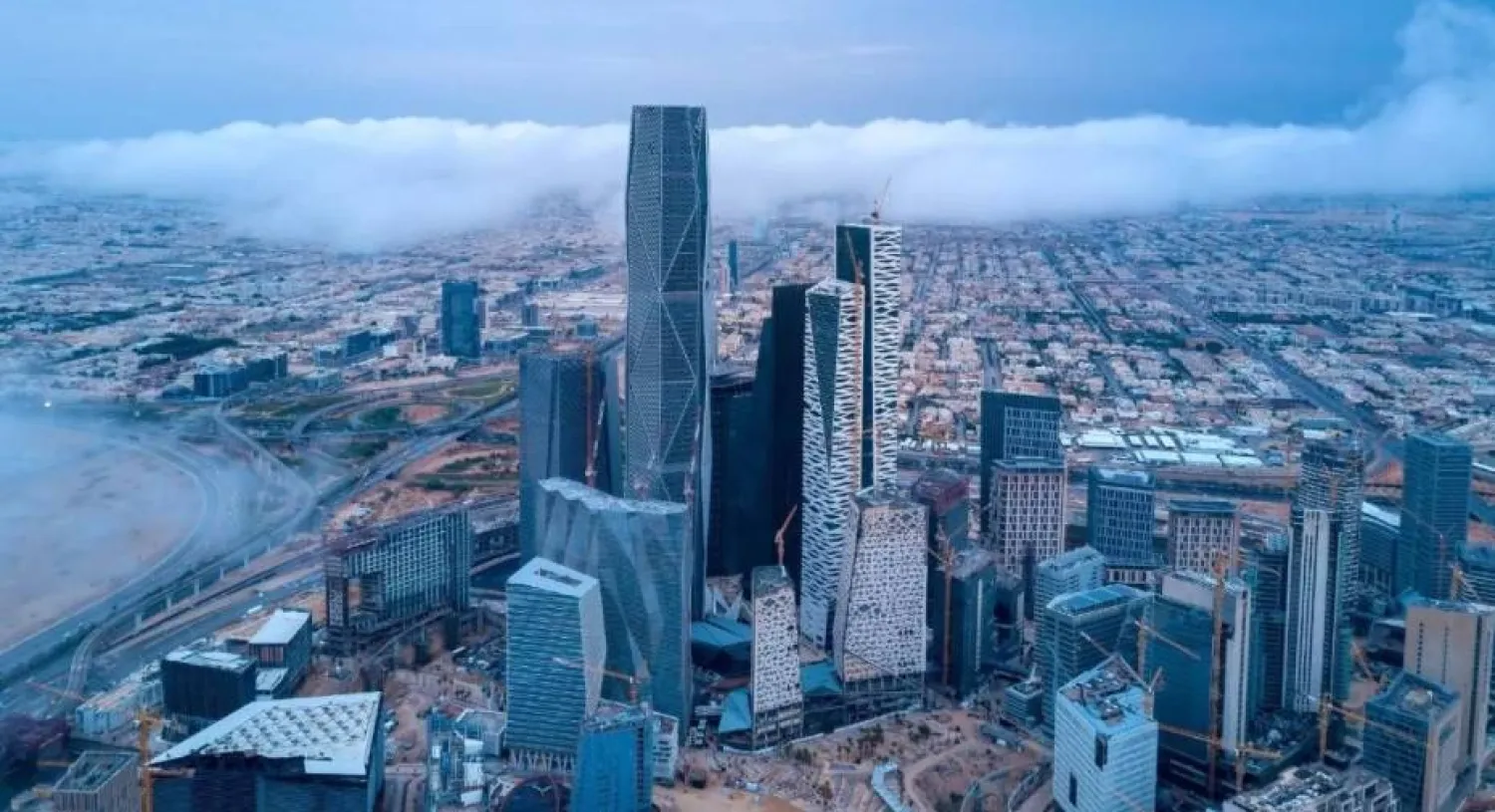
The Saudi capital Riyadh (SPA)
TT

Saudi PIF Tops List of Sovereign Funds Worldwide in 2025

The Saudi capital Riyadh (SPA)

Global SWF’s sixth annual report revealed that 2025 marked a historic shift in the global financial balance of power, as investors together with central banks notched a record $60 trillion in assets and foreign reserves.

The report also showed that Saudi Arabia’s Public Investment Fund (PIF) was crowed top of the list of sovereign funds worldwide in terms of expenditure in 2025, amounting to $36.2 billion.

This lead reflects the success of ‘Vision 2030’ in turning the Fund into a strategic compass that sets the direction of global financial flows; from tech innovation hubs in the US to giant development projects in Riyadh.

According to Global SWF, behind this leap lies a pivotal deal: the fund's acquisition of gaming giant “Electronic Arts” (EA) for $28.8 billion.

Also, PIF along with the seven Gulf sovereign wealth funds invested a record $119 billion in 2025, a 43% increase from 2024, and representing 43% of all capital invested by state-owned investors globally.

In addition to the PIF, the seven Gulf sovereign funds include the Abu Dhabi Investment Authority (ADIA), the Investment Corporation of Dubai, the Mubadala Investment Company, ADQ (Abu Dhabi Developmental Holding Company), Qatar Investment Authority (QIA), and the Kuwait Investment Authority (KIA).

Also, sovereign wealth fund assets alone hit a fresh record - $15 trillion - according to Global SWF, which uses a combination of public data and official reports to monitor the assets and spending of the world's state-owned investors, including wealth and pension funds and central banks.

Gulf-based funds, with $6 trillion in assets, have recorded a remarkable 48% increase in investment activity compared to 2024, accounting for almost half of the world's deals.

Sovereign Wealth Funds (SWFs) reached a historic high in December 2025, passing $15 trillion for the first time ever.

Together with Public Pension Funds (PPFs) and Central Banks (CBs), which also grew their balance sheets significantly during the year, they now collectively manage $60 trillion in assets and reserves. Projections suggest that this figure could increase further to circa $80 trillion by 2030.

In 2025, financial markets performed strongly around the world.

Most global indices ended the year with significant gains, except for Saudi Arabia’s TASI, which fell 12.5% causing the slowdown in IPOs.

Global bonds posted a strong gain of 7.5%, while stocks surged by 21.5% as measured by the S&P Global 1200. Private markets are always more difficult to measure, but according to public markets proxies, infrastructure had a strong year, up 18.1%, while real estate and private equity performed poorly.

Concerning the geographical distribution of global assets, Asia maintained its lead, accounting for more than one-third of global assets, followed by North America with 26%, Europe with 19% and the Middle East and North Africa with 15%.

The United States remained the most attractive destination for sovereign wealth funds, capturing 47% of all deals. Concurrently, investments in emerging markets experienced a 26% decline.

In terms of key themes, digitalization remained a key trend across asset classes, as sovereign investors continued to allocate significant capital to digital infrastructure, data centers, and AI companies and funds.

As a result, most sectors except for industrial products and financial services, received more capital in 2025 than they did in 2024.

The recovery of real estate and infrastructure was remarkable, even if to lower levels than their peak in 2021-2022. Investments in climate-related companies reached $ 35.7 billion – a new record – and private credit continued to grow as an option within illiquid markets.


Egypt Non-Oil Private Activity Expands Second Month in December, PMI Shows

 Fireworks burst over the historical site of the Giza Pyramids, on the outskirts of Cairo, Egypt, early Thursday, Jan. 1, 2026. (AP)
Fireworks burst over the historical site of the Giza Pyramids, on the outskirts of Cairo, Egypt, early Thursday, Jan. 1, 2026. (AP)
TT

Egypt Non-Oil Private Activity Expands Second Month in December, PMI Shows

 Fireworks burst over the historical site of the Giza Pyramids, on the outskirts of Cairo, Egypt, early Thursday, Jan. 1, 2026. (AP)
Fireworks burst over the historical site of the Giza Pyramids, on the outskirts of Cairo, Egypt, early Thursday, Jan. 1, 2026. (AP)

Egypt's non-oil private sector expanded for the second straight month in December, albeit at a slower pace, with firms benefiting from increased new orders and a slight expansion in output, a business survey showed on Tuesday.

The S&P Global Egypt Purchasing Managers' Index (PMI) retreated to 50.2 in December from a 61-month high ‌of 51.1 ‌in November, topping the ‌50.0 ⁠threshold that ‌separates growth from contraction for a second month after holding below that line since last March.

A PMI reading of 50.2 historically correlates with annual gross domestic product growth of approximately 5%, S&P ⁠Global said.

"Improvements in order books have been a ‌clear factor behind strong business ‍performances over the ‍past few months," S&P Global economist ‍David Owen said.

Purchasing activity rose for the first time in 10 months, while employment fell. Cost inflation picked up slightly from its recent low in November, resulting in only a marginal increase in ⁠average selling prices.

Driving the improvement in business conditions were additional expansions in activity and new orders, reflecting reports from survey panelists of stronger demand conditions and increased client spending.

Employment declined, with many firms citing challenges in replacing staff who had left.

The firms surveyed viewed the next 12 months as ‌neutral, with the future output index at 50.


Oil Dips on Ample Supply Outlook, Market Weighs Venezuelan Output

FILE PHOTO: Crude oil drips from a valve at an oil well operated by Venezuela's state oil company PDVSA, in the oil rich Orinoco belt, near Morichal at the state of Monagas April 16, 2015. Picture taken on April 16, 2015. REUTERS/Carlos Garcia Rawlins/File Photo
TT

Oil Dips on Ample Supply Outlook, Market Weighs Venezuelan Output

FILE PHOTO: Crude oil drips from a valve at an oil well operated by Venezuela's state oil company PDVSA, in the oil rich Orinoco belt, near Morichal at the state of Monagas April 16, 2015. Picture taken on April 16, 2015. REUTERS/Carlos Garcia Rawlins/File Photo

Oil prices fell on Tuesday on expectations of ample global supply amid weak demand, and as the market weighed the prospect of higher Venezuelan crude output following the US capture of President Nicolas Maduro.

Brent crude futures fell 0.2%, or 14 cents, to $61.62 a barrel by 0450 GMT while US West Texas Intermediate crude was at $58.13 a barrel, down 0.3% or 19 cents.

Priyanka Sachdeva, senior market analyst at brokerage Phillip Nova, noted the oil price response to major geopolitical events, such as the US military action in Venezuela and ongoing strikes on Russian ‌energy infrastructure, had ‌been surprisingly muted, suggesting fundamental demand-supply factors remained the ‌key ⁠concern.

"From a ‌supply perspective, the oil complex remains packed with barrels. According to the latest International Energy Agency (IEA) and US Energy Information Administration (EIA) data, global crude supply continues to outpace consumption growth, pushing inventories higher and keeping downward pressure on prices," she said. Market participants polled by Reuters in December said they expected oil prices to be under pressure in 2026 due to growing supply and weak demand.

Price pressure ⁠could be exacerbated by the US capture of Venezuela's leader on Saturday, increasing the chance of ‌an end to a US embargo on Venezuelan ‍oil and potentially leading to higher ‍output. Maduro pleaded not guilty in a New York court on Monday ‍to narcotics charges. The administration of US President Donald Trump plans to meet US oil executives this week to discuss boosting Venezuelan oil production, a person familiar with the matter told Reuters.

"I think if the Trump playbook even partially comes to pass, Venezuelan crude oil production should increase... Should it increase, there will be more pressure on an already over-supplied market," said Marex ⁠analyst Ed Meir. Venezuela is a founding member of the Organization of the Petroleum Exporting Countries and has the world's largest oil reserves at about 303 billion barrels. However, its oil sector has long been in decline due in part to under-investment and US sanctions.

Its average output last year was 1.1 million barrels per day. Oil analysts said Venezuelan output could increase up to half a million barrels a day over the next two years with political stability and US investment.

ANZ Research said in a note, however, that they saw heightened levels of political instability as the more likely scenario, and that a significant injection ‌of funds would be required to increase output beyond Venezuela's current effective capacity.


Gold Hits One-week High on Fed Rate-cut Bets, Venezuela Turmoil

FILE PHOTO: UK gold bars and gold Sovereign coins are displayed at Baird & Co in Hatton Garden in London, Britain, October 8, 2025. REUTERS/Hiba Kola//File Photo
TT

Gold Hits One-week High on Fed Rate-cut Bets, Venezuela Turmoil

FILE PHOTO: UK gold bars and gold Sovereign coins are displayed at Baird & Co in Hatton Garden in London, Britain, October 8, 2025. REUTERS/Hiba Kola//File Photo

Gold rose further on Tuesday to hit a one-week high, as dovish comments from Federal Reserve officials boosted interest rate-cut bets and Venezuela tensions bolstered safe-haven demand.

Spot gold was up 0.5% at $4,469.96 per ounce, as of 0534 GMT, after rising nearly 3% in the last session. Bullion hit a record high of $4,549.71 on December 26, and logged its best annual ‌performance since ‌1979 last year with a jump ‌of ⁠64%.

US gold ‌futures for February delivery rose 0.7% to $4,481.30, Reuters reported.

"(Comments by Fed officials) certainly didn't hurt but it doesn't look like the calculus has changed all that much. We of course have a big week this week with the jobs report on Friday," said Ilya Spivak, head of global macro at Tastylive.

Minneapolis Fed President Neel ⁠Kashkari said on Monday inflation was slowly easing, but there was a risk ‌the jobless rate could "pop" higher, increasing the ‍likelihood of a rate cut.

Investors currently ‍expect at least two rate cuts this year, while they ‍look to the nonfarm payroll report, due on Friday, for more monetary policy cues.

Toppled Venezuelan President Nicolas Maduro pleaded not guilty on Monday to narcotics charges after US President Donald Trump's capture of him rattled world leaders and left officials in Caracas scrambling to regroup.

"The capture of Maduro illustrated this rupture ⁠between the US and China and more broadly (the ongoing trend of) de-globalization," Spivak said.

Non-yielding assets tend to do well in a low-interest-rate environment and during times of geopolitical or economic uncertainty.

Spot silver gained 3.5% to $79.18 per ounce, after hitting an all-time high of $83.62 on December 29. Silver ended 2025 with annual gains of 147%, far outpacing gold, in what was its best year on record.

Spot platinum was up 2.8% at $2,334.25 per ounce, after rising to an all-time high of $2,478.50 last Monday. It rose more than 5% ‌earlier in the session to a one-week high.

Palladium traded 1.9% higher at $1,739.25 per ounce.