


Saudi Economy Poised for Strong Non-Oil Momentum in 2026

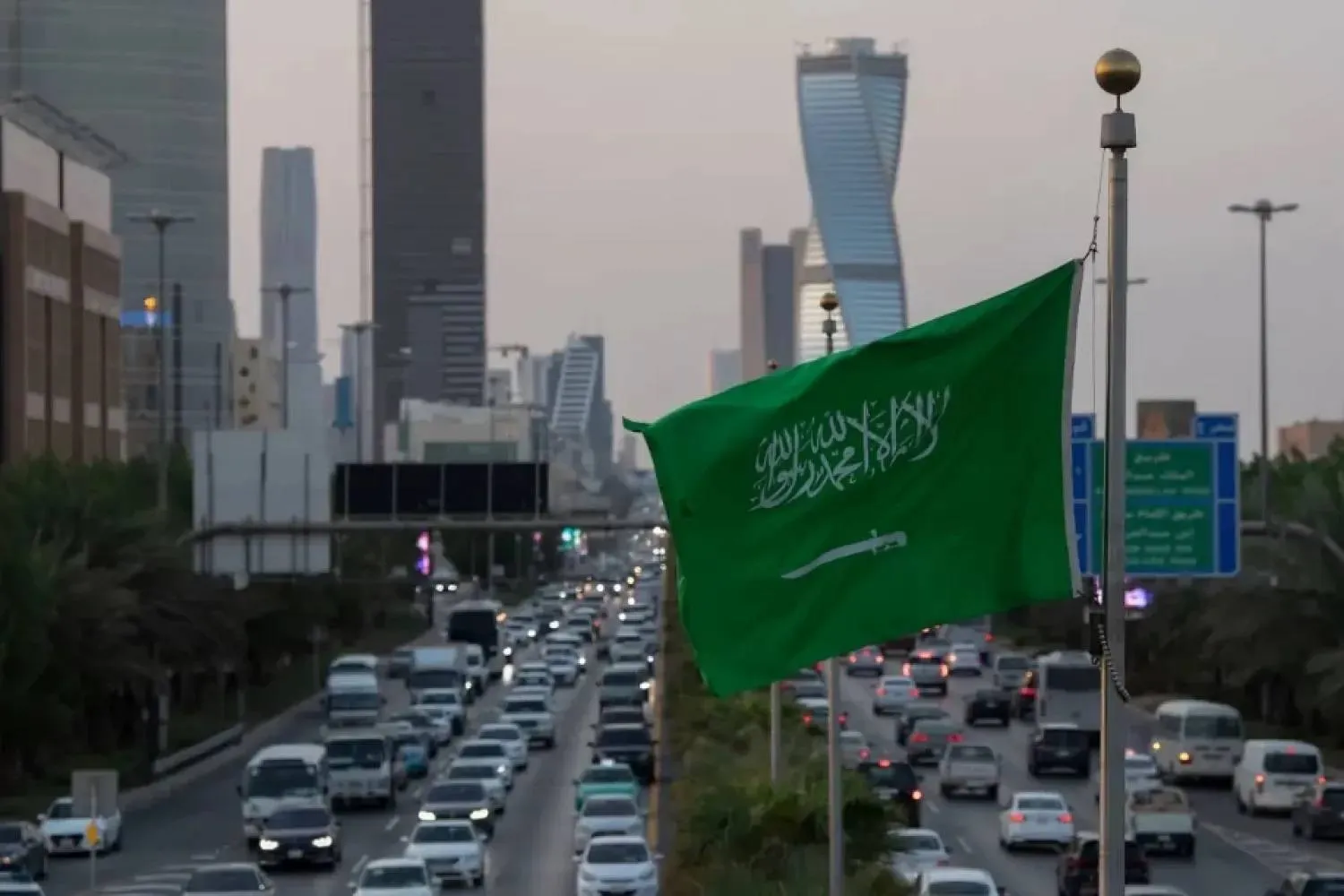
A general view of the Saudi capital Riyadh. (SPA)
TT

Saudi Economy Poised for Strong Non-Oil Momentum in 2026

A general view of the Saudi capital Riyadh. (SPA)

Saudi Arabia enters 2026 amid an accelerating transformation driven by Vision 2030 targets, even as global economic growth slows to about 3.1% and global inflation eases to roughly 3.7%, according to IMF estimates.

With geopolitical tensions and protectionist policies heightening global uncertainty, the Kingdom is betting on robust domestic demand and a broader non-oil base to secure more sustainable growth and reduce exposure to oil-market volatility.

Finance Ministry projections point to real GDP growth of 4.6% in 2026, led by non-oil activities as the main engine of expansion. This momentum reflects the rapid development of promising sectors, from tourism and entertainment to industry, transport and logistics, which have lifted their contribution to output. In 2024, non-oil activities reached a record SAR 2.6 trillion ($693 billion), growing 6%.

Continued growth

Alongside growth, a structural shift is evident on two fronts. First, digital transformation is accelerating: electronic payments accounted for 79% of individual transactions in 2024, e-commerce sales surged 64.3% by end-August 2025, and point-of-sale sales rose 6.1%. Second, the private sector and investment are playing a larger role. The purchasing managers’ index stood at a robust 60.2 points in October 2025, signaling stronger demand, output and hiring.

On macro stability, the 2026 budget statement forecasts inflation at 2%, supported by “flexible and balanced” fiscal policies focused on spending efficiency, service quality and the continued rollout of priority megaprojects.

Net foreign direct investment inflows reached SAR 46.5 billion ($12.4 billion) in the first half of 2025, up 29.2%, underscoring sustained confidence in the business environment.

Expansion of promising activities

Economic indicators in 2025 extended the strong results of 2024. From the start of 2025 through the third quarter, real GDP grew 4.1% year on year, driven by a 4.7% expansion in non-oil activities.

Quarterly growth in non-oil sectors reached 4.9% in Q1 and 4.6% in Q2, with wholesale and retail trade, restaurants and hotels up 6.6%; finance, insurance and business services up 5%; and construction up 3.8%. Preliminary estimates show non-oil growth of 4.5% in Q3.

Oil activities grew 3.9% over the same period, reflecting market developments linked to a gradual phase-out of an additional voluntary cut of 2.2 million barrels per day from April to September 2025.

Government activities expanded 1.9%, supported by faster execution of projects with lasting economic impact.

On the demand side, real private final consumption rose 3.5% in the first half of 2025, buoyed by localization programs and an improving labor market. Non-government fixed capital formation increased 4.6%, driven by a 5.2% rise in non-oil investment.

Labor market, tourism and trade

Labor market indicators improved further: overall unemployment fell to 3.2% in Q2 2025, while Saudi unemployment declined to 6.8%. Female participation reached 34.5%, and the number of Saudis employed in the private sector rose by 144,100 year on year to around 2.5 million.

Tourism played a pivotal role. Saudi Arabia ranked first globally in growth of international tourism receipts in Q1 2025 versus Q1 2019, and third in international arrivals, with a 102% increase, supporting the goal of welcoming 150 million visitors annually by 2030.

Average inflation from early 2025 through October hovered near 2%, with the full-year average expected around 2.3%. The goods trade balance posted a surplus of SAR 162 billion ($43.2 billion) through Q3 2025, aided by 17.7% growth in non-oil exports.

Imports rose 10.4%, largely intermediate and capital goods. The travel account recorded a surplus of SAR 32.2 billion in the first half.

Finance, markets and fiscal policy

Banking assets exceeded SAR 4.9 trillion by September 2025, with credit above SAR 3.2 trillion. Corporate lending climbed 19%, non-performing loans fell below 1.2%, and capital adequacy exceeded 19.6%. Equity markets saw 14 listings by end-September, rising institutional participation, and increased foreign ownership.

Preliminary estimates put the 2025 budget deficit at SAR 245 billion (5.3% of GDP), reflecting a flexible fiscal stance supporting transformation. Public debt stood near SAR 1.47 trillion by Q3, with reserves maintained at about SAR 390 billion.



Oil Dips on Ample Supply Outlook, Market Weighs Venezuelan Output

FILE PHOTO: Crude oil drips from a valve at an oil well operated by Venezuela's state oil company PDVSA, in the oil rich Orinoco belt, near Morichal at the state of Monagas April 16, 2015. Picture taken on April 16, 2015. REUTERS/Carlos Garcia Rawlins/File Photo
TT

Oil Dips on Ample Supply Outlook, Market Weighs Venezuelan Output

FILE PHOTO: Crude oil drips from a valve at an oil well operated by Venezuela's state oil company PDVSA, in the oil rich Orinoco belt, near Morichal at the state of Monagas April 16, 2015. Picture taken on April 16, 2015. REUTERS/Carlos Garcia Rawlins/File Photo

Oil prices fell on Tuesday on expectations of ample global supply amid weak demand, and as the market weighed the prospect of higher Venezuelan crude output following the US capture of President Nicolas Maduro.

Brent crude futures fell 0.2%, or 14 cents, to $61.62 a barrel by 0450 GMT while US West Texas Intermediate crude was at $58.13 a barrel, down 0.3% or 19 cents.

Priyanka Sachdeva, senior market analyst at brokerage Phillip Nova, noted the oil price response to major geopolitical events, such as the US military action in Venezuela and ongoing strikes on Russian ‌energy infrastructure, had ‌been surprisingly muted, suggesting fundamental demand-supply factors remained the ‌key ⁠concern.

"From a ‌supply perspective, the oil complex remains packed with barrels. According to the latest International Energy Agency (IEA) and US Energy Information Administration (EIA) data, global crude supply continues to outpace consumption growth, pushing inventories higher and keeping downward pressure on prices," she said. Market participants polled by Reuters in December said they expected oil prices to be under pressure in 2026 due to growing supply and weak demand.

Price pressure ⁠could be exacerbated by the US capture of Venezuela's leader on Saturday, increasing the chance of ‌an end to a US embargo on Venezuelan ‍oil and potentially leading to higher ‍output. Maduro pleaded not guilty in a New York court on Monday ‍to narcotics charges. The administration of US President Donald Trump plans to meet US oil executives this week to discuss boosting Venezuelan oil production, a person familiar with the matter told Reuters.

"I think if the Trump playbook even partially comes to pass, Venezuelan crude oil production should increase... Should it increase, there will be more pressure on an already over-supplied market," said Marex ⁠analyst Ed Meir. Venezuela is a founding member of the Organization of the Petroleum Exporting Countries and has the world's largest oil reserves at about 303 billion barrels. However, its oil sector has long been in decline due in part to under-investment and US sanctions.

Its average output last year was 1.1 million barrels per day. Oil analysts said Venezuelan output could increase up to half a million barrels a day over the next two years with political stability and US investment.

ANZ Research said in a note, however, that they saw heightened levels of political instability as the more likely scenario, and that a significant injection ‌of funds would be required to increase output beyond Venezuela's current effective capacity.


Gold Hits One-week High on Fed Rate-cut Bets, Venezuela Turmoil

FILE PHOTO: UK gold bars and gold Sovereign coins are displayed at Baird & Co in Hatton Garden in London, Britain, October 8, 2025. REUTERS/Hiba Kola//File Photo
TT

Gold Hits One-week High on Fed Rate-cut Bets, Venezuela Turmoil

FILE PHOTO: UK gold bars and gold Sovereign coins are displayed at Baird & Co in Hatton Garden in London, Britain, October 8, 2025. REUTERS/Hiba Kola//File Photo

Gold rose further on Tuesday to hit a one-week high, as dovish comments from Federal Reserve officials boosted interest rate-cut bets and Venezuela tensions bolstered safe-haven demand.

Spot gold was up 0.5% at $4,469.96 per ounce, as of 0534 GMT, after rising nearly 3% in the last session. Bullion hit a record high of $4,549.71 on December 26, and logged its best annual ‌performance since ‌1979 last year with a jump ‌of ⁠64%.

US gold ‌futures for February delivery rose 0.7% to $4,481.30, Reuters reported.

"(Comments by Fed officials) certainly didn't hurt but it doesn't look like the calculus has changed all that much. We of course have a big week this week with the jobs report on Friday," said Ilya Spivak, head of global macro at Tastylive.

Minneapolis Fed President Neel ⁠Kashkari said on Monday inflation was slowly easing, but there was a risk ‌the jobless rate could "pop" higher, increasing the ‍likelihood of a rate cut.

Investors currently ‍expect at least two rate cuts this year, while they ‍look to the nonfarm payroll report, due on Friday, for more monetary policy cues.

Toppled Venezuelan President Nicolas Maduro pleaded not guilty on Monday to narcotics charges after US President Donald Trump's capture of him rattled world leaders and left officials in Caracas scrambling to regroup.

"The capture of Maduro illustrated this rupture ⁠between the US and China and more broadly (the ongoing trend of) de-globalization," Spivak said.

Non-yielding assets tend to do well in a low-interest-rate environment and during times of geopolitical or economic uncertainty.

Spot silver gained 3.5% to $79.18 per ounce, after hitting an all-time high of $83.62 on December 29. Silver ended 2025 with annual gains of 147%, far outpacing gold, in what was its best year on record.

Spot platinum was up 2.8% at $2,334.25 per ounce, after rising to an all-time high of $2,478.50 last Monday. It rose more than 5% ‌earlier in the session to a one-week high.

Palladium traded 1.9% higher at $1,739.25 per ounce.


Egypt Signs MoU to Supply Syria with Gas, Ministry Says

Crowds gather in a street decorated with lights during New Year celebrations in Damascus, Syria, 31 December 2025. (EPA)
TT

Egypt Signs MoU to Supply Syria with Gas, Ministry Says

Crowds gather in a street decorated with lights during New Year celebrations in Damascus, Syria, 31 December 2025. (EPA)

Egypt has signed two memoranda of understanding (MoU) with Syria to cooperate on supplying gas for power generation and ‌meeting Syria's ‌petroleum product ‌needs, Egypt's ⁠petroleum ministry ‌said on Monday.

The statement said that Syria would receive gas through regasification ships or gas ⁠transportation networks, without providing details ‌on quantities.

Due ‍to ‍the destruction of ‍energy infrastructure during its 14-year civil war, Syria today produces just a fraction of the electricity it needs, though ⁠the supply of power has improved notably in the past months thanks to supplies of gas from Azerbaijan and Qatar.
