


Dar Global CEO: Saudi Arabia Emerges as One of the World’s Most Attractive Property Markets

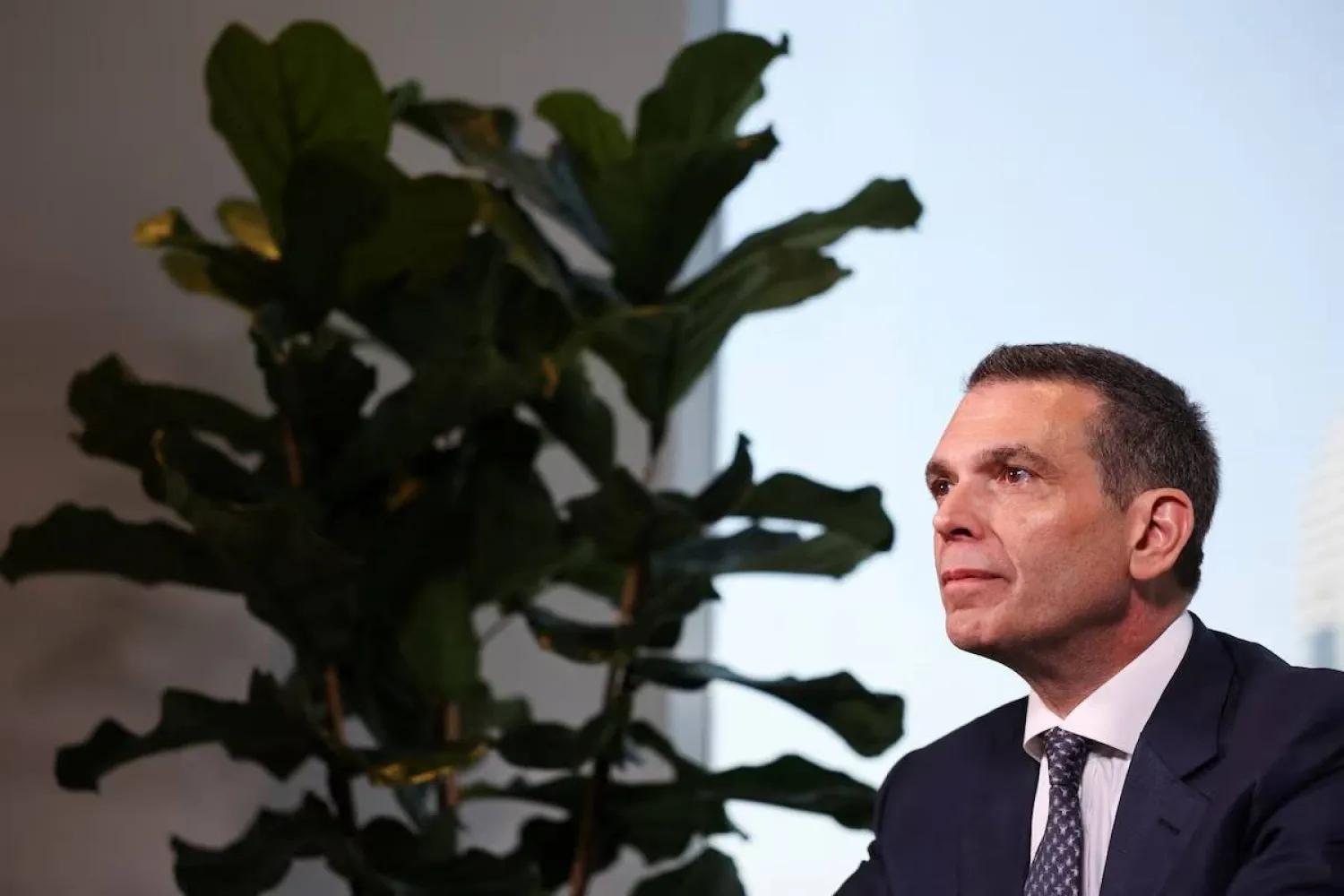
Ziad El Chaar, Chief Executive Officer of Dar Global, attends an interview with Reuters, in Dubai, United Arab Emirates, April 29, 2025. REUTERS/Amr Alfiky
TT

Dar Global CEO: Saudi Arabia Emerges as One of the World’s Most Attractive Property Markets

Ziad El Chaar, Chief Executive Officer of Dar Global, attends an interview with Reuters, in Dubai, United Arab Emirates, April 29, 2025. REUTERS/Amr Alfiky

As global investors reassess their priorities, Saudi Arabia has firmly positioned itself as one of the world’s most attractive real estate markets and among the largest within the G20, according to Ziad El Chaar, CEO of Dar Global.

Annual real estate transactions in the Kingdom are approaching $100 billion, a scale that El Chaar says makes Saudi Arabia impossible to ignore over the coming decade.

“Any investor who overlooks the Saudi market in the next ten years will undoubtedly be a loser,” El Chaar told Asharq Al-Awsat, pointing to a market that consistently injects around $100 billion annually into real estate activity.

Beyond the numbers, El Chaar highlighted what he described as Saudi Arabia’s “proactive and forward-looking vision,” noting that the Kingdom has succeeded where many Western capitals have faltered.

By establishing a clear regulatory framework that distinguishes between local and foreign property ownership, Saudi Arabia has managed to protect domestic demand while simultaneously opening its doors to global capital.

This regulatory maturity, he said, prompted Dar Global to significantly expand its investment exposure in the Kingdom to SAR 38 billion (approximately $10 billion), through a series of exclusive developments branded with the Trump Organization.

El Chaar said Saudi Arabia now ranks among the largest real estate markets in the G20, driven by heavy infrastructure spending, the hosting of major international events, rapid growth in aviation and tourism, and investor-friendly policies. Together, these factors have made the Kingdom one of the most compelling real estate destinations worldwide.

He also praised Saudi Arabia’s regulatory foresight, particularly the zoning of areas for local versus foreign ownership and the introduction of minimum thresholds for foreign investment. He said these measures prevent market distortions and protect local buyers, an achievement that many Western economies have struggled to replicate.

El Chaar stressed the role of the General Real Estate Authority in organizing the sector and safeguarding investor interests, noting that while regulations may be stringent for developers, they provide long-term stability and fairness for all market participants.

Flagship Developments

Dar Global has recently launched several large-scale projects in Saudi Arabia in partnership with the Trump Organization, with a combined value of about SAR 38 billion.

El Chaar said the developments position the company as the largest non-government real estate developer in the Kingdom and reflect strong confidence in local demand, as well as the group’s ability to attract foreign investors.

The company is currently developing two projects in Riyadh and one in Jeddah. The CEO reiterated that any foreign real estate investor who fails to include Saudi Arabia in their portfolio over the next decade risks missing out on one of the world’s fastest-transforming economies.

Among Dar Global’s most prominent Riyadh projects is Saffar Valley, spanning 2.6 million square meters. The gated development will feature palaces only, surrounded by a Trump-branded golf course and a Trump Hotel, targeting an elite segment of global investors. El Chaar said the project stands out regionally for its scale, exclusivity, and prime location.

Jeddah Expansion

In Jeddah, Dar Global recently announced Trump Plaza, following the strong performance of Trump Tower Jeddah. The mixed-use project will be located on King Abdulaziz Road and will include Grade A offices, retail space, serviced apartments, and residential units overlooking a central park equivalent in size to a football field.

Timelines and Growth

Construction has already begun on the two main developments, with completion expected before 2030. Trump Tower Jeddah has entered the execution phase, with a main contractor appointed and delivery scheduled within 30 to 33 months.

El Chaar said Dar Global spent the past four and a half years building a strong institutional platform in the region, enabling its investment portfolio to grow from $7 billion last year to between $23 billion and $25 billion today. He added that the company’s move to the Premium segment of the London Stock Exchange enhances its eligibility for inclusion in major global indices.

On market capacity, El Chaar said domestic demand alone is sufficient to support Saudi real estate growth, while Dar Global’s specialized, high-end developments target a different segment and act as an additional magnet for foreign capital.

He concluded that Saudi Arabia’s cultural and regulatory transformation - from visa facilitation to tourism development and openness to foreign investment - has made the Kingdom one of the world’s most attractive destinations.

“Today, investors arrive in Saudi Arabia to a welcoming environment,” he said. “Small details, but they make a big difference in investment decisions.”


Citibank Closes UAE Branches Temporarily as Precautionary Measure

A photograph shows Dubai's skyline with the Burj Khalifa at the center on March 11, 2026. (Photo by FADEL SENNA / AFP)
TT

Citibank Closes UAE Branches Temporarily as Precautionary Measure

A photograph shows Dubai's skyline with the Burj Khalifa at the center on March 11, 2026. (Photo by FADEL SENNA / AFP)

Citibank will close its branches and financial centers in the United Arab Emirates through March 14 as a precautionary measure, the bank's website showed on Thursday, following a wave of banks sending staff home as the crisis in the Middle East deepens.

The ⁠US bank plans ⁠to reopen all affected branches on March 16, but the branch in the Mall of the Emirates in central Dubai, will remain open ⁠during this period, it said.

Earlier this week, Citi told its staff to evacuate offices in the Dubai International Financial Centre (DIFC) and Dubai's Oud Metha neighborhood, telling them to work from home until further notice.

HSBC, another major global bank, has closed all branches in ⁠Qatar ⁠until further notice, according to a customer notice, saying the measure was to ensure the safety of staff and customers.

Banks across the region have stepped up precautions after Iran threatened banking interests linked to the US and Israel.


OPEC: Ongoing Geopolitical Developments Warrant Close Monitoring of Markets

OPEC's report focused on February market conditions prior to the Feb. 28 conflict outbreak (Reuters)
TT

OPEC: Ongoing Geopolitical Developments Warrant Close Monitoring of Markets

OPEC's report focused on February market conditions prior to the Feb. 28 conflict outbreak (Reuters)

The Organization of Petroleum Exporting Countries (OPEC) has maintained, for the seventh consecutive month, its 2026-2027 global oil demand growth projections unchanged.

OPEC kept its forecast for global oil demand growth at 1.38 million bpd for 2026 and at 1.3 million bpd for 2027.

The Iran war has severely impacted global supply chains, as the Gulf region is crucial to the world's oil and gas supply.

The war sent oil prices surging close to $120 a barrel on Monday before they later eased to around the low $90s, as markets weighed the risk of wider disruption against hopes the conflict might still be contained.

OPEC's report focused on February market conditions prior to the Feb. 28 conflict outbreak, therefore, not reflecting the war’s impact on the volume or price of oil.

“Ongoing geopolitical developments warrant close monitoring, although their impact, if any, on the growth forecast may be too early to determine,” OPEC said ⁠in the report, referring to economic growth.

OPEC also ⁠said output by the wider OPEC+, which includes the Organization of the Petroleum Exporting Countries plus other producers such as Russia, averaged 42.72 million bpd in February, up 445,000 bpd from January, citing secondary sources.

Crude oil production by OPEC rose by 164,000 bpd in February compared to January 2026, reaching around 28.63 million bpd, according to the group's latest Monthly Oil Market Report.

The largest output increase came from Venezuela, while Nigeria recorded the biggest decline last month.

And for the second month, OPEC kept its forecast for the growth of oil supply of non-OPEC countries at 630,000 bpd in 2026, and at 610,000 bpd in 2027.

Early this month, the eight OPEC+ countries agreed to a modest oil output boost of 206,000 bpd for April, a decision framed as a response to steady market fundamentals and global economic growth.

The eight members had raised production quotas by about 2.9 million bpd from April through December 2025, roughly 3% of global demand, before pausing increases for January to March 2026 due to seasonal weakness.


IMF Says it Has Made Progress in Pakistan Funding Talks

Students ride on motorbikes with their parents while heading to schools, after the government announced that schools would close for two weeks, starting March 16, following austerity measures to save fuel amid the US-Israeli conflict with Iran, in Karachi, Pakistan, March 10, 2026. REUTERS/Akhtar Soomro
TT

IMF Says it Has Made Progress in Pakistan Funding Talks

Students ride on motorbikes with their parents while heading to schools, after the government announced that schools would close for two weeks, starting March 16, following austerity measures to save fuel amid the US-Israeli conflict with Iran, in Karachi, Pakistan, March 10, 2026. REUTERS/Akhtar Soomro

The International Monetary Fund said on Wednesday it has made "considerable progress" in talks with Pakistan ⁠over its funding ⁠facilities and that discussions will continue.

"While considerable progress was made ⁠in the discussions, these will continue in the coming days, including to more fully assess the impact of recent global developments on Pakistan’s economy ⁠and ⁠the EFF-supported (Extended Fund Facility) program," IMF advisor Iva Petrova said in the statement.

Pakistan is in an ongoing $7 billion IMF program.

Tanker drivers in Pakistan said they were facing long waits at depots due to a shortage of fuel, as the government played down fears of another rise in prices.

The US-Israeli war with Iran has disrupted shipping and damaged oil and gas facilities in the Middle East, raising global oil prices as countries scramble to deal with concerns over supply.

Dozens of tankers, which supply fuel across Pakistan, were seen parked at the side of the road on Tuesday at depots near Lahore, the capital of Punjab, the country's most populous province.

Last week, the government in Islamabad hiked prices by about 20 percent, triggering long lines and panic buying at filling stations across the country.
