


Oil Gains on Upbeat China Data; Greenland in the Spotlight

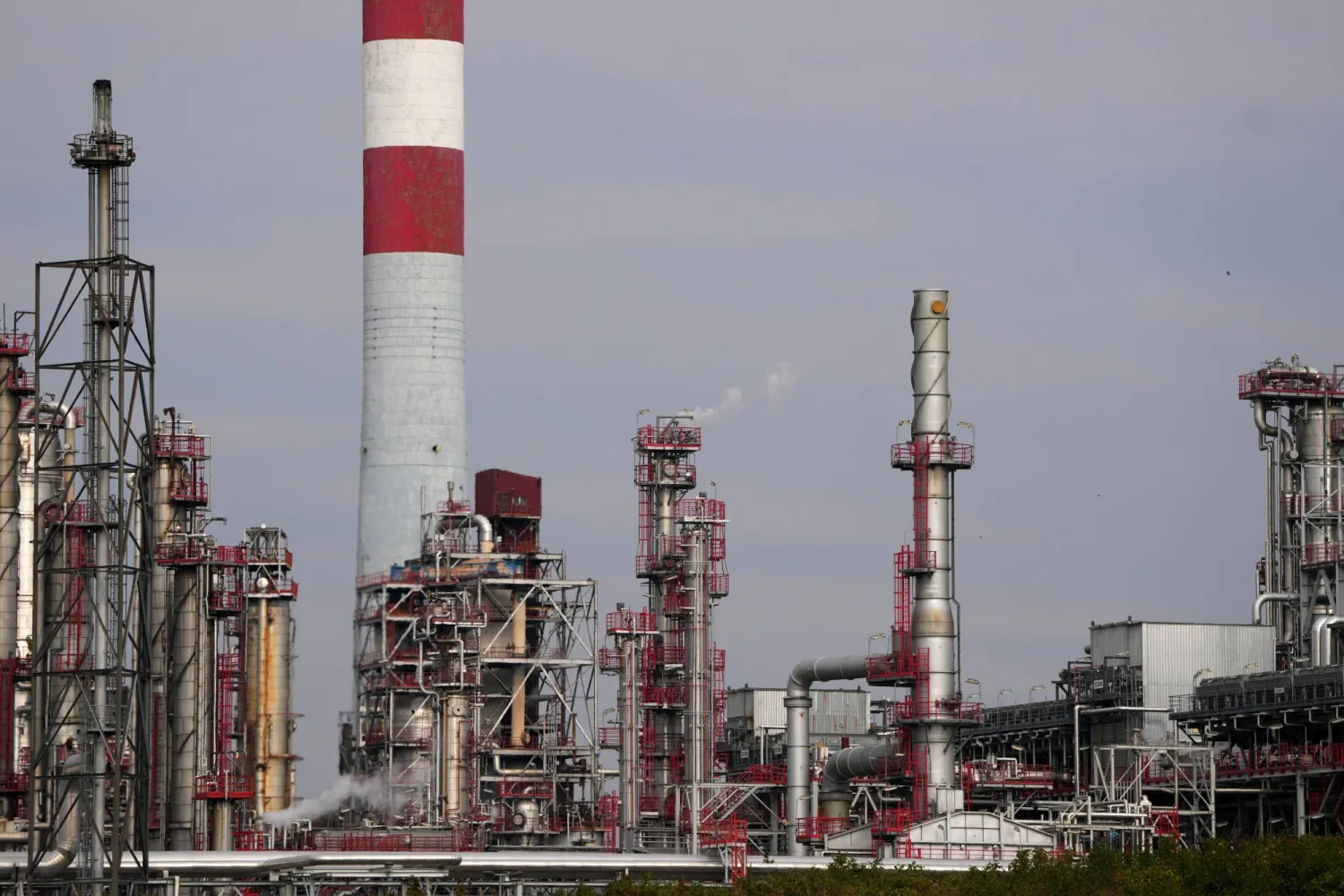
A view of Petroleum Industry of Serbia (NIS) oil refinery in Pancevo, Serbia, Thursday, Oct. 9, 2025. (AP Photo/Darko Vojinovic)
TT

Oil Gains on Upbeat China Data; Greenland in the Spotlight

A view of Petroleum Industry of Serbia (NIS) oil refinery in Pancevo, Serbia, Thursday, Oct. 9, 2025. (AP Photo/Darko Vojinovic)

Oil prices rose on Tuesday after better-than-expected Chinese economic growth data boosted optimism about demand, while markets are also watching President Donald Trump's threats to increase US tariffs on European countries because of his desire to buy Greenland.

Brent crude futures rose 19 cents, or 0.3 percent, to $64.13 a barrel by 01:00 GMT. US West Texas Intermediate crude for February, which expires on Tuesday, also rose 25 cents, or 0.4 percent, from Friday's close to $59.69, Reuters reported.

The price of the March West Texas Intermediate crude contract, which is the most traded, also rose by 0.08 cents, or 0.13 percent, to $59.42.

West Texas Intermediate crude contracts were not settled on Monday due to the Martin Luther King Jr. Day holiday in the United States.

“West Texas Intermediate crude is trading slightly higher... supported by fourth-quarter 2025 GDP data released yesterday, which came in better than expected,” said Tony Sycamore, market analyst at IG, in a note. “This resilience from the world's largest oil importer has boosted demand sentiment.”

According to data released on Monday, the Chinese economy grew by 5.0 percent last year, achieving the government's goal by acquiring a record share of global demand for goods to offset weak domestic consumption. This strategy has mitigated the impact of US tariffs, but it is becoming increasingly difficult to maintain.

Government data released on Monday showed that Chinese refinery output rose 4.1 percent year-on-year in 2025, while crude oil production grew 1.5 percent. Both indicators recorded their highest levels ever.

Over the weekend, fears of a renewed trade war escalated after Trump stated that he would impose an additional 10 percent tariff from February 1 on goods imported from Denmark, Norway, Sweden, France, Germany, the Netherlands, Finland, and Britain, rising to 25 percent on June 1 if no agreement is reached on Greenland.

“Contributing to the support of the oil price was the weakness of the US dollar, which resulted from markets selling the dollar in response to President Trump's continued threats to impose tariffs on Greenland,” Sycamore added.

The dollar fell 0.3 percent against major currencies. A weaker dollar makes dollar-denominated oil contracts cheaper for holders of other currencies.

Markets are closely monitoring the Venezuelan oil sector after Trump announced that the United States would take over the management of this sector following the arrest of President Nicolas Maduro.

Multiple trade sources reported that Vitol offered Venezuelan oil to Chinese buyers at discounts of up to about $5 a barrel compared to the price of Brent crude on the Intercontinental Exchange for April delivery.

China is also importing the largest amount of Russian Urals crude since 2023 at prices lower than Iranian oil prices, after India, the largest crude importer, sharply reduced its imports due to Western sanctions and ahead of the European Union's ban on products manufactured from Russian oil, according to trade sources and shipping data.



Oil Prices Surge While Asian Share Prices Rise Moderately

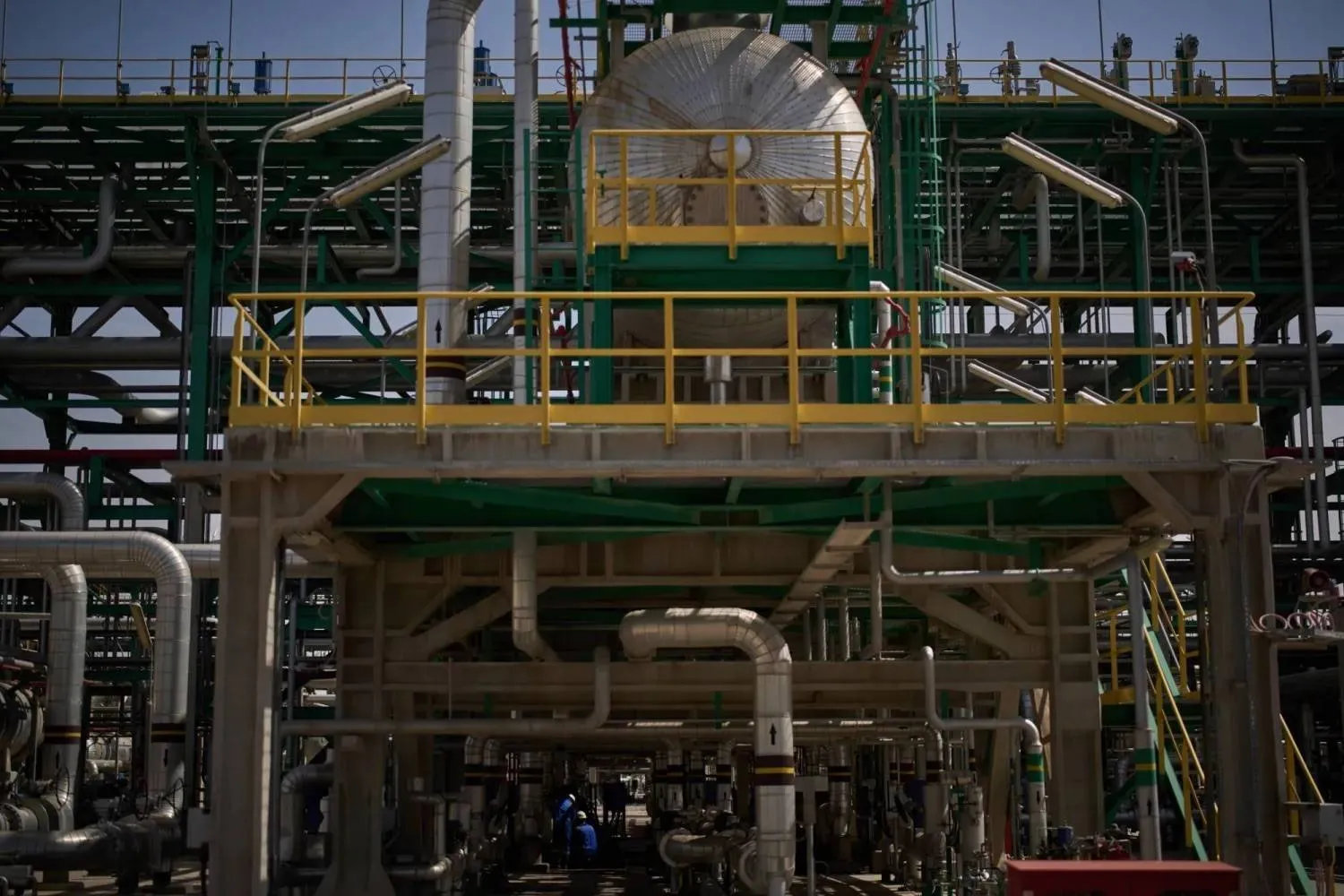
FILE - Workers walk in an area at a degassing station in Zubair oil field, whose operations have being reduced due to the Mideast war triggered by the US and Israeli attacks on Iran, near Basra, Iraq, March 28, 2026. (AP Photo/Leo Correa, File)
TT

Oil Prices Surge While Asian Share Prices Rise Moderately

FILE - Workers walk in an area at a degassing station in Zubair oil field, whose operations have being reduced due to the Mideast war triggered by the US and Israeli attacks on Iran, near Basra, Iraq, March 28, 2026. (AP Photo/Leo Correa, File)

Oil prices continued to surge on worries of a prolonged Iran war but the Asian markets that were open Friday rose moderately in cautious trading, while others were closed for the Good Friday holidays.

Benchmark US crude rose 11.4% to $111.54 a barrel. The price of Brent crude, the international standard, jumped 7.8% to $109.03 per barrel, The Associated Press said.

“A more extended conflict raises the threat to physical infrastructure, extends disruptions through the Strait of Hormuz, and will entail a longer post-war recovery period, with price impacts spilling over later into the year,” according to a report from BMI, a unit of Fitch Solutions.

The US only relies on the Arabian Gulf for a fraction of the oil it imports, but oil is a commodity and prices are set in a global market.

The situation is very different in Asia. Japan, for example, relies on access to the Strait of Hormuz for much of the nation’s oil import needs and would need to rely on alternative routes. But some analysts say Japan and other nations are counting on an agreement with Iran to allow transports.

Japan’s benchmark Nikkei 225 gained 0.9% in Friday morning trading to 52,938.62. South Korea’s Kospi jumped 2.1% to 5,344.41. The Shanghai Composite sank 0.5% to 3,899.57. Trading was closed in Hong Kong, Singapore, Australia, New Zealand, the Philippines, Indonesia and India.

Wall Street, where trading is closed Friday, finished its first winning week since the start of the Iran war, although trading started out with a decline driven by a surge in oil prices.

That came after US President Donald Trump late Wednesday vowed the US will continue to attack Iran and failed to offer a clear timetable for ending the conflict in the Middle East.

The S&P 500 rose 7.37 points, or 0.1%, to 6,582.69. Several days of solid gains this week helped the benchmark index notch a 3.4% gain for the week. The Dow Jones Industrial Average fell 61.07 points, or 0.1%, to 46,504.67. The Nasdaq composite rose 38.23 points, or 0.2%, to 21,879.18. Both indexes also notched weekly gains.

Treasury yields remained relatively steady in the bond market. The yield on the 10-year Treasury fell to to 4.30% from 4.32%.

In currency trading, the US dollar edged up to 159.66 Japanese yen from 159.53 yen. The euro cost $1.1535, inching down from $1.1537.


Saudi Arabia Boosts Firms’ Readiness for Supply Chain Challenges

Container ship at King Abdullah Port (SPA)
TT

Saudi Arabia Boosts Firms’ Readiness for Supply Chain Challenges

Container ship at King Abdullah Port (SPA)

Amid mounting geopolitical tensions threatening global supply chains, particularly disruptions in the Strait of Hormuz, Saudi Arabia is stepping up efforts to shield its economy by strengthening private sector readiness to withstand external shocks.

Asharq Al-Awsat has learned that the Federation of Saudi Chambers is moving to boost companies’ preparedness, unify procedures, and keep business flowing smoothly amid rising logistical risks.

The push underscores authorities’ focus on safeguarding the domestic market by helping businesses adapt quickly and strengthen operational resilience, supporting economic stability and sustained growth.

Future decisions

As part of efforts to bolster supply chain resilience, the Federation of Saudi Chambers is mapping challenges facing companies and national institutions, aiming to present the sector’s voice directly, build a clear picture of on-the-ground obstacles, and help shape future decisions.

It is tracking operational and logistical hurdles and turning them into inputs for relevant authorities to improve regulations and support market-based decision-making.

Improving the regulatory environment

The federation has asked companies to pinpoint challenges across ports, airports, logistics hubs, and warehouses, as well as those tied to regulators.

It urged firms to specify issues such as clearance or transit delays, procedural disruptions, added costs, lack of information, conflicting instructions, and regulatory requirements, along with their impact, whether financial or operational, including delivery delays, lost clients, suspended contracts, damaged cargo, and supply chain breakdowns.

The findings are expected to feed into regulatory improvements and more informed policymaking.

Alternative routes

Saudi Arabia has rolled out proactive logistics measures to reduce reliance on the Strait of Hormuz, including new corridors linking Gulf ports through alternative land and sea routes, Red Sea options, and additional shipping services to expand port capacity.

The Transport General Authority said licensed operators will be allowed to carry goods for third parties until Sept. 25, aiming to boost fleet efficiency and flexibility.

The authority said the step will help companies make better use of capacity, support supply chain continuity, and improve cargo movement within the kingdom and to neighboring countries.

On Thursday, it also approved regulatory updates extending deadlines for land freight firms to adjust their status, aiming to raise efficiency and compliance.

The extension covers heavy and light transport activities until Aug. 27, 2026, giving companies more time to meet regulatory requirements.

It also includes cases involving the reclassification of vehicle registration from private to public use in heavy freight, in a move to better regulate the sector and improve fleet utilization.


War Hits Lebanon Dollar Lifeline, Remittances Fall Sharply

Lebanon’s central bank (National News Agency)
TT

War Hits Lebanon Dollar Lifeline, Remittances Fall Sharply

Lebanon’s central bank (National News Agency)

A Lebanese mother described the sharp decline in one of her last sources of income, once a pillar of her financial stability, as remittances from her son abroad dwindled in the wake of the war.

“My son used to send me $600 a month. I lived on it, covered my medication and basic needs. After the war, the transfer does not exceed $200,” she told Asharq Al-Awsat.

Her account reflects a broader trend among Lebanese households, in which remittances from relatives abroad have dropped by 10% to 15% during the war. The conflict has left its mark on multiple countries, including Lebanon, driving inflation and creating obstacles to money transfers.

The financial situation was also discussed in a meeting between Lebanese President Joseph Aoun and central bank governor Karim Saeed, where current monetary and financial conditions, exchange rate stability, and precautionary measures to maintain liquidity were reviewed.

Rapid contraction and rising pressure

The issue has reached the government. Economy Minister Amer Bisat presented updated wartime estimates to the cabinet on Thursday, highlighting economic contraction and declining incomes driven by large-scale displacement, along with a notable rise in unemployment.

He cited sectoral and field studies showing deteriorating indicators, estimating the contraction at 7%-10%, coupled with slower inflows of funds into the country.

Bisat said the situation remains “relatively under control,” noting that the ministry continues to pursue cases of monopoly and fraud through dozens of reports, judicial referrals, and the seizure of non-compliant goods.

He warned that a prolonged war would heighten economic risks, describing inflation as a real challenge, while the balance of payments remains within acceptable limits.

Impact on daily life

The Lebanese mother told Asharq Al-Awsat: “I used to organize my life around the $600 my son sent me every month. I would pay for medication first, then cover household needs. Now I have to ration spending. I can no longer pay the electricity bill regularly.”

She added: “I buy smaller quantities of everything and postpone whatever I can. Sometimes I ask the pharmacy for medicine on credit. I never imagined I would reach this point.”

In the Bekaa Valley, Abu Mohammad described a similar experience: “My son used to send $400 a month, now it barely reaches $200.”

“I relied on that amount to cover rent and basic expenses. Now everything has changed. We live day to day on installments. We buy only the bare minimum and delay everything, rent, bills, even some essentials,” he said.

“Sometimes we sit together as a family to decide what we can pay this month and what to postpone. This did not exist before. Now it is part of our daily life.”

A shrinking economic backbone

Economist Walid Abou Suleiman said remittances have formed the “backbone of Lebanon’s economy since the 2019 crisis,” noting that the country relies heavily on them to secure foreign currency, as Lebanon imports about 85% of its consumer needs.

He told Asharq Al-Awsat that annual remittances are estimated at around $6 billion, including roughly $3 billion from Gulf countries, but have begun to decline, with at least a 5% drop recorded in the first month of the crisis.

“The impact of crises does not appear immediately; it builds gradually in the following months, meaning the decline is likely to worsen,” he said.

Hundreds of millions in losses

Abou Suleiman expects remittances to fall by 10% to 15%, equivalent to annual losses of between $450 million and $500 million, or about $40 million per month.

This decline is compounded by job losses among Lebanese expatriates in the Gulf, increasing domestic pressure as some return to Lebanon.

He added that the war has also affected other sources of foreign currency, particularly tourism. “Seasons that used to inject dollars into the market, such as Easter, have been absent this year,” he said, adding that rising global oil prices are worsening the crisis, as Lebanon is among the countries most affected by energy costs.

“The treasury is bearing additional burdens estimated at around 18% due to these increases,” he said.

Abou Suleiman warned that global inflation directly impacts Lebanon. “We do not only import goods, but we also import inflation with them, given the absence of local production and self-sufficiency,” he said, cautioning that the economic outlook will deteriorate further if the war continues.

Ongoing decline and uncertain outlook

Economist Professor Jassem Ajaka said remittances to Lebanon have recorded a notable decline, estimating a drop of around 5% last week, possibly rising to between 5% and 10% as conditions continue to evolve, with no precise figure due to constantly changing data.

He said the decline is logical, as Lebanese workers in the Gulf and Europe have also been affected by slowing economic conditions there.

“The crisis is no longer confined to one country or region; it is global, though its impact varies from place to place,” he said.

Ajaka stressed that remittances remain a key pillar, alongside tourism, which is largely driven by expatriates. “The tourism sector is almost entirely halted. The season can be considered lost, and even the upcoming summer season is not guaranteed. Recovery will not be quick, even if the war ends,” he said.

Tourism revenues were estimated at between $4 billion and $4.5 billion annually, making them a major source of foreign currency.

Exports are also expected to decline by around 10% due to damage to the agricultural sector in the south and Bekaa, as well as higher industrial production costs driven by rising oil prices.

Dollar inflows shrink, risks expand

Ajaka said remittances now represent the last line of resilience for many Lebanese families, but this pillar is weakening with the current decline.

He warned that the most serious consequence is a shortage of dollars in the market, raising questions about Lebanon’s ability to finance imports of fuel, food, and medicine.

A temporary solution could involve the central bank financing imports from its foreign currency reserves, he said, but this would amount to crisis management, with repercussions worsening the longer it continues.

He added that pressures are not limited to economic factors, but also include measures that restrict dollar inflows, further reducing liquidity in the market.