

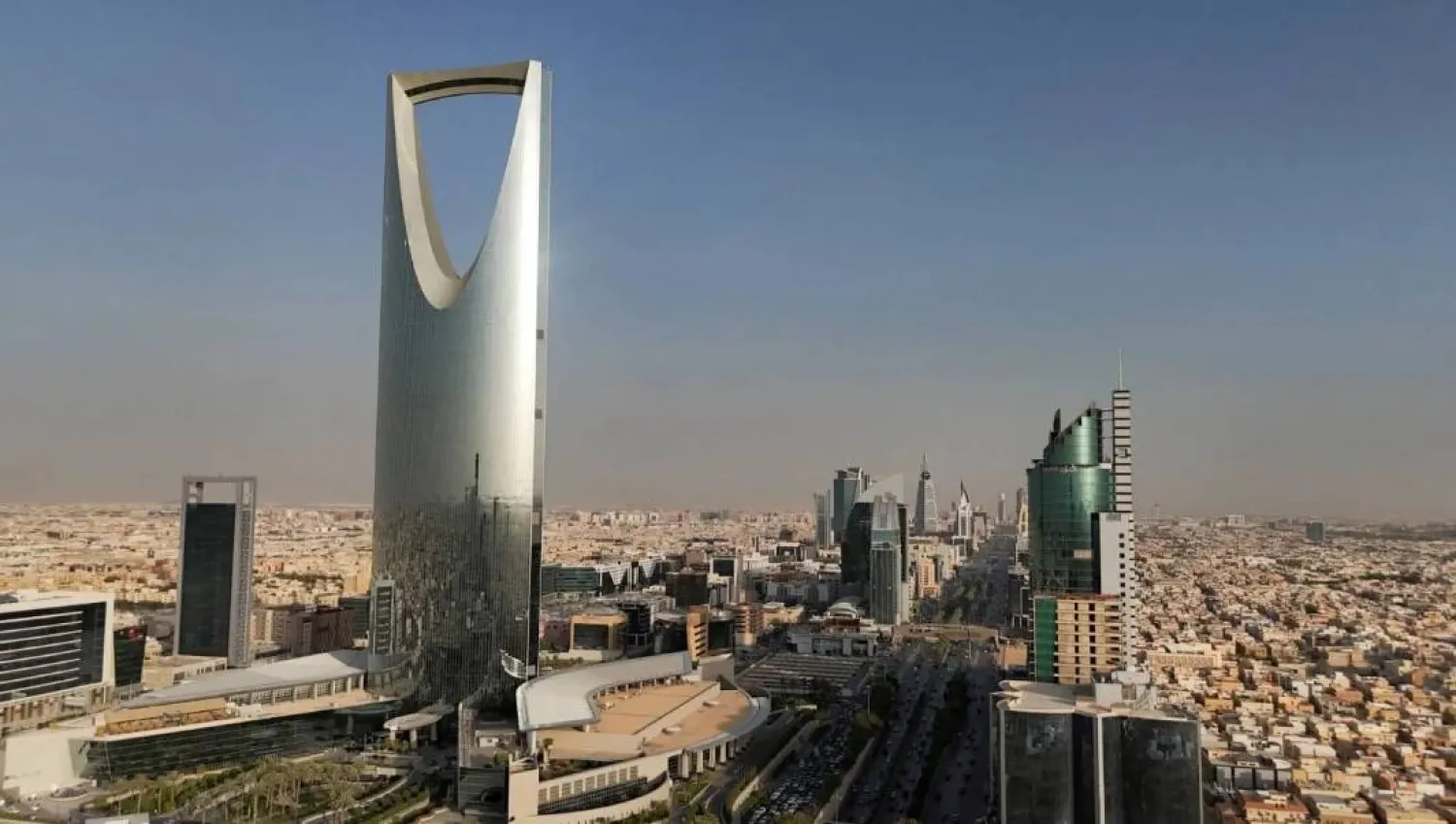

IMF Raises Saudi Arabia’s Growth Forecast to 4.5% in 2026

The Saudi capital, Riyadh (SPA)
TT

IMF Raises Saudi Arabia’s Growth Forecast to 4.5% in 2026

The Saudi capital, Riyadh (SPA)

For the third time in six months, the International Monetary Fund (IMF) has raised its forecast for Saudi Arabia's economic growth for 2025 and 2026, in a sign of a growing robust economy.

The fund is now forecasting the Kingdom's economy, the largest in the Arab world, to grow by 4.3% in 2025 and 4.5% in 2026. This is 0.3 percentage points and 0.5 percentage points respectively higher than the October forecast, according to the IMF’s latest World Economic Outlook Update.

These projections are close to the Saudi government's estimates of 4.4% growth in 2025 and 4.6% this year, stated in the Kingdom’s Pre-Budget Statement for Fiscal Year 2026.

The IMF forecast came after Fitch Ratings affirmed Saudi Arabia’s sovereign credit rating at A+ with a stable outlook, reflecting the Kingdom’s strong fiscal and the momentum of social and economic reforms, according to a report issued by the agency last Friday.

It said the Saudi economy will benefit from higher oil production, as well as the “healthy” prospects for non-oil activities, underpinned by reform, high levels of government and GRE spending, new projects coming on stream and buoyant consumer spending.

Earlier this month, the IMF said next year will be pivotal for the Kingdom thanks to deeper reforms implemented throughout the past years.

It said the resilience shown in 2025 underscores the progress already achieved in reducing the economy’s exposure to oil fluctuations and the sustainability of the Kingdom's financial stability.

Saudi Arabia also built a more diversified and solid economic base, and maintained the growth momentum in its non-oil sector even as oil production falls.

This reflects the ability of the Saudi economy to face market fluctuations, and regional and global challenges.



China Limits Fuel Price Hike to Cushion Impact of Rising Oil Prices

A rider passes by motorists queue to pump gasoline at a petrol station in Beijing, Sunday, March 22, 2026. (AP Photo/Andy Wong)
TT

China Limits Fuel Price Hike to Cushion Impact of Rising Oil Prices

A rider passes by motorists queue to pump gasoline at a petrol station in Beijing, Sunday, March 22, 2026. (AP Photo/Andy Wong)

China intervened to cushion rising fuel prices on Monday, increasing regulated ceiling prices for retail gasoline and diesel but limiting the hike to about half what would normally be applied under the government's pricing mechanism.

However, the adjustments brought on by rising oil prices linked to the US-Israeli war on Iran were still the largest on record, lifting price limits close to levels seen in 2022 following Russia's invasion of Ukraine.

The state ⁠planner, the National ⁠Development and Reform Commission, said on Monday it would raise the maximum retail prices for gasoline and diesel by 1,160 yuan ($167.93) per metric ton and 1,115 yuan per metric ton, respectively, starting from Monday midnight, Reuters reported.

The NDRC reviews retail gasoline and diesel ⁠prices every 10 working days and applies adjustments reflecting changes in international crude oil prices, while taking into account average processing costs, taxes, distribution expenses, and appropriate profit margins.

Under the current pricing mechanism, gasoline and diesel prices would have been set to rise by 2,205 yuan per metric ton, and 2,120 yuan per metric ton, respectively, according to NDRC.

"To cushion the impact, ease the burden on downstream users, and support ⁠economic ⁠and social stability, authorities introduced temporary controls within the existing pricing framework," the state's planner said in an announcement.

Oil prices rose on Monday after Iran's Revolutionary Guards said they would target Israel's power plants and those supplying US bases in the Middle East in retaliation against any attack on its electricity sector.

Brent crude futures were up $1.57 to $113.76 a barrel by 0731 GMT. US West Texas Intermediate was at $101.32 a barrel, up $3.09, or 3.15%.


IEA Head Says Global Economy Faces ‘Major, Major Threat’ from Iran War

International Energy Agency Executive Director Fatih Birol speaks at the National Press Club in Canberra, Australia, Monday, March 23, 2026. (Lukas Coch/AAP Image via AP)
TT

IEA Head Says Global Economy Faces ‘Major, Major Threat’ from Iran War

International Energy Agency Executive Director Fatih Birol speaks at the National Press Club in Canberra, Australia, Monday, March 23, 2026. (Lukas Coch/AAP Image via AP)

The head of the International Energy Agency said Monday that the global economy faces a “major, major threat” because of the Iran war.

“No country will be immune to the effects of this crisis if it continues to go in this direction,” Fatih Birol said at Australia’s National Press Club in Canberra on Monday.

The crisis in the Middle ⁠East, he said, has had a worse impact on oil than the two oil shocks of the 1970s combined, and a worse effect on gas than the Russia-Ukraine war.

Israel launched a new wave of attacks early Monday against Tehran. US President Donald Trump also warned the United States will “obliterate” Iran’s power plants if Tehran doesn’t fully open the Strait of Hormuz within 48 hours. That prompted Iran to say it would respond to any such strike with attacks on US and Israeli energy and infrastructure assets.

Trump is facing increasing pressure at home to secure the strait as oil prices soar.

One major fear is that the war could knock out oil and gas production in the Middle East for a long time, which would mean high prices could last a while and cause inflation to rip higher around the world. The US stock market has a history of bouncing back relatively quickly from past conflicts in the Middle East and elsewhere, as long as oil prices don’t stay too high for too long.

Iran on Monday renewed strikes on its neighbors.

“The situation is very severe,” Birol said in Australia.

The oil crises of 1973 and 1979, he said, lost together 10 million barrels per day, causing "major economic problems around the world, the recessions.

And today, only as of today, we lost 11 million barrels per day — so more than two major oil shocks put together.”

After Russia’s invasion of Ukraine, he said, the gas markets, especially in Europe, “lost about 75 billion cubic meters, 75BCM. And as of now, as a result of this crisis, we lost about 140BCM, almost twice (as much).”

According to The Associated Press, Birol said 40 energy assets in nine countries across the region were “severely or very severely damaged.”

“Some of the vital arteries of the global economy, such as petrochemical, such as fertilizers, such as sulfur, such as helium — their trade is all interrupted, which would have serious consequences for the global economy,” he said.

He said the International Energy Agency, “in order to comfort the markets,” earlier released 400 million barrels of oil, “which is historic. We have never released so much oil to the markets. ... The single most important solution to this problem is opening up the Hormuz Strait as things stand now.”

The official added that he was consulting with governments in Europe, Asia, North America and the Middle East about the prospect of releasing further stockpiled oil.

“We will see, we will look at the markets,” he said. “If it is necessary, of course, we will do it, but we will look at the conditions, we will analyze, assess the market and discuss with our member countries.”


UAE Equities Decline

FILE PHOTO: A general view of buildings and and construction cranes, amid the US-Israel conflict with Iran, in Dubai, United Arab Emirates, March 7, 2026. REUTERS/Amr Alfiky/File Photo
TT

UAE Equities Decline

FILE PHOTO: A general view of buildings and and construction cranes, amid the US-Israel conflict with Iran, in Dubai, United Arab Emirates, March 7, 2026. REUTERS/Amr Alfiky/File Photo

Stock markets in the United Arab Emirates declined on Monday as the ongoing regional conflict has driven sharp increases in energy prices, disrupted air travel, and severely impacted shipping operations through the Strait ⁠of Hormuz.

Dubai's main share index tumbled 2.7% in early trade, dragged down by a 4.6% drop in blue-chip developer Emaar properties and a 2.9% fall in top lender Emirates NBD Bank.

Abu Dhabi's benchmark index slipped 1.6% with real estate giant Aldar properties falling 5% and Abu Dhabi Commercial Bank falling 4.9%.

The Abu Dhabi-listed water and Electricity firm Abu Dhabi National Energy Company (better known as TAQA) declined dipped 3.6%. Dubai Electricity ⁠and ⁠Water Authority was down 0.8%.

Adnoc Gas slumped 2.7% after the firm said it made temporary adjustments to its production of liquefied natural gas and export-traded liquids in response to ongoing shipping disruption in the Strait of Hormuz.

"Operations are continuing safely across ADNOC Gas plc's asset base," ADNOC Gas said.

"Following debris falling near certain facilities, inspections confirmed no injuries and no impact to core processing integrity."

The Dubai index's year-to-date losses climbed to 10.7%, while Abu Dhabi's declined 5.9%, according to LSEG data.