


Croatia's Vujcic Nominated as ECB's Next Vice President

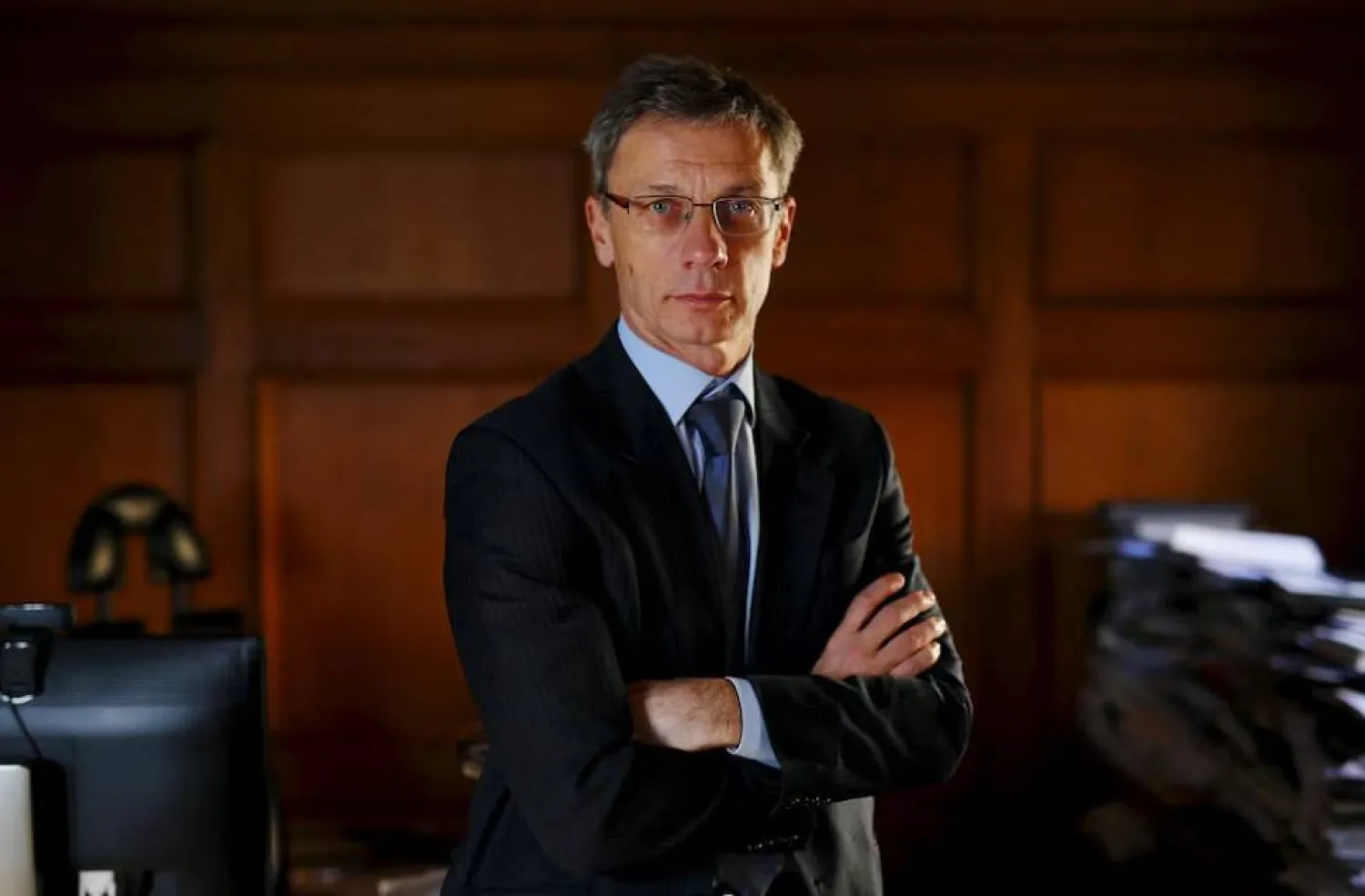
Croatian Central Bank Governor Boris Vujcic pictured during an interview with Reuters in Zagreb (Reuters file photo)
TT

Croatia's Vujcic Nominated as ECB's Next Vice President

Croatian Central Bank Governor Boris Vujcic pictured during an interview with Reuters in Zagreb (Reuters file photo)

Croatia's Boris Vujcic was formally nominated on Monday as the European Central Bank's next vice president, putting him on track to become the first person from the former communist east to win a seat on the board of the bloc's most important financial institution.

Having secured the support of the euro zone's 21 finance ministers, Vujcic is now expected to take over from Spain's Luis de Guindos on June 1, becoming the ECB's number two behind Christine Lagarde at a relatively ‌tranquil moment, with inflation ‌at target and interest rate changes not ‌even ⁠on the agenda.

The decision ‌also gives one of Europe's smallest economies the chance to take on a top ECB job, a relative rarity for an institution that has been dominated by the bloc's four biggest nations since its inception more than a quarter of a century ago, Reuters reported.

COVETED JOBS COMING IN 2027

But ECB watchers say the vice presidency is not among the most coveted jobs and Europe's biggest nations did not even enter ⁠the contest as they focus their attention on the bigger roles coming up next year.

The jobs ‌of the president, the chief economist and the head ‍of market operations all become vacant ‍next year, and Germany, Spain and France are all expected to be ‍in the race, continuing their dominance of the ECB.

THIRD-TERM GOVERNOR

Now serving his third term as Croatia's central bank chief, Vujcic, 61, is a trained monetary economist who oversaw his own country's accession to the euro zone as its 20th nation in 2023, making it the second-newest member after Bulgaria.

A former university professor, Vujcic is considered a moderate hawk who has consistently warned against lingering inflation ⁠risks and argued for only gradual policy easing to make sure price pressures are fully extinguished.

A governor or deputy governor for more than 25 years now, he was also instrumental in negotiating Croatia's accession into the European Union in 2013.

While the nomination is still subject to a confirmation process, that is largely a formality as the heads of governments make the final call and normally confirm their finance ministers' pick.

The European Parliament is likely to raise objections, particularly about gender, since men make up 25 of the ECB's 27-member Governing Council. But its lawmakers cannot actually stop the selection process.

The vice president is responsible for financial stability analysis ‌and fills in for the president whenever necessary.

Other candidates for the job included Latvia's Martins Kazaks, Finland's Olli Rehn Portugal's Mario Centeno, Estonia's Madis Muller and Lithuania's Rimantas Sadzius.



From Davos: The World Looks to Saudi Vision, from Reform to Delivery

The logo of the World Economic Forum at the Davos Conference Center (AFP)
TT

From Davos: The World Looks to Saudi Vision, from Reform to Delivery

The logo of the World Economic Forum at the Davos Conference Center (AFP)

At the 2026 World Economic Forum in Davos, Saudi Arabia offered a compelling account of how long-term ambition can be translated into measurable results.

Through a narrative grounded in data and outcomes, Saudi ministers traced the evolution of Vision 2030 from structural reform to disciplined execution, presenting the Kingdom as one of the world’s most attractive investment destinations.

Rising capital-formation rates now place Saudi Arabia alongside major economies such as China and India, underscoring growing international confidence in the strength and future of its economy.

On the margins of the forum, a high-level dialogue at the Saudi House pavilion brought together Princess Reema bint Bandar Al Saud, Saudi ambassador to the United States; Minister of Investment Khalid Al-Falih; Minister of Finance Mohammed Al-Jadaan; Minister of Economy and Planning Faisal Alibrahim; IMF Managing Director Kristalina Georgieva; and Lubna Olayan, Chair of Olayan Financing.

Titled From Reform to Delivery: Implementing Change at Scale, the session examined the next phase of Vision 2030 and how it has enhanced the government’s capacity for evidence-based planning and execution.

Saudi Arabia’s presence at the 2026 forum runs from Jan. 19-23 through an expanded Saudi House program - the largest since its launch - bringing together ministers, senior officials, business leaders and global thinkers.

From vision to policy discipline

Al-Jadaan emphasized that visions and reform agendas cannot be taken for granted. The true test, he said, lies not in designing strategies but in sustaining their execution, an area where many reform efforts around the world lose momentum. Saudi Arabia’s fiscal framework, supported by record foreign reserves at the central bank, has provided the flexibility needed to absorb shocks and maintain reform momentum.

He noted that 93 percent of Vision 2030’s key performance indicators have either been achieved or are progressing as planned. He added that reform has moved beyond individual initiatives to become a permanent institutional practice, supported by a 22 percent rise in financial reserves between 2022 and 2025.

He also stressed that trust and credibility are central to this process. Sustained progress depends on maintaining confidence with markets and stakeholders through pragmatic fiscal discipline and clear prioritization of resources. With fiscal space always finite, sequencing and focus are essential. He pointed to IMF Article IV consultations as a rigorous external validation of Saudi Arabia’s economic direction, noting that ambitions set a decade ago are now reflected in tangible outcomes, with hundreds of indicators either exceeding targets or firmly on track.

Converting strategy into outcomes

Building on this theme, Alibrahim said that turning strategies into results requires clarity of purpose, institutional adaptability and the ability to adjust course quickly. He explained that sustainable transformation cannot be achieved without a conscious approach to managing risk.

According to Alibrahim, Vision 2030’s long-term perspective has strengthened the government’s ability to plan, execute and respond to data, allowing it to change direction when needed while balancing risks and opportunities over both short and long horizons.

Attracting global capital

Al-Falih placed Saudi Arabia’s experience within a broader global context marked by geopolitical uncertainty, strained supply chains and rapid technological change. He noted that capital cannot avoid risk entirely but must find ways to balance it with the need for growth, particularly at a time when the world requires vast investment to navigate major transitions. These include energy digitization and the restructuring of global artificial intelligence supply chains.

He further explained that investors are increasingly drawn to markets that combine scale with access to global opportunities. This, in turn, requires skilled human capital, reliable energy, credible decarbonization pathways, advanced physical and digital infrastructure, and transparent, predictable regulatory systems. He said that few countries offer all these elements together, adding that Saudi Arabia has succeeded in doing so.

Al-Falih continued that foreign direct investment has risen to five times its pre–Vision 2030 level, while domestic investors have also increased their commitments. Capital formation as a share of GDP now matches levels seen in China and India, with visible effects across global supply chains, from shipbuilding on the eastern coast to automotive manufacturing on the western coast, as well as green and blue hydrogen projects developed with international partners.

Energy, markets and new frontiers

Al-Falih noted that the availability of Saudi capital, combined with a partnership-driven approach, has been a decisive factor. The government co-invests alongside the Public Investment Fund, major national companies and the private sector, aligning capital with strategic priorities.

While petrochemicals, fertilizers and mining remain important, the scope of transformation has broadened significantly. Saudi capital markets have become more integrated, the exchange-traded fund ecosystem has expanded, and inclusion in major global indices has lowered barriers for international investors.

At the same time, he said that the Kingdom is moving beyond its traditional role as an oil and gas supplier. It is investing in hydrogen, accelerating renewable energy localization and developing cross-border electricity interconnections with Africa, the Gulf, Iraq and Egypt. Investments in critical minerals and global supply chains now extend to joint ventures in the United States and Asia, supporting demand in a low-carbon economy. Saudi Arabia, Al-Falih concluded, also aims to position itself as a hub for the new economy, including data and artificial intelligence.

Georgieva: A transformation that inspires

Georgieva described Saudi Arabia’s reform journey as a “generational transformation” that spans sectors and places the Kingdom in a position of global leadership. Reforms that reduced the state’s direct role while enabling the private sector to flourish, she said, now underpin the country’s economic resilience.

She highlighted the breadth of diversification — from finance and tourism to sports and fashion — as particularly striking, adding that Saudi Arabia has also emerged as a partner and sponsor of reform beyond its borders, with the IMF office in Riyadh helping to share the Saudi experience with other countries. Concluding her remarks, she urged Saudi leaders and officials to maintain momentum and continue supporting others on similar paths.

Princess Reema, for her part, emphasized that human capital remains the engine of long-term growth. She said that investment in youth, job creation and a supportive social environment, encouraged many young Saudis to build their futures at home.

Lubna Olayan observed that the business landscape has undergone a notable shift. Where large corporations once dominated, small and medium-sized enterprises are now playing a growing role, supported by banks and new financing channels. She noted that economic diversification has opened private-sector opportunities, particularly in tourism, a labor-intensive service industry.

Powell: A model with global relevance

In a separate Saudi House session, Dina Powell McCormick, Vice Chair of Meta’s board, said her 25-year relationship with Saudi Arabia has given her a firsthand view of “extraordinary progress” under Vision 2030.

Recalling discussions in Washington in 2017 during her tenure as US deputy national security advisor under President Donald Trump, she described a long-term roadmap centered on unlocking the potential of a population that is more than 65 percent under the age of 35 and on the expanding role of women as entrepreneurs and leaders.

On technology, Powell said the world is approaching a pivotal moment that could reshape humanity within just three to eight years, making Saudi Arabia’s execution-focused transformation a model of growing relevance well beyond the region.


Nasser from Davos: AI Has Generated $6 Billion for Aramco

The CEO of Saudi Aramco, Engineer Amin Nasser (World Economic Forum)
TT

Nasser from Davos: AI Has Generated $6 Billion for Aramco

The CEO of Saudi Aramco, Engineer Amin Nasser (World Economic Forum)

The CEO of Saudi Aramco, Engineer Amin Nasser, on Tuesday revealed fundamental transformations in the company's financial and operational performance thanks to the adoption of artificial intelligence technologies.

He announced that the value achieved from the technology jumped to reach $6 billion during 2023 and 2024. It did not exceed $300 million in previous years.

Nasser explained, during a dialogue session at the Annual Meeting of the World Economic Forum 2026, in the Swiss city of Davos, that artificial intelligence alone was responsible for 50 percent of this value.

He pointed out that the company is looking forward to publishing the figures for 2025 next month, amid expectations of achieving savings and added value ranging between 3 and 5 billion additional dollars.

In his review of the direct impact on operations, Nasser confirmed that the use of artificial intelligence in the exploration and production sector has achieved amazing results.

Nasser directed a message to the global industry, saying: "The matter is not just about buying chips and graphics processing units, but about the quality of the data and creating talent". He noted that Aramco now has 6,000 talents trained in artificial intelligence.

He also revealed the enormous construction size of the company, saying; "Today we have projects worth $100 billion under construction". He explained that integrating artificial intelligence into these giant projects creates added value.

Nasser confirmed that the ambition is directed towards "autonomous operations" in cooperation with major cloud providers, while strictly maintaining safety and control standards.


Qatar Central Bank Says AI Operational Risks Need Prudential Focus

A boat makes its way past the Doha skyline in Doha, Qatar on Sunday, Jan. 18, 2026. (Sean Kilpatrick/The Canadian Press via AP)
TT

Qatar Central Bank Says AI Operational Risks Need Prudential Focus

A boat makes its way past the Doha skyline in Doha, Qatar on Sunday, Jan. 18, 2026. (Sean Kilpatrick/The Canadian Press via AP)

The governor of Qatar's central bank said on Tuesday that operational risks emerging from technologies like Artificial Intelligence should ‌be treated as ‌a ‌prudential ⁠risk and ‌as important as capital and liquidity-related regulation.

"I do believe that operation resilience should ⁠be also treated as ‌core prudential risk ‍and ‍should it ‍should not be treated as less important than capital and liquidity," Sheikh Bandar Bin Mohammed Bin ⁠Saoud Al-Thani, Governor of the Qatar Central Bank, told an event at the World Economic Forum in Davos.