

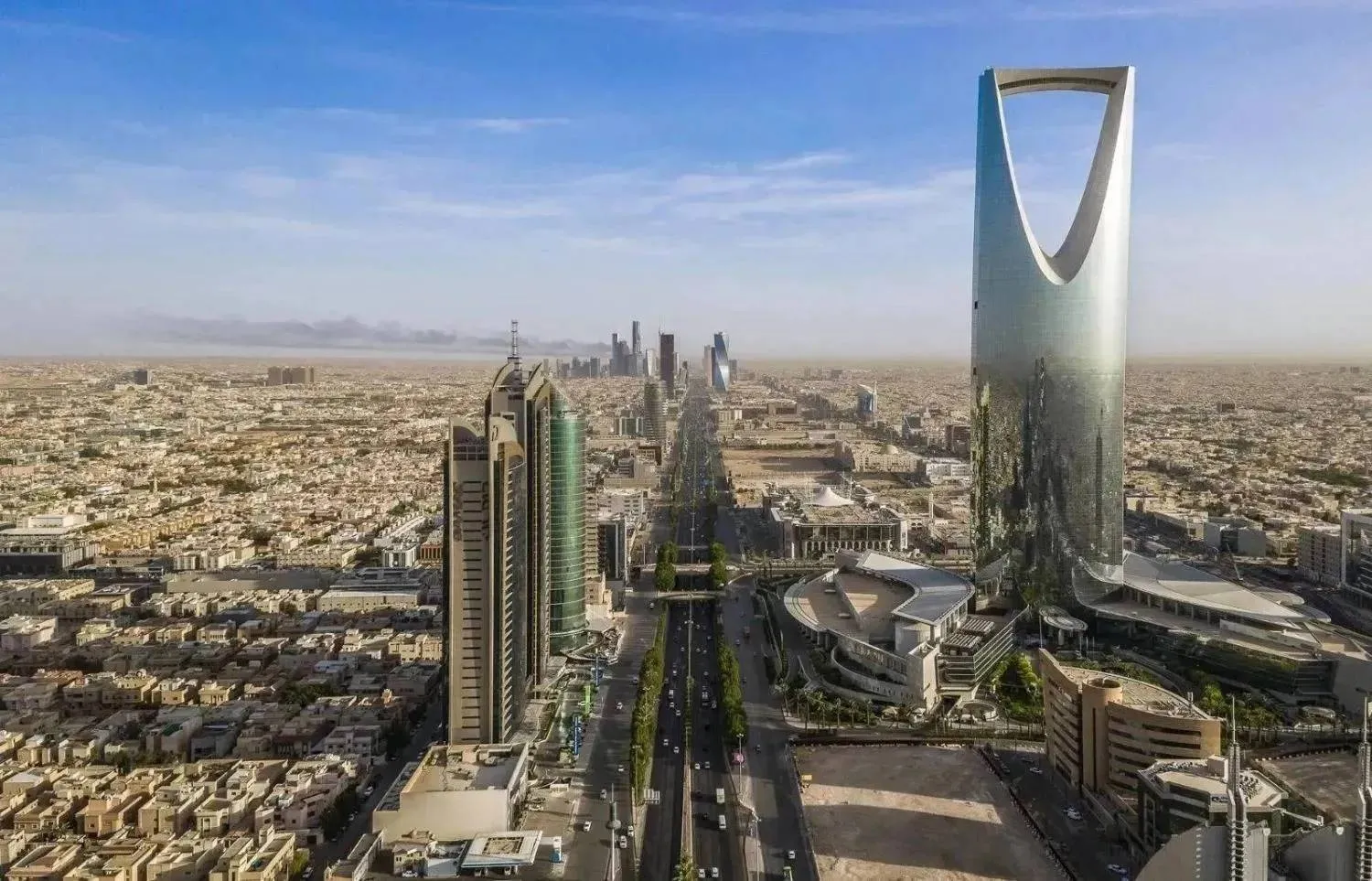

Saudi Economy Defies Forecasts, Posts Fastest Growth in Three Years

A general view of Riyadh, Saudi Arabia. (SPA)
TT

Saudi Economy Defies Forecasts, Posts Fastest Growth in Three Years

A general view of Riyadh, Saudi Arabia. (SPA)

Saudi Arabia closed 2025 with economic performance that exceeded expectations, recording an annual growth of 4.5 percent. The result not only surpassed the International Monetary Fund’s latest forecast of 4.3 percent, but also marked the Kingdom’s highest growth rate in three years, compared with 2.7 percent in 2024 and 0.5 percent in 2023.

The figures highlight strong economic resilience and align with the strategic direction outlined by the Ministry of Finance in its 2026 budget statement, which stressed the importance of sustaining growth and broadening its drivers in line with Saudi Vision 2030.

Landmark year

The year 2025 proved to be pivotal in Saudi Arabia’s economic transformation, with annual data showing a clear balance among sectoral contributions. Oil activities recorded the strongest annual growth at 5.6 percent, contributing around 1.4 percentage points to gross domestic product.

Non-oil activities, however, continued to consolidate their role as the main engine of growth, expanding by 4.9 percent and contributing about 2.7 percentage points. Government activities maintained moderate growth of 0.9 percent, according to preliminary estimates released by the General Authority for Statistics.

The Ministry of Finance had projected real GDP growth of 4.6 percent for 2025, driven primarily by non-oil activities, which have increasingly become the backbone of economic activity.

Noticeable acceleration

On a quarterly basis, the fourth quarter of 2025 saw a marked acceleration, with GDP growing by 4.9 percent year on year. Oil activities surged by 10.4 percent, contributing 2.5 percentage points to growth, while non-oil activities expanded by 4.1 percent, adding 2.3 points, reflecting strong integration between the two sectors.

Seasonally adjusted quarter-on-quarter growth reached 1.1 percent in the fourth quarter compared with the third.

Oil activities led with 1.4 percent growth, followed by non-oil activities at 1.3 percent, while government activities edged down by 0.2 percent.

Structural transformation

Financial and economic adviser Dr. Hussein Al-Attas told Asharq Al-Awsat that real GDP growth of 4.5 percent in 2025 reflects the success of economic and fiscal policies in achieving genuine diversification, rather than a cyclical improvement linked solely to oil prices.

He noted that the non-oil sector now accounts for about 55–56 percent of real GDP, growing close to 5 percent in 2025, driven by manufacturing, trade, transport and logistics, tourism, and services. These indicators, he said, point to a real structural shift aligned with Vision 2030, enhancing resilience against oil price volatility.

Sustainable outlook

Al-Attas said sustained growth remains achievable despite oil price fluctuations. While oil will remain influential, the expanding non-oil base has reduced sensitivity to oil cycles, supported by fiscal reforms, privatization, stronger private-sector participation, and foreign investment.

Looking ahead, he expects growth of 4.3–4.6 percent in 2026, with balanced contributions from oil and non-oil sectors.

Global banks, including Standard Chartered, forecast growth near 4.5 percent, underscoring confidence in the sustainability of Saudi Arabia’s economic trajectory.



Saudi Stocks Open to Foreign Investors as Inflows of Global Capital Loom

A trader monitors stock movements on a screen at the Saudi stock exchange. (Reuters)
TT

Saudi Stocks Open to Foreign Investors as Inflows of Global Capital Loom

A trader monitors stock movements on a screen at the Saudi stock exchange. (Reuters)

Saudi Arabia’s equity market has been formally opened to all categories of foreign investors, a move widely expected to attract substantial international capital inflows in the coming period.

The decision follows the entry into force, on Sunday, of a new regulatory framework allowing non-resident foreign investors to invest directly in the Saudi stock market.

Market experts say the reform could draw global funds seeking exposure to the Kingdom’s largest listed companies and fast-growing economy.

By the end of the third quarter of 2025, foreign investors’ ownership in the Saudi capital market exceeded SAR 590 billion ($157.3 billion). Investments in the main market alone stood at around SAR 519 billion ($138.4 billion), up from SAR 498 billion ($132.8 billion) at the end of 2024, underscoring steady growth even before the latest reforms. Analysts expect the new rules to further boost foreign participation.

On Sunday, the Saudi Capital Market Authority announced that the market would be fully open to all foreign investor categories from February 1, following approval by its board of the new regulatory framework. With this step, all segments of the Saudi market are now accessible to investors worldwide through direct investment.

Market performance, however, was mixed. The benchmark index recorded its strongest monthly gain since 2022 in January, closing at 11,382.08 points.

On the first day of foreign investors being allowed to trade directly, the index fell 1.9 percent to 11,167.48 points, losing 214.6 points amid broad declines, particularly in energy, banking, and basic materials stocks.

Leading stocks

Hamad Al-Olayan, chief executive of Villa Capital, said the initial decline was “natural,” noting that several major stocks had posted strong gains in recent days following the announcement of the decision last month.

Speaking to Asharq Al-Awsat, he attributed the pullback largely to profit-taking in leading stocks such as Maaden.

Al-Olayan also pointed to pressure on banking shares, especially Al Rajhi Bank and Saudi National Bank, after recent rallies, as well as volatility in gold and silver prices.

Some investors may still be unclear about ownership limits and sector-specific restrictions, he added.

Outlook improves

The recent decline may also reflect psychological factors, profit-taking, and limited geopolitical pressures, he remarked. Sentiment would improve once procedures for foreign entry, account opening, execution, and ownership thresholds become clearer.

The reforms abolish the concept of the “qualified foreign investor” in the main market and cancel swap agreements previously used by non-resident investors to gain only economic exposure. Direct ownership of listed shares is now permitted.

In July 2025, the CMA had already eased account-opening procedures for certain foreign investors, a transitional step toward full liberalization.

The latest changes align with the authority’s gradual approach to opening the market and aim to position Saudi Arabia as a global investment destination while supporting the domestic economy.


IMF Chief Says Global Inflation to Fall, Trade Integration is Needed

International Monetary Fund (IMF) managing director Kristalina Georgieva gestures as she speaks during the final day of the World Economic Forum (WEF) annual meeting in Davos on January 23, 2026. (Photo by Fabrice COFFRINI / AFP)
TT

IMF Chief Says Global Inflation to Fall, Trade Integration is Needed

International Monetary Fund (IMF) managing director Kristalina Georgieva gestures as she speaks during the final day of the World Economic Forum (WEF) annual meeting in Davos on January 23, 2026. (Photo by Fabrice COFFRINI / AFP)

Global inflation is expected to fall to 3.8% this year and to 3.4% in 2027, helped by softer demand and lower energy prices, the IMF chief ‌said on ‌Monday.

Managing Director ‌Kristalina ⁠Georgieva said ‌in a speech in the Annual Arab Fiscal Forum in Dubai that global growth has held up 'remarkably well' amid profound shifts ⁠in geopolitics, trade policy, technology, ‌and demographics.

Georgieva also ‍called for ‍more trade integration as unilateral ‍trade agreements are seen on the increase, Reuters said.

"In the world of trade fragmentation, more trade integration is absolutely paramount."

"What we have ⁠seen this year is that trade did not go down the way we feared it would. In fact trade is growing slightly slower than global growth," she added.


Turkish Manufacturing Downturn Deepens as Inflation Pressures Rise, PMI Shows

People look at gold jewelleries as they stand outside a jewellery shop at the Grand Bazaar in Istanbul, Türkiye, January 26, 2026. (Reuters)
TT

Turkish Manufacturing Downturn Deepens as Inflation Pressures Rise, PMI Shows

People look at gold jewelleries as they stand outside a jewellery shop at the Grand Bazaar in Istanbul, Türkiye, January 26, 2026. (Reuters)

Türkiye's manufacturing sector faced continued challenges in January, with new orders and production continuing to decline, while inflationary pressures ​surged, a survey from S&P Global reported on Monday.

The Istanbul Chamber of Industry Türkiye Manufacturing Purchasing Managers' Index (PMI) fell to 48.1 in January from 48.9 in December, remaining below the 50.0 threshold that indicates growth for the twenty-second consecutive ‌month.

Muted demand ‌conditions were evident as ‌new ⁠orders ​eased further, ‌albeit at a modest pace, the panel said. New export orders slowed more significantly than total new business, reflecting broader challenges in the global market, the survey showed.

Manufacturers responded by reducing output, and the slowdown in production ⁠was more pronounced than in December, the survey said.

In ‌line with reduced output, ‍firms cut back ‍on employment, purchasing activity, and inventories of ‍inputs and finished goods at the start of the year.

Inflationary pressures intensified, with input costs rising sharply. The pace of inflation accelerated, driven ​by higher raw material costs, particularly metals. Consequently, output prices surged as firms passed ⁠on increased costs to customers, the survey said.

"The Turkish manufacturing sector began 2026 in a similar position to that which it ended 2025, seeing modest slowdowns in new orders and production as business conditions remained challenging," said Andrew Harker, Economics Director at S&P Global Market Intelligence.

"Firms will be hoping to see these pressures abate somewhat in the ‌months ahead to provide an easier path to growth."