Algeria Tenders to Buy Nominal 50,000 Metric Tons Soft Milling Wheat

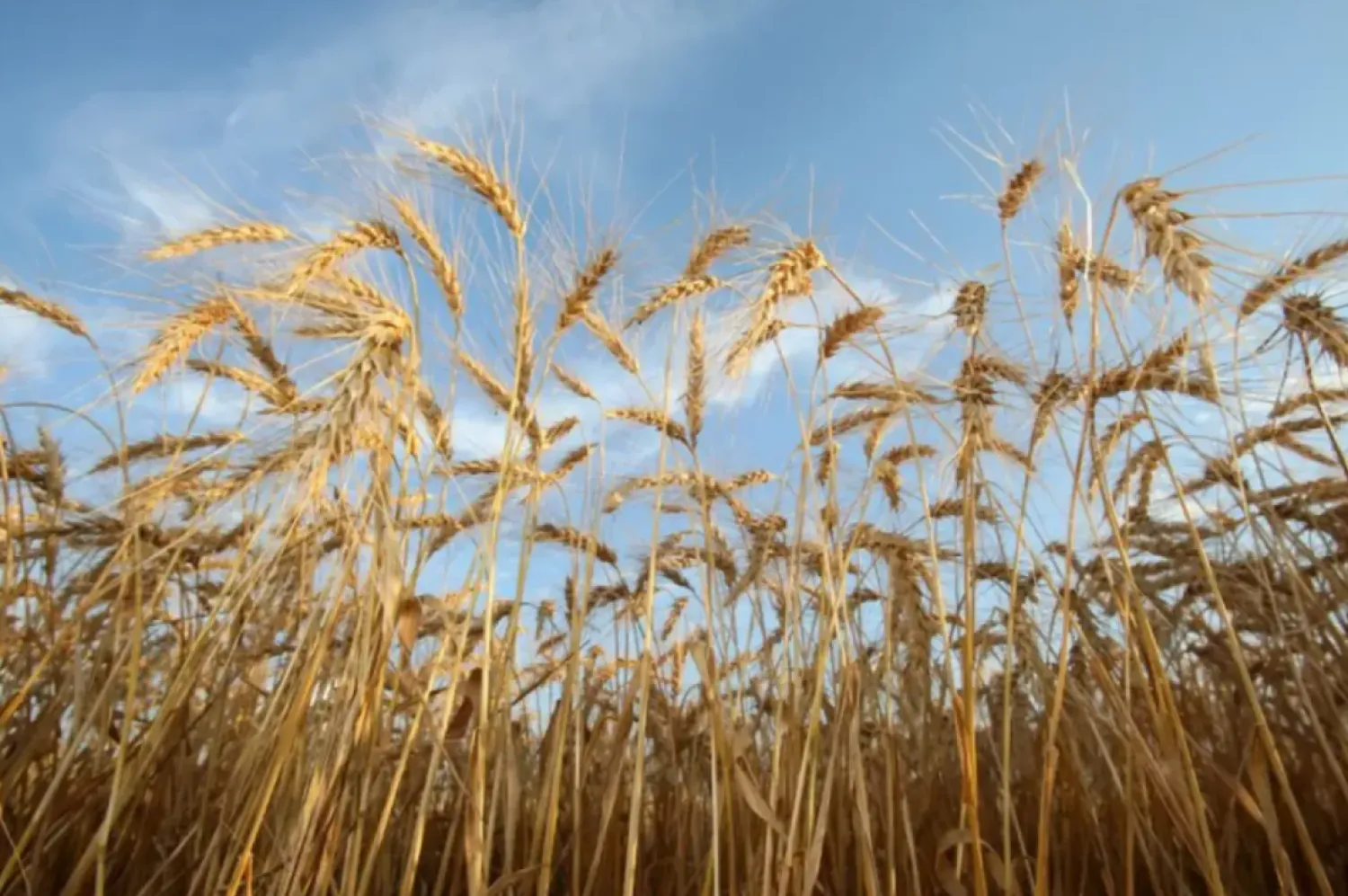
Mature spring wheat awaits harvest on a farm near Beausejour, Manitoba, Canada August 20, 2020. REUTERS/Shannon VanRaes/File Photo
TT

Algeria Tenders to Buy Nominal 50,000 Metric Tons Soft Milling Wheat

Mature spring wheat awaits harvest on a farm near Beausejour, Manitoba, Canada August 20, 2020. REUTERS/Shannon VanRaes/File Photo

Algeria's state grains agency OAIC has issued an international tender to buy soft milling wheat to be sourced from optional origins, European traders said on Sunday.

The tender sought a nominal 50,000 metric tons but Algeria often buys considerably more in its tenders than the nominal volume sought, Reuters reported.

The deadline for submission of price offers in the tender is Tuesday, February 24, with offers having to remain valid until Wednesday, February 25. The wheat is sought for shipment in three periods from the main supply regions including Europe: April 16-30, May 1-15 and May 16-31. If sourced from South America or Australia, shipment is one month earlier.

Algeria is a vital customer for wheat from the European Union, especially France, but Russian and other Black Sea region exporters have been expanding strongly in the Algerian market.


Investment Deputy Minister Highlights Saudi-China Economic Ties at CMF Select Shanghai 2026

Deputy Minister of Investment for Economic Affairs and Investment Studies Dr. Saad Alshahrani affirmed that China is a strategic investment partner for Saudi Arabia. (SPA)
TT

Investment Deputy Minister Highlights Saudi-China Economic Ties at CMF Select Shanghai 2026

Deputy Minister of Investment for Economic Affairs and Investment Studies Dr. Saad Alshahrani affirmed that China is a strategic investment partner for Saudi Arabia. (SPA)

Deputy Minister of Investment for Economic Affairs and Investment Studies Dr. Saad Alshahrani affirmed that China is a strategic investment partner for Saudi Arabia, emphasizing that the next phase will focus on deepening bilateral investments, bolstering industrial partnerships, and building shared value chains.

Speaking at a Saudi-China strategic investment dialogue during the Capital Markets Forum (CMF) Select Shanghai 2026, Alshahrani invited Chinese companies to capitalize on local opportunities and collaborate on building next-generation industries across manufacturing, logistics, technology, and emerging sectors, the Saudi Press Agency said.

Reviewing economic progress under Saudi Vision 2030, Alshahrani noted that the Saudi economy, domestic investment, and foreign direct investment (FDI) stock have doubled over the past decade, with FDI inflows surging nearly fivefold. Non-oil domestic investment now accounts for roughly 40% of non-oil GDP, ranking the Kingdom second among G20 nations after China, while foreign companies operating in the Kingdom have grown tenfold.

He underscored that the National Investment Strategy consistently exceeds its annual targets, lifting the Kingdom into the global top 10 of the FDI Confidence Index. Moving forward, the Kingdom is prioritizing high-impact, productive investments that advance technology transfer, generate quality employment, and expand export reach globally.


SEREDO Real Estate Development and Ownership Exhibition Kicks Off in Jeddah

SEREDO Real Estate Development and Ownership Exhibition Kicks Off in Jeddah
TT

SEREDO Real Estate Development and Ownership Exhibition Kicks Off in Jeddah

SEREDO Real Estate Development and Ownership Exhibition Kicks Off in Jeddah

The fifth edition of the SEREDO Expo for Real Estate Development and Ownership 2026 kicks off on Sunday and runs through September 8 at the Jeddah Superdome, the Saudi Press Agency reported.

The expo aims to enhance investment opportunities and showcase the latest projects and innovative solutions in the Kingdom's real estate sector.

Supported by the Ministry of Municipalities and Housing, the expo serves as a specialized platform and strategic meeting point, bringing together leading real estate developers, investors, financing entities, and other stakeholders.

This contributes to building effective partnerships, exploring promising opportunities, and opening new horizons for cooperation and integration within the real estate development and housing ecosystem.

SEREDO 2026 will showcase the latest projects, investment opportunities, and cutting-edge technologies, in addition to an educational program featuring a series of workshops and panel discussions with experts and specialists.

The program will address modern trends and challenges facing the real estate market and review best practices and solutions that support sustainable urban development, in line with Saudi Vision 2030 objectives.


COP31 in Antalya: From Pledges to Investment

Murat Kurum, Turkish Minister of Environment, Urbanization and Climate Change and President of COP 31, during the press conference in Istanbul. (Asharq Al-Awsat)
TT

COP31 in Antalya: From Pledges to Investment

Murat Kurum, Turkish Minister of Environment, Urbanization and Climate Change and President of COP 31, during the press conference in Istanbul. (Asharq Al-Awsat)

Türkiye plans to make implementation of climate commitments and financing a central focus of its presidency of the UN COP31 climate conference, seeking to move negotiations from agreements and pledges toward concrete projects and investments as energy security, debt, extreme weather and the development needs of emerging economies increasingly intersect.

Türkiye’s presidency will pursue three main pillars, “dialogue, consensus and action”, Environment, Urbanization and Climate Change Minister and COP31 President Murat Kurum explained.

He stressed that success in Antalya would be measured not only by the decisions reached, but by the ability to turn them into viable projects, attract financing and deliver results people can see in their daily lives.

At a news conference Friday, Kurum noted that climate change could no longer be treated as a separate environmental issue, but had become closely linked to energy, industry, cities, trade, water and development, amid the growing impact of heat waves, extreme weather and threats to food and water security.

Communities, he added, want to see the impact of climate decisions on the ground, and the world must move from “words to implementation.” While the Paris Agreement established an important path for climate action, the challenge in its second decade is the speed with which decisions and commitments are carried out.

Dialogue, consensus and action

Kurum argued that lasting results require listening to different parties, finding common ground and translating consensus into practical steps.

Türkiye wants COP31 to become a turning point by “turning words into projects, projects into investments, and investments into results that affect people’s lives,” he added.

Ankara has begun broad consultations with the UN system, governments, financial institutions, cities and the private sector to identify obstacles to implementation. Those consultations helped shape an “Action Agenda” focused on areas including clean energy, electricity, cities, industry, youth and food.

Financing at the forefront

Kurum placed climate finance at the top of Türkiye’s priorities, emphasizing that the challenge is no longer limited to announcing how much money will be made available, but ensuring that it reaches the countries and projects that need it at the right time.

He pointed to delays in meeting the previous pledge to provide developing countries with $100 billion annually, noting that the experience showed that confidence in the financing system depends on pledged funds actually reaching projects.

COP29 in Baku concluded with an agreement to raise the financing target for developing countries to at least $300 billion a year by 2035, while working to increase climate finance flows from public and private sources to $1.3 trillion annually.

Kurum described a global paradox in which capital is seeking investment opportunities while climate investment needs are enormous, yet the two “do not always meet.”

Many developing countries, he explained, have potential and projects but need technical and technological support, as well as help preparing projects so they can attract financing.

Türkiye’s presidency is therefore working on mechanisms to turn climate needs into investable projects, particularly in cities, water and infrastructure, and connect them with financial institutions and investors.

Private sector and the most vulnerable countries

Kurum underscored Türkiye’s aim of securing strong private-sector participation in Antalya, particularly from companies with climate technologies and solutions.

At the same time, he stressed that the needs of least-developed countries and small island developing states must remain at the heart of discussions, especially in terms of access to financing.

Türkiye will also bring its domestic experience to COP31, including its 2053 net-zero target and policies on the circular economy, waste management, energy efficiency and renewable energy.

Kurum also cited Türkiye’s reconstruction of earthquake-hit areas, noting that the country had completed and delivered around 455,000 housing units over two years, with an emphasis on disaster resilience and energy efficiency.

Kurum outlined plans to link the Action Agenda to measurable goals through 2035, including raising electricity’s share of global energy consumption to 35%, reducing waste-related resource consumption by 25% and increasing the use of secondary and recycled materials in industry to 15%.

Türkiye wants COP31 to mark the beginning of a phase in which climate action shifts more decisively from negotiation to implementation, with success measured by the ability to turn “words into projects, projects into investments, and investments into results.”