


Fitch: Saudi Banks Well-Buffered Against Regional Tensions

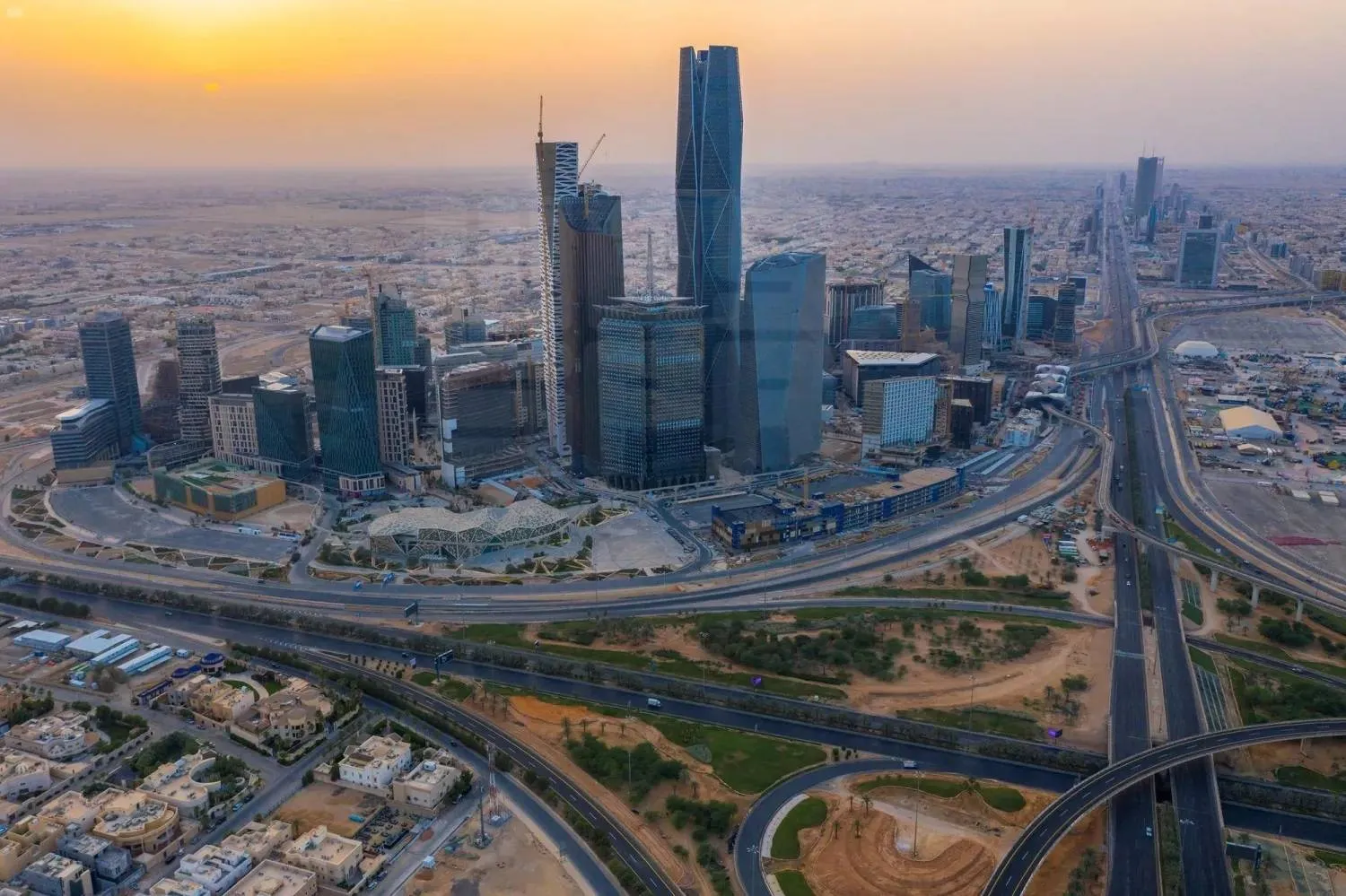
The King Abdullah Financial District in Riyadh. (SPA)
TT

Fitch: Saudi Banks Well-Buffered Against Regional Tensions

The King Abdullah Financial District in Riyadh. (SPA)

Rating agency Fitch affirmed that Saudi banks have solid capital and liquidity buffers, making them less vulnerable to the impact of the recent regional conflict that has followed attacks launched by Israel and the US on Iran on February 28.

“The effect (of the regional conflict) on Saudi banks’ credit profiles is not likely to be significant, given their solid capital and liquidity buffers,” the rating agency said in a report published on Tuesday.

“The conflict could make it more challenging for GCC-based entities to issue debt in overseas capital markets,” it said, adding that this could particularly increase Saudi banks’ reliance on more expensive domestic markets, raising funding costs or leading to a slightly sharper slowing of loan growth than we had previously expected.

Fitch also said Gulf Cooperation Council (GCC) banking systems face few immediate credit risks from the regional conflict and that bank ratings in the GCC are mostly driven by our expectations of sovereign support.

“GCC sovereign ratings generally have sufficient headroom to withstand a short regional conflict that does not escalate significantly further, including in most cases substantial assets that provide a buffer against short-term hydrocarbon revenue disruption,” the rating agency noted.

However, Fitch warned that lasting damage to key energy infrastructure or protracted hostilities could pose risks to these ratings.

“The longer-term orientation and stability of Iran’s government, and the associated implications for regional security, are unclear and could have negative or positive sovereign rating implications,” it said.

Geopolitical risk has long been an important credit consideration for GCC issuers, including banks, although the regional breadth and scale of the ongoing attacks is unprecedented, the rating agency added.

Fitch also said it believes a key area to watch will be the strength of operating conditions, particularly non-oil growth and general confidence in the region, as these are important for banks’ credit profiles.



Hapag-Lloyd Says US Plans to Block Hormuz Difficult to Assess

(FILES) A Hapag Lloyd container ship is seen in Rotterdam's harbour on August 1, 2022. (Photo by JOHN THYS / AFP)
TT

Hapag-Lloyd Says US Plans to Block Hormuz Difficult to Assess

(FILES) A Hapag Lloyd container ship is seen in Rotterdam's harbour on August 1, 2022. (Photo by JOHN THYS / AFP)

Germany's Hapag-Lloyd said on Monday that it is difficult to assess what effect US President Donald Trump's plans to block the Strait of Hormuz would have on shipping.

"What's important is that passage through the Strait of Hormuz be restored as soon as possible," said a company spokesperson in an emailed statement.

From Hapag-Lloyd's view, as long as there are mines, passage is not possible, and in addition, insurance for passage is also difficult to obtain at this time, added the spokesperson.


UN: Iran War Could Plunge 32 million into Poverty

People shop at the fruit and vegetable market the day after negotiations between Iran and the US in Pakistan failed to produce a deal, in the capital Tehran on April 13, 2026. (Photo by ATTA KENARE / AFP)
TT

UN: Iran War Could Plunge 32 million into Poverty

People shop at the fruit and vegetable market the day after negotiations between Iran and the US in Pakistan failed to produce a deal, in the capital Tehran on April 13, 2026. (Photo by ATTA KENARE / AFP)

More than 32 million people worldwide could be plunged into poverty by the economic fallout from the Iran war, with developing countries expected to be hit hardest, the United Nations Development Program (UNDP) warned.

In a report issued amid doubts over a fragile ceasefire, the UNDP said the world is facing a “triple shock” involving energy, food and weaker economic growth.

The agency said the conflict is reversing gains in international development, with the impact expected to be felt unevenly across regions.

Alexander De Croo, UNDP administrator and former prime minister of Belgium, said: “A conflict like this is development in reverse. Even if the war stops, and a ceasefire is very welcome, the impact is already there.”

“You will see an enduring impact, especially in poorer countries, where people are being pushed back into poverty. This is the most painful aspect. The people being pushed into poverty are very often the same people who were in poverty, escaped it, and are now being pushed back.”

Energy prices surged sharply during the six weeks of the Iran war after Iran’s closure of the Strait of Hormuz choked global oil and gas supplies. With knock-on effects on fertilizer supplies and global shipping, experts warn of a “time bomb” threatening food security in the developing world.

The head of the International Monetary Fund said the war’s “devastating effects” have caused lasting damage to the global economy, even if the conflict ends.

Publishing its report alongside meetings of world leaders in Washington for the IMF Spring Meetings, the UNDP said a global response is required to support countries hardest hit by the economic fallout.

It said targeted and temporary cash transfers are needed to protect the most vulnerable households in developing countries, at a cost of about $6 billion to mitigate the shocks for those living below the poverty line.

De Croo said international agencies and development banks could provide financial support. “There is a positive economic return from short-term cash transfers to avoid people being pushed back into poverty,” he said. Alternative measures could include temporary subsidies or vouchers for electricity or cooking gas.

Setting out three scenarios for the war, the UNDP found that in the worst case – involving six weeks of major disruption to oil and gas production and eight months of sustained higher costs – up to 32.5 million people globally would fall into poverty.

The report used the upper-middle-income poverty line defined by the World Bank, set at less than $8.30 per person per day.

The UNDP said that while richer countries are in a stronger position to cushion the economic fallout, countries in the global south face weaker conditions and already severe financial constraints.

This comes as western governments, including the US, Germany, France and the UK, cut aid spending amid rising borrowing and debt levels in advanced economies and calls to increase defense spending.

Data from the Organization for Economic Co-operation and Development published last week showed that countries in its Development Assistance Committee cut aid spending to $174.3 billion in 2025, nearly a quarter lower than in 2024.


EU Member States Must Coordinate on Energy Prices amid Iran conflict, Von Der Leyen Says

Gas prices are displayed at a Chevron station in Los Angeles, California, on March 31, 2026,(Photo by Frederic J. BROWN / AFP)
TT

EU Member States Must Coordinate on Energy Prices amid Iran conflict, Von Der Leyen Says

Gas prices are displayed at a Chevron station in Los Angeles, California, on March 31, 2026,(Photo by Frederic J. BROWN / AFP)

The European Union's member states must coordinate on energy prices amid a 22 billion euro ($25.70 billion) increase in fossil fuel bills since the start of the Iran war, EU Commission President Ursula von der Leyen said on Monday.

"We're also looking into ... coordination of member states' gas storage filling to avoid that many member states go to the market at the same time," von der Leyen told reporters in Brussels.

"And we will coordinate oil stock releases, to achieve the largest possible effect, and we will ensure that member states' emergency measures will not impact the single market."

The EU Commission is planning to publish proposals for energy price measures on April 22, to be discussed by EU leaders at their informal summit next week, according to Reuters.

Separately the EU's executive arm will present an electrification strategy before the summer, von der Leyen said as she stressed the need for structural measures to lower energy prices as well.

"We are paying a very high price for our global dependency on fossil fuels, and the grim reality for our continent is fossil fuel energy will remain the most expensive option in the years to come," von der Leyen said.

"Our strategy to decarbonize has not only been confirmed in the last years, but is growing in importance day by day," she added.