


Saudi Arabia Named Top 10 Global Mining Investment Destination

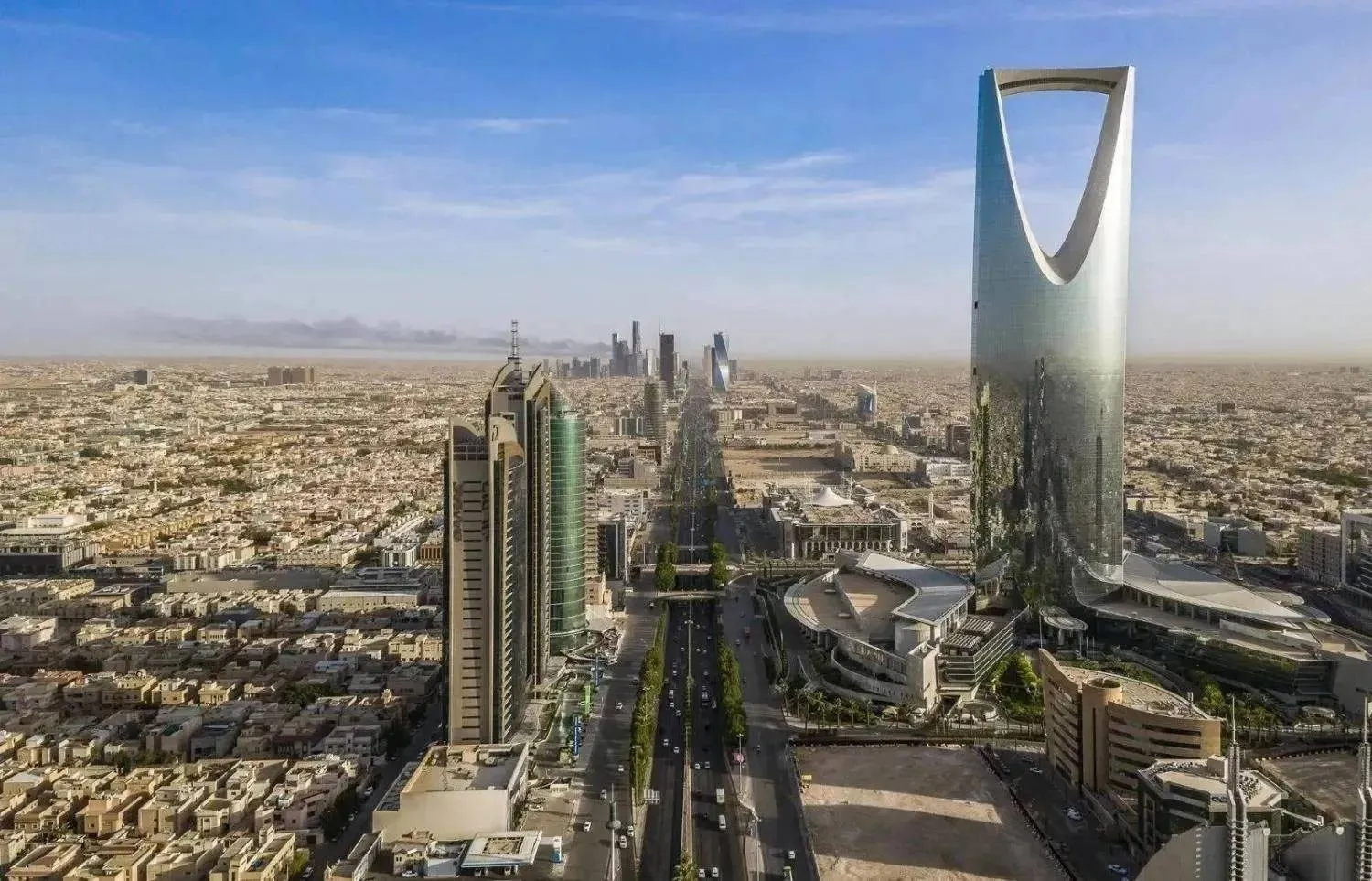
A view of the skyline of the Saudi capital, Riyadh (SPA)
TT

Saudi Arabia Named Top 10 Global Mining Investment Destination

A view of the skyline of the Saudi capital, Riyadh (SPA)

Saudi Arabia has been named among the world’s top ten mining investment destinations in the Fraser Institute’s Annual Survey of Mining Companies 2025, one of the most respected global benchmarks for assessing mining investment environments and a key reference for international investors.

The report shows that the Kingdom’s mining sector has capped an unprecedented rise on the main ‘Investment Attractiveness Index,’ climbing 13 positions and improving its score by 14.3% within a single year, becoming the only Asian jurisdiction ranked among the world’s top ten mining destinations in 2025, SPA reported.

This milestone reflects a remarkable transformation of the Kingdom’s mining sector, rising from 104th place in 2013 to 23rd in 2024, and now firmly establishing Saudi Arabia as a top ten global destination for mining investment.

This global recognition is based on strong gains in the two fundamental sub-indices. In the ‘Policy Perception Index,’ Saudi Arabia jumped from 20th place last year to 4th globally, scoring 94.99. In the ‘Mineral Potential Index,’ it grew from 24th to 16th, with a score of 73.33. These results reinforce the Kingdom’s message that its investment competitiveness rests on two interlinked criteria: promising geological resources and a modern regulatory framework supported by clear and efficient governance.

Across the detailed policy criteria, Saudi Arabia achieved exceptional results, ranking first globally in three key categories. The Kingdom ranked first globally in ‘Uncertainty Concerning the Administration & Regulations,’ reflecting clarity of mining regulations and executive administration, It recorded a remarkable 558% improvement, driven by the implementation of the new Mining Investment Law and its legal system, the establishment of ESNAD (Saudi Mining Services Company) to strengthen oversight and compliance, and the automation of licensing procedures through the Ta’adeen digital platform.

Saudi Arabia also ranked first globally in ‘Regulatory Duplication and Inconsistencies,’ reflecting success in coordinated efforts across government entities. In addition, the Kingdom ranked first globally in the ‘Taxation Regime,’ strengthening investor confidence and improving the financial competitiveness of mining projects.

In related indicators, Saudi Arabia ranked second globally in ‘Uncertainty Concerning Environmental Regulations’ and third globally in ‘Uncertainty Concerning Disputed Land Claims.’ These results reflect the strength, clarity, and stability of the Kingdom’s environmental regulatory framework, as well as the effectiveness of policies governing land claims and community development. The rankings highlight the impact of coordinated efforts with the Ministry of Environment, Water and Agriculture, alongside structured approaches to managing community engagement requirements around mining operations.

The Kingdom also recorded a significant improvement in the ‘Infrastructure indicator,’ which includes access to roads and energy availability. This progress reflects ongoing efforts to enhance infrastructure, notably through the launch of the Mining Infrastructure Enablement Initiative at the fifth edition of the Future Minerals Forum, held in January.

These top rankings were accompanied by exceptional qualitative leaps, averaging over 100% in other critical criteria. The ‘Legal System’ criterion

improved by 211%, while the ‘Quality of Geological Database’ rose by 203% due to the inclusion of extensive geological survey data, establishing a more transparent and reliable investment environment.

Commenting on the achievement, Vice Minister of Industry and Mineral Resources for Mining Affairs Eng. Khalid bin Saleh Al-Mudaifer said the Kingdom’s entry into the global top ten reflects the depth of reforms implemented under Saudi Vision 2030 in the mining sector.

He noted that the ranking demonstrates the maturity and resilience of Saudi Arabia’s investment environment as the Kingdom positions itself to meet rising global demand for minerals.

Looking ahead, the vice minister added that the ministry will continue to strengthen the sector as a driver of industrial and economic growth by developing legislative and regulatory frameworks that enhance investor confidence and reinforce the Kingdom’s long-term competitiveness.

In addition, he said the Fraser Institute results provide independent international recognition of the rapid transformation underway in Saudi Arabia’s mining sector.

He further noted that ongoing efforts focus on improving the investor experience through greater transparency, faster licensing procedures, and reduced exploration risks, while strengthening supply chain localization and supporting the creation of high-quality employment opportunities.

These regulatory developments are translating into tangible investment outcomes. In 2025, Saudi Arabia issued 61 exploitation licenses for mine development, with investment valued at $11.73 billion (SAR44 billion), compared with 21 licenses in 2024, which represents an increase of 221%.

Active exploration companies increased from six in 2020 to 226 in 2024, representing more than 38‑fold growth. Meanwhile, the number of active exploration mining licenses reached 1,018 by 2025, compared with 500 licenses in 2020, reflecting a growth of approximately 104%.

Saudi Arabia’s Ministry of Industry and Mineral Resources continues to attract investment and facilitate the investor journey through competitive exploration licensing rounds. These rounds have seen unprecedented international interest from leading global mining companies and consortia, including Barrick Gold, Ivanhoe Electric, Shandong Gold, Hancock Prospecting, and Zijin Mining.

As part of these efforts, the ministry recently launched the 11th licensing round, opening competition for exploration licenses across eight mining sites in the regions of Riyadh, Hail, and Aseer, covering a total area of 1,878 km² and targeting deposits of gold, silver, copper, zinc, and iron ore.

To support early‑stage exploration and reduce financial risk, the report also highlighted the ‘Exploration Enablement Program’ as an effective tool for supporting exploration companies. The Kingdom has allocated over $182.67 million (SAR685 million) to the program for the period 2024–2030, targeting exploration licenses in their first five years and requiring participating companies to share geological data to accelerate knowledge exchange and improve the quality of investment decisions.

This advanced ranking and historic progress reflect Saudi Arabia’s continued success in advancing the objectives of Vision 2030: positioning mining as the third pillar of the national industrial base and strengthening the Kingdom’s role as a leading global investment destination and a trusted partner in securing future mineral supply chains.

The survey evaluated 68 mining jurisdictions worldwide, based on 256 responses from senior executives representing global mining companies.



War Weighs on Egypt’s Private Sector as PMI Hits Near Two-Year Low in March

People walk past a closed cinema as shops close early under a government-ordered curfew aimed at reducing energy costs in downtown Cairo on April 2, 2026. (AFP)
TT

War Weighs on Egypt’s Private Sector as PMI Hits Near Two-Year Low in March

People walk past a closed cinema as shops close early under a government-ordered curfew aimed at reducing energy costs in downtown Cairo on April 2, 2026. (AFP)

Egypt's non-oil private ‌sector deteriorated at its sharpest pace in almost two years in March, as the Middle East war drove up costs and dampened client demand, a closely watched business survey showed on Sunday.

The headline S&P Global Egypt Purchasing Managers' Index fell for a fourth consecutive month, dropping to 48.0 in March from 48.9 in February — its lowest reading since April 2024.

The ‌figure remained below ‌the 50.0 threshold that ‌separates growth ⁠from contraction, though ⁠it was broadly in line with the survey's long-run average of 48.2.

Output and new orders were the chief drags on the index, with both measures also hitting their lowest levels for nearly two years. Firms frequently blamed ⁠the Middle East conflict for dampening client ‌demand, partly through ‌intensifying price pressures.

In a first, business expectations for the ‌coming 12 months slipped into negative territory, with ‌companies citing uncertainty over the war as a key reason for pessimism, though the degree of gloom was described as mild.

David Owen, senior economist at ‌S&P Global Market Intelligence, nevertheless noted that "the latest figure of 48.0 still relates ⁠to ⁠annual GDP growth of around 4.3%," adding that "recent data suggests the domestic non-oil sector is on a solid underlying growth path."

Cost pressures remained a serious concern, however. Input prices surged at their joint-sharpest pace in one-and-a-half years, as firms cited fuel costs and other war-related commodity price increases, compounded by a stronger US dollar.

In response, companies raised their selling prices at the fastest rate in 10 months, though the increase remained modest overall.


Middle East War Presents ‘Serious Risk’ for Africa, Warns Report

Festus Mwirotsi, 34, scouts for pests and diseases in roses meant for export at Isinya Roses farm in Kajiado, Kenya, March 24, 2026, as Kenya's flower industry is losing up to $1.4 million a week as the Iran war cuts demand and disrupts shipping. (AP)
TT

Middle East War Presents ‘Serious Risk’ for Africa, Warns Report

Festus Mwirotsi, 34, scouts for pests and diseases in roses meant for export at Isinya Roses farm in Kajiado, Kenya, March 24, 2026, as Kenya's flower industry is losing up to $1.4 million a week as the Iran war cuts demand and disrupts shipping. (AP)

The Middle East war "presents a serious risk to Africa", the African Union and the African Development Bank (AfDB) said in a report seen by AFP Saturday.

The conflict threatens to increase the cost of living and curtail growth on the continent, the report warned.

The Middle East accounts for 15.8 percent of Africa's imports and 10.9 percent of its exports, the report noted.

"The conflict, which already has triggered a trade shock, could quickly turn into a cost-of-living crisis across Africa through higher fuel and food prices, rising shipping and insurance costs, exchange rate pressures, and tighter fiscal conditions," it added.

The growth rate of most African countries continues to be slower than before the Covid pandemic, it noted.

"A loss in output growth of 0.2 percentage points on Africa's GDP is projected for 2026 if it (the conflict) exceeds six months," it said.

"The longer the conflict lasts and the more severe the disruption to shipping routes and energy and fertilizer supplies, the greater the risk of a significant growth slowdown across the continent."

Reduced deliveries of liquefied natural gas (LNG) from the Gulf will impact fertilizer production, limiting its availability during the crucial planting period up to May, it added.

- Currencies hit -

The report was compiled by the UN Development Program (UNDP) and the United Nations Economic Commission for Africa (UNECA).

According to recent data from the AfDB, the currencies of 29 African countries have already depreciated, increasing the cost of servicing external debt, making imports more expensive and reducing foreign exchange reserves,

Some countries could see some short-term gains, such as Nigeria for its oil exports or Mozambique for its LNG.

The rerouting of ships around Cape of Good Hope could benefit ports in Mozambique, South Africa, Namibia and Mauritius.

Kenya is establishing itself as a logistics hub in East Africa, while Ethiopian Airlines, the leading carrier in Africa, is serving as an "emergency air bridge" between the continent, Asia, and Europe, the report noted.

But these gains are likely to be uneven and will not offset the consequences for inflation, budgets, and food security in Africa, they warned.

Above all, the current crisis could hit the costs of humanitarian aid and divert donor funds towards other priorities.


Taiwan Says It Has Assurances over LNG Supplies from 'Major' Country

The Taipei 101 skyscraper is seen lit up before the Earth Hour in Taipei, Taiwan, Saturday, March 28, 2026. (AP Photo/ Chiang Ying-ying)
TT

Taiwan Says It Has Assurances over LNG Supplies from 'Major' Country

The Taipei 101 skyscraper is seen lit up before the Earth Hour in Taipei, Taiwan, Saturday, March 28, 2026. (AP Photo/ Chiang Ying-ying)

Taiwan has received ‌supply assurances from the energy minister of a "major" liquefied natural gas-producing country, the island's economy minister said on Saturday, speaking about the Iran war's impact on Middle East energy imports.

Taiwan, a major semiconductor producer, had relied on Qatar for around a third of its LNG before the conflict, and has said it has secured alternate supplies for the months ahead from countries including Australia and the United States, said Reuters.

Speaking to ‌reporters in Taipei, ‌Economy Minister Kung Ming-hsin said that ‌because ⁠Taiwan has good ⁠relationships with its crude oil and natural gas suppliers, neither adjusting shipment origins nor purchasing additional spot cargoes would be a problem.

Kung said that about two weeks ago the energy minister of a certain "major energy-producing country" proactively contacted him.

The person "explained to us that they ⁠would fully support our natural gas needs. ‌If we have any ‌demand, we can let them know," he added.

"Another country even ‌said that some countries have released strategic petroleum ‌reserves, and they could also help coordinate matters if Taiwan needs assistance," Kung said.

"This shows that Taiwan has in fact earned considerable goodwill internationally through the long-term trust ‌it has built over the years," he said.

He declined to name the countries involved.

Angela ⁠Lin, ⁠spokesperson for state-owned refiner CPC, said at the same news conference that crude oil inventories were being maintained at pre-conflict levels and overall petrochemical feedstock supplies have remained stable.

CPC Chairman Fang Jeng-zen said that to reduce dependence on the Middle East, a new contract with the US will see 1.2 million metric tons of LNG supplied annually, with even more to come in the future, including eventually from Alaska.

However, Taiwan is not considering importing crude or LNG from Russia, he added.