


Many in Egypt Struggle as the Costs of a Distant War Drive up Prices in Local Markets

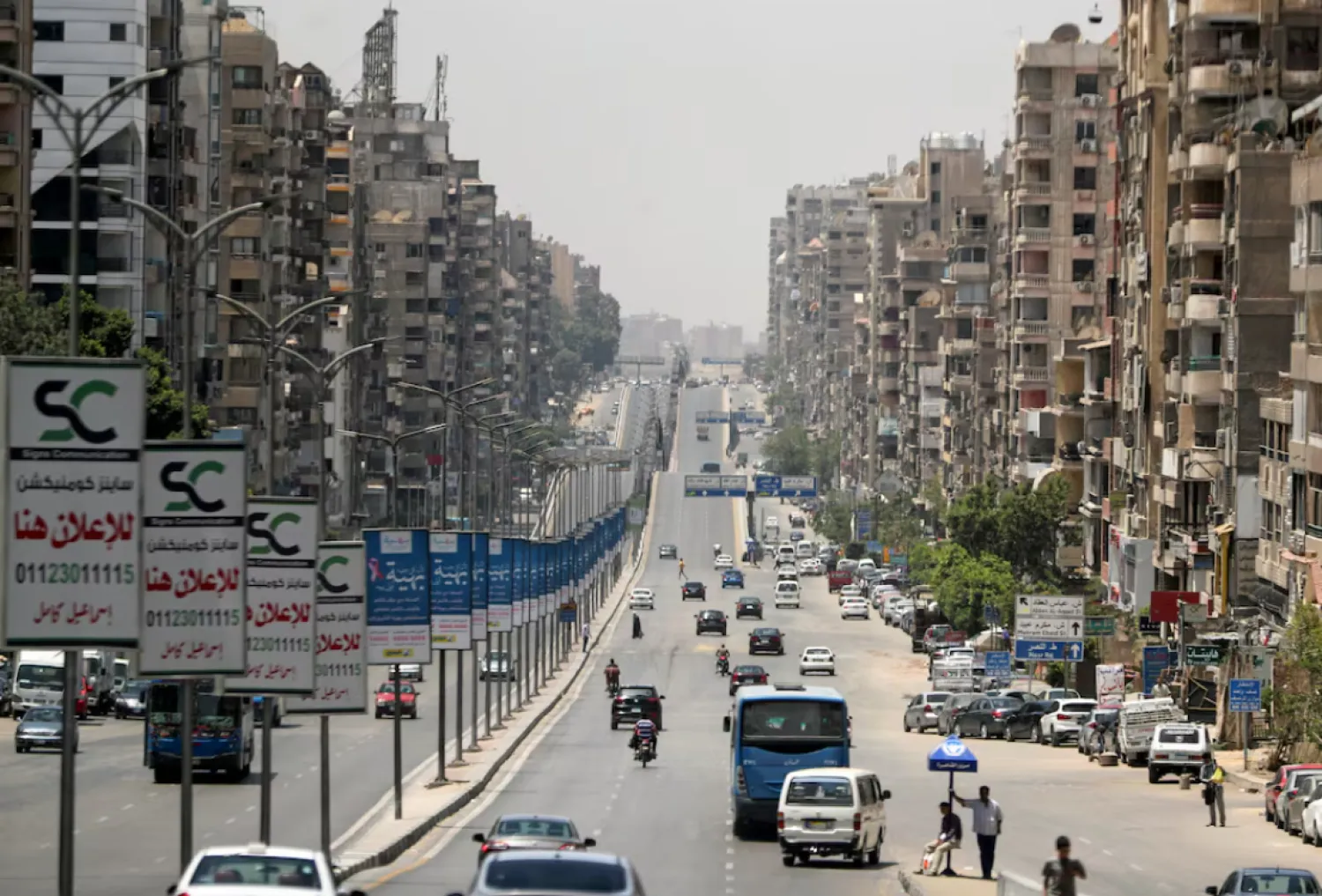
Cars are seen on a road at Nasr City, a suburb of Cairo, Egypt May 3, 2021. REUTERS/Mohamed Abd El Ghany
TT

Many in Egypt Struggle as the Costs of a Distant War Drive up Prices in Local Markets

Cars are seen on a road at Nasr City, a suburb of Cairo, Egypt May 3, 2021. REUTERS/Mohamed Abd El Ghany

Sayyed Ragheb was already struggling to keep his family afloat, earning less than $100 a month. Now he fears it will get even worse after Egypt hiked fuel prices because of the Iran war.

The father of four school-age children works day-to-day in cafes and sometimes in construction. With prices of meat and produce jumping just the past week, he worries about meeting his family’s basic needs, The AP news reported.

“This means a price increase for everything,” said Ragheb, as he served hot drinks at a cafe on a recent evening in Cairo. “This is catastrophic for someone like me.”

Egypt is one of the few countries in the Middle East not directly affected by the war, now in its third week with no sign of abating. It’s not part of the US-Israeli campaign against Iran, and it hasn’t been targeted by Iranian missile and drone fire, like Arab Gulf nations, or by Israeli bombardment, like Lebanon.

But the nation of over 108 million people is feeling the conflict’s repercussions. Soaring energy prices forced the government to implement a steep hike in the prices of subsidized fuel and cooking gas.

That is having a domino effect on the prices of other goods and services in Egypt's struggling economy. Moreover, it comes during the Muslim holy month of Ramadan, when families traditionally hold large dinner gatherings, and ahead of the holiday of Eid al-Fitr, a major shopping season when people buy new clothes, especially for children.

Egypt is vulnerable to fuel price hikes World energy prices have surged since the US and Israel launched the war on Feb. 28. Iran retaliated by attacking oil and gas infrastructure across the Persian Gulf and effectively blocking traffic through the Strait of Hormuz, where a fifth of the world's traded oil passes.

Brent crude, the international benchmark, soared from less than $70 a barrel on Feb. 27 to a peak of nearly $120 early March 9. It was hovering around $104 on Wednesday.

The jump is particularly painful for Egypt because the government dedicates a large part of its already strained budget to subsidizing gasoline, fuel and electricity.

Energy prices aren’t its only vulnerability.

Traffic through the Suez Canal, a major source of government income, had started to recover after two years of attacks on Red Sea shipping by Yemen's Houthis. Now some shipping companies are again routing traffic away from the Middle East because of the latest turmoil, and the government says it expects more losses.

Egypt, home to the ancient pyramids, also earns considerable foreign income from tourism. But arrivals are expected to plunge as travelers steer clear of the region.

If the conflict is prolonged and continues to drive up prices and reduce government revenues, the short-term economic pain could become a broader political and economic crisis, said Alexandra Blackman, an expert in Mideast politics at Cornell University.

“That will be more challenging for the regime to manage and control,” she said.

Egypt's president says the price hikes were ‘inevitable’ On March 10, the government announced a 15% hike in the price of gasoline, a 22% hike in cooking gas and a 17% hike in diesel, widely used in commercial and public transport.

President Abdel-Fattah el-Sissi acknowledged the pressure on people but said the increases are “inevitable” and “the least expensive” option to protect the economy.

“The requirements of the reality sometimes necessitate taking difficult measures ... to avert harsher options and more serious consequences,” he said over the weekend at an Iftar event, breaking the daily sunrise-to-sunset Ramadan fast.

He said Egypt’s consumption of oil products costs $20 billion annually, including fuel used to operate power plants.

The government imports 28% of its gasoline needs and 45% of its diesel needs, which puts pressure on the budget, said Petroleum Minister Karim Badawy.

The government announced a series of measures aimed at mitigating the impact, including reducing official overseas trips and tightening fuel consumption across the public sector. It also announced salary increases starting in July.

Egypt’s poor and middle class have already seen their purchasing power shrink over the past decade under government austerity measures. The measures included the slashing of subsidies and devaluation of Egypt’s currency as part of an ambitious reform program in 2016.

Inflation jumped from 10% in January to 11.5% in February of this year, according to official figures. The price increases are rippling across the economy in a country where a third of the population is below the poverty line, according to government statistics.

Since the new fuel prices took effect, the cost of meat has jumped 25% and fruit and vegetables rose 15-30%, according to merchants at three markets in Cairo.

Hussein Rashad, a grocer in a poorer district, said customers have become more selective, and most have reduced the amount of vegetables they buy. Some have stopped buying fruit altogether, he said.

“Many things have become out of their reach,” he said.

Ragheb, the cafe worker, said his family has tightened its budget, including resorting to the cheapest food staples. He won't be buying new clothes for his children for the upcoming Eid.

“One has no other option,” he said.


Saudi Aramco: Oil Refining Has Been Underinvested

FILE PHOTO: Saudi Aramco logo and stock graph are seen through a magnifier displayed in this illustration taken September 4, 2022. REUTERS/Dado Ruvic/Illustration/File Photo
TT

Saudi Aramco: Oil Refining Has Been Underinvested

FILE PHOTO: Saudi Aramco logo and stock graph are seen through a magnifier displayed in this illustration taken September 4, 2022. REUTERS/Dado Ruvic/Illustration/File Photo

The current oil supply crisis shows there is underinvestment in oil refining as demand holds resilient, Saudi state-owned Aramco's vice president of market analysis and sustainability, Musaab Al Mulla, said on Tuesday.

Around 3 ⁠million barrels per ⁠day of refining capacity closed between 2020 and 2023, Al Mulla said at the S&P Global Energy Middle East ⁠Petroleum and Gas Conference in London.

"Now we realize if you have those refineries you may have definitely mitigated the impacts of the crisis today," he said.

The war in Iran, attacks on energy infrastructure and ⁠Iran's effective ⁠closure of the Strait of Hormuz followed by a US naval blockade, have removed around 14 million bpd of oil supply from Middle East producers to the global market.


OECD Cuts 2026 Global Growth Forecasts Over Mideast War Fallout

A drone view of vessels anchored in the Strait of Hormuz as seen from Musandam, Oman, June 3, 2026. (Reuters)
TT

OECD Cuts 2026 Global Growth Forecasts Over Mideast War Fallout

A drone view of vessels anchored in the Strait of Hormuz as seen from Musandam, Oman, June 3, 2026. (Reuters)

The war in the Middle East has dented economic growth prospects worldwide, with a more severe shock likely if no effective ceasefire is agreed before 2027, the OECD warned Wednesday.

Global economic growth is now forecast to slip to 2.8 percent for 2026 if Gulf exports of oil and gas return to pre-conflict levels in the third quarter, the group of 38 industrialized countries said in its quarterly update.

Previously the OECD had forecast full-year global growth of 2.9 percent.

But if the Middle East war continues into next year, however, global growth could slow to 2.1 percent, the OECD said -- well below the average annual growth of 3.4 percent seen from 2013 to 2019, before the Covid pandemic.

"The longer the disruptions last, the larger the economic and social costs become," the group's chief economist Stefano Scarpetta said in the report.

Many countries would risk falling into recession, he noted, and a drop in investment spending -- "including in energy-intensive AI" -- would likely push up unemployment.

Sustained high prices for energy as well as fertilizer and other key products from hydrocarbon production in the Gulf would weigh especially hard on developing countries that have "higher shares of energy and food in household consumption".

Even if the war sparked by US and Israeli strikes on Iran in late February ends in the coming weeks, the OECD forecast global inflation rising to 4.0 percent this year from 3.4 percent in 2025.

In this "time-limited disruption scenario", the group expects US growth to slow to 2.0 percent this year and 1.8 percent in 2027, after growing 2.1 percent last year.

In the eurozone, where many countries are highly dependent on energy imports, GDP growth will slump to 0.8 percent this year after 1.4 percent last year, assuming a Mideast ceasefire is secured in the coming weeks.


Saudi Non-oil Private Sector Activity Hits 3-month High in May

The Saudi capital, Riyadh (Reuters)
TT

Saudi Non-oil Private Sector Activity Hits 3-month High in May

The Saudi capital, Riyadh (Reuters)

Saudi Arabia's non-oil private sector expanded at the fastest pace in three months in May as domestic demand improved and supply chains stabilized, while business optimism remained subdued amid conflict in the region, a survey showed on Wednesday.

The seasonally adjusted Riyad Bank Saudi Arabia Purchasing Managers' Index, compiled by S&P Global, rose to 52.8 in May from 51.5 in April. The 50 mark separates growth from contraction, Reuters reported.

Output accelerated at the ⁠fastest pace in ⁠three months after March's downturn following the start of the Iran war, as firms cited normalizing working conditions, revived contracts and stronger local demand.

Export sales fell for a third straight month, hit by shipping disruption, higher freight and fuel costs, geopolitical tensions and stronger competition. The pace of decline eased only modestly from April's survey-record contraction.

However, supply chains improved, with suppliers' delivery times shortening for the first time in three months as ⁠firms relied ⁠more on local vendors. Backlogs of work rose for an 11th consecutive month, albeit moderately.

“Overall, the latest PMI reading supports the expectation that Saudi Arabia’s non-oil economy will continue its upward trend during the remainder of 2026," said Naif Al-Ghaith, Riyad Bank's chief economist.
