


Saudi Arabia Bypasses ‘Hormuz’ Disruption with Transcontinental Network

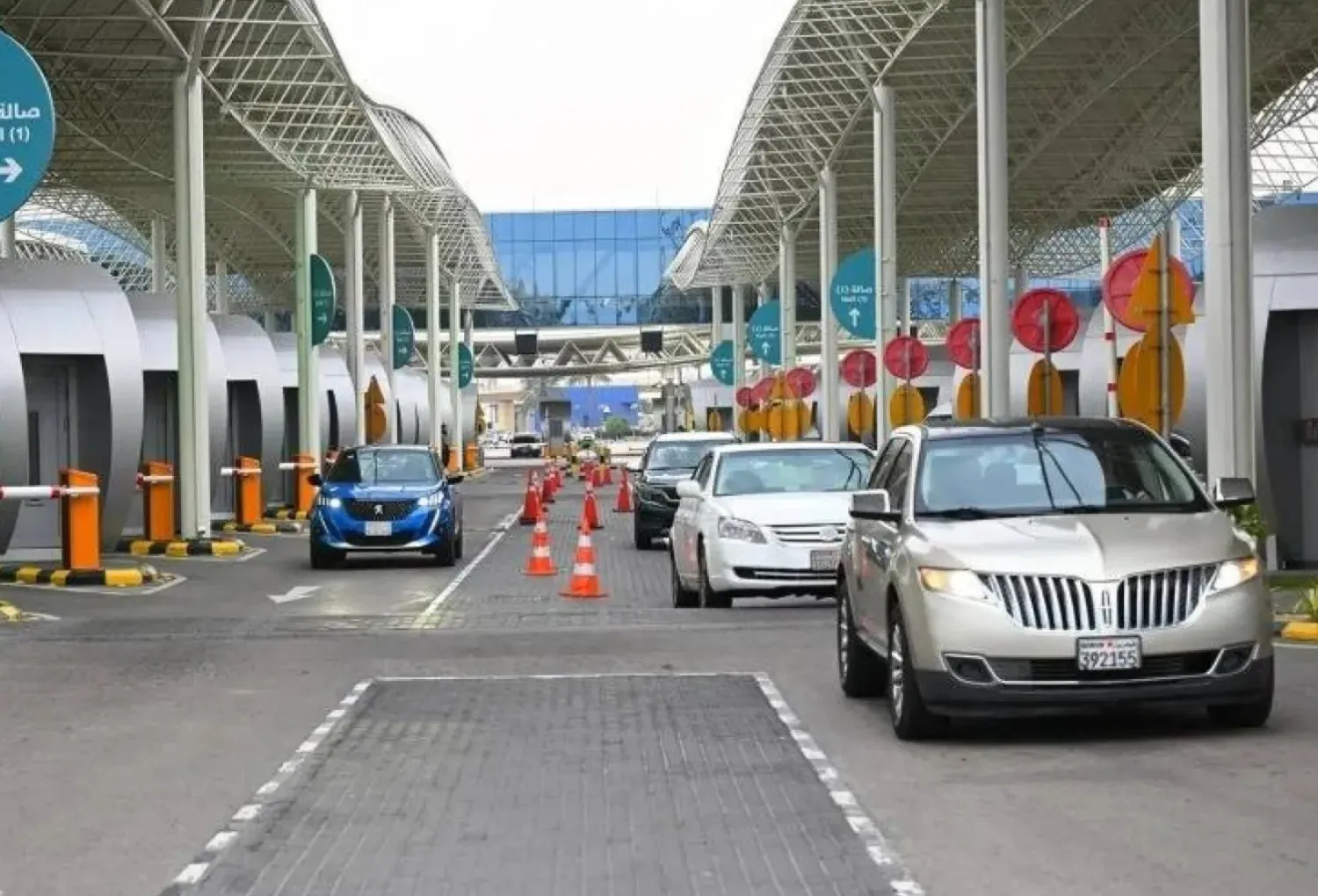
Vehicles complete crossing procedures on King Fahd Causeway linking Saudi Arabia and Bahrain (SPA)
TT

Saudi Arabia Bypasses ‘Hormuz’ Disruption with Transcontinental Network

Vehicles complete crossing procedures on King Fahd Causeway linking Saudi Arabia and Bahrain (SPA)

As global supply chains face unprecedented strain, and the Strait of Hormuz, one of the world’s most critical chokepoints, is disrupted, Saudi Arabia has positioned its transport system as a vital alternative, helping keep global trade moving.

Under the National Transport and Logistics Strategy launched by Crown Prince Mohammed bin Salman in 2021, the kingdom has built a transcontinental network that is now being tested in real time.

Officials say operational success rates exceed 97% in crisis management and evacuation.

The system, designed to position Saudi Arabia as a hub linking three continents, has been activated through new logistics zones, partnerships with global firms, and faster export and import procedures across air, land, and sea.

This has helped ensure the steady flow of goods, services, and energy, shifting the kingdom’s role from infrastructure developer to a key stabilizing force in times of crisis.

Air response

Logistics expert Hassan Al Helil told Asharq Al-Awsat that air transport now drives emergency response, handling 70% to 80% of rapid evacuations.

Sea transport is used for larger operations involving 500 to 2,000 people, with response times of 24 to 72 hours.

He said operations rely on tight coordination and strict safety protocols, including medical screening and in-transit care, despite challenges such as congested airspace, longer flight times of 20% to 30%, regulatory differences, delays of up to 48 hours, and weak infrastructure in crisis areas that can cut efficiency to 40%.

Even so, Saudi Arabia maintains a success rate above 97%, supported by flexible operations and tested emergency plans.

Red Sea shift

Maritime transport has emerged as a key alternative. Red Sea ports, led by Yanbu, are handling cargo that once passed through the Strait of Hormuz.

Integrated with the East-West pipeline, the system allows exports to be rerouted away from tension zones without disrupting supply.

Crude exports from Yanbu’s northern and southern terminals averaged 4.4 million barrels per day over five days through Tuesday. The kingdom is aiming to raise Red Sea exports to 5 million barrels per day.

Transport costs have dropped 58% as vessels move closer to Saudi ports. Large cargoes, including wind turbines, have been redirected from Jubail to Yanbu to speed delivery.

Smarter routes

Al Helil said diversifying export routes has cut exposure to chokepoints by up to 40%.

This helped absorb global shipping cost increases of up to 50%, alongside added geopolitical risk fees and higher insurance costs.

Despite global delays of three to 10 days, Saudi port efficiency and temporary exemptions for vessels reduced idle time by 25% and limited price volatility.

Land and rail

Saudi Arabia has also become a key land corridor for Gulf trade, backed by more than 500,000 trucks and expanded rail capacity exceeding 2,500 containers a day.

Thousands of trucks have moved goods to Kuwait and Bahrain, underscoring the kingdom’s growing role as a regional distribution hub.

The system has also supported passenger movement, including overland transport of Kuwaiti citizens from Riyadh and Iraqi flights arriving at Arar airport.

Regional links

The Saudi Ports Authority has launched a new trade bridge linking Dammam with Sharjah in partnership with Gulftainer, offering faster multimodal shipping.

A Gulf Shuttle service now connects Dammam’s King Abdulaziz Port with Bahrain’s Khalifa Bin Salman Port.

Saudi Arabia Railways has also launched a freight corridor linking eastern ports with the Al Haditha border crossing, strengthening trade links with Jordan and beyond.

Passengers and crisis response

The system has played a key humanitarian role, facilitating the movement of stranded travelers.

Arar International Airport has received flights from Iraq, while maintaining operational success above 97%.

Authorities have also introduced temporary exemptions for ships, cutting idle time by up to 25% and reducing costs without compromising safety.

This has lowered maritime transport costs by 8% to 18% and reduced price volatility by 10% to 20%.

Food security, shuttle shipping

The system has also supported regional food security.

Land crossings, particularly Abu Samra, have ensured steady supplies to Qatar.

Al Helil said Saudi Arabia has diversified imports from more than 25 countries and maintains strategic reserves of up to 12 months for some goods, with availability exceeding 95%.

Also speaking to Asharq Al-Awsat, logistics specialist Nashmi Al Harbi said rail has become a reliable alternative amid disruptions at sea.

A new freight route linking eastern ports to Al Haditha can carry more than 400 containers per train, cutting shipping time in half.

In February 2026, the Saudi cabinet approved a high-speed rail link between Riyadh and Doha, reducing travel time to two hours and supporting steady goods flows.

Al Harbi said that shuttle shipping, using smaller vessels that move frequently between ports, is reshaping supply chains and costs.

He said a parallel maritime link has eased pressure on the King Fahd Causeway, which handled 4.7 million vehicles in 2025, while supporting intra-Gulf trade nearing $1 billion.

Saudi Arabia is also attracting global logistics firms. DHL is investing 130 million euros to build a regional hub in Riyadh, while Maersk has opened a new bonded warehouse.

These efforts have lifted the kingdom 17 places in the World Bank’s Logistics Performance Index to 38th globally.

Saudi Arabia has moved beyond crisis response to strengthen its position in global trade. With integrated ports, stronger infrastructure and flexible operations, it can reroute trade and energy flows efficiently, turning disruption into opportunity.




China Says Hopes to Boost Trade Cooperation with US

 A street cleaner walks by food delivery riders gather outside restaurants waiting for their online orders, in Beijing, China, Wednesday, March 25, 2026. (AP)
A street cleaner walks by food delivery riders gather outside restaurants waiting for their online orders, in Beijing, China, Wednesday, March 25, 2026. (AP)
TT

China Says Hopes to Boost Trade Cooperation with US

 A street cleaner walks by food delivery riders gather outside restaurants waiting for their online orders, in Beijing, China, Wednesday, March 25, 2026. (AP)
A street cleaner walks by food delivery riders gather outside restaurants waiting for their online orders, in Beijing, China, Wednesday, March 25, 2026. (AP)

China wishes to strengthen economic cooperation with the United States to avoid "vicious competition", commerce minister Wang Wentao told US Trade Representative Jamieson Greer, according to a readout released on Friday.

The two met on Thursday on the sidelines of a World Trade Organization (WTO) ministerial conference in Cameroon's capital, less than two months ahead of US President Donald Trump's planned visit to Beijing.

"China is willing to strengthen multilateral and regional economic and trade cooperation with the United States," Wang told Greer, according to a statement by the Beijing's Ministry of Commerce.

The two powers must "properly handle the relationship between competition and cooperation" and "avoid vicious competition," he said.

The world's two largest economies were locked in a bitter trade battle last year before agreeing to a truce in October.

High-level talks in Paris this month between US Treasury Secretary Scott Bessent and Chinese Vice Premier He Lifeng also helped to ease tensions.

Nevertheless, issues including US tariffs, a trade balance in China's favor, and US restrictions on exports of advanced technologies continue to threaten relations.

Wang expressed "grave concerns" on Thursday regarding recently announced US trade investigations signaling the possibility of fresh tariffs.

Washington's trade investigations target 60 economies, including China, and will look into "failures to take action on forced labor" and whether these burden or restrict US commerce.

The White House has said Trump will visit Beijing on May 14-15, with the timing postponed by several weeks as a result of the war in the Middle East.


Dollar Rides Haven Demand as Middle East Talks Ring Hollow

An electronic panel displays US Dollar currency symbol at an exchange office in Podolsk, outside Moscow, Russia, 26 March 2026. (EPA)
TT

Dollar Rides Haven Demand as Middle East Talks Ring Hollow

An electronic panel displays US Dollar currency symbol at an exchange office in Podolsk, outside Moscow, Russia, 26 March 2026. (EPA)

The dollar hovered near multi-month peaks on Friday as investors sought safety in the shadow of an intensifying Middle East war and mounting doubts over any path to de-escalation.

Markets were on edge following another rollercoaster week as US President Donald Trump again extended a deadline for striking Iran's energy facilities into April, even as Washington and Tehran offered starkly conflicting accounts of diplomatic progress.

The Pentagon is also looking at sending up to 10,000 additional ground troops to the Middle East, the Wall Street Journal reported on Thursday, doing little to bolster investor hopes ‌of an imminent ‌end to the war.

That kept the dollar bid ‌as ⁠investors flocked to ⁠the safe-haven currency and ramped up expectations of a US rate hike by the year-end, owing to the inflationary pulse from higher-for-longer energy prices.

The yen, on the other hand, was left on the cusp of 160 per dollar and stood at 159.58. The euro was nursing losses and tacked on 0.1% to $1.1540, while sterling was little changed at $1.3339.

"It doesn't look like the conflict will end anytime soon," said Carol Kong, a ⁠currency strategist at Commonwealth Bank of Australia. "The dollar is king while ‌this conflict lasts."

"If we're right about this ‌conflict being protracted, I think oil prices will just keep rising and it will ‌push the dollar higher, at the expense of net energy importers like the Japanese ‌yen and the euro," she added.

The darkening market mood sent the risk-sensitive Australian dollar down to a two-month trough, though it later rebounded and traded 0.2% higher at $0.6903. The New Zealand dollar languished near its lowest level since January and last stood at $0.5769.

Against a basket ‌of currencies, the dollar was marginally weaker at 99.83, but still on track for a 2.2% rise this month, which would ⁠mark its ⁠biggest gain since July last year.

Investors are now pricing in an over 40% chance of a 25-basis-point rate hike from the Federal Reserve by September, according to CME Fedwatch tool, in a sharp reversal from more than 50 bps worth of easing expected before the war.

The Bank of England and the European Central Bank are also seen tightening policy, with the hawkish sea change in rate expectations hammering bonds and sending yields rising.

"A more prolonged disruption to energy supplies would deliver a larger hit to activity that would meet most definitions of a global recession and prompt a broader monetary tightening cycle," said analysts at Capital Economics in a note.

Yields on US Treasuries edged slightly higher on Friday, following a sharp rise overnight, with the two-year yield at 3.9899%. The benchmark 10-year yield was up about 1 bp to 4.4278%.


Oil Drops as Trump Pauses Iran Strikes, but Stock Traders Nervous

Donald trump said he had pushed back the deadline for Iran to reopen the Strait of Hormuz once again following a request from Tehran. IRIB TV/AFP
TT

Oil Drops as Trump Pauses Iran Strikes, but Stock Traders Nervous

Donald trump said he had pushed back the deadline for Iran to reopen the Strait of Hormuz once again following a request from Tehran. IRIB TV/AFP

Oil prices fell Friday after Donald Trump again pushed back a deadline for Iran to reopen the Strait of Hormuz, though most equities also dropped as traders shrugged at the news following a series of conflicting messaging from the White House.

The US president had warned last Saturday he would obliterate Iran’s energy sites if it did not unblock the crucial waterway within 48 hours but pushed that back five days citing positive peace talks, which Tehran denied had taken place.

But after days of strikes by both sides and mixed reports of negotiations -- including the trading of multi-point demands -- he announced Thursday that he would again delay the attacks to April 6 after a request from Tehran.

"Talks are ongoing and, despite erroneous statements to the contrary by the Fake News Media, and others, they are going very well," Trump posted on his Truth Social platform.

"As per Iranian Government request... I am pausing the period of Energy Plant destruction by 10 Days to Monday, April 6, 2026, at 8 P.M., Eastern Time," he posted.

Trump had earlier denied he was desperate for a deal to end the war, despite the Iranian republic's cool response to an American peace plan and fears the spike in oil prices would fan inflation, said AFP.

Trump later told a cabinet meeting Iran had allowed 10 oil tankers passage through the Strait of Hormuz -- through which about a fifth of world oil and gas pass -- to show it was serious about talks.

The Iranian news agency Tasnim said the country's response to Washington's 15-point plan to end the war "was officially sent last night through intermediaries, and Iran is awaiting the other side's response".

The report, citing an unnamed official, said officials had called for an end to US-Israeli attacks on Iran and Tehran-backed groups elsewhere in the region.

It also called for war reparations and Iran's "sovereignty" over the Strait of Hormuz be respected.

However, Trump's announcement came as the Wall Street Journal cited Department of Defense officials as saying the Pentagon was considering sending as many as 10,000 extra ground troops to the Middle East.

Oil prices fell more than one percent Friday, though that only partially pared the previous day's surge amid growing anxiety that the conflict will last far longer than first thought.

Brent is up almost 50 percent since the war began on February 28, while West Texas Intermediate has risen around 40 percent.

Equities struggled following hefty losses in Wall Street.

Tokyo and Seoul, which had been the standout performers in the first two months of the year, were among the biggest losers, while Hong Kong, Sydney, Wellington, Taipei Jakarta and Manila were also sharply lower.

Shanghai and Singapore fluctuated.

Investors are also increasingly skeptical about the messaging from the White House, with Trump often flipping between threats and talk of peace.

"A ten-day extension sounds like breathing room, but in market terms, it feels more like a trader rolling a losing position forward, hoping the next candle delivers what the last one refused to give," said SPI Asset Management's Stephen Innes referring to an investors analysis tool.

"Time has been purchased, not clarity. And the market knows the difference."

And National Australia Bank's Ray Attrill said: "Whether peace talks are taking place between the US and Iran remains debatable, Iran insisting that exchanges of letters via a friendly intermediary (presumed to be Pakistan) does not constitute talks."

Meanwhile, the World Trade Organization warned the global trading system was experiencing the "worst disruptions in the past 80 years", while the World Bank said it was prepared to provide immediate financial assistance to emerging market countries.

That came as the Organization for Economic Cooperation and Development warned US inflation could hit more than four percent this year as a result of the spike in crude prices. That compares with its previous projection of 2.8 percent.

The prospect of another spike in the cost of living led several Federal Reserve officials to express concern about the outlook for the world's top economy and suggested interest rates were unlikely to come down any time soon.

With the economic impact worsening, governments around the world are being forced to act.

Spain approved a sweeping $5.8 billion package including steep cuts to energy taxes, while Poland's prime minister announced a series of measures to address soaring fuel costs, including reduced taxes and price ceilings.

And South Korea said it will roll out a $17 billion "wartime" supplementary budget and expand fuel tax cuts.