


Pessimism Grows over Iraq’s Prospects for Resuming Oil Exports

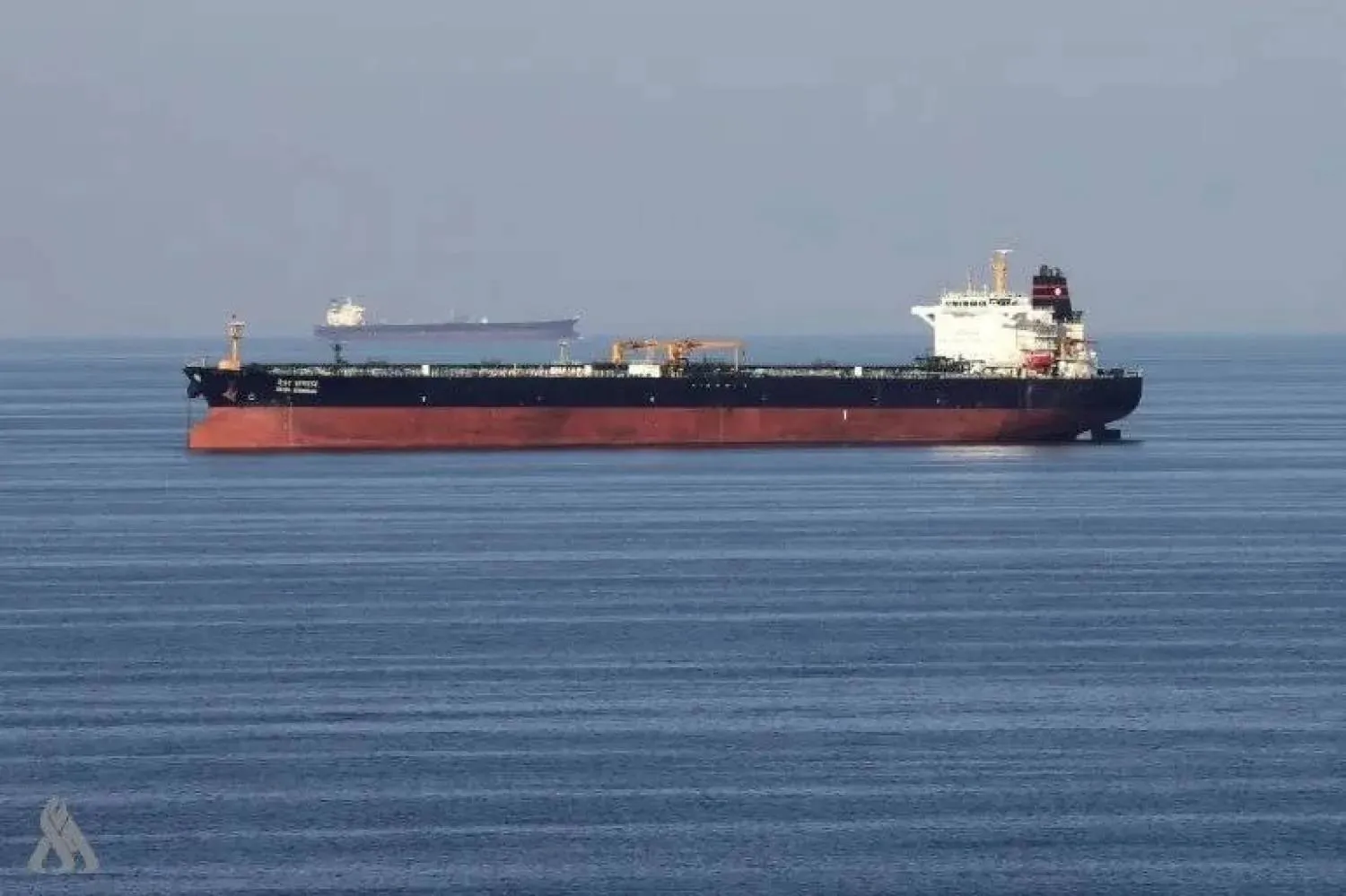
An Iraqi petroleum products tanker (Iraqi News Agency) 
TT

Pessimism Grows over Iraq’s Prospects for Resuming Oil Exports

An Iraqi petroleum products tanker (Iraqi News Agency) 

A growing number of Iraqi oil and economic experts are voicing pessimism about the country’s ability to resume crude exports via the Gulf and the Strait of Hormuz, despite Iran’s announcement of an “exception” allowing Iraqi shipments to pass as those of a “friendly country”.

Iraq has suffered a sharp blow to its oil sector following the US-Israeli conflict with Iran and the closure of the Strait of Hormuz, losing roughly three-quarters of its exports. The country had been producing about 3.5 million barrels per day, but current export volumes have dropped to around one million barrels per day, most of which is diverted to domestic consumption.

More than 300,000 barrels per day are still exported via the Kurdistan Region through Türkiye’s Ceyhan port, while smaller quantities are transported overland by tanker trucks to Jordan and Syria.

As a result of the collapse in exports, Iraq is expected to face a monthly fiscal deficit of between $5 billion and $6 billion, placing the government under severe financial strain, economists say.

While Iran’s decision has been welcomed by its allies and sympathizers as a positive step for Iraq, sceptics argue that resuming exports is far more complex than a political declaration. They point to complex web of technical, security and logistical challenges involving maritime risk, insurance costs, shipping company behavior and contractual arrangements.

Security concerns remain acute. Despite the Iranian exemption, four oil facilities in the southern province of Basra were targeted by drone attacks over the past two days, reportedly carried out by Iran-backed armed factions seeking to pressure foreign companies to leave Iraq. The incidents raise questions about the consistency between Tehran’s declared position and the actions of allied groups on the ground.

Former oil ministry spokesman Assem Jihad said Iraq’s export capacity is governed by “fundamental realities” that make a swift return to normal operations unlikely.

In comments posted on Facebook, he noted that Iraq does not rely on its own fleet of supertankers to export crude. Instead, the State Organization for Marketing of Oil (SOMO) sells oil under contracts whereby buyers arrange shipping and lift cargoes from Iraqi ports.

The key issue, he explained, is not a lack of contracts but the reluctance of global shipping companies and tanker owners to enter what is now considered a high-risk zone. Even if buyers are willing, securing vessels prepared to dock at southern Iraqi ports or operate near conflict areas remains a major obstacle.

Insurance costs have also surged. Companies face steep premiums for vessels transiting conflict zones, discouraging participation. “Even with statements allowing passage, that does not necessarily translate into a safe and secure shipping environment,” Jihad said, adding that insurers and shipping firms base decisions on actual risk assessments rather than political assurances.

He argued that exports would only resume once confidence returns to maritime markets, risks decline and insurance costs fall.

Economic researcher Ziad al-Hashimi outlined additional barriers preventing Iraq from benefiting from the Iranian decision.

Writing on X, he said Iraq’s oil production, service companies and southern export terminals are currently operating under “force majeure”, a status declared on March 20 across fields run by foreign firms. Lifting this clause could take time, as companies would require assurances that operations will not be targeted again.

“Its removal is not a quick process,” he noted, warning of “real risk” if exports resume without improved security guarantees.

Al-Hashimi also pointed to ongoing attacks on oil fields, saying that many service companies have evacuated staff and suspended operations. “Work will not return to normal as long as the war continues,” he underlined.

He further questioned the practicality of Iran’s exemption, which applies to loaded Iraqi tankers exiting Hormuz. “How will empty vessels enter the strait to reach Iraq, and who will guarantee their safety?” he asked.

The government and oil ministry have meanwhile faced criticism for failing to take precautionary measures to safeguard production, Iraq’s main source of national income. Critics say Baghdad should have diversified export routes or maintained floating storage capacity, as many oil-producing countries do.

According to Basra-based economist Nabil al-Marsoumi, Iraq’s state tanker company, established in 1972, currently owns just six vessels for refined products with a combined capacity of 117,000 tons. Four of these ships are over 15 years old, requiring more frequent maintenance.

The company no longer owns any crude oil tankers, he added, compared with 25 vessels totaling 1.485 million tons in 1983.

On the diplomatic front, Foreign Minister Fuad Hussein on Sunday thanked Iran for allowing Iraqi oil tankers to transit Hormuz during a meeting with Iranian ambassador Mohammad Kazem Al Sadeq.

A foreign ministry statement said the two sides discussed mechanisms to ensure implementation of the arrangement and broader regional developments. Hussein reiterated Iraq’s opposition to war and stressed the need for dialogue and peaceful conflict resolution.

Separately, data from the London Stock Exchange Group and analytics firm Kpler indicated that a tanker carrying Iraqi crude had passed through the Strait of Hormuz near Iran’s coast. The vessel, Ocean Thunder, loaded about one million barrels of Basra Heavy crude on March 2 and is expected to discharge in Malaysia in mid-April.


Oil Prices Fall on US-Iran Receiving Peace Proposal

FILE PHOTO: A dog looks out of a car window next to signs on empty fuel dispensers at a Shell petrol station that ran out of fuel, in Sydney, Australia, March 30, 2026. REUTERS/Hollie Adams/File Photo
TT

Oil Prices Fall on US-Iran Receiving Peace Proposal

FILE PHOTO: A dog looks out of a car window next to signs on empty fuel dispensers at a Shell petrol station that ran out of fuel, in Sydney, Australia, March 30, 2026. REUTERS/Hollie Adams/File Photo

Oil prices fell more than $2 in choppy trade on Monday, as investors awaited clarity on the status of talks between the US and Iran and remained wary about sustained supply losses due to shipping disruptions.

Brent crude futures fell $1.92, or 1.76%, to $107.11 a barrel at 1037 GMT. US West Texas Intermediate crude futures were trading down 1.82%, or $2.03, at $109.50 per barrel.

The pricing moves in Asia trading on Monday were dwarfed by an 11% surge for WTI and an 8% rise for Brent during the previous trading session on Thursday, the biggest absolute price increase since 2020.

The US and Iran received the framework of a plan to end hostilities, but Iran rejected immediately reopening the Strait of Hormuz, after President Donald Trump threatened to rain "hell" ⁠on Tehran if ⁠it did not make a deal by the end of Tuesday.

Iran also said it has formulated its positions and demands in response to recent ceasefire proposals conveyed via intermediaries.

The Strait of Hormuz, which carries oil and petroleum products from Iraq, Saudi Arabia, Qatar, Kuwait and the United Arab Emirates, remains largely closed due to Iranian attacks on shipping after the war began on February 28.

"Not being able to open the Strait of Hormuz is becoming more a question of political victory," said Mukesh Sahdev, founder and CEO at consultancy ⁠XAnalysts.

Because of the Middle East supply disruptions, refiners are seeking alternative sources for crude, particularly for physical cargoes in the US and Britain's North Sea. Some vessels, however, including an Omani-operated tanker, a French-owned container ship and a Japanese-owned gas carrier, have passed through the Strait of Hormuz since Thursday, shipping data showed, reflecting Iran's policy to allow passage for vessels from countries it deems more friendly.

Additionally, spot premiums for US West Texas Intermediate crude have jumped to all-time highs as competition between Asian and European refiners for supply heats up to replace Middle Eastern oil flows disrupted by the war, industry sources told Reuters.

The war threatens to linger on as Iran has officially told mediators it is not prepared to meet with US officials in Islamabad in the coming days and efforts to produce a ceasefire have reached a dead ⁠end, The Wall Street ⁠Journal reported on Friday.

On Sunday, OPEC+, consisting of some members of the Organization of the Petroleum Exporting Countries and allies such as Russia, agreed to a modest rise of 206,000 barrels per day for May.

However, that decision will largely exist on paper as several of the group's key producers are unable to raise output due to the war.

Meanwhile, Russian supply has been disrupted recently by Ukrainian drone attacks on its Baltic Sea export terminals. Media reports on Sunday said its Ust-Luga terminal resumed loadings on Saturday after days of disruptions.

Exports from the Black Sea port of Tuapse are set to rise to 794,000 metric tons in April, up 8.7% on a daily basis from 755,000 metric tons planned for March, according to two traders and Reuters calculations.


Dollar Steady as Traders Weigh Escalating Iran War, Ceasefire Hopes

US dollar banknotes are seen in this illustration taken March 24, 2026. (Reuters)
TT

Dollar Steady as Traders Weigh Escalating Iran War, Ceasefire Hopes

US dollar banknotes are seen in this illustration taken March 24, 2026. (Reuters)

The dollar was steady on Monday, while the yen flirted with the crucial 160 per dollar level, as nervous investors took stock of the escalating Iran war, with all eyes on the latest deadline from US President Donald Trump to reopen the Strait of Hormuz.

In an expletive-laden Easter Sunday social media post, Trump threatened to target Iran's power plants and bridges on Tuesday if the strategic waterway is not reopened, setting a precise deadline of 8 p.m. Tuesday Eastern Time (0000 GMT).

With most of Asia and Europe closed for holiday on Monday, liquidity is likely to be thin, with investor focus on the possibility of a ceasefire after a media report suggested a last-ditch push from negotiators was underway.

"Trump's latest deadline itself is bearish not because investors think war is guaranteed tomorrow if ‌Iran does not ‌open the strait, but because every new ultimatum makes the disruption look longer, ‌stickier ⁠and more macro-negative," ⁠said Charu Chanana, chief investment strategist at Saxo in Singapore.

The euro was at $1.1523, while sterling last fetched $1.3211. The dollar index, which measures the US currency against six rivals, was slightly lower at 100.12.

The Australian dollar was 0.3% higher at $0.69045, wobbling near the two-month low that it hit last week.

In the kind of mixed messaging that has baffled supporters, foes and financial markets alike, Trump told Fox News on Sunday that Iran was negotiating, with a deal possible by Monday.

Axios reported the US, Iran and regional mediators are discussing terms of a potential 45-day ceasefire that could ⁠lead to a permanent end to the war.

Global markets have been rattled since ‌the US-Israel war on Iran broke out at the end of February, ‌with Tehran effectively closing the Strait of Hormuz, a key waterway that is a thoroughfare through which about a fifth ‌of the world's total oil and liquefied natural gas passes.

"If the strait is reopened fully around that ‌time (Trump's Tuesday deadline), oil will fall sharply and risk will rally hard," said Prashant Newnaha, senior rates strategist at TD Securities.

"However, if the US escalates, expect global markets to reprice sharply. It's wait-and-watch in what's turning out to be a binary event."

The closure has caused oil prices to surge well above $100 per barrel, stoking fears of high inflation and upending rates outlooks across the ‌world. Worries about the hit to economic growth have also weighed as stagflation risks swirl.

Traders are now no longer pricing a move from the Federal Reserve ⁠well into the second ⁠half of 2027, compared with expectations of two rate cuts in 2026 at the start of the year.

Data last week suggested US labor market conditions remained calm in March, though economists warned that a prolonged war in the Middle East posed a downside risk.

YEN WATCH

The Japanese yen was flat at 159.55 per US dollar, not far from the 21-month low that it hit last week as traders watch for indications of Tokyo intervening in the wake of strong warnings from officials in the past few days.

Japanese Finance Minister Satsuki Katayama on Friday put currency traders on notice, saying the government stands ready to act against speculative moves in foreign exchange markets as volatility has risen "significantly."

Still, many doubt the firepower of any intervention at a time when geopolitical turmoil in the Middle East is fueling relentless demand for the safe-haven dollar. The yen is down 1.5% since the war started, stuck near the 160 level.

Speculators have also been adding to their short yen positioning, with the latest weekly data showing a short position worth $5.7 billion, the highest since July 2024, when Japan last intervened in the FX markets.


Citigroup Pushes Back Fed Rate Cut Timeline After Strong Job Numbers

The Federal Reserve building in Washington. (Reuters)
TT

Citigroup Pushes Back Fed Rate Cut Timeline After Strong Job Numbers

The Federal Reserve building in Washington. (Reuters)

Citigroup ‌has pushed back its Fed rate-cut timeline, citing unexpectedly strong US job gains and persistent inflation risks.

The Wall Street brokerage now expects a total of 75 basis points of rate cuts in September, October and December ‌instead of June, ‌July and September, ‌according ⁠to a note ⁠dated April 3.

"We continue to think signs of a weakening labor market will result in cuts later in the year. ⁠But the timing of ‌upcoming data ‌suggests a later start to rate ‌cuts than we had ‌previously been expecting," Citigroup said.

US job growth rebounded more than expected in March as a strike ‌by healthcare workers ended and temperatures warmed up, but ⁠downside ⁠risks for the labor market are mounting from a war with Iran that has no clear end in sight.

Citigroup says weak hiring will push the unemployment rate higher in the summer, similar to the last few years.
