


Saudi Fund Injects $1.7 Bn to Boost Food Security

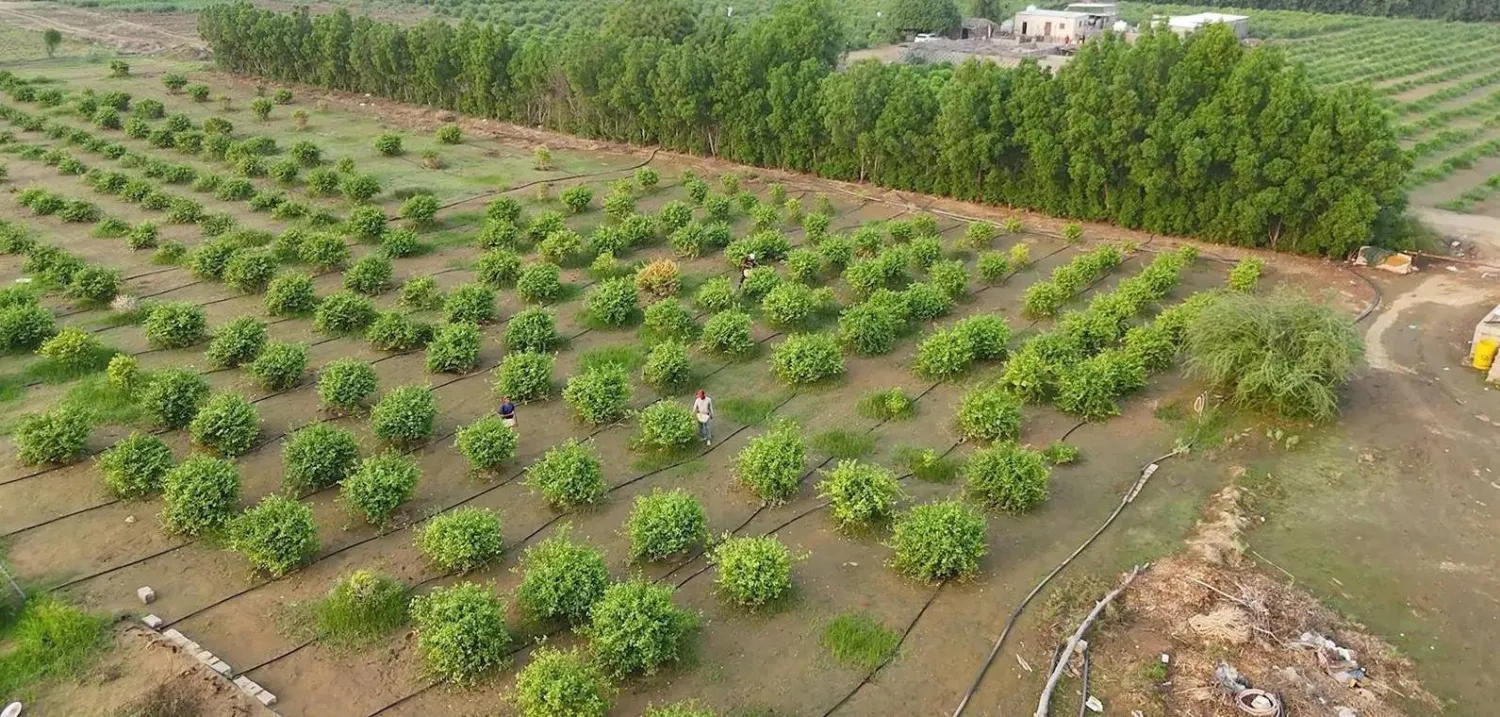
The fund financed agricultural projects worth 7.1 million dollars to support afforestation and expand vegetation cover. SPA
TT

Saudi Fund Injects $1.7 Bn to Boost Food Security

The fund financed agricultural projects worth 7.1 million dollars to support afforestation and expand vegetation cover. SPA

Saudi Arabia’s Agricultural Development Fund is stepping up efforts to bolster food security and sustain the Kingdom’s agricultural sector, raising self-sufficiency and strengthening strategic reserves.

The push is part of a broader strategy balancing support for domestic production and supply chains with external programs to import targeted products and invest in cross-border agriculture.

Habib Al-Shammari, the fund’s official spokesman, told Asharq Al-Awsat the approach aligns with the national agriculture and food security strategies. He said the fund continues to promote modern technologies in agricultural projects to preserve natural resources and boost productivity.

In 2024, the fund disbursed more than 1.2 billion riyals (about 300 million dollars) for projects that used modern technologies. These helped save nearly 4 million cubic meters of water and cut energy consumption by about 330,000 megawatt hours, Al-Shammari said.

He added that such technologies also reduce greenhouse gas emissions by improving efficiency, in line with the Saudi Green Initiative. The fund financed agricultural projects worth 26.6 million riyals (7.1 million dollars) to support afforestation and expand vegetation cover.

Al-Shammari said the fund has also backed biodiversity protection by financing programs supporting beekeeping and honey production, developing rose cultivation and rain-fed crops, and extending loans totaling more than 12 million riyals to central nurseries.

Loan approvals reached about 6.47 billion riyals (1.72 billion dollars) by the end of 2025, he said. The fund also signed a memorandum of understanding last year with the International Fund for Agricultural Development (IFAD) in Rome to support sustainable rural agricultural development and exchange expertise.

Al-Shammari said such agreements strengthen the agricultural sector, pointing to deals with local entities, including Jazan City for Primary and Downstream Industries, to enhance integration into food-sector investment opportunities and maximize the impact of the fund’s programs for investors and farmers.

The fund also signed an agreement with the National Center for Palms and Dates to support the sustainability of the sector and related industries, financing operating costs for date purchases and offering tailored financing solutions.

Another agreement with the Imam Abdulaziz bin Mohammed Royal Reserve Development Authority focuses on vegetation development, ecosystem sustainability, and support for local communities within the reserve.

To strengthen the livestock sector, the fund signed a deal with Al-Raie National Livestock Company to finance a sheep farming project in Hail valued at 1.106 billion riyals (295 million dollars), with a total investment cost of 2 billion riyals (533 million dollars). It also signed an agreement with the Center for Support and Liquidation (Infath) to regulate the sale of seized real estate and share expertise.


Turkish Shares Rise After Iran Ceasefire Deal, Lira Set for Rare Daily Gain

10 July 2020, Türkiye, Istanbul: People stand behind a Turkish national flag in front of Hagia Sophia in Istanbul. (dpa)
TT

Turkish Shares Rise After Iran Ceasefire Deal, Lira Set for Rare Daily Gain

10 July 2020, Türkiye, Istanbul: People stand behind a Turkish national flag in front of Hagia Sophia in Istanbul. (dpa)

Banking and ‌airline stocks led a more than 4% rise in Turkish shares and the lira was on track for a rare daily gain on Wednesday, as the two-week Middle East ceasefire sparked a relief rally across global markets.

At 0823 GMT, Türkiye's blue-chip BIST 100 index was up 4.3%, while the banking index rose 8.8%. Shares in airline ‌carriers Turkish ‌Airlines and Pegasus climbed more than ‌6% ⁠each.

The United States ⁠and Iran have agreed to a two-week ceasefire and Pakistan Prime Minister Shehbaz Sharif said in a post on X that he had invited Iranian and US delegations to meet in Islamabad on Friday.

The ⁠lira traded at 44.5400 against ‌the dollar, strengthening from ‌Tuesday's close of 44.6065.

The currency had lost about ‌1.5% in value since the US-Israeli strikes ‌on Iran began at the end of February. With a year-to-date loss of 3.6% and inflation reaching to 10% in the first three ‌months of the year, the lira has gained in real terms.

Before the ⁠two-week ⁠ceasefire agreement, economists had been expecting the central bank to reflect a cumulative 300 basis points of tightening delivered via liquidity measures in the main policy rate, which stands at 37%.

Markets are now watching whether the two-week ceasefire evolves into a more permanent arrangement, which could reshape expectations for policy tightening at the central bank's next monetary policy committee meeting on April 22.


Gulf Markets Jump on US-Iran Ceasefire Agreement

A man follows the stock market at the Dubai Financial Market in Dubai (EPA)
TT

Gulf Markets Jump on US-Iran Ceasefire Agreement

A man follows the stock market at the Dubai Financial Market in Dubai (EPA)

Stock markets in the Gulf region jumped on Wednesday in line with global equities after US President Donald Trump agreed to a two-week ceasefire with Iran on Tuesday.

Trump said the last-minute deal was subject to Iran's agreement to pause its blockade of oil and gas supplies through the Strait of Hormuz, which before the war typically handled about one-fifth of global oil and liquefied natural gas shipments.

Iranian Foreign Minister Abbas Araqchi said Tehran would cease counter-attacks and provide safe passage through the waterway if attacks against it stopped.

Pakistani Prime Minister Shehbaz Sharif ⁠said he had ⁠invited Iranian and US delegations to meet in Islamabad on Friday.

Saudi Arabia's benchmark index opened 1.4% higher, lifted by gains in banking and energy stocks.

Oil giant Saudi Aramco gained 2.1%, while largest lender Al Rajhi Bank added 2.4%.

Dubai's main market spiked as much as 8.5%, its highest intraday gain in more than 11 years, with the heavyweight real estate and financial sectors outperforming.

At 0730 GMT the Dubai index was trading 6.4% higher, led by a 9.8% jump in blue-chip developer Emaar Properties and an 11.3% rise in top lender Emirates NBD ⁠Bank.

Abu Dhabi's benchmark index climbed as much as 4.9% in early trade, its biggest jump in six years, boosted by gains in the financial, real estate, logistics and energy sectors.

At 0730 GMT the Abu Dhabi index was up 3.2% with the largest lender, First Abu Dhabi Bank, rising 8.3% and real estate giant Aldar Properties jumping 8.8%.

Energy firm Adnoc Gas gained 3.8%, while Abu Dhabi Ports Company advanced 9.8%.

In Qatar, the index jumped 3.4%, as all its constituents advanced, led by energy shares.

Petrochemical maker Industries Qatar jumped 6.2% and Qatar Gas Transport surged 8%, the top gainer.

The Gulf's biggest lender, Qatar National Bank, climbed 3.7%.


Gulf Banks Weather Geopolitical Tensions with Strong Capital Buffers

A Saudi money changer displays Saudi Riyal banknotes at a currency exchange shop in Riyadh, Saudi Arabia July 27, 2017. (Reuters)
TT

Gulf Banks Weather Geopolitical Tensions with Strong Capital Buffers

A Saudi money changer displays Saudi Riyal banknotes at a currency exchange shop in Riyadh, Saudi Arabia July 27, 2017. (Reuters)

Gulf banks are holding up well despite rising geopolitical tensions in the Middle East, underpinned by solid financial positions and early regulatory action, though the full impact on the sector has yet to emerge.

Mohamed Damak, managing director at S&P Global Ratings, told Asharq Al-Awsat there have been no significant capital outflows from the region’s banks so far. Any deterioration in asset quality, he said, would take time to show up in financial results.

A recent S&P Global Ratings report reached similar conclusions, noting that operations remain stable and asset quality indicators have yet to weaken, although pressures could build in the months ahead.

The agency’s baseline scenario assumes disruptions will persist in parts of the region, even if the most acute phase subsides within weeks.

Supply chain bottlenecks, port congestion and delays in insurance services could linger, while security risks along shipping routes may weigh on trade and keep inflation elevated.

That, in turn, could affect sectors such as transport, tourism, real estate and retail — with knock-on effects for banks’ asset quality and growth.

Still, Damak said regulatory easing measures introduced by some authorities, combined with banks’ strong fundamentals, should help cushion part of the impact.

He pointed to robust balance sheets across the region: average Tier 1 capital stands at about 17.1 percent, non-performing loans at roughly 2.5 percent, and provisioning coverage near 158.7 percent among the 45 largest banks.

Liquidity levels also remain comfortable, giving banks room to absorb shocks, even if funding conditions tighten or certain sectors come under strain.

Authorities across the Gulf have moved quickly to shore up financial stability, broadly echoing measures seen in Europe, the United States and parts of East Asia.

Qatar’s central bank has introduced unlimited repo facilities in riyals, alongside overnight and three-month funding options, to support liquidity management and borrowers.

In Kuwait, the central bank eased liquidity and capital requirements, including the liquidity coverage ratio and net stable funding ratio, while raising lending ceilings and funding gap limits to support credit growth.

In the United Arab Emirates, banks have drawn on emergency liquidity facilities, borrowing against a range of collateral as part of broader efforts to sustain lending and liquidity in the system.

At the same time, banks have activated contingency plans, shifting to remote operations, scaling back branch networks and relying on backup data centers to reduce operational risks.

Uncertainty continues to dominate the outlook. But with strong capital, ample liquidity and regulatory support, Gulf banks appear well placed to withstand the current turbulence — even if a prolonged disruption could test the sector more severely.
