


Gulf Banks Weather Geopolitical Tensions with Strong Capital Buffers

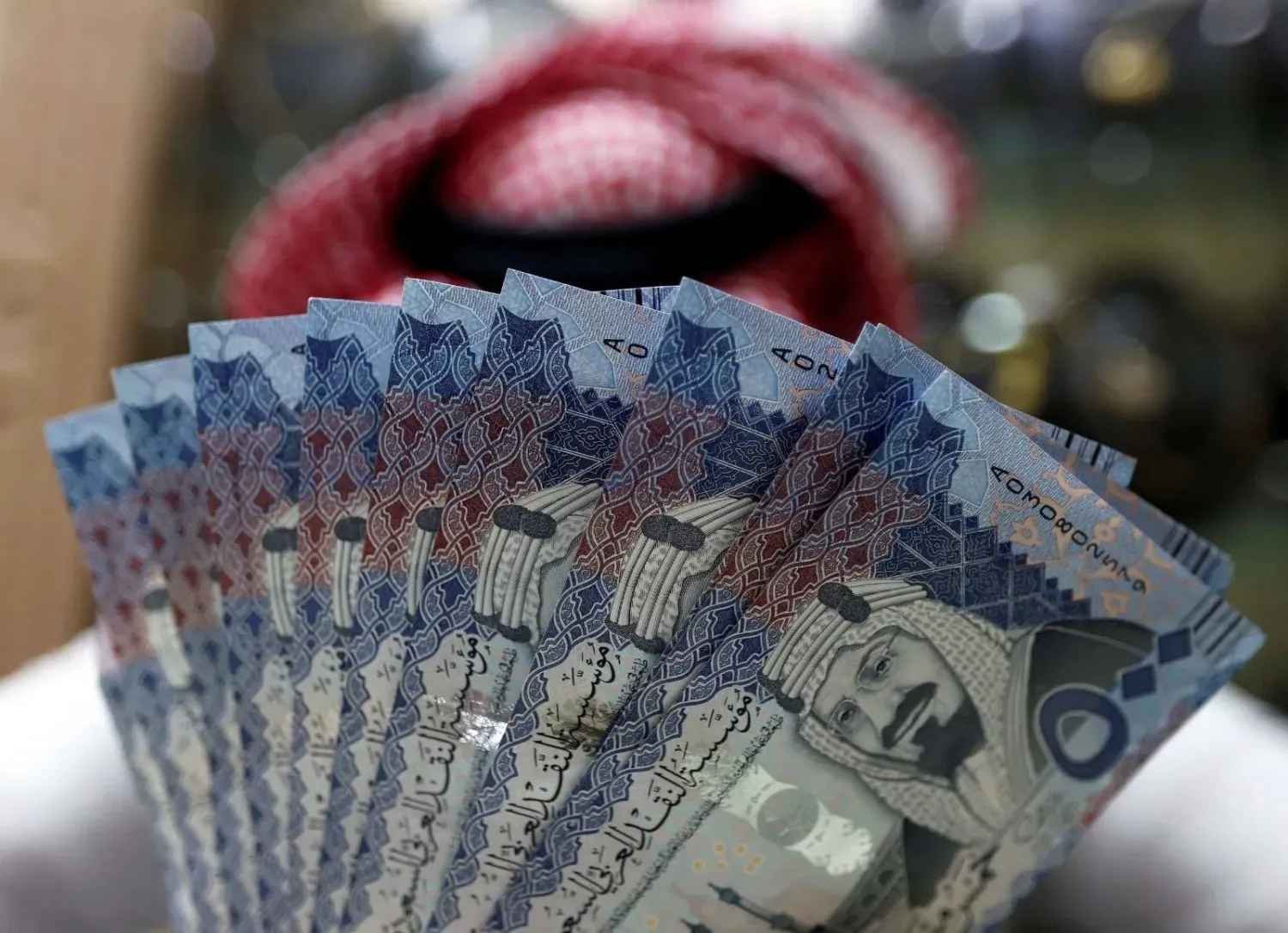
A Saudi money changer displays Saudi Riyal banknotes at a currency exchange shop in Riyadh, Saudi Arabia July 27, 2017. (Reuters)
TT

Gulf Banks Weather Geopolitical Tensions with Strong Capital Buffers

A Saudi money changer displays Saudi Riyal banknotes at a currency exchange shop in Riyadh, Saudi Arabia July 27, 2017. (Reuters)

Gulf banks are holding up well despite rising geopolitical tensions in the Middle East, underpinned by solid financial positions and early regulatory action, though the full impact on the sector has yet to emerge.

Mohamed Damak, managing director at S&P Global Ratings, told Asharq Al-Awsat there have been no significant capital outflows from the region’s banks so far. Any deterioration in asset quality, he said, would take time to show up in financial results.

A recent S&P Global Ratings report reached similar conclusions, noting that operations remain stable and asset quality indicators have yet to weaken, although pressures could build in the months ahead.

The agency’s baseline scenario assumes disruptions will persist in parts of the region, even if the most acute phase subsides within weeks.

Supply chain bottlenecks, port congestion and delays in insurance services could linger, while security risks along shipping routes may weigh on trade and keep inflation elevated.

That, in turn, could affect sectors such as transport, tourism, real estate and retail — with knock-on effects for banks’ asset quality and growth.

Still, Damak said regulatory easing measures introduced by some authorities, combined with banks’ strong fundamentals, should help cushion part of the impact.

He pointed to robust balance sheets across the region: average Tier 1 capital stands at about 17.1 percent, non-performing loans at roughly 2.5 percent, and provisioning coverage near 158.7 percent among the 45 largest banks.

Liquidity levels also remain comfortable, giving banks room to absorb shocks, even if funding conditions tighten or certain sectors come under strain.

Authorities across the Gulf have moved quickly to shore up financial stability, broadly echoing measures seen in Europe, the United States and parts of East Asia.

Qatar’s central bank has introduced unlimited repo facilities in riyals, alongside overnight and three-month funding options, to support liquidity management and borrowers.

In Kuwait, the central bank eased liquidity and capital requirements, including the liquidity coverage ratio and net stable funding ratio, while raising lending ceilings and funding gap limits to support credit growth.

In the United Arab Emirates, banks have drawn on emergency liquidity facilities, borrowing against a range of collateral as part of broader efforts to sustain lending and liquidity in the system.

At the same time, banks have activated contingency plans, shifting to remote operations, scaling back branch networks and relying on backup data centers to reduce operational risks.

Uncertainty continues to dominate the outlook. But with strong capital, ample liquidity and regulatory support, Gulf banks appear well placed to withstand the current turbulence — even if a prolonged disruption could test the sector more severely.



Euro Zone Yields Fall after Iran Raises Prospect of Hormuz Reopening

Euro banknotes (Reuters)
TT

Euro Zone Yields Fall after Iran Raises Prospect of Hormuz Reopening

Euro banknotes (Reuters)

Euro zone bond yields fell for a second straight day on Tuesday, hitting their lowest in almost two weeks after Iran raised the prospect of reopening the Strait of Hormuz and Washington hinted it could restart talks with Tehran, pushing oil prices lower.

Germany's 10-year bond yield, the benchmark for the bloc, fell 1 basis point to 3.44% after rising as much as 4 bps earlier in the session. It fell 7 bps on Monday as energy prices retreated.

A senior Iranian official told Reuters that the strait, which carried about a fifth of global energy supplies before the war, could reopen within seven days if the US also lifts its blockade of Iranian ports.

The official added that Iran's delegation to a UN meeting in New York this week has full authority to revive diplomacy over the conflict.

US Secretary of State Marco Rubio told NBC's "Today" show that Washington was open to speaking with Tehran.

The dip in energy prices helped pull yields lower globally after a surge in recent weeks fuelled by expectations of further interest-rate hikes to combat energy-driven inflation. Traders are pricing in around 35 bps of additional European Central Bank tightening this year, down from 40 bps on Friday.

Germany's two-year bond yield, which is sensitive to interest-rate expectations, fell 1 bp to 3.19%, following a 6-bp drop on Monday.

Rabobank senior rates strategist Lyn Graham-Taylor said lower oil prices following the Iranian comments were weighing on bond yields.

Brent crude futures were last down 1% to $100 a barrel after earlier falling to $97.40, the lowest in two weeks.


Libya's NOC Says Sharara Crude Pipeline Closure Losses at 130,000 bpd

General view of the Sharara oil field in Libya (Reuters)
TT

Libya's NOC Says Sharara Crude Pipeline Closure Losses at 130,000 bpd

General view of the Sharara oil field in Libya (Reuters)

Libya's National Oil Corporation said on Tuesday that the Sharara-Zawiya crude loading pipeline closure has led to daily losses of about 130,000 barrels per day, Reuters reported.

An armed military group closed valve seven on the Sharara crude pipeline to Zawiya port on Monday, resulting in a significant decline in production at the Sharara oilfield, the National Oil Corporation said in a statement.


Sources: Saudi Arabia Restarts East-West Oil Pipeline

FILE PHOTO: A model of an oil pump is seen in front of a Saudi Arabian flag in this illustration taken January 9, 2026. REUTERS/Dado Ruvic/Illustration/File Photo
TT

Sources: Saudi Arabia Restarts East-West Oil Pipeline

FILE PHOTO: A model of an oil pump is seen in front of a Saudi Arabian flag in this illustration taken January 9, 2026. REUTERS/Dado Ruvic/Illustration/File Photo

Saudi Arabia has restarted operations at its East-West Pipeline and could resume exports from the Red Sea port of Yanbu later on Tuesday, three sources briefed on the matter said.

Drone attacks forced Saudi Arabia to shut its East-West Pipeline on September 13, halting crude loadings at the kingdom's Yanbu port.

The resumption of supplies on Tuesday helped to drive selling on global oil markets, traders said. Brent crude futures fell by more than $2 a barrel to its lowest since September 8.

Two trading sources said traders were getting ready for Saudi oil loadings by moving tankers to Egypt's Mediterranean Port Said for ship-to-ship transfers and also to Sidi Kerir.