


World Bank Slashes 2026 Middle East Growth Forecast, Saudi Arabia Absorbs Shock

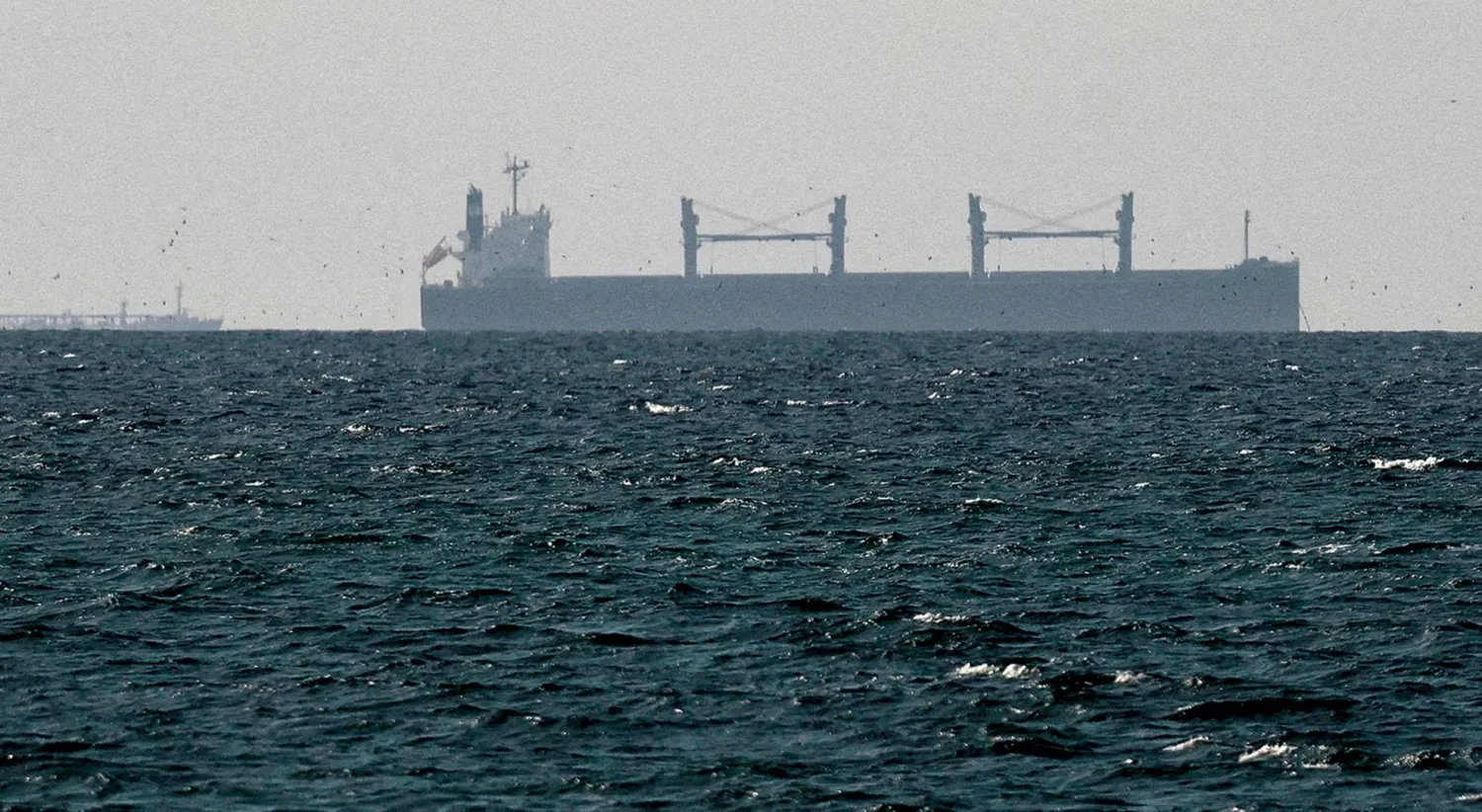
A cargo ship in the Arabian Gulf near the Strait of Hormuz (Reuters)
TT

World Bank Slashes 2026 Middle East Growth Forecast, Saudi Arabia Absorbs Shock

A cargo ship in the Arabian Gulf near the Strait of Hormuz (Reuters)

The World Bank has slashed its 2026 growth forecast for Middle East economies, saying overall GDP growth in ⁠the region is expected to slow from an estimated 3.6% in January to 1.8% for 2026.

The closure of the strategic ⁠Strait of Hormuz, and destruction ⁠of energy and public infrastructure, had disrupted markets, increased financial volatility, and weakened the 2026 growth outlook, the World Bank Group said in its Economic Update for the Middle East, North Africa, Afghanistan and Pakistan.

The report was published as US President Donald Trump late on Tuesday announced a two-week ceasefire in the conflict with Iran after he had threatened to wipe out “a whole civilization.”

According to the World Bank, the conflict comes as an additional shock to a region already suffering from low productivity growth, limited private sector dynamism and persistent labor market challenges – underscoring the urgent need to strengthen governance and macroeconomic fundamentals and take action to boost long-term job creation and resilience.

The April 2026 World Bank’s Macro Poverty Outlook forecasts that the region’s aggregate (excluding the Iran) GDP growth will decelerate to 1.8 percent in 2026, down from 4.0 percent estimated for 2025. The 2026 forecast has been downgraded by 2.4 percentage points since the January projections, reflecting the adverse effects of the ongoing conflict.

GCC states

Growth in the Gulf Cooperation Council and Iraq, among the most heavily affected by the impact of the conflict, is expected to slow to 1.3% for 2026, down 3.1 percentage points from its January projection, and driven mainly by lower projected hydrocarbon revenues due to disruptions caused ⁠by the ⁠conflict.

Saudi Arabia: Forecast was downgraded by 1.2 percentage points since January. Growth is now expected to slow from 4.3% in 2025 to 3.1% in 2026, noting that Saudi Arabia’s outlook remains the strongest among Gulf economies.

United Arab Emirates: Growth forecast for the UAE has fallen by 2.7 percentage points since January. Growth is now expected to slow from 5% in 2025 to 2.4% in 2026.

Qatar: Notably, growth forecast for the Qatari economy has seen a sharp decline of 11.0 percentage points since January. The economy is now expected to record a contraction of 5.7%, down from an estimated growth of 5.3%, due to severe obstruction to liquefied gas supplies. Qatar is a key player in the global energy market, with a global market share of liquefied natural gas (LNG) supplies ranging between 20% and 21%.

Kuwait: Likewise, Kuwait’s economy is expected to register a significant contraction of 6.4%, compared to growth of 2.6% expected in January. Kuwait relies entirely (100%) on the Strait of Hormuz to export its crude oil and derivatives. Consequently, closing the strait would mean a complete shutdown of the country’s financial lifeline, immediately halting revenue inflows to the state budget.

Bahrain: Growth forecast for Bahrain’s economy has declined by 1.8 percentage points since January. Growth is now expected to slow from 3.1% in 2025 to 1.3% in 2026.

Sultanate of Oman: Growth forecast for Oman’s economy has decreased by 1.2 percentage points since January. Growth is now expected to slow from 3.6% in 2025 to 2.4% in 2026.
Iraq

The greatest shock in the World Bank report lies in the free fall of the Iraqi economy, as its growth forecast dropped from 6.5 percent to a staggering contraction of 8.6 percent.

This alarming figure reflects the situation faced by Iraq following the closure of the Strait of Hormuz.

Iraq — the second-largest producer within the Organization of the Petroleum Exporting Countries (OPEC) — experienced the largest drop in production, estimated at nearly 70 percent, dropping to about 800,000 barrels per day from 4.3 million barrels prior to the Strait of Hormuz crisis.

Egypt

Egypt’s situation in the World Bank report differs from that of some countries in the region that saw sharp contractions; the bank maintained its forecast for Egypt’s economic growth at 4.3%.

The World Bank said that “risks are tilted to the downside.”

It added that “in the event of a prolonged conflict, the current impacts on the region will be compounded–through elevated energy and food prices, declining trade, tourism and remittances, increased fiscal pressures, and displacement.”

Peace is a precondition for the region’s durable development

“The current crisis is a stark reminder of the work ahead for the region: not only to weather shocks, but to rebuild more resilient economies with stronger macroeconomic fundamentals, innovate and improve governance, invest in infrastructure, and boost employment-creating sectors,” Ousmane Dione, the World Bank's Vice President for the region said in a statement.

"Peace and stability are preconditions for the region’s durable development. With peace and the right action, countries can build the institutions, capabilities and competitive sectors that create opportunities for people,” he added.

As for Roberta Gatti, World Bank Group Chief Economist for the Middle East, North Africa, Afghanistan and Pakistan, she said: "As countries face the heavy toll of the present conflict, it is important to also not lose sight of the work needed for long-lasting peace and prosperity.”



European Development Bank Unveils 5 Bn Euros for War-hit Economies

A Lebanese man walks past destruction at the site of an Israeli airstrike the day before that targeted a building in Beirut on April 9, 2026. (Photo by Ibrahim AMRO / AFP)
TT

European Development Bank Unveils 5 Bn Euros for War-hit Economies

A Lebanese man walks past destruction at the site of an Israeli airstrike the day before that targeted a building in Beirut on April 9, 2026. (Photo by Ibrahim AMRO / AFP)

The European development bank said Thursday it was unlocking five billion euros ($5.9 bn) to help shore up economies hit by the Middle East war.

The European Bank for Reconstruction and Development (EBRD) said it will "deploy EUR5 billion in 2026 in economies impacted by Middle East conflict".

The funds would be focused on Iraq, Jordan, Lebanon, the West Bank and Gaza "and affected neighboring economies" including Egypt, Türkiye, Armenia and Azerbaijan, the bank said in a statement.

"The economic and social impact of the conflict is already being felt across many of the bank's economies in the form of disrupted trade routes, energy and commodity shocks, weakened investor confidence and broader costs to the population," it added.

Established in 1991 to help former Soviet bloc nations embrace free-market economies, the bank later extended its reach to the Middle East and Africa.

"In a time of rising uncertainty, we are stepping up where others may pull back," said EBRD president Odile Renaud Basso.

"We are here to support economies, clients and people in our countries of operation in tough times," she added.

The bank said "the volume of conflict response investment will be demand driven due to the fast-changing nature of the situation".

The funds will provide immediate relief "by supporting economic activity" and "fostering financial sector stabilization".

EBRD will aim to strengthen energy security and aid state-owned enterprises to "ensure the uninterrupted provision of essential goods and services".

On Thursday it had approved "a project to support Lebanon's retail chain," it said, adding it also aimed to safeguard access to jobs, finance and essential services.

Since starting operations in the southern and eastern Mediterranean in 2012, the EBRD has invested more than EUR26.5 billion in 489 projects in the region.

In Türkiye alone, the lender has committed more than 23 billion euros since 2009.


Saudia to Partially Resume Flights To, From Dubai, Abu Dhabi, and Amman on Saturday

One of Saudia’s aircraft (company website)
TT

Saudia to Partially Resume Flights To, From Dubai, Abu Dhabi, and Amman on Saturday

One of Saudia’s aircraft (company website)

Saudia announced on Thursday the partial resumption of its operations to and from Dubai, Abu Dhabi, and Amman starting Saturday, April 11.

In a post on its official account on the social media platform X, the airline said the resumption will be carried out through the operation of exceptional daily flights to and from those destinations.

Saudia advised passengers to check the status of their flights before heading to the airport, noting that further updates will be published through its official channels.


IMF Expects to Provide Vulnerable Economies Hit by Iran War Up to $50 bn

FILED - 24 October 2024, US, Washington: The logo of the International Monetary Fund (IMF) is pictured on the facade of the conference building on Pennsylvania Street. Photo: Soeren Stache/dpa
TT

IMF Expects to Provide Vulnerable Economies Hit by Iran War Up to $50 bn

FILED - 24 October 2024, US, Washington: The logo of the International Monetary Fund (IMF) is pictured on the facade of the conference building on Pennsylvania Street. Photo: Soeren Stache/dpa

The International Monetary Fund expects to have to provide up to $50 billion in immediate financial assistance to countries affected by the Middle East war, its managing director said on Thursday, with the crisis likely to have lasting economic effects.

"Given the spillovers of the Middle East war, we expect near-term demand for IMF balance-of-payments support to rise to somewhere between $20 billion and $50 billion, with the lower bound prevailing if the ceasefire holds," Kristalina Georgieva said, according to prepared remarks shared with AFP.

She added that food insecurity due to transport and supply chain disruptions caused by the war was expected to affect at least 45 million people.

"Even in a best case, there will be no neat and clean return to the status quo ante," she said, as a fragile ceasefire appeared to hold on Thursday.

The IMF will pare its global growth forecast for 2026 based on the impact of the crisis, with spiraling energy costs hitting some vulnerable economies harder than others.

Georgieva said that even in the Fund's "most hopeful scenario," infrastructure damage, supply disruptions and a loss of market confidence among other "scarring effects" meant growth would be less than expected.

She highlighted the "asymmetric" effects of the crisis, hitting low-income energy importers with limited fiscal space much harder than others.

"Spare a thought for the Pacific Island nations at the end of a long supply chain, wondering if fuel will still reach them in the wake of such a severe disruption," she said.