

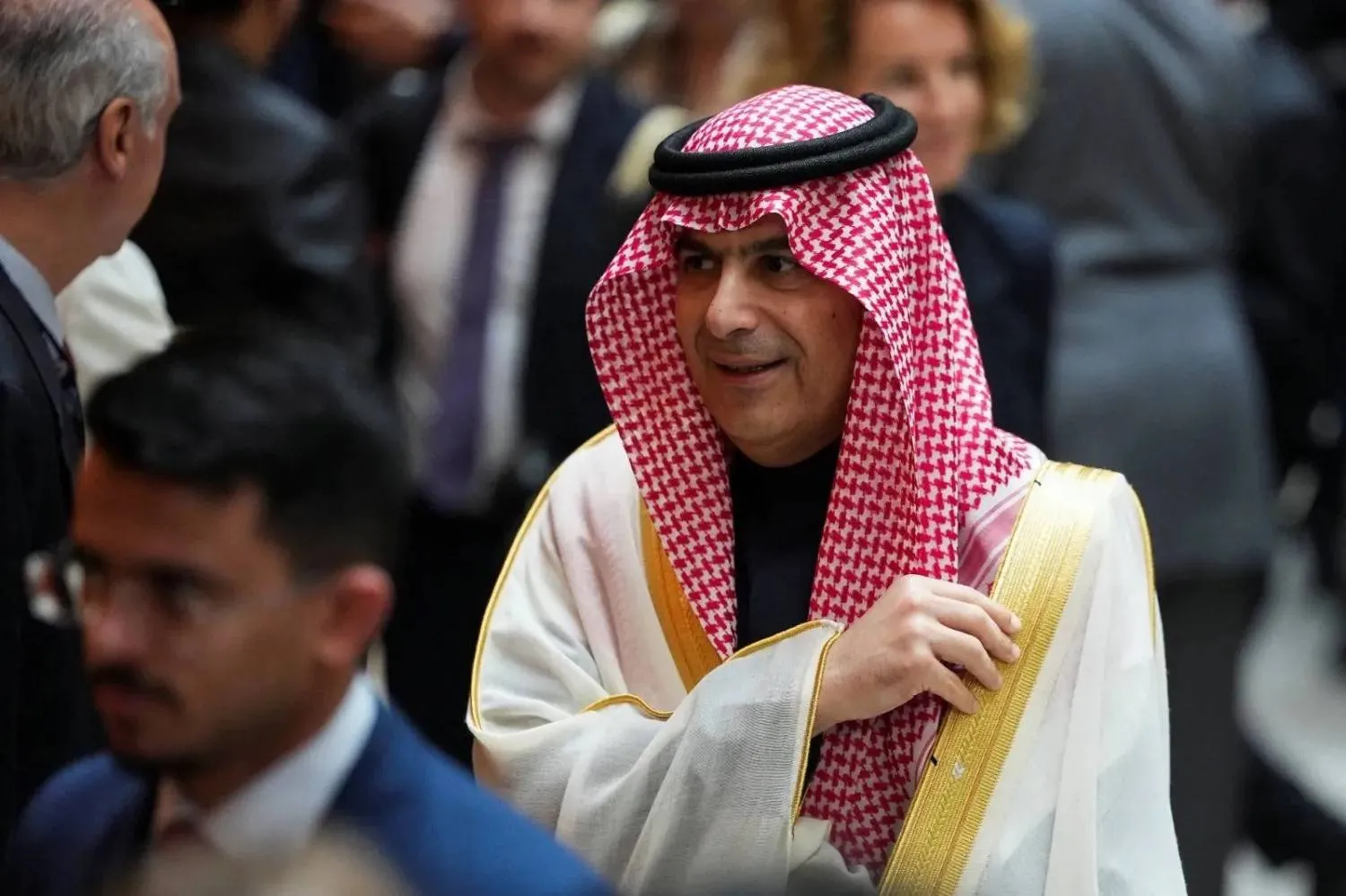

Saudi Central Bank Governor Says National Model Has Shielded Economy from Shocks

Saudi Central Bank Governor Ayman Alsayari. (International Monetary Fund)
TT

Saudi Central Bank Governor Says National Model Has Shielded Economy from Shocks

Saudi Central Bank Governor Ayman Alsayari. (International Monetary Fund)

Saudi Arabia’s economy has emerged as a model of resilience and crisis readiness, Central Bank Governor Ayman Alsayari said, citing steady progress under the Kingdom’s Vision 2030 reform agenda.

He stressed that continued implementation of the plan has helped protect the economy from regional shocks, underpinned by solid growth, contained inflation and prudent monetary and fiscal policies.

This strength, he noted, reflects decades of structural reforms and strategic investment in infrastructure and institutions, equipping the Kingdom with the capacity and flexibility to absorb shocks while sustaining investor and consumer confidence.

Addressing the International Monetary and Financial Committee of the International Monetary Fund, chaired by Saudi Finance Minister Mohammed Al-Jadaan, Alsayari highlighted the importance of Saudi Arabia’s diversified energy and trade infrastructure in maintaining supply flows under pressure.

He pointed to long-term investments such as the East-West pipeline, which runs to Red Sea ports in Yanbu, describing it as a vital artery for both Saudi exports and global energy supplies.

The ability to reroute exports and secure access to Red Sea ports and strategic facilities, he said, underscores the importance of long-term planning in preventing supply disruptions.

It also reinforces the need to treat energy security as integral to global financial stability, while avoiding policies that sideline the role of fossil fuels in sustaining trade and growth.

Alsayari warned that the war in the Middle East poses a serious test for the global economy and could revive conditions reminiscent of the stagflation era of the 1970s.

He welcomed progress on the “Diriyah Guiding Principles,” describing them as a milestone in efforts to reform IMF governance after nearly two decades of stagnation. The principles, reflecting the Diriyah Declaration, combine realism and ambition and provide a basis for strengthening the fund’s representation of the global economy.

Alsayari said that the step is essential to enabling the IMF to carry out its core functions in surveillance and lending, while keeping pace with technological shifts such as artificial intelligence and digital assets, and safeguarding the international monetary system against geopolitical risks and stagflation.

Saudi Arabia is translating its economic gains into tangible international support, including a $279 million pledge for IMF capacity development and the opening of a regional office in Riyadh to strengthen cooperation with countries in the region and beyond, Alsayari added.

He also cited platforms such as the AlUla Conference on Emerging Market Economies as tools to share expertise and advance reforms that support resilience and long-term growth.



Iraq Reopens Rabia Border Crossing to Boost Fuel Oil Exports via Syria

This aerial picture shows cars and trucks loaded with goods waiting to cross over into Syria at the al-Rabia border crossing on April 20, 2026. (AFP)
TT

Iraq Reopens Rabia Border Crossing to Boost Fuel Oil Exports via Syria

This aerial picture shows cars and trucks loaded with goods waiting to cross over into Syria at the al-Rabia border crossing on April 20, 2026. (AFP)

Iraq has reopened the Rabia border crossing with Syria after more than a decade to accelerate overland fuel oil exports and revive cross-border trade amid disruption to Gulf shipping following the Iran war, Iraqi border officials said on Monday.

The crossing, located in Iraq’s northern Nineveh province, will allow fuel oil shipments to be trucked through Syria while also reopening the route to ‌commercial trade ‌traffic that has been halted since ‌the ⁠conflict that followed ⁠Syria’s civil war, officials said.

The head of Iraq’s Border Ports Commission, Omar al-Waeli, said reopening Rabia would ease pressure on fuel shipments to Syria by allowing more fuel oil trucks to cross, with most convoys currently backed up at ⁠the al-Waleed crossing in western Iraq, ‌the only operating ‌border point.

Iraq’s state oil marketer SOMO has recently turned to overland routes through Syria, despite higher ‌costs, as one of the few viable alternatives to keep exports flowing. SOMO ⁠awarded ⁠contracts to supply about 650,000 metric tons of fuel oil per month from April to June to be trucked overland via Syria.

Convoys of tanker trucks loaded with Iraqi fuel oil are expected to begin crossing in the coming days, adding capacity to an operation that energy officials say has already stretched Iraq’s trucking and border infrastructure.

Iraq had previously exported the bulk of its fuel oil through the Khor al-Zubair terminal on the Gulf.


IFAD to Asharq Al-Awsat: Repercussions of Hormuz Closure Trigger Global Food Security Shock

A container ship is seen in the Strait of Hormuz off the coast of Qeshm Island, Iran, Saturday, April 18, 2026. (AP Photo/Asghar Besharati)
TT

IFAD to Asharq Al-Awsat: Repercussions of Hormuz Closure Trigger Global Food Security Shock

A container ship is seen in the Strait of Hormuz off the coast of Qeshm Island, Iran, Saturday, April 18, 2026. (AP Photo/Asghar Besharati)

The International Fund for Agricultural Development (IFAD) said the repercussions of the closure of the Strait of Hormuz have triggered a global food security shock, warning that disruptions to fertilizer and fuel supplies, rising input costs, and declining purchasing power are threatening production at a critical point in the agricultural season. This is driving food prices higher and will severely affect the world’s most vulnerable populations.

Gerardine Mukeshimana, Vice President of IFAD, told Asharq Al-Awsat that the repercussions of the US-Israeli-Iranian conflict have led to a global food security shock that has already begun to manifest in local food crises, particularly for small-scale producers and rural populations.

On this Mukeshimana said “The ripple effects of the conflict have triggered a global food security shock that is already translating into local food crises, particularly for small-scale producers and rural populations. While it is too early to quantify a precise global ‘food gap,’ nor foresee all possible consequences, we do know that many of the women and men who produce our food are already under pressure.”

Critical timing and heightened risks

Mukeshimana stressed the seriousness of the timing, as farmers across nearly half the world are entering critical agricultural seasons between March and June. Any shortage of inputs at this stage will inevitably lead to lower yields and reduced food availability in the coming months.

“Between March and June, farmers across nearly half the world enter critical planting seasons, meaning that input shortfalls and price spikes today risk lower harvests and tighter food availability in the months ahead. As past crises have shown, these shocks do not originate at the farm level, but they ultimately land there, among those with the least capacity to absorb them.”

Impact of shipping disruptions on agricultural production

On the repercussions of the closure of the Strait of Hormuz on the passage of ships carrying agricultural inputs and fertilizers, and estimates of losses over the past 40 days, Mukeshimana said: “The abrupt halt and severe disruption of shipping through the Strait of Hormuz and Bab el-Mandeb has had immediate repercussions for fertilizers, fuel and other agricultural inputs. While exact volume losses over the past 40 days vary by commodity and route, evidence from IFAD investments points to significant shipment delays, curtailed exports and cascading market effects, from reduced planting to distorted farm-gate prices and declining rural incomes, as gathered in detail by the position paper, ‘Global shock, local crisis,’ published by Alvaro Lario, President of IFAD this week.”

She noted that these impacts are clearly reflected in shrinking cultivated areas, distortions in agricultural price structures, and a deterioration in farmers’ net incomes, as documented in the position paper issued this week by IFAD President Alvaro Lario titled “Global shock, local crisis,” which warned that international logistical disruptions are translating into severe local livelihood crises.

Vice-President of IFAD Gerardine Mukeshimana (Asharq Al-Awsat)

Import-dependent countries in a double bind

“The supply chain disruptions are cutting off farmers’ access to markets to both purchase inputs – such as seeds, veterinary medicines, and equipment – and sell their products both domestically and as exports. The result: farmers’ expenses rise as their income drops.”

Mukeshimana said this represents a global risk, as small-scale farmers produce about one-third of the world’s food, and up to 70 percent in Africa. When their production declines due to input shortages, it leads to reduced output, higher prices, deeper vulnerability, and rising hunger.

She warned that these repercussions directly translate into lower production levels, rising prices, and worsening economic vulnerability, ultimately expanding the scope of hunger.

Mukeshimana added that countries that rely on imports face a double bind, as fertilizer shortages and rising costs compound existing pressures from climate shocks, armed conflict, and accumulated debt, making it extremely difficult for these countries to withstand the current crisis.

“In import-dependent countries, fertilizer shortages and price spikes amplify existing pressures from climate shocks, conflict, and debt. Left unaddressed, these shocks can drive wider development setbacks, hunger, increasing humanitarian needs, forced migration, conflict and political instability.”


Inflation Woes and Firmer Dollar Drag Gold Lower as US-Iran Tensions Revive

A display of gold bars, each weighing 1000 grams, at a gold and silver refinery in Vienna (AFP)
TT

Inflation Woes and Firmer Dollar Drag Gold Lower as US-Iran Tensions Revive

A display of gold bars, each weighing 1000 grams, at a gold and silver refinery in Vienna (AFP)

Gold prices fell on Monday owing to a stronger US dollar and renewed inflation fears after another closure of the Strait of Hormuz pushed oil prices higher.

Spot gold was down 0.8% at $4,790.59 per ounce, as of 1103 GMT, after hitting its lowest since April 13 earlier in the session.

US gold futures for June delivery fell 1.4% to $4,811.

"Oil's surge after the weekend's chaotic events surrounding the Strait of Hormuz ensure that inflation risks remain palpable, offsetting gold's allure as a safe-haven asset. The precious metal has taken a backseat to the dollar's role as the preferred safe haven throughout the conflict so far," said Han Tan, chief market analyst at Bybit, Reuters reported.

"Barring meaningful and sustained de-escalations in the ongoing conflict, spot gold is expected to keep treading water in these sub-$5,000 levels."

The US said on Sunday that it had took over an Iranian cargo ship that tried to break through its blockade while Iran said it would retaliate, heightening fears of a resumption of hostilities.

Oil prices jumped around 5% on fears that the ceasefire between the United States and Iran could collapse and traffic through the Strait of Hormuz remained largely halted.

The dollar index strengthened, making greenback-priced bullion more expensive for holders of other currencies. Benchmark 10-year US Treasury yields gained, increasing the opportunity cost of holding non-yielding bullion.

Although gold is considered an inflation hedge and a safe haven during geopolitical and economic uncertainty, rising energy costs stemming from the war in Iran have stoked inflation concerns and pushed the yellow metal lower on expectations of monetary tightening by the US Federal Reserve.

"Nonetheless, gold retains the ability to extend its recent rebound as structural demand drivers persist. Central bank buying, de-dollarization and currency debasement trends may have faded but remain alive and can support bullion," said Nikos Tzabouras, senior market analyst at Jefferies-owned Tradu.com.

Among other metals, spot silver lost 2.1% to $79.07 per ounce, platinum fell 1.7% to $2,066.90, and palladium was down 1.6% at $1,533.64.