

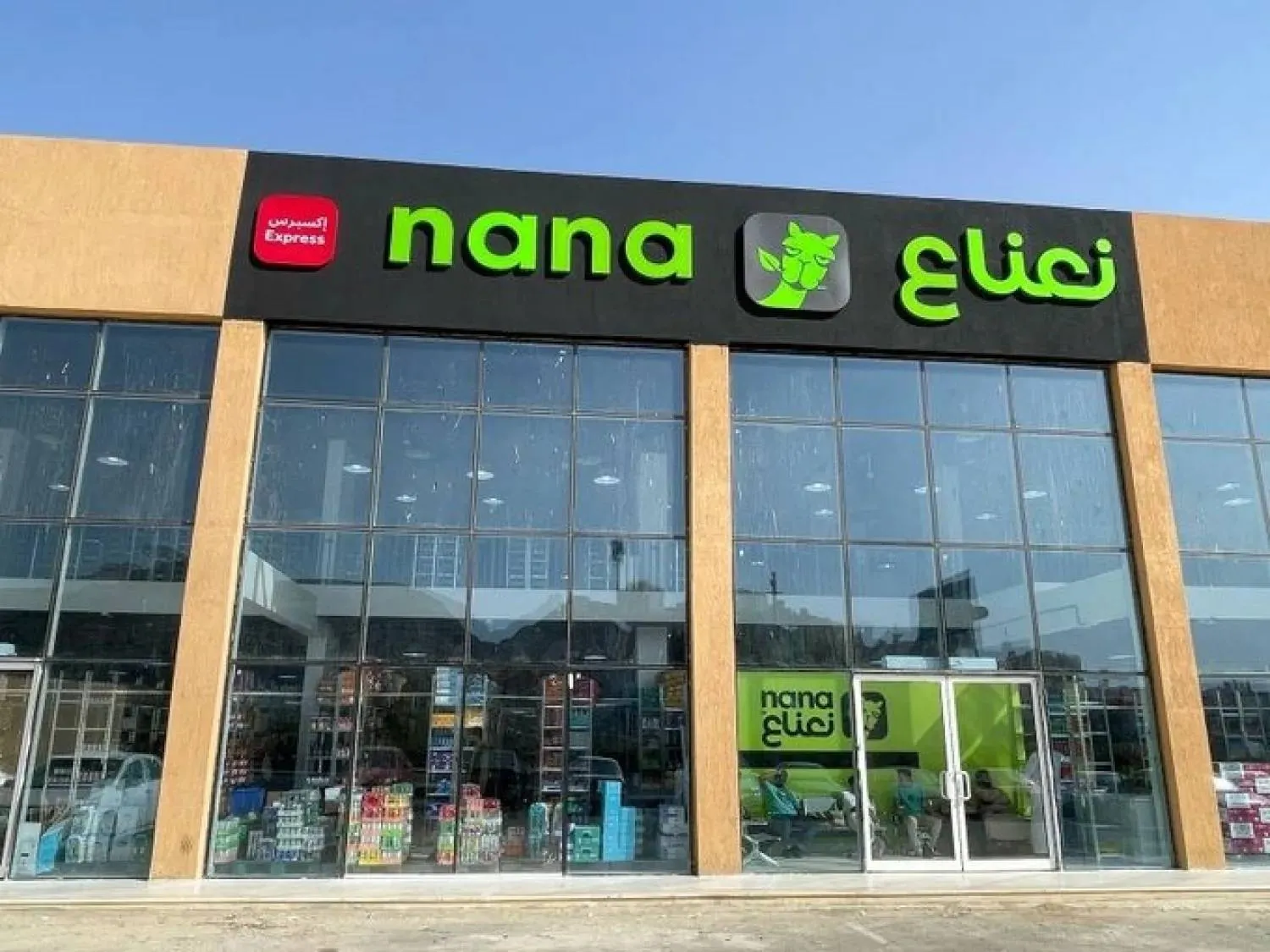

After Hundreds of Millions in Investments, Saudi Grocery App nana Faces Survival Test

A nana store. (nana)
TT

After Hundreds of Millions in Investments, Saudi Grocery App nana Faces Survival Test

A nana store. (nana)

Saudi Arabia’s commercial court has opened a new phase in the trajectory of nana, a grocery delivery app, after approving financial reorganization proceedings for its parent company.

According to the government-run “Eisar” insolvency platform, a trustee said the Commercial Court in Riyadh issued a ruling to initiate financial reorganization for Central Markets for Information Technology, the owner and operator of nana. Creditors have been invited to submit claims within 90 days of the announcement.

Founded in 2016 by an entrepreneur and two partners, nana was among the first local grocery delivery apps in Saudi Arabia. From the outset, the company bet not only on entering the delivery market but on a broader shift: that traditional neighborhood grocery stores would decline as consumers increasingly turned to fast digital ordering for everyday needs.

This vision led nana to adopt a “quick commerce” model aimed at minimizing delivery times by establishing small neighborhood fulfilment stores rather than relying entirely on traditional retailers.

The company initially operated through couriers purchasing orders from partner stores, before expanding to run its own outlets. At its peak, nana operated 36 branches, later reduced to 16 as part of operational restructuring and service cuts in some locations.

Geographically, the company expanded to 18 cities across Saudi Arabia and into Cairo, reflecting ambitions for regional growth.

Heavy funding, fast expansion

nana raised about SAR780 million ($211.9 million) across six funding rounds, according to company and investor data. It began with a $2.1 million seed round in 2016, followed by a $2.2 million convertible debt round in 2017. A $6.6 million round came in 2019, then $18 million in 2020 led by STV, a Saudi venture capital fund focused on AI-driven startups.

In 2022, nana secured $50 million, followed by its largest round in 2023 worth SAR500 million, led by Kingdom Holding alongside a consortium of investors. Funding in 2022 and 2023 accounted for more than 85 percent of total capital raised, underscoring the pace of investment alongside operational expansion.

At the time, the company’s chief executive Sami Alhelwah said it aimed to list on the Saudi stock market within two years — by this year — alongside further domestic and international expansion.

Investor concerns mount

Recent developments have raised concerns among retail investors, with social media platforms seeing growing criticism and questions about the company’s status.

One investor wrote on X that he had invested in nana via the Thiqah platform, but had received no updates. “Since investing, there has been no update on what happened to the investment, nor any report explaining the situation,” he said, adding that the platform should be responsible for safeguarding investor rights.

Competitive pressures

As nana expanded, operational challenges emerged. The quick commerce model, while reducing delivery times, significantly increases costs, especially with a growing network of branches and rising order volumes.

At the same time, intensifying competition in the delivery sector has led to sharp price pressure, with companies competing heavily on cost and speed, eroding margins.

nana is not alone in facing these challenges. In 2025, the delivery app Shgardi exited the market after six years, despite completing more than 7 million orders and serving over 3 million customers across 35 cities in Saudi Arabia.

The company cited “price burning” — aggressive discounting sometimes below cost — as a key factor behind its closure.

Financial reorganization

Saudi lawyer and commercial arbitrator Mohammed Almuzayen told Asharq Al-Awsat the Kingdom’s bankruptcy law balances business continuity with creditor protection.

He said financial reorganization is not a liquidation process but a legally empowered mechanism to help a debtor reach an agreement with creditors under court and expert supervision, allowing for restructuring rather than market exit.

Under the law, companies facing financial distress can continue operating under oversight from a court-appointed trustee. Article 69 stipulates that management typically remains in place unless there is evidence of negligence or mismanagement.

The process unfolds in two phases. The first runs from filing to court approval and includes a suspension of claims under Article 46, protecting the company from enforcement actions while it prepares a restructuring plan. The second begins after the ruling, with the company operating under trustee supervision in line with Article 57 to implement the plan.

Almuzayen described the procedure as a legal mechanism aimed at restructuring debt and restoring operations, not ending them. The system provides protection from creditor claims and allows companies to continue operating while negotiating a collective settlement.

Rights of retail investors

Individual investors are treated as creditors under the law, he explained.

Once a repayment plan is approved by the court, it becomes legally binding on the company. Creditors are classified into categories to ensure fair treatment, and committees may be formed to represent investor interests and oversee implementation.

The law also imposes strict penalties for violations such as asset dissipation or preferential treatment of certain creditors, including prison sentences of up to five years and fines of up to SAR5 million.

A turning point

With the court ruling, nana moves from a phase of funding-driven expansion into one of court-supervised restructuring.

Once seen in 2023 as a leading quick commerce growth story, the company now faces a different test — one of survival and sustainability.

Its future will depend on the restructuring plan and whether it can rebuild its operating and financial model in a highly competitive market that continues to evolve.



Saudi Arabia Reshapes Its Industrial Identity... From Assembly to Independent Innovation

A view of the Saudi capital Riyadh. (SPA)
TT

Saudi Arabia Reshapes Its Industrial Identity... From Assembly to Independent Innovation

A view of the Saudi capital Riyadh. (SPA)

Saudi Arabia is moving rapidly and steadily toward building a comprehensive industrial system, surpassing ambitions of mere assembly and importation, but aiming to establish robust engineering capabilities capable of resilience and competition.

This was revealed by a recent report issued by Alvarez & Marsal, and confirmed by Andrea Di Lello, Senior Director of Strategy and Performance Improvement at the company, in an interview with Asharq Al-Awsat.

Saudi localization efforts are distributed across highly strategic sectors, including space, aviation, automotive, shipbuilding, information technology, artificial intelligence, and financial technology. In each of these sectors, local projects connect with major international partnerships, reflecting the depth of the ongoing transformation.

In the aerospace and aviation sector, the Saudi Arabian Military Industries (SAMI) has started locally producing spare parts for F-15 aircraft and airborne electronics systems, while Boeing, Lockheed Martin, and Airbus have signed localization agreements targeting 50% local content. The numbers here tell a remarkable story of growth; the actual localization rate has increased from 4 percent in 2018 to about 20 percent today.

However, Di Lello put these numbers in their proper context, saying agreements with international partners have laid the initial foundations by building operational capabilities and developing advanced infrastructure for maintenance, repair, and overhaul.

He warned that the next phase, which is building engineering capabilities in design and systems integration, is the true added value, and this is where the greatest opportunities lie.

Factories shaping a different future

At the King Abdullah Economic City, Lucid Motors opened the first car factory in the history of the Kingdom, while Ceer Motors is seeking to design and manufacture electric cars locally, and SNAM continues to assemble commercial vehicles with ambitions to transition to full manufacturing.

Asked about the realistic timelines for achieving independence in innovation in these sectors, Di Lello explained that tangible progress can be made within five years.

The critical factor is not the time itself, but the quality of execution, which includes the true definition of achievement and how the knowledge transfer process is organized, he added.

As for the shipbuilding sector, it is based on an ambitious pillar, the King Salman Global Maritime Industries Complex, which aims to localize more than 50 percent of construction activities and drilling platform manufacturing. This is supported by a joint venture with the Korea’s Hyundai Group, which aims to manufacture ship engines and their structural components.

Di Lillo described the complex as a "world-class facility," noting that long-term agreements with major local buyers provide a commercial foundation that is not usually available to most emerging countries in this sector.

The Alvarez & Marsal report does not hide the existing gaps. Di Lillo described them when discussing the readiness of local suppliers, saying that the priority today is to move from an assembly phase to a more mature phase based on independent design, systems integration, and the ability to grant certifications.

He identified the most urgent needs as building a base of "first-tier" suppliers capable of designing complex components and developing local engineering expertise able to modify products and certify them technically.

Regarding joint training programs with global companies, Di Lillo set a fundamental condition for their success, explaining that the programs most capable of producing sustainable outcomes are those that include clear engineering milestones, binding commitments to transfer technology, and a graduated pathway that moves trainees from operational training to possessing design capabilities.

He recommended that future agreements should guarantee clear qualitative outputs, not just participation targets.

The report paid special attention to one competitive advantage: Saudi Arabia’s capabilities in information technology and artificial intelligence. Di Lillo said these capabilities place the Kingdom in an advanced position in terms of readiness for innovation and adoption of modern technologies.

Research and development

The Kingdom currently invests about 0.56 percent of its GDP in research and development, a figure that has grown by more than 30 percent year on year.

Di Lillo stressed that the real opportunity now lies in ensuring that this growing investment is converted increasingly into applied industrial R&D, yielding strong and tangible results in trade and manufacturing.

The report does not overlook external risks, noting that fluctuations in oil prices and tensions in international trade may affect investment flows. However, it viewed these challenges as opportunities to attract talent and highly experienced small and medium-sized enterprises.

The report described the current phase as moving beyond the initial setup and establishment stages to approach “environmental maturity,” which is the third phase of localization. This phase focuses on building unique local knowledge capabilities and includes strengthening self-sustaining companies, establishing innovation centers, deepening local supply chains, and fostering partnerships between universities and industry.


Saudi Aramco Beats Forecasts with Adjusted First-Quarter Income of $33.6 Billion

Aramco President and CEO Amin Nasser speaks at a previous Aramco event. (Reuters)
TT

Saudi Aramco Beats Forecasts with Adjusted First-Quarter Income of $33.6 Billion

Aramco President and CEO Amin Nasser speaks at a previous Aramco event. (Reuters)

Saudi Aramco reported a sharp rise in first-quarter profit for 2026, beating analyst expectations as higher oil prices and increased crude sales offset geopolitical disruptions linked to shipping constraints in the Strait of Hormuz.

Aramco’s adjusted net income rose nearly 26% to $33.6 billion (SAR126.0 billion), above analysts’ average forecast of SAR109 billion and up from SAR99.8 billion a year earlier, according to a company statement on Sunday.

The company approved a base dividend of $21.89 billion (SAR82.08 billion), in line with its strategy to provide sustainable and growing returns backed by strong cash flow generation and a solid balance sheet.

The results highlighted Aramco’s ability to generate cash flow from operating activities of $30.7 billion despite heightened geopolitical tensions affecting global energy markets.

Iran’s blockade of shipping through the Strait of Hormuz during the US-Israeli conflict disrupted global energy supplies and pushed oil prices higher, prompting Aramco to increase crude flows from its eastern facilities to the Red Sea port of Yanbu through its East-West pipeline network.

Aramco President and CEO Amin Nasser said in this regard: “Our East-West Pipeline, which reached its maximum capacity of 7.0 million barrels of oil per day, has proven itself to be a critical supply artery, helping to mitigate the impact of a global energy shock and providing relief to customers affected by shipping constraints in the Strait of Hormuz.”

“Recent events have clearly demonstrated the vital contribution of oil and gas to energy security and the global economy, and are a stark reminder that reliable energy supply is critical,” Nasser added.

Crude prices climbed from around $65 per barrel in early February to more than $100 in March after Iran closed the Strait of Hormuz, triggering a global energy shock.

Strong revenue and profit growth

Adjusted net income of $33.6 billion (SAR125.97 billion) exceeded analysts’ consensus estimate of $31.16 billion.

The figure reflects underlying operating performance excluding non-recurring items and accounting impacts related to replacement costs, fair-value movements in certain derivatives and financing costs totaling about $1.06 billion (SAR3.96 billion), according to results published on the Saudi stock exchange website.

Net income rose more than 25% year-on-year to $32.04 billion (SAR120.13 billion), compared with $25.51 billion (SAR95.68 billion) in the same quarter of 2025, driven by higher crude oil prices and increased sales volumes.

Revenue increased 7% to $115.49 billion (SAR433.10 billion), supported by higher prices for crude oil, refined products and chemicals, as well as higher sales volumes of crude and chemical products.

On a quarterly basis, net income jumped 72.9% from the fourth quarter of 2025, rising from $18.53 billion to $32.04 billion, helped by stronger margins and lower operating costs despite higher taxes and zakat payments.

Aramco said shareholders’ equity rose 3.9% year-on-year to $408.46 billion (SAR1.5 trillion), while earnings per share reached $0.13 (SAR0.50).

Cash flow and financial position

Cash flow from operating activities totaled $30.7 billion (SAR115.2 billion).

Free cash flow came in at $18.6 billion (SAR69.9 billion), down slightly from $19.2 billion a year earlier, reflecting a strategic increase in working capital of $15.8 billion (SAR59.1 billion) aimed at ensuring business continuity.

The company maintained a strong capital structure, with gearing at 4.8%, up from 3.8% at the end of 2025. Return on average capital employed stood at 20.7%.

Aramco shares rose 0.8% after the results announcement to close at SAR27.42, with trading volume of around 12 million shares.

Dividends and expansion plans

Aramco’s board declared a first-quarter base dividend of $21.9 billion (SAR82.1 billion), up 3.5% from a year earlier, to be paid in the second quarter.

The company also invested $12.1 billion (SAR45.4 billion) in capital expenditure during the quarter as part of plans to expand production capacity and strengthen strategic infrastructure.

Nasser said the company’s first-quarter performance reflected “strong resilience and operational flexibility in a complex geopolitical environment.”

“Despite these headwinds, Aramco remains focused on its strategic priorities and is leveraging both its domestic infrastructure and its global network to navigate disruption,” he stated.

In comments to Reuters, Nasser warned the global oil market could take time to stabilize after recent disruptions.

The world has lost about one billion barrels of oil over the past two months, Nasser said, adding: “Our goal is simple: to ensure energy keeps flowing, even under the pressure the system is facing.”

Resilience

Hussein Al-Attas, a financial and economic adviser, told Asharq Al-Awsat that Aramco’s results demonstrated the strength of its operating model and its ability to benefit from higher oil prices.

“What stands out in these results is not only profit growth, but also the company’s operational flexibility in managing supply chains and exports under complex geopolitical conditions, which preserved strong cash flow levels and sustainable shareholder distributions,” he noted.

Al-Attas said part of the earnings growth was linked to exceptional price increases during the quarter, meaning future profitability would remain closely tied to global oil price trends and supply stability.

For his part, Mohammed Al-Farraj, senior head of asset management at Arbah Capital, said Aramco’s large cash distributions enhanced the stock’s appeal as a defensive investment for institutional and long-term investors, particularly sovereign wealth funds and pension funds.

He told Asharq Al-Awsat that the company’s low production costs and strong balance sheet supported its ability to continue distributing dividends despite energy market volatility.

Al-Farraj also said Aramco’s $3 billion share buyback program, announced in March, reflected management confidence in the company’s valuation and long-term cash generation capacity.

The repurchased shares will be held as treasury shares and allocated to employee stock programs, the company said.

Al-Farraj added that Aramco continued pursuing diversification through investments in natural gas, liquefied natural gas and projects such as the Jafurah field, while also deploying artificial intelligence technologies to improve efficiency and reduce costs.


Indian PM Urges Reduced Fuel Use amid Middle East War Disruption

FILE PHOTO: Workers assemble Ather 450X electric scooter inside Ather Energy's manufacturing facility in Hosur in southern state of Tamil Nadu, India, March 23, 2025. REUTERS/Nandan Mandayam/File Photo
TT

Indian PM Urges Reduced Fuel Use amid Middle East War Disruption

FILE PHOTO: Workers assemble Ather 450X electric scooter inside Ather Energy's manufacturing facility in Hosur in southern state of Tamil Nadu, India, March 23, 2025. REUTERS/Nandan Mandayam/File Photo

Prime Minister Narendra Modi on Sunday urged the people of India to cut down on petrol and diesel consumption amid supply disruptions due to the Middle East war.

India is one of few countries in the region that has not increased prices of petrol and diesel for domestic consumers or rationed supplies, according to AFP.

But it has increased prices of liquefied petroleum gas (LPG) -- a primary cooking fuel in the country -- after disruptions following the US-Israeli strikes on Iran, which led to Iran's near-total blockade of the strategic Strait of Hormuz.

"We have to reduce our use of petrol and diesel. In cities with metro lines, we should try to travel by metro...If we must use a car, then we should try to car pool," Modi said Sunday, addressing a gathering in southern Telangana state.

He added that restrictions on use were also necessary to save foreign currency spent on fuel imports.

"We must also place a strong emphasis on saving foreign exchange, as petrol and diesel have become so expensive globally."

Modi also urged people to resume energy-saving schemes that were in place during the Covid pandemic.

"We should prioritize work from home, online conferences, and virtual meetings again," he said.

Hardeep Singh Puri, India's minister for petroleum and natural gas, said oil marketing companies (OMCs) had taken a hit on their revenues while ensuring "uninterrupted energy imports and supply."

"OMCs are buying crude, gas and LPG at higher cost, but in order to protect consumers, they are selling final products at lower cost leading to massive mounting losses of up to 1,000 crore rupees (approximately $120 million) per day," Puri said Sunday on X.

He added that losses for the government, after reducing taxes on diesel and petrol for domestic consumption, "saw revenue losses of 14,000 crore rupees (approximately $1.6 billion) in a month."

He urged citizens to turn Modi's "empathetic appeal" into a mass movement "to save and conserve energy."