Saudi Trade Offices Contribute to Creating 2,221 Export Opportunities, Securing 393 New Investments

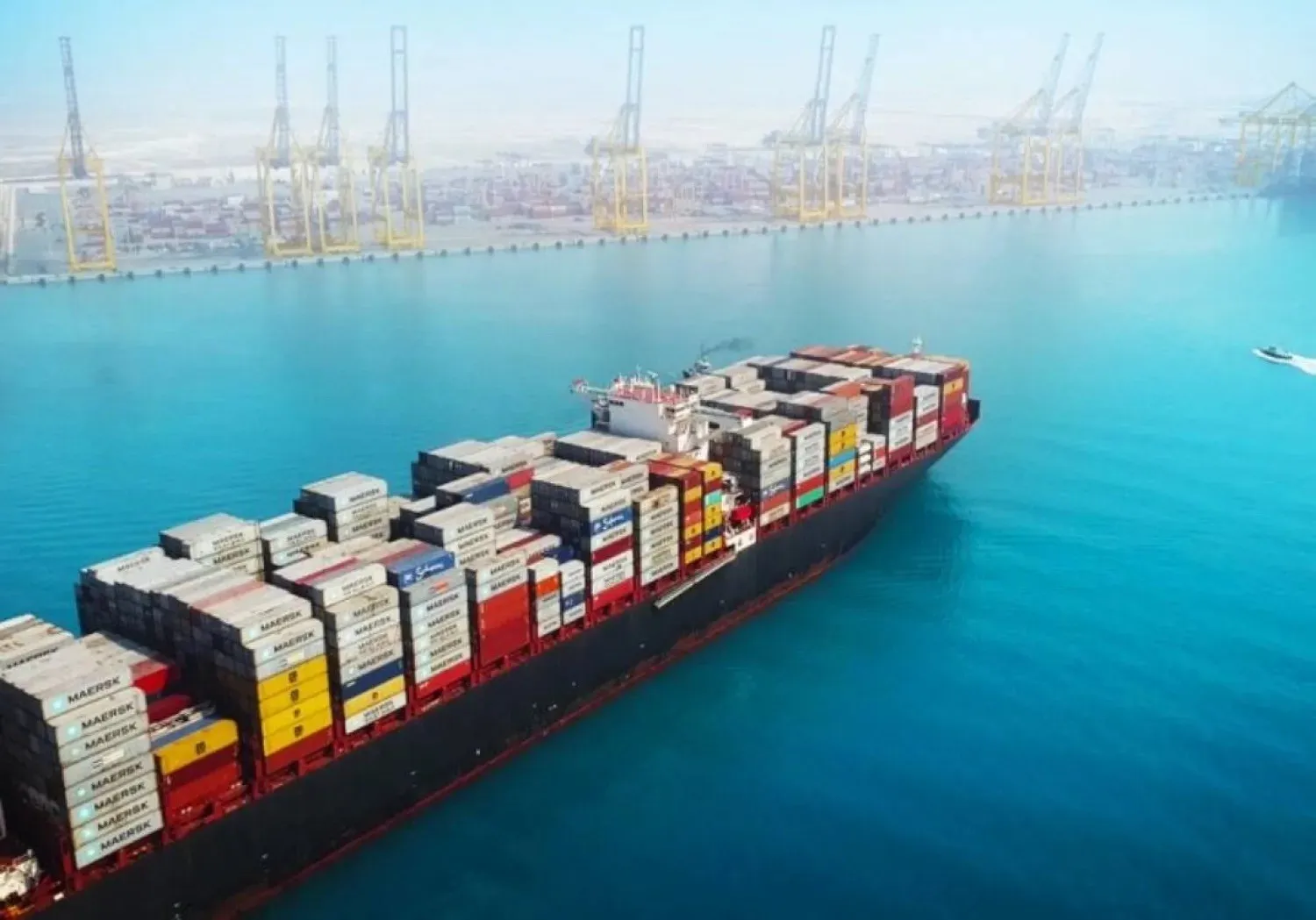
King Abdullah Economic City port (Economic Cities and Special Zones Authority)
TT

Saudi Trade Offices Contribute to Creating 2,221 Export Opportunities, Securing 393 New Investments

King Abdullah Economic City port (Economic Cities and Special Zones Authority)

Saudi Arabia’s General Authority of Foreign Trade said Saudi commercial attachés contributed to creating 2.221 export opportunities and secured 393 new investment opportunities, underscoring efforts to expand the Kingdom’s global economic footprint.

The gains came alongside measures to protect domestic industry, including four anti-dumping investigations and five decisions imposing protective duties on imports to ensure fair competition and support Saudi exports abroad.

Established in 2019 as an independent authority, the body is tasked with advancing Saudi trade interests internationally and supporting economic development under Vision 2030.

According to a recent authority report seen by Asharq Al-Awsat, the agency held 25 meetings of its main negotiating team involving Saudi government entities, 75 meetings of related subcommittees and 149 meetings of Gulf technical negotiating teams. It also conducted seven rounds of negotiations between Gulf Cooperation Council states and trade partners.

International Partnerships

The authority carried out 38 overseas visits, participated in or prepared for 39 international forums and conferences, and held 305 technical meetings with domestic and foreign entities.

It launched four anti-dumping investigations into imports, prepared 182 economic reports to support companies and took part in seven international investigations to defend Saudi exports. It also issued five anti-dumping duty decisions covering imports of several products.

The report said the authority continued negotiations with a number of countries to support non-oil exports - goods and services - by securing preferential access to global markets, encouraging and protecting investment, strengthening supply chains and advancing free trade agreements with major economies and blocs.

Diversification Push

The authority said the efforts align with Vision 2030 goals to diversify the economy and strengthen Saudi Arabia’s position in global trade, adding that it was pressing ahead with trade policies aimed at widening the reach of Saudi exports and opening new markets, reinforcing the Kingdom’s ambition to position itself as a global trade hub.

The authority also said it was working with public and private sector partners to develop a more flexible and competitive external trade system while adopting international best practices in trade regulation.

The efforts form part of broader plans to boost the competitiveness of Saudi exports, improve efficiency and build a sustainable, diversified economy in line with the Kingdom’s foreign trade ambitions.


Hormuz Disruptions Drive Saudi Re-Exports to Historic High

King Fahd Industrial Port in Yanbu, Saudi Arabia (SPA)
TT

Hormuz Disruptions Drive Saudi Re-Exports to Historic High

King Fahd Industrial Port in Yanbu, Saudi Arabia (SPA)

Preliminary data released by the General Authority for Statistics on Thursday revealed a remarkable positive shift in Saudi Arabia's international merchandise trade during April 2026.

The merchandise trade surplus doubled by 100.8 percent compared to the same month last year, reaching 25.4 billion riyals (approximately $6.77 billion), driven by an increase in total merchandise exports and a decrease in spending on imports.

According to the official bulletin, total merchandise exports grew by 9.3 percent to reach 101 billion riyals (approximately $26.93 billion), compared to 93 billion riyals in April 2025.

This growth was primarily driven by an 11.7 percent rise in oil exports, reaching a value of 69.6 billion riyals (approximately $18.56 billion), compared to about 62.7 billion riyals (approximately $16.72 billion) in the previous year, alongside a 4.5 percent growth in non-oil exports (including re-exports), reaching 31.4 billion riyals (approximately $8.37 billion). Among these, the "re-exports" item alone saw a historic jump of 20.4 percent, reaching 15.5 billion riyals (approximately $4.13 billion).

Conversely, a 5.2 percent decline in total merchandise imports, decreasing from 80 billion riyals (approximately $21.33 billion) to 76 billion riyals (approximately $20.26 billion), contributed to the Kingdom's trade balance gains; the merchandise trade surplus doubled by 100.8 percent, rising from approximately 13 billion riyals (approximately $3.47 billion) in April 2025 to expand to 25.4 billion riyals (approximately $6.77 billion) in April 2026.

Logistical Resilience

The re-export movement in the Kingdom recorded unprecedented historic performance; the value of re-exported goods jumped by 20.4 percent to reach a record level of 15.5 billion riyals (approximately $4.13 billion), which is the highest monthly level recorded by statistical data since 2017.

This strong performance was bolstered by a 74.0 percent increase in exports from the "machinery, electrical appliances, and equipment and their parts" sector, which alone accounted for 53.5 percent of total re-exported goods.

This intensive logistical activity occurred as the Kingdom benefited from diverting part of the regional shipping traffic to avoid navigation disruptions in the Strait of Hormuz, which accompanied the Iranian war.

Saudi Arabia enhanced the role of its ports as alternative routes by diverting shipping to Red Sea ports (Jeddah and Yanbu), while raising the readiness of eastern and western ports and activating the "East-West" pipeline to ensure the continuous flow of oil and goods. These efforts culminated in a rise in the ratio of non-oil exports (including re-exports) to imports, reaching 41.6 percent compared to 37.8 percent in April 2025.

Goods Structure and Trade Partners

Regarding non-oil trade details, "machinery, electrical appliances, and equipment" topped the list of non-oil exports with a share of 28.1 percent, followed by "plastics, rubber, and their products" at 17.1 percent. As for imports, the same group (machinery and electrical equipment) led the imported goods with a share of 33.3 percent, followed by transport equipment and parts at 10.2 percent.

In terms of international partners, China maintained its position as the Kingdom's main trading partner, accounting for 15.2 percent of total Saudi merchandise exports, followed by the UAE at 10.6 percent, and then South Korea at 9.7 percent. China also ranked first in the Kingdom's import list with 29.4 percent, followed by the UAE at 7.9 percent, and the United States of America third at 7.2 percent.

Jeddah Islamic Port played a pivotal role during this period, topping customs ports as the most important gateway through which 33.7 percent of imported goods passed, and also ranking first as the most important port for the Kingdom's non-oil exports with 23.3 percent.


SIRC: Waste Management to Add $32 Billion to Saudi Economy by 2040

SIRC headquarters in Saudi Arabia (company website)
TT

SIRC: Waste Management to Add $32 Billion to Saudi Economy by 2040

SIRC headquarters in Saudi Arabia (company website)

Saudi Arabia’s waste-management sector is set to evolve from a routine environmental service into an independent industrial and economic engine, potentially adding more than SAR120 billion ($32 billion) to the Kingdom’s GDP by 2040, according to Alwaleed Alzahrani, Business Development Manager at the Saudi Investment Recycling Company (SIRC).

Speaking to Asharq Al-Awsat on the sidelines of Riyadh International Industry Week 2026, Alzahrani projected the sector will create more than 77,000 quality jobs and cut carbon emissions by 73 million tons annually.

Waste in Saudi Arabia, he noted, is no longer merely an environmental challenge linked to urban expansion but an emerging economic and industrial pillar that recycles resources and transforms waste into productive inputs, reducing reliance on oil.

SIRC, wholly owned by the Public Investment Fund and established in 2017, is the main driver of Saudi Arabia’s waste-management sector. It serves as a platform to empower the private sector and develop the infrastructure needed to meet Vision 2030 sustainability and economic diversification goals.

Alzahrani described the shift as a fundamental move from the traditional service-based model of waste treatment to a standalone industrial sector built on circular-economy principles.

SIRC functions as a national arm and strategic investor, working with government entities and the private sector to build an integrated system for sorting, treating, recycling, and converting waste into value-added industrial resources.

The sector aims to divert 90 percent of waste away from landfills by 2040 while helping save more than 60 million barrels of crude oil through waste-to-energy and alternative fuel production.

The strategy, he added, goes beyond addressing a growing environmental challenge by creating a new industrial sector capable of generating added value, strengthening local content, and positioning Saudi Arabia among the world’s leading circular economies.

Investment opportunities extend beyond recycling plants to the entire value chain, including collection, sorting, digital solutions, logistics, and the development of stable markets for recycled materials.

These opportunities span municipal waste, construction and demolition debris, plastics, metals, and electronic and industrial waste.

According to Alzahrani, SIRC’s central role is to transform these opportunities into commercially viable projects by “reducing investment ambiguity,” providing accurate market data, ensuring stable supplies and economic feasibility, and creating a regulatory environment attractive to domestic and international investors.

On the broader economic impact, he explained that returning recovered materials to the production cycle keeps value within the national economy for longer. It also gives local manufacturers greater resilience against global market volatility and raw-material price swings by enabling them to rely on high-quality recycled domestic resources available in stable commercial quantities, while reducing environmental impacts and carbon emissions.

Official data from the General Authority for Statistics show total recorded waste in Saudi Arabia rose to 135.1 million tons in 2024, up from 111.4 million tons in 2023. Agriculture, forestry, and fishing generated the largest share at 46.9 million tons, followed by construction (32.2 million tons), households (20.5 million tons), and industry (26.7 million tons), with manufacturing accounting for 68.6 percent of industrial waste.

By material type, organic waste represented the largest share at 45.7 percent (about 61.7 million tons), followed by construction materials (22.8 percent) and plastics (5.8 percent).


Ministry of Tourism Highlights Investment Opportunities at FHS Saudi Arabia 2026

The Ministry highlighted Saudi Arabia’s growing appeal as a tourism investment destination and showcased the wide range of opportunities emerging across the Kingdom’s rapidly developing tourism sector. (SPA)
TT

Ministry of Tourism Highlights Investment Opportunities at FHS Saudi Arabia 2026

The Ministry highlighted Saudi Arabia’s growing appeal as a tourism investment destination and showcased the wide range of opportunities emerging across the Kingdom’s rapidly developing tourism sector. (SPA)

Saudi Arabia’s Ministry of Tourism participated in the Future Hospitality Summit (FHS) Saudi Arabia 2026, held in Riyadh from June 22 to 24, bringing together investors, developers, operators, and leading global brands from across the hospitality and tourism sectors.

Through its participation as the Strategic Enabler of the Kingdom's premier hospitality investment forum, the Ministry highlighted Saudi Arabia’s growing appeal as a tourism investment destination and showcased the wide range of opportunities emerging across the Kingdom’s rapidly developing tourism sector, reported the Saudi Press Agency on Wednesday.

In his opening address, Deputy Minister for Tourism Destinations Enablement Eng. Mahmoud Abdulhadi said: “Saudi Arabia is not asking investors to invest in a promise. It is inviting them into a market already moving at scale.”

Highlighting the breadth of this opportunity, he added: “Saudi tourism is not built on one project, one city, or one market segment. It is a national portfolio of destinations shaped for diverse demand.”

Abdulhadi also participated in a fireside chat titled “From Opportunity to Bankability: Saudi Tourism’s Next Investment Chapter,” where he stressed that Saudi Arabia’s tourism sector has entered a new phase focused on elevating the quality of the visitor experience.

“My advice to investors is simple: come, explore, and engage with the ecosystem. The opportunity is not only in building assets, but in creating high-quality experiences for the traveler,” he said.

Throughout the three-day event, the Ministry of Tourism presented Saudi Arabia’s evolving tourism landscape, highlighting its efforts to foster an investment-enabling environment and unlock new opportunities across the Kingdom’s destinations in support of Saudi Vision 2030 and the sector’s long-term growth.

The Ministry also introduced local and international investors to its targeted incentive programs and initiatives designed to support their investment journey, most notably the Tourism Investment Enablers Program (TIEP) and the Hospitality Investment Enablers (HIE) initiative.

During FHS, the Ministry launched the Global Investment in Saudi Tourism report, which highlights key growth indicators in the sector, the expansion of leading global hospitality brands in the Saudi market, and ongoing efforts to strengthen the Kingdom’s position as a premier global destination for tourism investment.

The Ministry of Tourism’s participation in FHS Saudi Arabia 2026 forms part of its ongoing efforts to engage local and international investors and partners, unlock high-quality investment opportunities, and support private sector participation in the development of the tourism industry, advancing the objectives of the National Tourism Strategy and Saudi Vision 2030.