


Lebanon’s Central Bank Governor: 90% of Depositors Are a Priority, IMF Deal is ‘Last Credible Pathway’

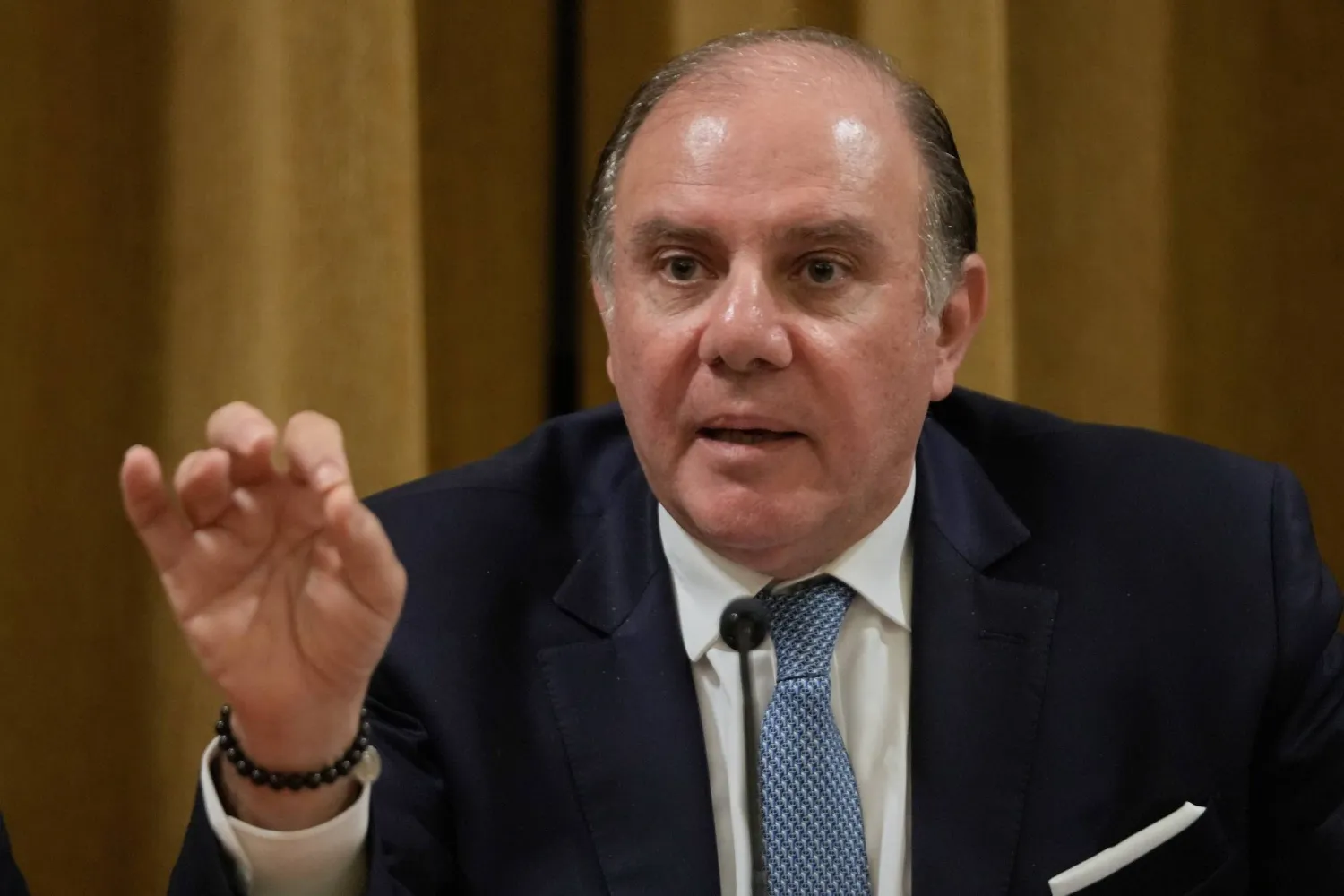
Lebanese Central Bank Governor Kareem Said (AP)
TT

Lebanon’s Central Bank Governor: 90% of Depositors Are a Priority, IMF Deal is ‘Last Credible Pathway’

Lebanese Central Bank Governor Kareem Said (AP)

Lebanon’s central bank Governor Karim Souaid said on Sunday a prioritization of smaller depositors that make up mostly 90 percent of accounts is both economically rational and socially necessary, adding that an agreement with the International Monetary Fund is “the last credible pathway to anchor reforms.”

In an opinion piece for Britain’s Financial Times headlined “Lebanon needs help to secure its economic recovery,” Souaid wrote that the country’s “economic crisis is often described as complex. It is not. It is the predictable result of fiscal indiscipline by dilettante governments, monetary mismanagement by the central bank and the concentrated misallocation of private savings by the banking sector.”

Yet, he praised the government’s “policy adjustments,” which he said “are moving the country in the right direction.”

“Fiscal balances have improved, largely through higher tax collection and constrained spending. This is key, but not enough to resolve all impediments towards recovery,” he wrote.

Restructuring of banks

According to Souaid, the central bank’s proposed banking restructuring framework considers that “losses must be allocated between principal stakeholders — the state, the central bank and the commercial banks — before a turnaround can take shape.”

He stressed that “the prioritization of smaller depositors — the overwhelming majority of accounts at almost 90 percent — is both economically rational and socially necessary.”

Souaid added that “a banking system cannot be rebuilt on impaired assets and inadequate capital. It must be recapitalized with fresh equity or seriously downsized, to reflect economic reality. Anything in between merely prolongs stagnation.”

The cash economy and fighting corruption

Souaid warned against a cash-based economy, saying it weakens tax collection, damages growth and facilitates illegal financial activities. He called for restoring trust in the formal banking system by reversing this trend.

He added that the central bank is supporting criminal and civil actions, in Lebanon and abroad, against former officials and banking principals implicated in fraud. "The objective is clear — reclaim this misappropriated money and uphold the rights of depositors whose funds have long borne the cost of such abuses."

Armed conflict and the negotiations with the IMF

“There is still one factor that no economic model can easily absorb: armed conflict,” said Souaid. “War brings uncertainty that deters investment, accelerates capital flight and erodes gains from policy reforms. Under such conditions, even sound economic measures yield diminished returns.”

The governor wrote that “the IMF is deeply engaged with the government in negotiations that aim towards a constructive resolution plan — arguably the last credible pathway to anchor reforms and a sustainable recovery. Lebanon has little room to impose any counter-conditions so the chance of an accord is rather positive.”

Message to the international community

Souaid lamented that “international actors have provided sound advice in abundance. Friends and neighbors have offered support, in principle. However, financial support has been more limited.”

“This reflects a familiar hesitation: a preference for policy correction before capital commitment. Yet stabilization often requires both to proceed. Without a bridge, even well-designed reforms risk exhaustion before they take hold.”

Souaid said he was sending a “clear” message to the international community, by saying “support a reform-driven government now or defer assistance and risk a far more destabilized reality, after conflict has taken its toll and without the assurance of the institutional capacity needed to implement it.”



China's May Fuel Oil Exports Rise 42% Year-on-year

An attendant holds a petrol nozzle after refuelling a car at a PetroChina gas station in Beijing, China, March 10, 2026. REUTERS/Florence Lo
TT

China's May Fuel Oil Exports Rise 42% Year-on-year

An attendant holds a petrol nozzle after refuelling a car at a PetroChina gas station in Beijing, China, March 10, 2026. REUTERS/Florence Lo

China's exports of fuel oil, mainly for low-sulphur marine fuel bunkering, rose 42% year-on-year in May, customs data showed on Saturday.

Volumes totaled 1.76 million metric tons, or about 360,695 barrels per day (bpd), up 4% from April, according to General Administration of Customs data.

Some marine fuel demand had been diverted from regional hub Singapore to China's Zhoushan due to cheaper prices at Chinese ports during most of ⁠May, market sources ⁠said.

Fuel oil imports in May extended declines after plummeting last month to what was then the lowest level since customs data for them began in 2021.

Imports of fuel oil totaled 559,346 tons ⁠in May, down 43% from April and 57% from a year earlier.

The imports, mostly purchased by refineries for use as feedstock, remained capped this quarter as China's independent refineries trimmed runs amid weak domestic demand for products, market sources said, according to Reuters.


Saudi Arabia Expands Investment Prospects in Military Industries

The Saudi pavilion reinforced the Kingdom’s position as a leading investment destination in the military industry sector. (Asharq Al-Awsat)
TT

Saudi Arabia Expands Investment Prospects in Military Industries

The Saudi pavilion reinforced the Kingdom’s position as a leading investment destination in the military industry sector. (Asharq Al-Awsat)

Saudi Arabia used the Eurosatory 2026 defense and security show to open new investment horizons, showcasing promising opportunities and a regulatory environment designed to attract capital.

The participation helped sharpen the appeal of the Kingdom’s military industries and drew the attention of major global companies seeking strategic partnerships that support Saudi localization targets.

The Saudi pavilion, held at the Paris exhibition from June 15 to 19, reinforced the Kingdom’s position as a leading investment destination in the military industry sector.

Organized by the General Authority for Military Industries (GAMI), the pavilion brought together 10 government and private entities alongside the authority.

The participation underlined Saudi Arabia’s welcome to investors from around the world seeking opportunities in the military industries sector. It also highlighted the Kingdom’s efforts to localize more than 50% of military spending by 2030.

On the sidelines of the exhibition, GAMI Governor Ahmad Al-Ohali met Patrick Pailloux, French Director General for Armament (DGA), as well as representatives of major global defense companies.

The meetings focused on ways to strengthen cooperation in military industries and exchange expertise, supporting the development of a sustainable sector, improving the readiness of military equipment, boosting self-sufficiency and contributing to the national economy.

The Saudi participation also saw the signing of several agreements and memorandums of understanding, part of GAMI’s efforts to develop military industries, strengthen supply chains and enable strategic partnerships.

The authority organized a workshop titled “Developing Supply Chains in Military Industries,” which discussed how an attractive investment environment for local and international investors can help build a diversified and prosperous economy in the sector.

The pavilion showcased the integration of government efforts, national industrial and service capabilities, and the innovative technologies presented by participating Saudi companies. It also highlighted the country’s attractive investment environment and the rapid growth of its military industries sector.

The sector’s contribution to GDP rose from 2.2 billion riyals, or about $587 million, in 2021 to 6.6 billion riyals, or about $1.76 billion, in 2024. The localization rate of military spending also climbed to nearly 25% in 2024, as the Kingdom works toward localizing more than 50% of military spending by 2030.

GAMI said the Saudi pavilion’s participation strengthened the Kingdom’s position as a trusted international partner, expanded its network of relations with major global companies and enabled national firms to showcase their capabilities while exploring opportunities for growth and expansion in global markets.


Iraq Raises Southern Oil Output to 1.75 Million bpd

Technicians working at the Majnoon oil field in Basra, Iraq. (Reuters)
TT

Iraq Raises Southern Oil Output to 1.75 Million bpd

Technicians working at the Majnoon oil field in Basra, Iraq. (Reuters)

Iraq has increased crude oil production from its southern fields by 250,000 barrels per day to around 1.75 million barrels per day as more tankers load crude from the country's ports, Iraqi oil officials told Reuters on Friday, Reuters reported.


The officials said Iraq plans to raise production further to two million barrels per day in the coming few days.


Iraq, like other Gulf oil producers, has suffered the biggest drop in oil revenue as a result of the effective closure of the Strait of Hormuz amid the US-Iran War.