

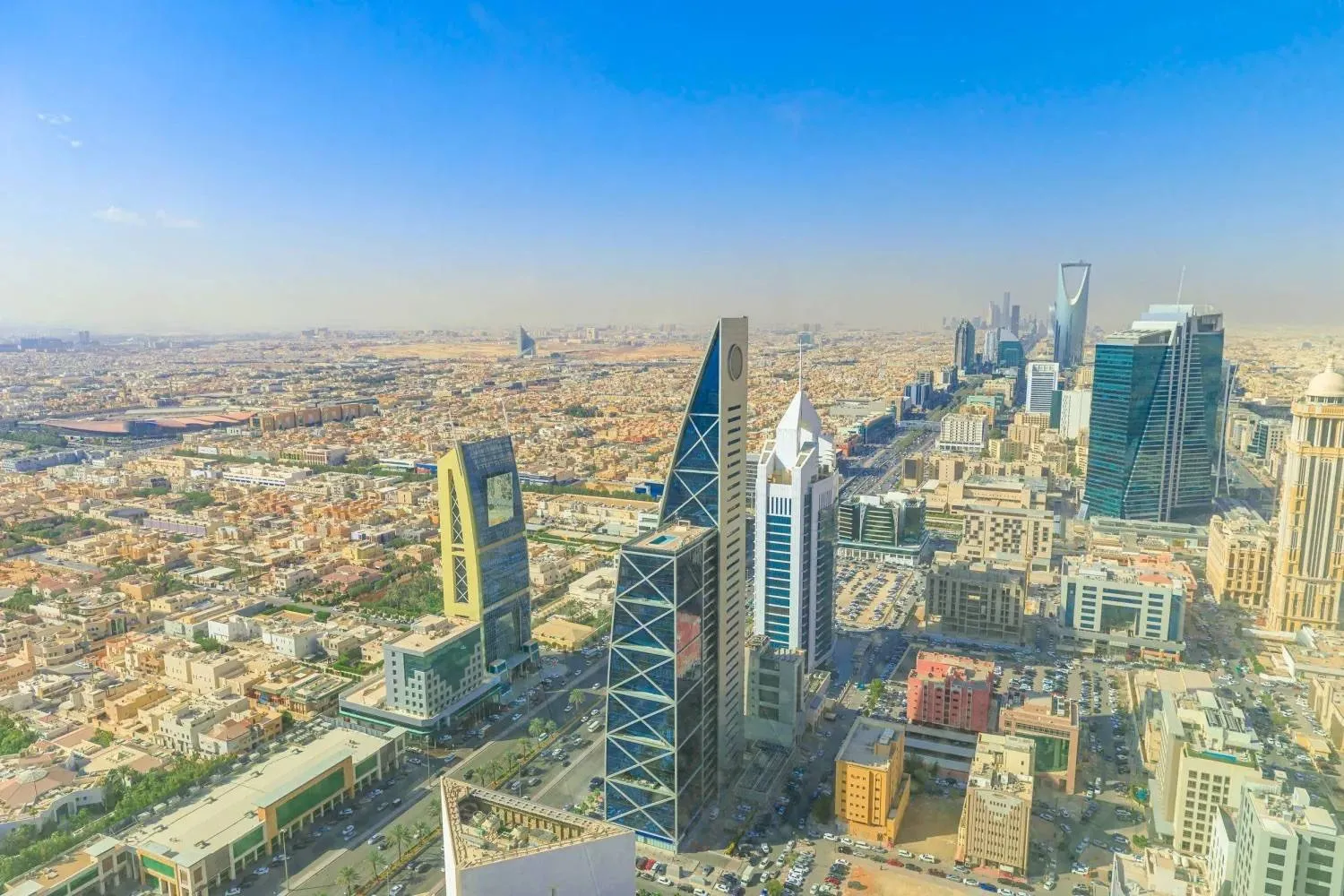

Saudi Q1 Budget: Strategic Spending of $103 Billion Strengthens Economic Resilience

 The Saudi capital (Reuters) 
 The Saudi capital (Reuters) 
TT

Saudi Q1 Budget: Strategic Spending of $103 Billion Strengthens Economic Resilience

 The Saudi capital (Reuters) 
 The Saudi capital (Reuters) 

Saudi Arabia’s first-quarter 2026 budget performance figures showed the government remained firmly committed to development and social spending, with total expenditure surging 20 percent year on year to about SAR387 billion ($103.2 billion), compared with SAR322 billion in the same period a year earlier.

The spending drive reflects a broader strategy to strengthen the Kingdom’s economic resilience, going beyond traditional support measures to focus heavily on securing supply chains, localizing strategic industries and building financial buffers aimed at shielding domestic growth from external geopolitical shocks.

Revenue resilience and growing non-oil income

Saudi Arabia’s Finance Ministry said in its quarterly report that total revenue reached SAR261 billion ($69.6 billion). Although overall revenue edged down 1 percent due to a roughly 3 percent decline in oil revenue to SAR145 billion ($38.6 billion), non-oil revenue maintained positive momentum, rising 2 percent annually to SAR116 billion ($30.9 billion).

Taxes on goods and services remained the largest contributor to non-oil revenue at SAR74.9 billion ($20 billion), underscoring the success of policies aimed at diversifying income sources and reducing direct exposure to oil-market volatility.

The figures highlight the Saudi economy’s ability to maintain stable cash flows despite turbulence in global markets, resulting in a budget deficit of SAR126 billion ($33.6 billion), which the ministry described as a necessary investment to support future growth.

According to the International Monetary Fund (IMF), the impact of the war on Saudi Arabia appears less severe than on other Gulf states despite downgraded forecasts. The Saudi economy is still expected to grow by 3.1 percent after a 1.4-percentage-point cut from the IMF’s January projections, indicating the region’s largest economy remains capable of absorbing external shocks.

The World Bank, meanwhile, forecast Saudi Arabia’s budget deficit would narrow to 3 percent of gross domestic product in 2026, while the current account is expected to post a surplus of 3.3 percent, compared with an earlier forecast of a 2.7 percent deficit.

Finance Minister Mohammed Al-Jadaan has previously said not all budget deficits should be viewed negatively, distinguishing between what he described as “good” and “bad” deficits. He said a “bad” deficit fails to generate growth and merely increases future liabilities, while a “good” deficit finances strategically important projects that stimulate growth, including infrastructure, logistics, airports, ports and railway networks that encourage private-sector investment and help lower financing costs.

Social stability as the first line of defense

The 12 percent increase in spending on health and social development to SAR81 billion ($21.6 billion) reflected what officials described as a preemptive policy aimed at shielding citizens from the effects of global inflation driven by wars and geopolitical tensions.

Similarly, the allocation of SAR31 billion ($8.2 billion) for social benefits is intended to preserve purchasing power, helping explain why inflation remained moderate at 1.8 percent and point-of-sale transactions rose 4.4 percent despite regional instability.

At the same time, spending on infrastructure and transport rose sharply by 26 percent to SAR12 billion ($3.2 billion), supporting Saudi ambitions to become a global logistics hub linking continents.

Public debt management and financing sources

The report also highlighted what it described as efficient management of financing requirements during the first quarter of 2026. The entire deficit of SAR125.7 billion ($33.5 billion) was financed through debt issuance without drawing on government reserves, which stood at SAR400.9 billion ($106.9 billion).

The approach is consistent with the Finance Ministry’s stated policy of preserving reserves as a pillar of fiscal strength while managing deficits through diversified financing tools under a medium-term debt strategy aimed at keeping debt levels at about 32.7 percent of GDP.

Total public debt reached SAR1.667 trillion ($444.6 billion) at the end of the first quarter. Domestic debt accounted for SAR1.042 trillion ($278.1 billion), while external debt stood at SAR624.4 billion ($166.5 billion).

International markets continued to show strong confidence in the Saudi economy. A dollar-denominated bond sale in early January worth $11.5 billion attracted more than $28 billion in orders, as the ministry pursued plans to raise between $14 billion and $17 billion in international borrowing this year while gradually slowing the pace of sovereign bond sales abroad.

The current account balance stood at SAR67.7 billion ($18 billion) at the end of the same period.

Confidence indicators and private-sector momentum

The positive performance extended beyond public finances to broader macroeconomic indicators pointing to strong economic resilience. Foreign reserve assets rose 10 percent to SAR1.786 trillion ($476.2 billion) by the end of February 2026.

The labor market also showed structural gains, with the number of Saudi nationals employed in the private sector increasing by about 139,500 workers, bringing the total number of Saudis employed in the sector to 2.5 million.

Momentum in the private sector was reinforced by an 8.8 percent rise in bank lending to businesses, reflecting confidence among banks and investors in the Kingdom’s economic outlook.

Digital transformation and monetary stability

As part of the shift toward a digital economy, e-commerce sales surged 42.6 percent, while point-of-sale transactions increased 4.4 percent to reach SAR189.7 billion ($50.5 billion).

Despite the strong pace of economic activity, inflation remained relatively stable at 1.8 percent, helping protect purchasing power and support household financial stability.

With the purchasing managers’ index remaining above the neutral threshold at 53.7 points and industrial production rising 9.8 percent, official reports expect Saudi gross domestic product to expand by about 4.6 percent in 2026, driven by the combined strength of oil and non-oil activities under continuing structural reforms.



EU's Six Biggest Economies Agree on Capital Markets Supervision

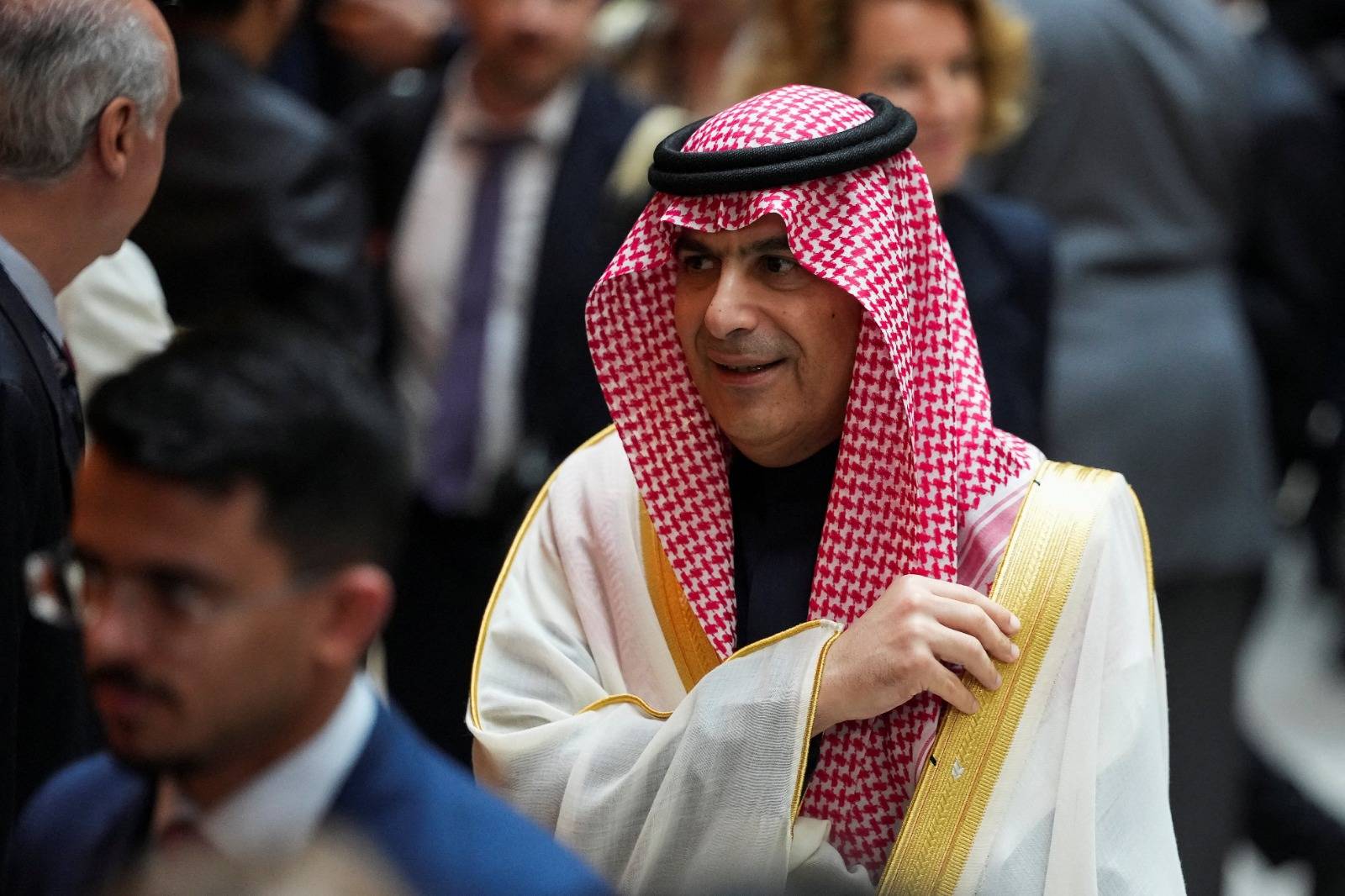
German Finance Minister Lars Klingbeil (L), Dutch Finance Minister Eelco Heinen (R) and Spanish Economy Minister Carlos Cuerpo attend a meeting with finance ministers from Germany, Italy, Spain, Poland, France and the Netherlands at the Deutsche Bundesbank recreation center in Berlin, Germany, 28 May 2026. (EPA)
TT

EU's Six Biggest Economies Agree on Capital Markets Supervision

German Finance Minister Lars Klingbeil (L), Dutch Finance Minister Eelco Heinen (R) and Spanish Economy Minister Carlos Cuerpo attend a meeting with finance ministers from Germany, Italy, Spain, Poland, France and the Netherlands at the Deutsche Bundesbank recreation center in Berlin, Germany, 28 May 2026. (EPA)

Finance ministers from the EU's six biggest economies (E6) agreed among themselves on Friday to support more centralized capital markets supervision, in a breakthrough crucial for deeper integration of Europe's fragmented capital markets.

The push for financial market players to be supervised at a European Union rather than national level is part of the EU's plan to redirect trillions of its citizens' savings, now idling in bank deposits, into more productive investment in Europe.

Access to such a large ‌amount of capital ‌for investment would boost the bloc's chances of competing against ‌the ⁠United States and China.

Supervision ⁠of significant market infrastructure would be gradually transferred to the European Securities and Markets Authority in Paris, the finance ministers of Germany, France, Italy, Poland, Spain and the Netherlands agreed after they met in Berlin on Thursday to discuss the issue.

The issue of handing over local powers to supervise trading platforms, central counterparties and central securities depositories to the EU has been difficult because of vested national interests and opposition from Ireland and Luxembourg and ⁠initially Germany.

But the issue will be decided by qualified ‌majority, meaning it needs the support of 15 ‌out of the EU's 27 countries representing 65% of the bloc's population.

With the backing of the ‌E6, which represent 70% of the EU's population, centralized supervision is now much ‌more likely to happen.

"The fact that the EU's six largest economies are prepared to leave national self-interest behind and move forward together is an important signal for the entire European Union," German Finance Minister Lars Klingbeil said in a statement.

ACCOUNTABILITY MUST BE ENFORCED

The European Commission presented its ‌plan to better integrate EU capital markets in December, and Germany's finance minister has said he expects the package to ⁠be adopted by ⁠the end of this year.

"In an uncertain international context, Europe needs deeper and more integrated capital markets," Spanish Finance Minister Carlos Cuerpo said. "This joint positioning is a decisive step towards a true savings and investment union."

ESMA's governance structure must be set up efficiently: expertise, supervisory and market experience, and geographical balance should play a decisive role, the ministers agreed in a paper seen by Reuters on Friday.

In addition, costs must be kept under control and accountability must be enforced, the joint paper said about the ESMA.

However, the paper said that in their current form and size, German trading venues would currently not be subject to mandatory European supervision authorities over trading in crypto-assets, and to reduce barriers to cross-border funds to help company financing, according to the paper.


Saudi Fintech, Cloud Services Drive Technology Sector Profit Boom

Women walk through the lobby of Elm Co. in the Saudi capital Riyadh. (Public Investment Fund)
TT

Saudi Fintech, Cloud Services Drive Technology Sector Profit Boom

Women walk through the lobby of Elm Co. in the Saudi capital Riyadh. (Public Investment Fund)

Saudi Arabia’s listed technology companies posted strong first-quarter earnings for 2026, reflecting a structural shift in the sector as digital revenue growth converged with tighter control over operating and administrative costs.

Combined net profits for companies in the Kingdom’s applications and technology services sector rose 16% year-on-year to SAR1.07 billion ($285 million), up from SAR920 million ($245 million) in the same period last year. The performance underscores the sector’s growing ability to diversify revenue streams across cybersecurity, digital identity, managed services and cloud computing.

Analysts said the gains were fueled by the continued expansion of Saudi Arabia’s digital transformation programs, the rapid maturation of the fintech industry, infrastructure development and rising investment in cloud computing.

Strong corporate demand is also pushing the Kingdom’s information and communications technology market toward what analysts expect will exceed $100 billion in spending by 2031.

The sector includes five listed companies, four of which reported profits during the quarter: Elm Co., Solutions by stc, 2P Perfect Presentation and Al Moammar Information Systems Co. Bahr Al Arab Systems Information Technology continued to post quarterly losses through the end of the first quarter.

Elm accounted for roughly 61% of total sector profits, recording the highest net income at SAR656 million in the first three months of the year, up 32% from SAR495 million a year earlier. The company benefited from a 31% rise in revenue to SAR2.47 billion, in addition to lower research and development expenses.

Solutions by stc ranked second, posting profits of SAR370 million, up 2.5% from SAR361 million in the same quarter last year. The increase was supported by lower operating costs, reduced selling and administrative expenses, and a 6.3% rise in revenue to SAR3 billion.

2P Perfect Presentation came third in sector profitability, reporting net income of SAR33.06 million, up 2.4% from SAR32.28 million a year earlier. The company cited strong performance across most operating segments, particularly call center services, while revenue climbed 14% to SAR330.08 million.

The Saudi Data and AI Authority's (SDAIA) "Hexagon" data center, the largest government data center in the world. (SPA)

Five drivers behind the growth

Financial analyst Nasser Al-Rashid told Asharq Al-Awsat that the strong earnings growth reflects the intersection of several operational and strategic factors centered on five main pillars.

The first is sustained government and private-sector spending on digital transformation, which remains the sector’s largest growth engine, he explained. As government agencies and major corporations expand automation and strengthen digital infrastructure, demand has increased for technology solutions, data management, cybersecurity and cloud services, creating stable long-term revenue streams for companies with major public-sector contracts.

The second pillar is the rapid development of the fintech sector, which has accelerated adoption of digital payments, e-services, digital identity tools and smart business platforms. This has directly boosted recurring revenues and profit margins for technology and applications companies, Al-Rashid said.

Third, companies have improved operational efficiency, as reflected in lower operating and administrative costs and reduced sales and distribution expenses. This demonstrates that firms are not relying solely on revenue growth but are also improving profitability through tighter cost controls, he added.

The fourth driver is the expansion of cloud computing and data center services, among the industry’s most profitable activities, he continued.

Rising demand from businesses for cloud hosting, data analytics and managed services has increased returns on technology contracts as institutions reduce reliance on traditional infrastructure.

The fifth pillar is the diversification and quality of revenue streams, said Al-Rashid.

Major companies are no longer dependent on a single source of income but now generate returns from digital operations, cloud solutions, business platforms, call center services and systems management, reducing exposure to operational volatility and improving earnings sustainability, he went on to say.

Market analyst Tariq Al-Ateeq told Asharq Al-Awsat that Elm’s contribution of more than 60% of sector profits highlights the strength of its innovation-driven model built around government digital services, data and specialized solutions.

He added that the Saudi technology sector has formally entered a phase of “sustainable operational growth,” supported by Vision 2030, rapid digitalization and rising spending on technology infrastructure.

Al-Ateeq expects technology and applications companies to maintain solid earnings and revenue growth in coming quarters, albeit at a more balanced pace than in previous years.

The sector’s long-term expansion will continue to be driven by government digital transformation spending, the rapid growth of cloud and artificial intelligence services, and rising private-sector demand for automation, he remarked.


Gold on Track for Third Straight Monthly Loss; Traders Assess US-Iran Ceasefire Reports

Gold bars displayed inside Comptoir National de l'Or store in Paris (Reuters)
TT

Gold on Track for Third Straight Monthly Loss; Traders Assess US-Iran Ceasefire Reports

Gold bars displayed inside Comptoir National de l'Or store in Paris (Reuters)

Gold was headed for a third straight monthly loss as the US-Israeli war on Iran kept concerns around inflation and US rate hikes elevated.

Spot gold rose 0.5% to $4,514.19 per ounce by 0610 GMT on Friday as investors assessed reports on reports of an extension to the US-Iran ceasefire extension. It had ‌fallen to a ‌two-month low of $4,365.76 on Thursday, but closed ‌higher.

The ⁠bullion is on ⁠track to lose 2.4% for the month and about 15% over three months.

US gold futures for August delivery inched 0.3% higher to $4,544.80.

"Yesterday, we saw gold went down to $4,360 and was likely to go down further until the (ceasefire) announcement came, due to which we suddenly saw the reversal of prices. This is where the market ⁠continues to be this morning," said GoldSilver Central Managing ‌Director Brian Lan.

"Markets are now ‌waiting for the deal to be signed even if it's only just ‌pending Trump's signature."

The United States and Iran reached an ‌agreement on Thursday to extend their ceasefire and lift restrictions on shipping through the Strait of Hormuz, sources told Reuters, though US President Donald Trump has yet to approve it and Iranian state media said it ‌had not been finalized.

Oil futures fell more than 1% on Friday and were on track for ⁠their steepest ⁠weekly decline since early April, easing some concerns around inflation driven by higher energy prices due to the Iran war.

US inflation increased at its fastest pace in three years in April, cementing economists' views that the Federal Reserve would hold interest rates unchanged well into next year.

While gold is considered a hedge against inflation, the non-yielding asset tends to come under pressure in a high-interest-rate environment.

Spot silver fell 0.1% to $75.55 per ounce and palladium gained 0.6% to $1,375.25, with both metals headed for a weekly gain. Platinum lost 0.4% to $1,915.30 and was on course for a weekly loss.
