


Saudi Entertainment Becomes Strategic Driver of Economy

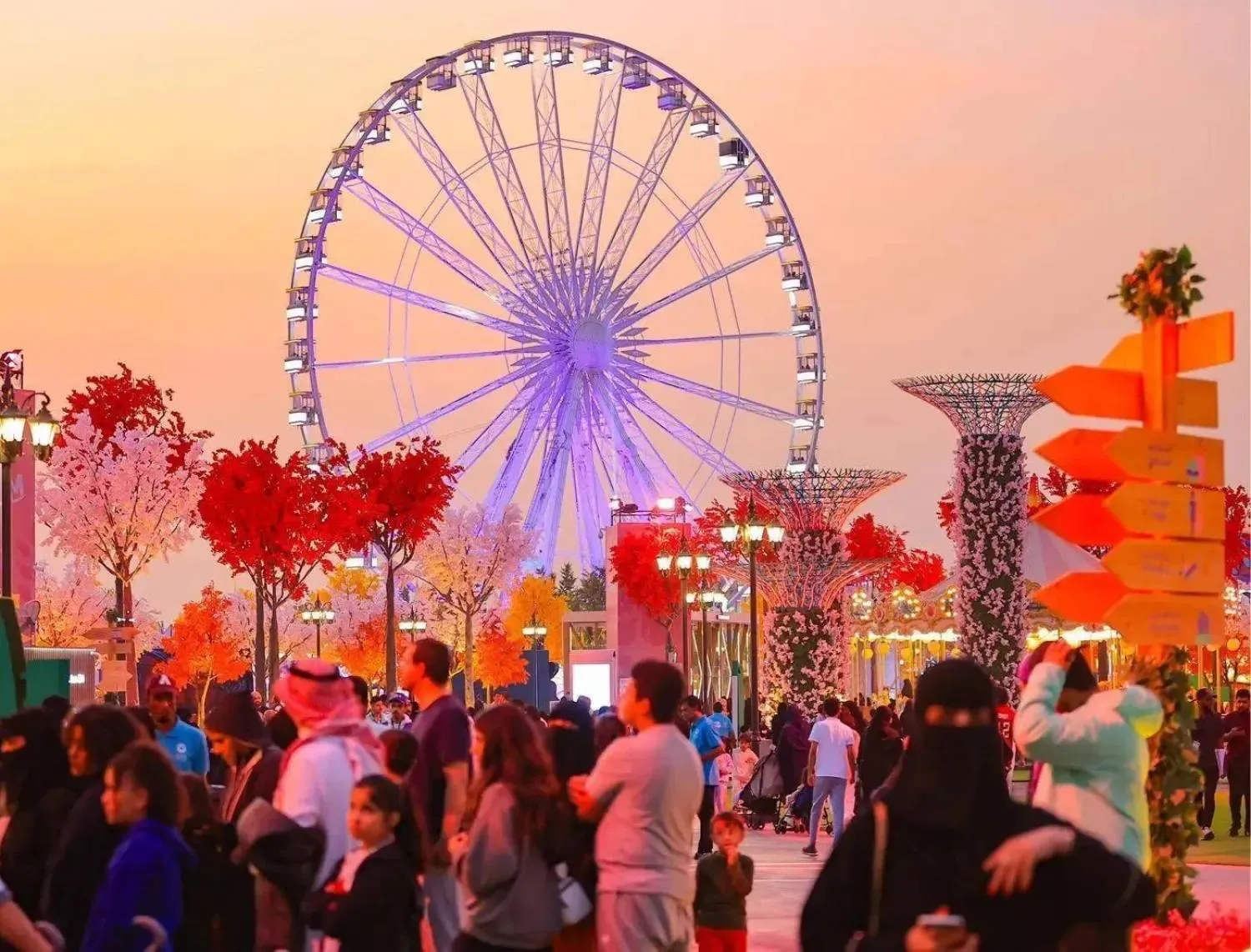
 Large crowds attend Riyadh Season, SPA
Large crowds attend Riyadh Season, SPA
TT

Saudi Entertainment Becomes Strategic Driver of Economy

 Large crowds attend Riyadh Season, SPA
Large crowds attend Riyadh Season, SPA

Over the past decade, Saudi Arabia’s entertainment sector has shifted from an activity with limited influence to one of the main drivers of economic diversification under Vision 2030.

After years in which the sector was viewed as marginal or seasonal, it has become an integrated industry covering major events and festivals, concerts and international shows, cinema and artistic production, gaming and esports, entertainment tourism, and the restaurant and retail sectors linked to events.

The transformation has been reflected economically through the attraction of billions of riyals in local and international investment, the creation of thousands of jobs for young people, and higher domestic spending that might otherwise have flowed abroad. It has also stimulated related sectors such as hospitality, aviation, and transport.

Since its establishment in 2016, the General Entertainment Authority has played a central role in building and accumulating the sector’s regulatory infrastructure and attracting international events, turning cities such as Riyadh and Jeddah into regional hubs for events and entertainment.

As a result, entertainment is no longer merely a consumer activity. It has become an economic, investment, and cultural tool that contributes to improving the quality of life and strengthening Saudi Arabia’s position as a regional and global destination.

320 million visitors

General Entertainment Authority Chairman Turki Alalshikh said that over 10 years of continuous work, Saudi Arabia’s entertainment ecosystem had developed through more than 39 seasons and 21 entertainment programs, offering diverse experiences and drawing more than 320 million visitors.

He said this had helped consolidate the country’s global presence in the sector.

Alalshikh thanked Custodian of the Two Holy Mosques King Salman bin Abdulaziz and Crown Prince Mohammed bin Salman for their “unlimited” support in establishing the General Entertainment Authority and building an integrated entertainment sector in the kingdom.

The chairman of the General Entertainment Authority had previously disclosed that the estimated brand value of Riyadh Season had reached $3.2 billion, reflecting the major growth in the season’s global reputation and confirming that it had become one of the leading entertainment brands in the Middle East and the world.

During the previous edition of Riyadh Season, he said the event included 11 main entertainment zones across the capital, 15 international championships, and 34 exhibitions and festivals, with the participation of more than 2,100 companies across various fields.

Local companies accounted for 95% of the total, through 4,200 contracts signed with the private sector, reflecting the empowerment of national talent and the growing contribution of the private sector to the local economy.

Tourism economy

In this context, the World Travel and Tourism Council, WTTC, recently said Saudi Arabia’s tourism sector was the largest in the Middle East.

It said the total contribution of travel and tourism to the kingdom’s economy reached about $178 billion in 2025, accounting for 46% of the Middle East’s tourism economy, according to the council’s methodology, which includes the sector’s direct and indirect contribution to gross domestic product.

The economic impact report said the total contribution of travel and tourism to Saudi Arabia’s GDP grew by about 7.4% in 2025, nearly double the global average growth rate of 4.1%.

At the regional level, Saudi Arabia exceeded the Middle East average growth rate of 5.3%, reinforcing its position as the fastest-growing tourism market in the region.

The figures underscore Saudi Arabia's regional leadership in tourism and its rapid growth since the start of the comprehensive transformation path outlined by Vision 2030.

The report pointed to business travel as one of the key enablers of growth in Saudi tourism, noting the kingdom’s emergence as a central hub for conferences, exhibitions and major international events. This strengthens its position as a leading global tourism destination with diverse demand drivers.

The WTTC report confirms the continued growth of Saudi Arabia’s tourism sector, a trend reflected in various global and local reports.

Saudi Arabia recently issued the Vision 2030 annual report for 2025, which showed strong performance in the tourism sector last year. The total number of domestic and inbound tourists reached about 123 million, further strengthening the kingdom’s position as a leading global tourism destination.


Regional Turmoil Drives Growth at Egyptian Ports While Cutting Suez Canal Revenues

Egypt has an extensive network of seaports along both the Red Sea and the Mediterranean. (Egyptian Ministry of Transport)
TT

Regional Turmoil Drives Growth at Egyptian Ports While Cutting Suez Canal Revenues

Egypt has an extensive network of seaports along both the Red Sea and the Mediterranean. (Egyptian Ministry of Transport)

The Suez Canal may have incurred heavy losses due to regional tensions and instability in recent years — from the war in Gaza to the conflict involving Iran — those same disruptions have contributed to a significant surge in activity at Egyptian ports and in transit trade.

However, Egyptian economists said the strong increase in container traffic at the country’s ports is not enough to compensate for the canal’s losses.

They stressed that government initiatives, including efforts to expand transit trade, may only help reduce part of the revenue shortfall.

At the end of April, Egyptian President Abdel Fattah al-Sisi said Egypt had lost nearly $10 billion in Suez Canal revenues because of attacks on ships in the Bab el-Mandeb Strait.

Egyptian ports have experienced increased activity in recent months amid supply-chain disruptions linked to the Iran conflict. Maritime connections with regional countries have expanded, including the launch of the NEOM–Safaga multimodal logistics corridor linking Gulf Cooperation Council countries with Europe.

The Egyptian government has also reinforced trade links between the Gulf and Europe through the “Ro-Ro” shipping line connecting Damietta Port with Italy’s Port of Trieste to increase trade volumes.

In the energy sector, oil flows through Egypt’s SUMED pipeline rose following disruptions in global energy supply chains caused by the closure of the Strait of Hormuz.

Amr El-Samadouni, secretary-general of the International Transport and Logistics Division at the Cairo Chamber of Commerce, said the recent tensions in the Strait of Hormuz have “strengthened Egypt’s position as a regional hub for logistics services and supply-chain management.”

In a statement, El-Samadouni said the developments provide Egypt with “an important opportunity to offset part of the decline in Suez Canal revenues by attracting a share of urgent shipments that cannot tolerate long delays, especially in sectors linked to fast-moving trade and time-sensitive supply chains.”

According to a statement by Egypt’s Ministry of Transport on Thursday, the country’s port sector recorded a major increase in cargo and container handling. Egyptian ports handled 11.1 million twenty-foot equivalent units (TEUs) in 2025, compared with 8.9 million in 2024, representing growth of 24.3 percent.

Transit container traffic also increased sharply, reaching 6.7 million containers in 2025, a rise of 36 percent. The number of ships calling at Egyptian ports climbed to 17,288 voyages in 2025, up 6.6 percent, according to the ministry.

Egypt has an extensive network of seaports along both the Red Sea and the Mediterranean and is investing heavily in upgrades to strengthen its role in regional and international trade.

The Ministry of Transport said the modernization program aims to transform Egypt into a regional hub for transport, logistics, and transit trade while boosting the ports’ ability to attract investment and handle growing trade volumes.

Despite the improvements in port activity, “they cannot compensate for the losses of the Suez Canal,” said Walid Gaballah, a member of the Egyptian Association for Political Economy, Statistics and Legislation.

He noted that revenues from trade and container handling “may reduce the losses but cannot fully replace them,” adding that shipping traffic through the canal has yet to return to pre-Gaza war levels.

Gaballah told Asharq Al-Awsat that continued regional instability makes recovery in Suez Canal traffic increasingly difficult.

Egyptian economist Mostafa Badra also said there can be no direct comparison between canal revenues and port trade income. “There is no substitute for the canal as a major source of foreign currency,” he told Asharq Al-Awsat, noting that revenues generated by port trade remain far below the canal’s earnings under normal conditions.

Badra added that the government’s port-development strategy is intended to strengthen Egypt’s logistics capabilities and reinforce the Suez Canal’s role as a global trade corridor while primarily supporting domestic trade. By contrast, he said, the canal itself remains a vital artery in global supply chains.

Egypt recently rose three places in the UNCTAD Liner Shipping Connectivity Index, ranking 19th globally, first in Africa, and second in the Arab world, according to the Ministry of Transport.


US, Mexico Finish First Round of Trade Agreement Talks

Mexican Economy Minister, Marcelo Ebrard, gestures as he speaks during a press conference in Mexico City on May 27, 2026. (AFP)
TT

US, Mexico Finish First Round of Trade Agreement Talks

Mexican Economy Minister, Marcelo Ebrard, gestures as he speaks during a press conference in Mexico City on May 27, 2026. (AFP)

The United States and Mexico completed a first round of bilateral trade talks Friday, focused on revising the North American Free Trade Agreement in light of pressure from President Donald Trump's tariff policies.

The US-Mexico-Canada Agreement (USMCA) is due for its first review since coming into force in 2020, with talks starting Wednesday led by Mexico's Economy Secretary Marcelo Ebrard and US Deputy Trade Representative Jeff Goettman joining Thursday.

"We talked about rules of origination, the automotive sector, how we compete with countries in Asia and other parts of the world, and how we can integrate more," Ebrard said in a statement.

The Mexican delegation in a statement described the talks as being held "in a constructive environment and with frank dialogue" that ended with a "net positive."

The US Trade Representative Office said in a statement the US approached the talks with the goals of reducing Washington's trade deficit with Mexico and strengthening US supply chains.

"During this first round, negotiators discussed priority issues related to automotive rules of origin, steel and aluminum, and economic security," the statement said.

"The United States and Mexico recognize the importance of advancing cooperation to enhance regulatory compatibility to strengthen sectors, including medical devices, pharmaceuticals, cosmetic products, and others."

Trump has threatened to pull out from the USMCA, arguing it doesn't benefit the US economy, casting a shadow over the talks.

The USMCA is critical for Mexico, as the United States accounts for more than 80 percent of its exports.

With the first round complete, future rounds of negotiations will take place in Washington in June, then Mexico City in July.


EU's Six Biggest Economies Agree on Capital Markets Supervision

German Finance Minister Lars Klingbeil (L), Dutch Finance Minister Eelco Heinen (R) and Spanish Economy Minister Carlos Cuerpo attend a meeting with finance ministers from Germany, Italy, Spain, Poland, France and the Netherlands at the Deutsche Bundesbank recreation center in Berlin, Germany, 28 May 2026. (EPA)
TT

EU's Six Biggest Economies Agree on Capital Markets Supervision

German Finance Minister Lars Klingbeil (L), Dutch Finance Minister Eelco Heinen (R) and Spanish Economy Minister Carlos Cuerpo attend a meeting with finance ministers from Germany, Italy, Spain, Poland, France and the Netherlands at the Deutsche Bundesbank recreation center in Berlin, Germany, 28 May 2026. (EPA)

Finance ministers from the EU's six biggest economies (E6) agreed among themselves on Friday to support more centralized capital markets supervision, in a breakthrough crucial for deeper integration of Europe's fragmented capital markets.

The push for financial market players to be supervised at a European Union rather than national level is part of the EU's plan to redirect trillions of its citizens' savings, now idling in bank deposits, into more productive investment in Europe.

Access to such a large ‌amount of capital ‌for investment would boost the bloc's chances of competing against ‌the ⁠United States and China.

Supervision ⁠of significant market infrastructure would be gradually transferred to the European Securities and Markets Authority in Paris, the finance ministers of Germany, France, Italy, Poland, Spain and the Netherlands agreed after they met in Berlin on Thursday to discuss the issue.

The issue of handing over local powers to supervise trading platforms, central counterparties and central securities depositories to the EU has been difficult because of vested national interests and opposition from Ireland and Luxembourg and ⁠initially Germany.

But the issue will be decided by qualified ‌majority, meaning it needs the support of 15 ‌out of the EU's 27 countries representing 65% of the bloc's population.

With the backing of the ‌E6, which represent 70% of the EU's population, centralized supervision is now much ‌more likely to happen.

"The fact that the EU's six largest economies are prepared to leave national self-interest behind and move forward together is an important signal for the entire European Union," German Finance Minister Lars Klingbeil said in a statement.

ACCOUNTABILITY MUST BE ENFORCED

The European Commission presented its ‌plan to better integrate EU capital markets in December, and Germany's finance minister has said he expects the package to ⁠be adopted by ⁠the end of this year.

"In an uncertain international context, Europe needs deeper and more integrated capital markets," Spanish Finance Minister Carlos Cuerpo said. "This joint positioning is a decisive step towards a true savings and investment union."

ESMA's governance structure must be set up efficiently: expertise, supervisory and market experience, and geographical balance should play a decisive role, the ministers agreed in a paper seen by Reuters on Friday.

In addition, costs must be kept under control and accountability must be enforced, the joint paper said about the ESMA.

However, the paper said that in their current form and size, German trading venues would currently not be subject to mandatory European supervision authorities over trading in crypto-assets, and to reduce barriers to cross-border funds to help company financing, according to the paper.
