IMF Says Constructive US-China Dialogue Good for World Economyhttps://english.aawsat.com/business/5273268-imf-says-constructive-us-china-dialogue-good-world-economy
IMF Says Constructive US-China Dialogue Good for World Economy
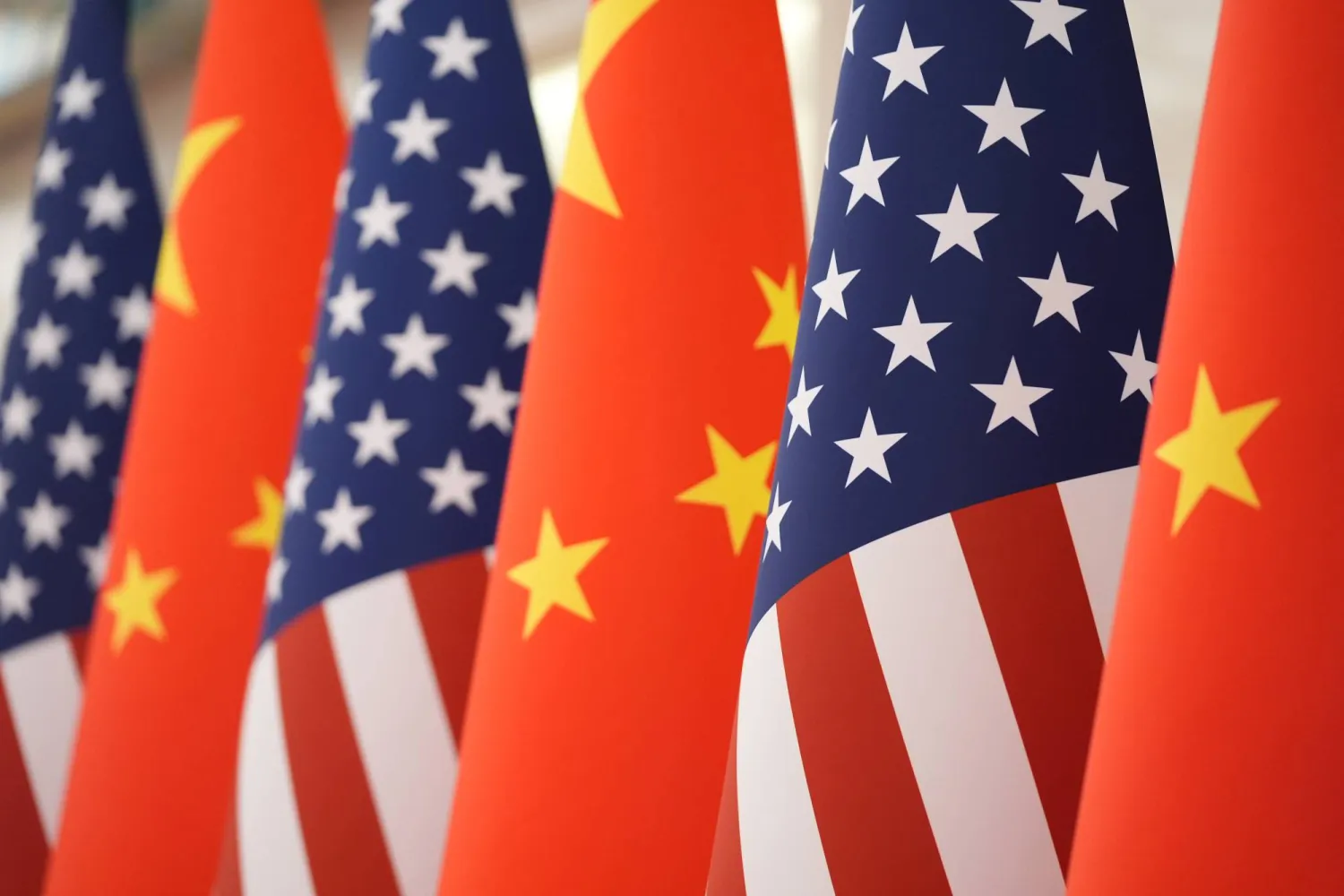
The US and Chinese flag at the Great Hall of the People prior to the state dinner of President Donald Trump and Chinese President Xi Jinping on Thursday May 14, 2026, in Beijing. (AP Photo/Mark Schiefelbein)
IMF Says Constructive US-China Dialogue Good for World Economy
The US and Chinese flag at the Great Hall of the People prior to the state dinner of President Donald Trump and Chinese President Xi Jinping on Thursday May 14, 2026, in Beijing. (AP Photo/Mark Schiefelbein)
The International Monetary Fund said on Thursday that it welcomes the initial positive dialogue between US President Donald Trump and Chinese President Xi Jinping, adding that reducing tension and uncertainty between the world's two largest economies was good for the world.
"It's very important, of course, that the world's two largest economies are engaging at the highest level," IMF spokesperson Julie Kozack told a news briefing when asked about the Trump-Xi summit's initial outcomes in Beijing.
"We certainly welcome the fact that there's a constructive dialogue between the two countries. Anything that is going to help reduce trade tensions and reduce uncertainty is good for both of those large economies, and, of course, good for the global economy as well," Kozack added, according to Reuters.
Kozack also said that that the IMF was paying close attention to the energy shock caused by the conflict in the Middle East and its implications for fertilizer shipments.
History showed it took about six months for increases in fertilizer prices to translate into higher food prices, and in some cases reduced yields and food security issues, Kozack added.
Egypt: Positive Results from Nargis-2 Natural Gas Well in Mediterraneanhttps://english.aawsat.com/business/5333140-egypt-positive-results-nargis-2-natural-gas-well-mediterranean
Egypt: Positive Results from Nargis-2 Natural Gas Well in Mediterranean
Egyptian Petroleum Minister inspects the start of drilling operations at the Nargis gas field in the Mediterranean Sea (Ministry of Petroleum)
Egypt's Ministry of Petroleum and Mineral Resources and US energy major Chevron announced Saturday positive results from drilling the Nargis-2 natural gas well in the Mediterranean Sea, which began in May in cooperation with Chevron, its partners and the Egyptian Natural Gas Holding Company (EGAS).
In a statement, the ministry said the results support ongoing efforts to appraise the Nargis discovery, made in 2022, and accelerate its commercial development as one of Egypt's undeveloped gas discoveries.
The Nargis-2 appraisal well confirmed the extension of gas-bearing reservoirs previously encountered at Nargis-1 and identified an additional gas-bearing reservoir with favorable characteristics, supporting efforts to assess the area's gas resources and potential development opportunities.
The ministry said drilling operations were designed to evaluate the extent of the Nargis discovery and test deeper geological formations as part of efforts to expand exploration activities and maximize the Mediterranean's promising potential, including high-pressure, high-temperature formations.
The well reached a total depth of more than 5,000 meters, with appraisal results indicating gas-bearing reservoirs containing up to 35 meters of net pay.
According to the statement, these findings provide a positive indication supporting further technical studies to determine the discovery's overall potential and assess development opportunities.
The results align with the ministry's strategy to accelerate the development of undeveloped discoveries, encourage investment partners to intensify exploration activities and convert discovered resources into reserves that can be developed and brought into production, helping increase domestic natural gas output.
Egyptian Minister of Petroleum and Mineral Resources Karim Badawi witnessed the start of drilling operations at Nargis-2 in May aboard the Stena Forth drillship.
At the time, he emphasized the importance of accelerating the appraisal and development of undeveloped gas discoveries and strengthening cooperation with international energy companies to capitalize on Egypt's promising oil and gas resources.
Chevron operates the Nargis Offshore Concession in partnership with Italy's Eni, the UAE's Mubadala and Egypt's Tharwa Petroleum Company.
Global Equity Funds Attract Inflows for 5th Consecutive Weekhttps://english.aawsat.com/business/5333020-global-equity-funds-attract-inflows-5th-consecutive-week
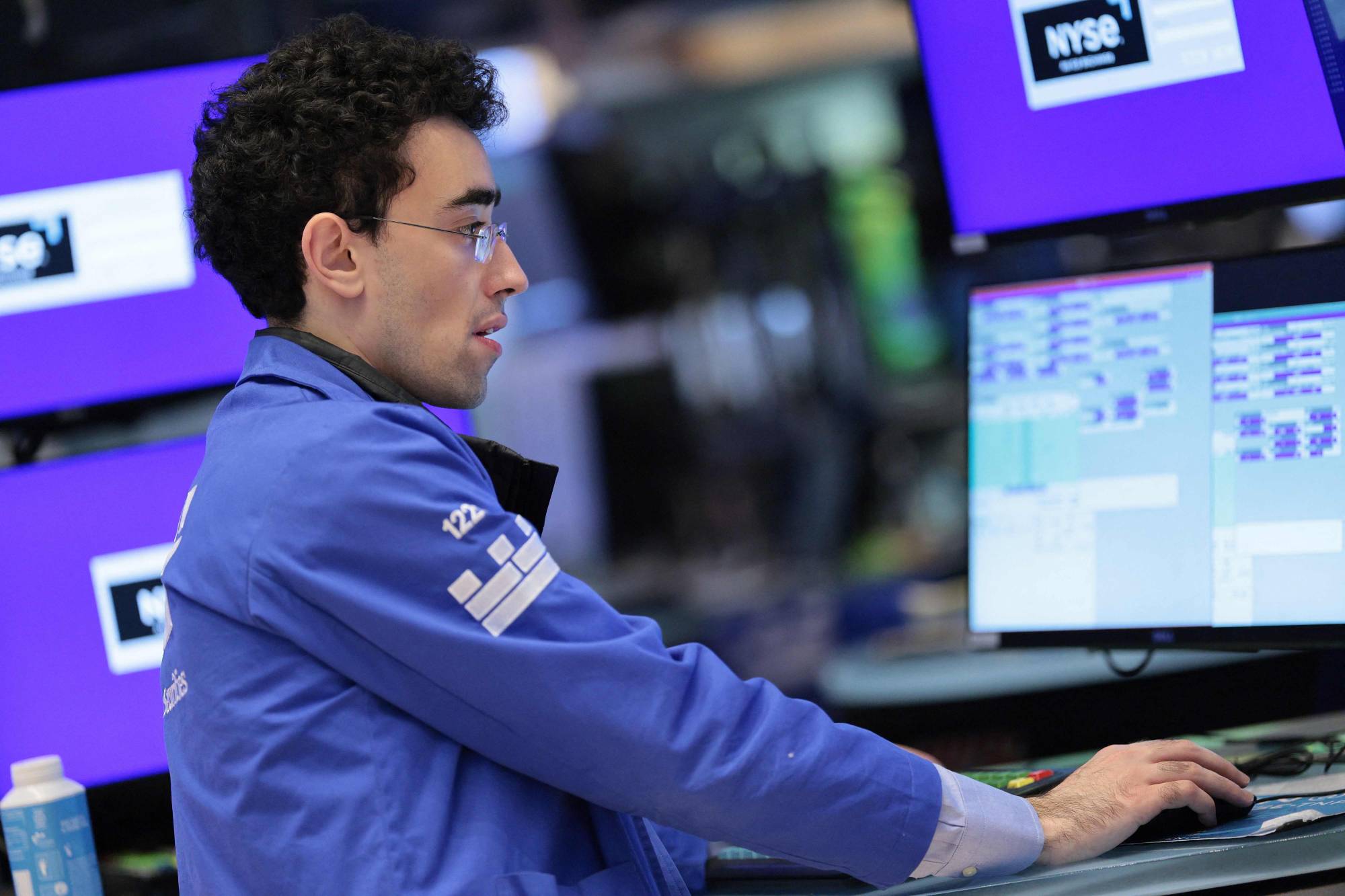
NEW YORK, NEW YORK - OCTOBER 21: Traders work on the floor of the New York Stock Exchange during morning trading on October 21, 2026 in New York City. Michael M. Santiago/Getty Images/AFP
Global Equity Funds Attract Inflows for 5th Consecutive Week
NEW YORK, NEW YORK - OCTOBER 21: Traders work on the floor of the New York Stock Exchange during morning trading on October 21, 2026 in New York City. Michael M. Santiago/Getty Images/AFP
Global equity funds attracted inflows for a fifth consecutive week in the week through October 21, as easing Treasury yields and strong early corporate earnings lifted investor sentiment.
Global equity funds drew net inflows of $28.16 billion during the week, compared with $19.88 billion in the previous week, LSEG Lipper data showed.
The benchmark 10-year US Treasury yield fell about 15 basis points last week and dropped below the psychologically significant 5% level this week, Reuters reported.
Fund investors were encouraged by better-than-expected corporate earnings so far this reporting season.
Of the nearly 18% of MSCI All Country World Index constituents that have reported earnings to date, about 73% have exceeded the average analyst estimate, according to LSEG data.
The MSCI World Index, however, fell 1.31% on Thursday after Meta reported strong results on Wednesday but unveiled plans to issue non-voting stock, reviving concerns about its growing capital commitments.
NEW YORK, NEW YORK - OCTOBER 21: Traders work on the floor of the New York Stock Exchange during morning trading on October 21, 2026 in New York City. Michael M. Santiago/Getty Images/AFP
By region, Asian equity funds attracted $11.53 billion, their largest weekly inflow since at least December 2022. Investors also added $9.14 billion to European equity funds and $5.07 billion to US equity funds.
Among sectoral funds, technology attracted $5.05 billion, reversing net sales of $4.77 billion in the previous week. Investors also bought $1.83 billion in healthcare sector funds but sold a notable $1.29 billion in consumer discretionary sector funds.
Global bond funds remained popular for a fifth consecutive week, attracting net inflows of $9.44 billion.
Swiss franc-denominated bond funds drew $6.8 billion, their largest weekly inflow since at least November 2024. Investors also added a significant $2.78 billion to short-term bond funds, while pulling $1.68 billion from high-yield bond funds and $550 million from government bond funds.
Money market funds attracted weekly net inflows of $15.86 billion, following net outflows of $47.51 billion the previous week.
Among commodities, gold and other precious metals funds attracted net inflows of $1.29 billion, marking their fifth week of net purchases in the past six weeks. Investors also added $41.5 million to energy funds.
Data covering 29,174 emerging market funds showed that investors bought $6.28 billion worth of equity funds — the largest weekly net purchase since August 5. However, they withdrew a marginal $48.72 million from bond funds.
UK Pledges More Funding to Guard Against AI Riskshttps://english.aawsat.com/business/5332997-uk-pledges-more-funding-guard-against-ai-risks
FILE PHOTO: The words "AI Artificial Intelligence", a keyboard, and a robotics hand in this illustration taken October 19, 2026. REUTERS/Dado Ruvic/Illustration/File Photo
FILE PHOTO: The words "AI Artificial Intelligence", a keyboard, and a robotics hand in this illustration taken October 19, 2026. REUTERS/Dado Ruvic/Illustration/File Photo
The UK government on Saturday outlined plans to expand funding for artificial intelligence safety amid growing concerns over the cyber risks posed by the increasingly advanced technology.
"The economic opportunities from AI will only be realized if our critical infrastructure, public services and businesses are resilient to cyber, biological and emerging AI-enabled threats," the government said in a statement ahead of its annual budget update on Wednesday.
Concerns about AI safety have escalated in recent months after models developed by OpenAI and Anthropic were involved in security incidents during testing, piling pressure on governments to regulate the technology and protect against threats.
As part of a package of AI-related measures in the budget, the government will invest an additional £120 million ($161 million) in Britain's AI Security Institute, which tests the most powerful AI models before they are released.
According to AFP, it will also invest £100 million to establish a national AI Biosecurity Lab, which will use AI to detect and track biological threats.
"As AI becomes more powerful, Britain must have the capabilities to protect its people and shape its own future," said AI minister Kanishka Narayan.
"That means staying ahead of emerging threats, from cyberattacks to biological risks, while building more of the critical technology our security depends on," he added.
The plans include investment in AI tools to identify cyber vulnerabilities across critical infrastructure.
Governments and companies around the world shut down websites Thursday as they raced to protect themselves from hacks after AI models uncovered critical flaws in a widely used programming language called PHP.
Cybersecurity experts fear state-of-the-art AI technology could be used to hack banks, hospitals and government systems.
Last month it emerged that a rogue OpenAI model bypassed safeguards during training and hacked an Australian government health statistics website.
لم تشترك بعد
انشئ حساباً خاصاً بك لتحصل على أخبار مخصصة لك ولتتمتع بخاصية حفظ المقالات وتتلقى نشراتنا البريدية المتنوعة