
Operating Profits Drive Saudi Petrochemical Firms to Record 111% Jump in Earnings

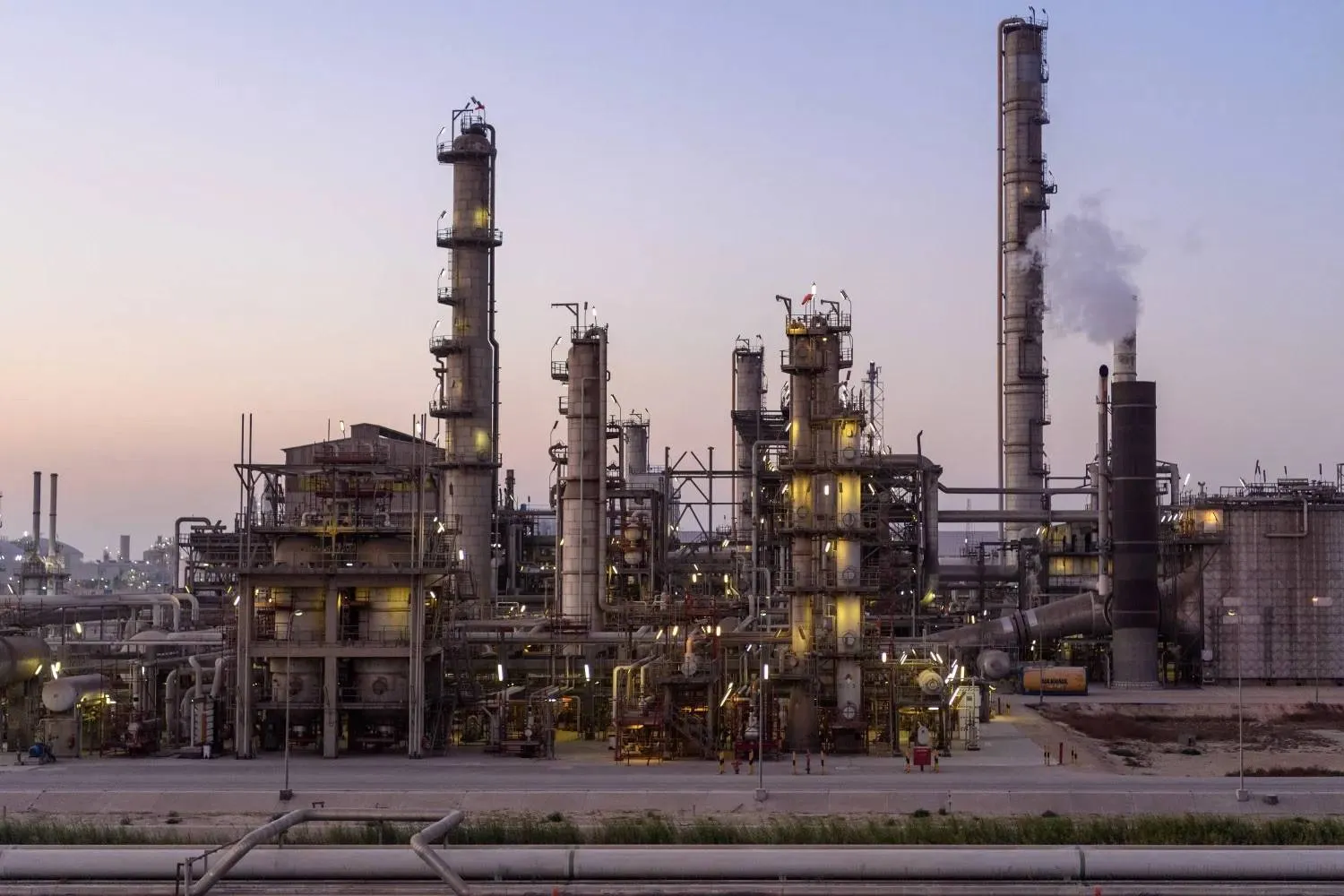
SABIC’s manufacturing facility in Jubail (company website) 
TT

Operating Profits Drive Saudi Petrochemical Firms to Record 111% Jump in Earnings

SABIC’s manufacturing facility in Jubail (company website) 

Saudi-listed petrochemical companies posted a sharp improvement in financial performance during the first quarter of 2026, driven by a strong recovery in operating efficiency that pushed the sector’s net profits up 111.75 percent to more than SAR374.36 million ($92.57 million).

The turnaround reflected the success of major companies in adapting to global market changes, with the sector’s operating profits surging nearly fivefold to $548.97 million.

The strong momentum was fueled by higher average selling prices for most products, lower operating and administrative expenses, improved investment returns and a decline in non-recurring costs that had weighed on last year’s results.

Among the nine petrochemical companies listed on the Saudi stock exchange, Tadawul, six posted net profits: SABIC, SABIC Agri-Nutrients, Yanbu National Petrochemical Co. (Yansab), Saudi Industrial Investment Group (SIIG), Advanced Petrochemical Co. and Alujain Corp.

Three companies posted losses: Sahara International Petrochemical Co. (Sipchem), National Industrialization Co. (Tasnee) and Saudi Kayan Petrochemical Co.

According to filings on Tadawul, SABIC Agri-Nutrients recorded the highest profits in the sector, with first-quarter earnings rising 24.57 percent to SAR1.23 billion from SAR985 million a year earlier. The company attributed the increase to higher average selling prices for most of its products.

SIIG posted the second-highest profits, reporting SAR252 million in first-quarter earnings compared with SAR18 million in the same period last year, a jump of 1,300 percent.

The company said profits rose because of a significant increase in its share of earnings from jointly managed companies, supported by exceptional improvements in product selling prices and lower depreciation expenses after reassessing the useful life of fixed assets.

Advanced Petrochemical ranked third among profitable companies despite a 58.33 percent decline in earnings, posting a net profit of SAR30 million compared with SAR72 million a year earlier.

The company attributed the drop to depreciation expenses, fixed costs and financing expenses linked to the start of operations at Advanced Polyolefins Industry Co.

The sector’s total operating profits rose nearly fivefold in the first quarter, climbing 492 percent to SAR2.06 billion from SAR347.56 million during the same period in 2025.

SABIC led the sector in operating profits, recording SAR1.4 billion in the first quarter, up more than 383 percent.

SABIC Agri-Nutrients came second with operating profits of SAR1.17 billion, an increase of 36.29 percent, while SIIG ranked third with SAR252 million in operating profit, marking a rise of 1,160 percent.

Financial markets analyst and member of the Saudi Economic Association Sulaiman Al-Humaid Al-Khalidi told Asharq Al-Awsat that the petrochemical sector saw a notable turnaround in the first quarter as major firms regained a significant portion of profitability momentum, supported by better product prices, improved operating efficiency and easing exceptional pressures that had weighed on results last year.

He noted that the sharp rise in earnings was driven by several factors, notably higher average selling prices for petrochemical products and fertilizers, especially at SABIC Agri-Nutrients, which benefited from strong global demand and stable fertilizer markets.

Lower operating expenses also played a major role in boosting results, particularly at SABIC, which returned to profitability after a decline in non-recurring costs and lower administrative and research expenses.

Al-Khalidi added that SIIG benefited from exceptional product pricing, stronger contributions from joint ventures and lower depreciation expenses, allowing it to post one of the sector’s strongest profit jumps.

At the same time, companies such as Saudi Kayan and Tasnee continued to face challenges despite reducing losses, reflecting a gradual improvement in operating conditions as some input costs declined and factories resumed operations after maintenance and expansion work.

Al-Khalidi said the sector appeared headed toward greater stability compared with 2024 and 2025, supported by improving global industrial demand, recovering economic activity in major markets and continuing Saudi industrial and economic transformation projects.

He added that any further rise in oil and energy prices would support profit margins for petrochemical companies as firms focus on improving operating efficiency, reducing costs and expanding higher value-added products.

He continued that the sector appeared to be entering a phase of “smart gradual recovery” rather than a temporary boom, potentially allowing companies to achieve more balanced and sustainable financial results in coming quarters.

Selective improvement

Mohamed Hamdy Omar, chief executive of G World, told Asharq Al-Awsat that the sector’s financial performance improved selectively rather than uniformly.

He said companies tied to strong pricing conditions or better operating factors posted stronger results, while firms burdened by high fixed costs or affected by maintenance and expansion projects remained under pressure.

He pointed to SABIC Agri-Nutrients benefiting from higher average selling prices despite lower sales volumes and weaker contributions from joint projects, indicating pricing had a greater impact on profitability than volumes.

Omar added that SIIG’s sharp profit increase was driven by stronger earnings contributions from jointly managed companies and lower depreciation expenses following the reassessment of asset lifespans.

He said SABIC’s return to profitability was largely driven by lower non-recurring expenses that had burdened the comparison period in 2025, along with lower general and research expenses.

Omar further noted that profit growth across the sector was mainly driven by three factors: improved selling prices for some products, especially fertilizers; stronger operating and investment performance at some companies; and lower non-recurring costs, which particularly benefited SABIC.

Loss-making companies, meanwhile, remained under pressure from lower sales volumes, weaker prices, higher financing expenses and maintenance and expansion costs, as seen at Tasnee and Saudi Kayan, he said.

Omar expected the petrochemical sector to remain highly sensitive in coming quarters to global price movements in petrochemicals, fertilizers and energy markets.

“Volatility between companies may continue even if the overall trend remains positive,” he said, adding that stronger firms with pricing power and operating efficiency, such as SABIC Agri-Nutrients, would be best positioned to maintain healthy margins if market conditions remain supportive.

Omar added that SABIC would remain a key factor in shaping the sector’s direction, though sustaining profitability would depend more on reducing non-recurring items and improving the global industrial cycle than on any single factor.

“The sector is entering a phase of improving operating quality rather than merely a rapid cyclical recovery,” he said, adding that the sustainability of the recovery would depend on prices, global demand and disciplined capital and operating spending.


Gold Extends Gains After US, Iran Reach Peace Deal

Gold bars of various values are stored in a safe deposit room in Munich, Germany, January 28, 2026. (Reuters)
TT

Gold Extends Gains After US, Iran Reach Peace Deal

Gold bars of various values are stored in a safe deposit room in Munich, Germany, January 28, 2026. (Reuters)

Gold rose more than 2% on Monday after US and Iran officials said they had reached an initial agreement to end their war, pushing oil prices lower and easing concerns about inflation and higher interest rates.

Spot gold climbed 2.5% to $4,322.87 per ounce by 0312 GMT, hitting its highest level since June 9 and extending gains for a third straight session. US gold futures ‌for August delivery ‌rose 2.5% to $4,344.80.

US and Iranian officials said on ‌Sunday ⁠they had agreed ⁠on a framework to end their war, halt the US blockade of Iran and reopen the Strait of Hormuz.

The pact will be officially signed on Friday in Switzerland, Pakistani Prime Minister Shehbaz Sharif said in a post on X.

The US dollar fell to a 10-day low, making greenback-priced bullion cheaper for other currency holders, while oil prices slipped more than 4%.

"Lower ⁠oil prices and a softer dollar, stemming from ‌reduced geopolitical risk and the anticipated reopening ‌of the Strait of Hormuz, are helping to calm inflation expectations," said Tim Waterer, ‌chief market analyst at KCM Trade.

"This combination is providing the ‌precious metal with its best tailwind in recent weeks, though sustainability will depend on how durable the peace agreement proves to be."

Gold prices have fallen about 20% since the start of the US-Israeli war against Iran in late February. The ‌effective closure of the Strait of Hormuz has led to a sharp increase in global oil prices, stoking ⁠inflation concerns ⁠and raising expectations of interest rates staying higher for longer.

Bullion loses appeal in a high-interest-rate environment as it is a non-yielding asset.

Markets have scaled back expectations for a US rate hike in December to 48% after the peace deal, down from 69% last week, according to the CME FedWatch tool.

Investors now await the Federal Reserve policy decision and remarks, the first under Chair Kevin Warsh, on Wednesday, with rates widely expected to remain unchanged.

"Currency debasement concerns, fiscal risks and ongoing geopolitical fragmentation continue to underpin long-term demand (for gold). A moderation in energy-led inflation could help these themes regain traction," OCBC said in a note.

Spot silver rose 3.6% to $70.39 per ounce, platinum gained 3.3% to $1,773.70 and palladium climbed 3.3% to $1,324.75.


Oil Slips $4 as US, Iran Reach Peace Deal to Reopen Strait of Hormuz

A pump jack operates near a crude oil reserve in the Permian Basin oil field near Midland, Texas, US, February 18, 2025. (Reuters)
TT

Oil Slips $4 as US, Iran Reach Peace Deal to Reopen Strait of Hormuz

A pump jack operates near a crude oil reserve in the Permian Basin oil field near Midland, Texas, US, February 18, 2025. (Reuters)

Oil prices slipped to their lowest since March on Monday after US President Donald Trump and Iran's deputy foreign minister said they had reached an initial deal to end the war and to resume traffic through the Strait of Hormuz.

Brent crude futures fell $4.08, or 4.7%, to $83.25 a barrel by 0415 GMT and US West Texas Intermediate was at $80.53, down $4.35, or 5.1%. Both contracts fell to their lowest levels since March 10 on Monday after tumbling more than 3% on Friday.

The US and Iran ‌will sign a ‌memorandum of understanding in Switzerland on Friday, said the prime ‌minister ⁠of Pakistan, whose country ⁠has served as a mediator. Trump said on Sunday that the Strait of Hormuz would be open "toll free" and that a US naval blockade of Iranian ports would also end.

Iran's semi-official Mehr news agency said the draft deal called for reopening the Strait of Hormuz within 30 days under Iranian arrangements.

"The geopolitical risk premium that had been built into crude is now being unwound quite aggressively as traders price in the prospect of restored oil ⁠flows," said Tim Waterer, chief market analyst at KCM Trade.

The ‌world has lost millions of barrels of oil ‌and gas supply since the war closed the Strait of Hormuz, a chokepoint for a fifth of ‌the world's oil and liquefied natural gas supplies, for more than three months.

Investors ‌are also watching cautiously how quickly Middle Eastern producers can resume oil production and exports following damage from the war and whether more ships will enter the region.

"While these uncertainties suggest upside risks to our forecast for Brent oil futures to reach $80/bbl by the end of the year, it's worth ‌noting that oil flows through the Strait of Hormuz just needs to reach 60-70% of pre-war levels to return oil markets ⁠to pre-war oversupply ⁠expectations," Vivek Dhar, a commodities strategist at Commonwealth Bank of Australia, said in a note.

Iran's deputy foreign minister, Kazem Gharibabadi, said a more expansive agreement would be negotiated during a 60-day ceasefire period.

E4 nations, which include the UK, France, Germany and Italy, said on Sunday the countries were prepared to lift sanctions on Iran in response to steps on its nuclear program.

"Beyond the immediate price reaction, attention will now shift toward the pace of actual supply normalization and compliance with the agreement," said Priyanka Sachdeva, senior market analyst at Phillip Nova.

"While the conflict may have come to an end and oil flows through the Strait of Hormuz may gradually return to normal, the damage already done cannot be reversed overnight. This includes not only any physical damage to oil infrastructure but also the economic strain endured by oil importing economies that have faced elevated energy costs for months."


Riyadh Air Launches First Domestic Service to Jeddah

The launch marks a key step in the carrier's strategy to expand its destination network from the Saudi capital. SPA
TT

Riyadh Air Launches First Domestic Service to Jeddah

The launch marks a key step in the carrier's strategy to expand its destination network from the Saudi capital. SPA

Riyadh Air, Saudi Arabia's new national carrier, launched on Sunday its first domestic flight from Riyadh to King Abdulaziz International Airport in Jeddah.

The move is part of Riyadh Air's plans to expand its domestic network through daily flights between Riyadh and Jeddah and strengthen connectivity between major destinations across the Kingdom.

The inaugural flight arrived from King Khalid International Airport in Riyadh with Minister of Hajj and Umrah Tawfig Al-Rabiah, President of the General Authority of Civil Aviation Abdulaziz Al-Duailej, Riyadh Air board member Raid Ismail, and several aviation-sector leaders on board.

They were received by Chairman of the Board of Directors of Jeddah Airports Company (JEDCO) Raed Al-Mudaiheem, JEDCO CEO Mazen Johar, and representatives of government and security agencies operating at the airport.

The launch marks a key step in the carrier's strategy to expand its destination network from the Saudi capital. The inaugural flight departed King Khalid International Airport (RUH) at 9:00 a.m. and landed at King Abdulaziz International Airport (JED) at 10:50 a.m.

Riyadh Air launched the route with two daily flights. Frequencies will increase to three daily flights from June 18 and four daily flights from July 2.

The route is being launched amid strong demand growth. According to aviation analytics firm OAG, the Riyadh-Jeddah route ranked as the world's fifth-busiest domestic air route in 2025, with 9.8 million seats.

By operating the service, Riyadh Air supports national strategies by providing additional seat capacity that contributes to the growth of the Kingdom's tourism, business, and economic sectors.

Riyadh Air CEO Tony Douglas said the launch of flights to Jeddah marks an important milestone in the airline's journey toward building a broad network connecting Saudi Arabia with the world. He noted that the route serves a large segment of business and leisure travelers and supports the goals of Saudi Vision 2030 to develop the aviation sector and strengthen air connectivity.

JEDCO CEO Mazen Johar said the new service reflects integration among the components of the Kingdom's aviation ecosystem and contributes to expanding travel options and enhancing passenger services. He added that King Abdulaziz International Airport served more than 14.8 million passengers through nearly 84,000 flights during the first quarter of 2026, reflecting continued growth in operational activity.

The new flights support Riyadh Air's goal of reaching more than 100 destinations worldwide. The route also facilitates business travel, tourism, and Hajj and Umrah traffic while reinforcing Riyadh's position as a major international air-connectivity hub.