Canada and Germany Sign Landmark LNG Deal to Boost Europe’s Energy Securityhttps://english.aawsat.com/business/5277948-canada-and-germany-sign-landmark-lng-deal-boost-europe%E2%80%99s-energy-security
Canada and Germany Sign Landmark LNG Deal to Boost Europe’s Energy Security
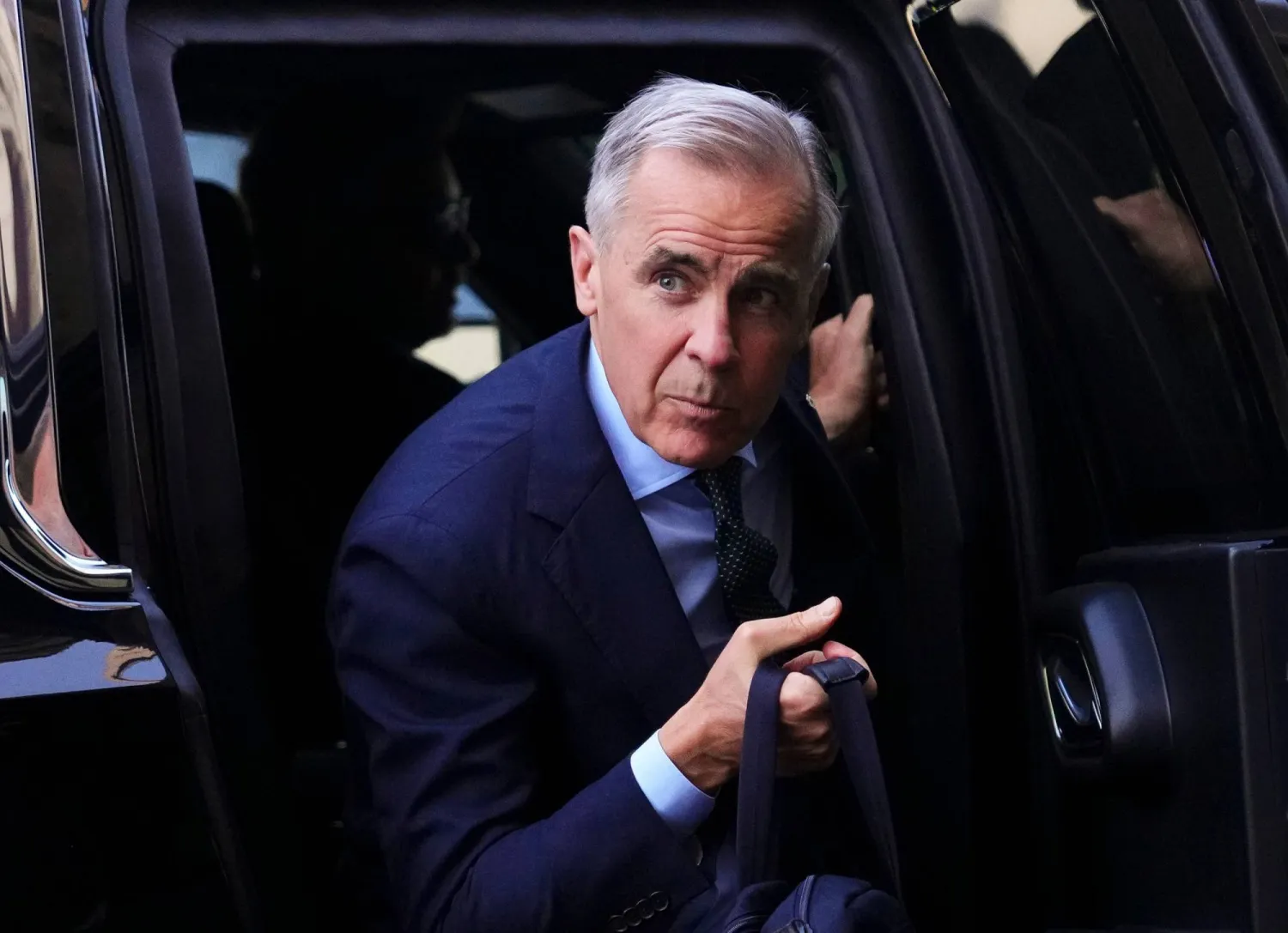
Canadian Prime Minister Mark Carney arrives to Parliament Hill in Ottawa on Tuesday, May 26, 2026. (Sean Kilpatrick/The Canadian Press via AP)
Canada and Germany’s state-owned energy firm SEFE said on Wednesday they had reached what Canada described as its first LNG supply deal with a European buyer, underscoring efforts on both sides to diversify energy trade amid global market uncertainty.
Earlier, sources familiar with the matter said Canada will sign the agreement with Germany’s SEFE group — Securing Energy for Europe — for supplies from the proposed Ksi Lisims export facility on the coast of British Columbia, the AP reported.
The sources spoke on condition of anonymity because they were not authorized to speak ahead of Wednesday’s announcement.
Up to 1 million metric tons of liquefied natural gas per year will be exported under the agreement.
The agreement comes as Canadian Prime Minister Mark Carney has set a target of doubling non-US trade within a decade.
Energy-rich Canada currently exports almost all of its oil and gas to the United States.
British Columbia Premier David Eby said earlier on Tuesday that a deal to supply Canadian LNG to Germany would mark a key step towards the partners behind the Ksi Lisims project taking a final investment decision on the CA$10 billion ($7.2 billion) plant and export terminal.
Ksi Lisims, located on Pearse Island near the border with Alaska, has secured the permits it requires, but the consortium has yet to make a final investment decision that would allow construction to begin.
Eby said securing long-term offtake agreements with buyers is a crucial step before the project can move forward.
The partnership has already signed supply agreements with a subsidiary of Shell and France’s TotalEnergies.
SEFE is a major German energy company. It was previously the German subsidiary of Gazprom before Berlin nationalized it in 2022 as Europe struggled with an energy crisis tied to the war in Ukraine.
After European countries backed Ukraine, Russia sharply reduced natural gas supplies, triggering an energy crisis that fueled inflation and forced some factories to scale back or shut down because of soaring energy prices.
Before the war, Germany was one of the largest importers of Russian gas in Europe.
Germany continues to rely on LNG imports as part of its efforts to replace Russian pipeline gas supplies.
Lebanon: Depositors to Receive Higher Monthly Payments from Tuesday as Rights Remain Unresolvedhttps://english.aawsat.com/business/5346936-lebanon-depositors-receive-higher-monthly-payments-tuesday-rights-remain
Lebanon: Depositors to Receive Higher Monthly Payments from Tuesday as Rights Remain Unresolved
Depositors demand access to funds frozen in banks since the fall of 2019 (File photo - EPA)
As Lebanese depositors continue their long wait for a government plan to break the cycle of stalled recovery efforts, those benefiting from Banque du Liban's circulars will receive a further 20 percent increase in their monthly withdrawal allowances starting Tuesday.
The additional amounts will be available exclusively through payment cards for purchases at merchants, pending the adoption of a comprehensive mechanism for recovering deposits under the proposed Financial Regularization and Deposit Recovery Law.
Under the latest amendments, monthly payments available to beneficiaries of Circular No. 158 will rise to $1,200, comprising $800 in cash and $400 through payment cards. Beneficiaries of Circular No. 166 will receive $600, including $400 in cash and $200 for electronic payments.
The arrangements are expected to remain in place until at least the middle of next year.
Circular No. 158 covers dollar deposits accumulated before the fall of 2019, while Circular No. 166 applies to foreign-currency accounts established before mid-2023 whose holders do not benefit from the first circular.
Although the increase provides some relief to depositors struggling with living expenses, it does not form part of a clear roadmap toward securing their rights and ensuring fair compensation. Instead, it represents a continuation of limited, gradual repayments while a legislative solution to Lebanon's banking crisis remains pending.
Meanwhile, proposals under discussion include separating irregular accounts or those subject to scrutiny and issuing long-term bonds maturing over 10, 15 and 20 years to cover balances exceeding $100,000.
That amount is being discussed as the guaranteed repayment threshold for each depositor. Accounts exceeding the threshold represent the largest share of deposits still trapped in the banking system by value.
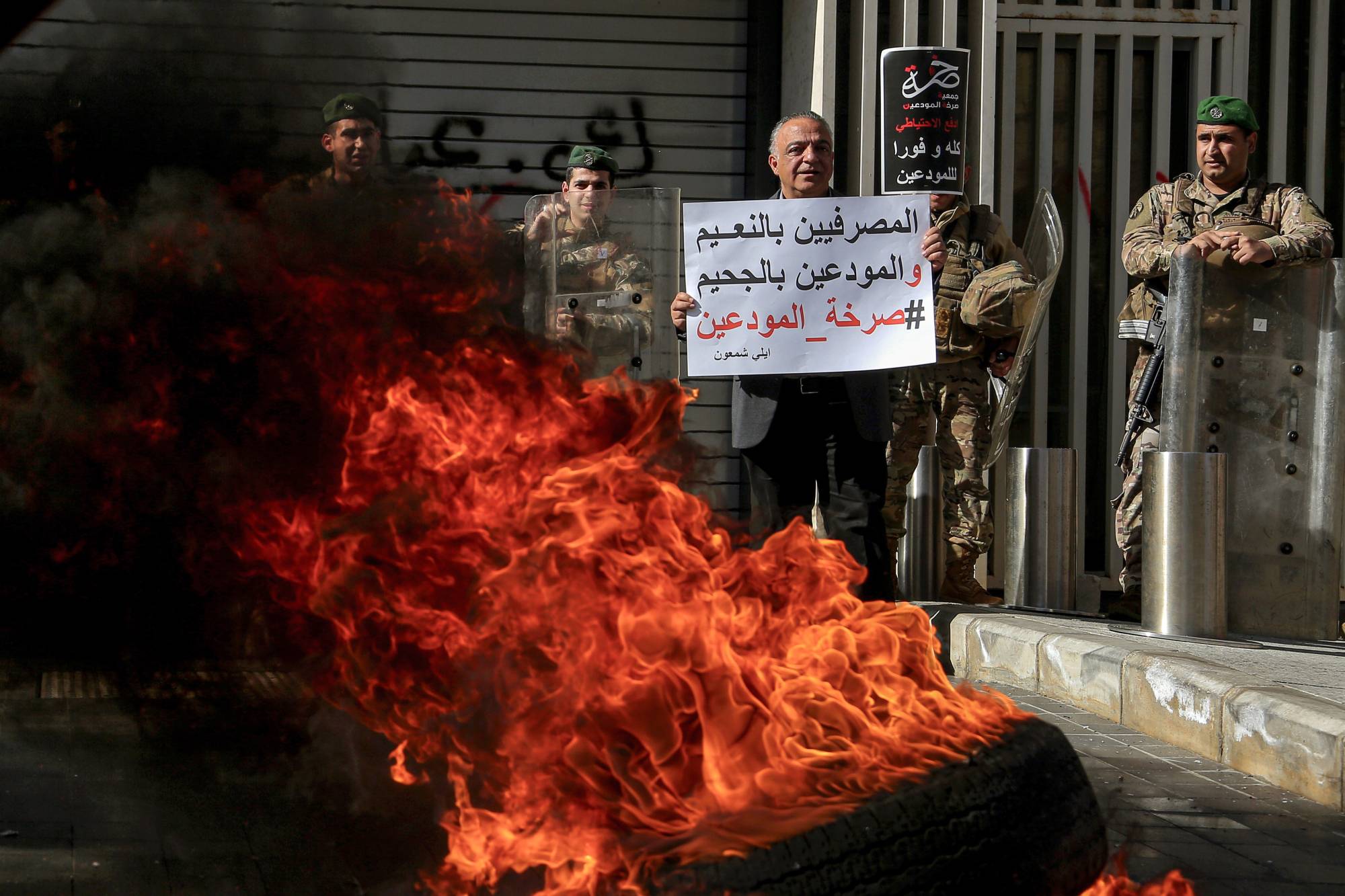
19 January 2024, Lebanon, Beirut: Lebanese soldiers secure a local bank as a depositor, displaying a banner that reads "Bankers live in heaven while depositors live in hell", stand between them and a burning tire during a protest to demand the imposition of a timetable for returning the savings of depositors. Photo: Marwan Naamani/dpa
Banque du Liban maintains that the temporary regulatory measures introduced through circulars issued within its legal authority are intended to facilitate limited repayments to depositors from their accounts, rather than replace the legislative measures needed to resolve the banking crisis.
The central bank stresses that approving the proposed Financial Regularization and Deposit Recovery Law through the relevant constitutional authorities, and establishing a comprehensive framework to restore financial stability and address depositors' rights and claims, remain the responsibility of the competent authorities.
On the surface, the latest amendments represent progress in releasing some liquidity to hundreds of thousands of individual depositors.
Official figures show that more than 775,000 depositors have benefited from the two circulars, with approximately 170,000 recovering their trapped savings in full.
Depositors whose balances fall below $50,000 are also awaiting the completion of their repayments by the end of the first quarter of next year.
However, the approximately $8 billion expected to have been repaid, compared with some $80 billion still trapped in bank accounts, illustrates the limitations of the existing approach.
The disparity is particularly striking nearly five and a half years after the first circular came into effect and as the third anniversary of the second circular approaches.
During that period, inflation has eroded the real value of both the amounts repaid and the balances still outstanding, while banks have stopped paying interest on savings since the outbreak of the crisis, which is entering its eighth year.
Total deposits had peaked on the eve of Lebanon's monetary and financial collapse at approximately $123 billion in foreign currencies, in addition to around $49 billion in Lebanese pounds.
Years of government delays and failed attempts to devise a rescue and recovery plan have turned depositors' concerns into serious fears about the future of their savings.
These concerns have deepened as the proposed guaranteed repayment ceiling has been sharply reduced from an earlier pledge of $500,000 to $100,000 per depositor, regardless of the number of accounts held.
The state's direct contribution to covering the losses also remains contentious. The government cites its limited financial resources and an explicit recommendation from the International Monetary Fund (IMF) to "limit the use of public funds."
Banks' ability to contribute directly, now or in the future, also faces significant constraints because of severe liquidity shortages and the continued freezing of approximately $79 billion in their placements with Banque du Liban.
This has brought renewed attention to the question of responsibility between the actual creditor and the ultimate debtor.
Most customer deposits were placed with the central bank before a substantial portion of those funds effectively became debts owed by the state through withdrawals and financing from Banque du Liban's balance sheet.
A forensic audit conducted by Alvarez & Marsal found that these amounts exceeded $64 billion.
In this context, commercial banks say the monthly repayments are financed through mandatory reserves associated with customer deposits.
Banque du Liban, meanwhile, maintains that a substantial portion of its foreign-currency assets consists of balances deposited by commercial banks to meet mandatory reserve requirements, representing legitimate rights and claims belonging exclusively to depositors.
Adding to depositors' concerns is the central bank's position that amounts already repaid under its circulars should be counted toward any cash payments provided for under the forthcoming deposit recovery mechanism.
In its assessment preceding the latest increase, the central bank's management stressed the need to take previous repayments into account when calculating future cash disbursements under the proposed Financial Regularization and Deposit Recovery Law.
It argued that doing so would ensure fairness and equal treatment among depositors while preventing double counting.
This approach means that amounts depositors have received over the past several years could count toward their final repayment ceiling.
That raises questions about how much each depositor will ultimately recover once the law is enacted and whether the current monthly payments will reduce their future entitlements.
Moody's: Lebanon Rating Unlikely to Change Before Debt Restructuring is Completedhttps://english.aawsat.com/business/5346913-moodys-lebanon-rating-unlikely-change-debt-restructuring-completed
Moody's: Lebanon Rating Unlikely to Change Before Debt Restructuring is Completed
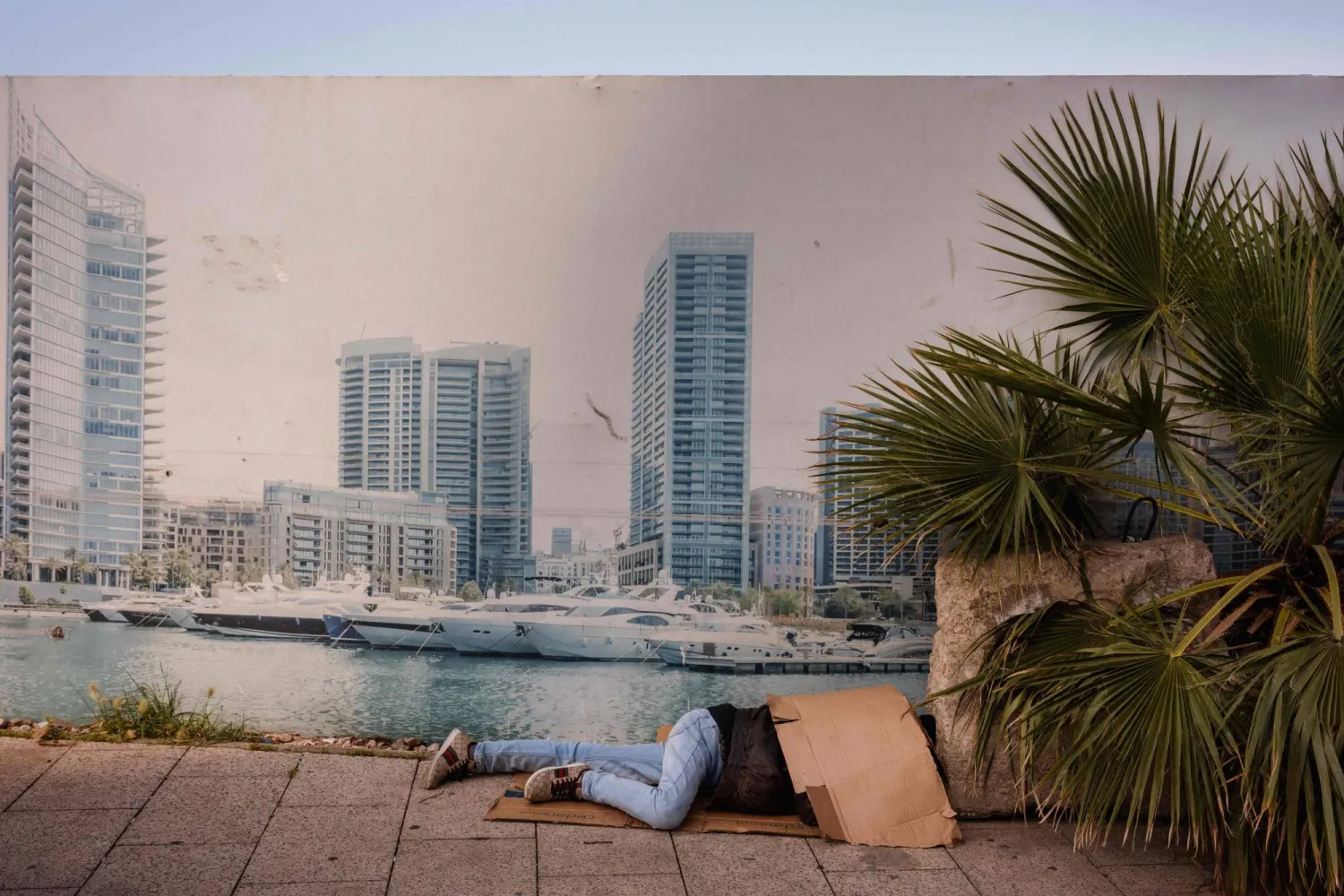
A displaced man sleeps on a street next to a billboard showing Beirut's Marina on April 6, 2026. (Photo by Dimitar DILKOFF / AFP)
Lebanon's ratings, including its C long-term issuer ratings, remain constrained by the legacy of its sovereign default in March 2020, prolonged political and institutional dysfunction, and an extremely weak government balance sheet, Moody's has announced.
Moody's Ratings said Saturday that the rating reflects the global ratings agency’s assessment that bondholder losses in an eventual debt restructuring are likely to exceed 65%.
Resolving the financial crisis will require a comprehensive restructuring of sovereign debt, central bank balance sheet, and the commercial banking system, it said.
Prolonged regional hostilities on Lebanese territory have compounded macroeconomic, fiscal, and social pressures, reinforcing Lebanon's very weak economic resilience and heightening susceptibility to event risk, the agency added.
According to Moody's, renewed engagement has restored dialogue between Lebanon and the International Monetary Fund, but significant obstacles to an IMF-supported program remain.
The IMF mission on November 10-13 reported progress in clarifying the positions of the government and the central bank, but ended without agreement.
A program remains conditional on implementing the Bank Resolution Law, passing a Financial Stabilization and Deposits Recovery law aligned with international standards, and adopting a 2027 budget and medium-term fiscal framework consistent with debt sustainability, Moody’s said.
Until these measures are agreed and implemented, program financing and broader external support remain prospective, it added.
It also said that its assessment of economic strength at "caa1" reflects Lebanon's significantly diminished economic base following years of contraction, the collapse of its previous foreign inflow-driven growth model, and persistent social vulnerability.
Lebanon scores "ca" for institutions and governance strength, reflecting very weak institutional quality, the prolonged unresolved sovereign default, and a track record of arrears.
Lebanon's "ca" fiscal strength reflects an extremely impaired sovereign balance sheet, with a high debt burden and debt sustainability contingent on deep restructuring.
Lebanon's "ca" susceptibility to event risk is driven by very weak government liquidity, banking sector vulnerabilities, and high external financing needs.
The stable outlook indicates Lebanon's rating is unlikely to change before the debt restructuring is completed, given the extent of the macroeconomic, financial and social challenges and our expectation of significant losses relative to the original face value.
An upgrade in Lebanon's sovereign rating after the debt restructuring will depend on the pace of fiscal and institutional reform, improvements in the government's revenue generation capacity and the economy's adjustment to a new growth model. A further precondition for an upgrade is for debt dynamics to evolve in a way that would ensure debt sustainability in the future and thereby reducing re-default risk.
It is unlikely that Lebanon's rating would move from its current position before restructuring, given the extent of the macroeconomic, financial and social challenges and the agency's expectation of very significant losses, Moody’s added.
US Black Friday Online Spend Rises 11% to a New High of $13.1 Billionhttps://english.aawsat.com/business/5346676-us-black-friday-online-spend-rises-11-new-high-131-billion
A shopper stands next to a large sale sign at the Citadel Outlets in Commerce, Calif., Friday, Nov. 27, 2026. (AP)
TT
TT
US Black Friday Online Spend Rises 11% to a New High of $13.1 Billion
A shopper stands next to a large sale sign at the Citadel Outlets in Commerce, Calif., Friday, Nov. 27, 2026. (AP)
US online spending rose 11% to $13.1 billion on Black Friday, data from Adobe Analytics showed, topping its forecast as shoppers snapped up popular toys and AI-powered gadgets and stocked up on essentials as inflation weighs on holiday budgets.
The spending total beat Adobe's forecast of about $12.9 billion, helped by discounts and promotions on apparel and appliances as retailers sought to woo Americans weighed down by inflation and high gas prices.
While electronics and gaming were among the strongest-selling categories, shoppers also used discounts to stock up on everyday essentials such as cleaning supplies, pet care products and personal hygiene items, the Adobe report said.
The data comes as inflation, running at 3.8%, continues to strain household finances. Foot traffic at US stores was down 2.2% from a year earlier at nearly 930 million visits on Black Friday, according to PassBy, a geospatial analytics company.
Black Friday and Cyber Monday bookend one of the retail sector's busiest periods of the year.
Adobe expects US online spending on Cyber Monday to jump 6.2% to $15.1 billion, contributing to about $47.5 billion in overall sales during the five-day Thanksgiving shopping period, the report said.
The morning after Black Friday, Kristy Martinez, 46, in Williamsburg, Brooklyn, said she planned to spend slightly more on gifts this holiday season after she and her husband “really pulled back” on spending last year.
Buy now, pay later options are expected to contribute $1.09 billion in online spending on Cyber Monday, up 5.3% from a year ago, Adobe Analytics said.
Consumers are also increasingly using AI-powered shopping tools to compare prices, with traffic from chatbots and AI-enabled browsers converting into purchases 68% more effectively than a year earlier, according to Adobe data.
لم تشترك بعد
انشئ حساباً خاصاً بك لتحصل على أخبار مخصصة لك ولتتمتع بخاصية حفظ المقالات وتتلقى نشراتنا البريدية المتنوعة