


European Commission Vows Tougher Action on Trade with China

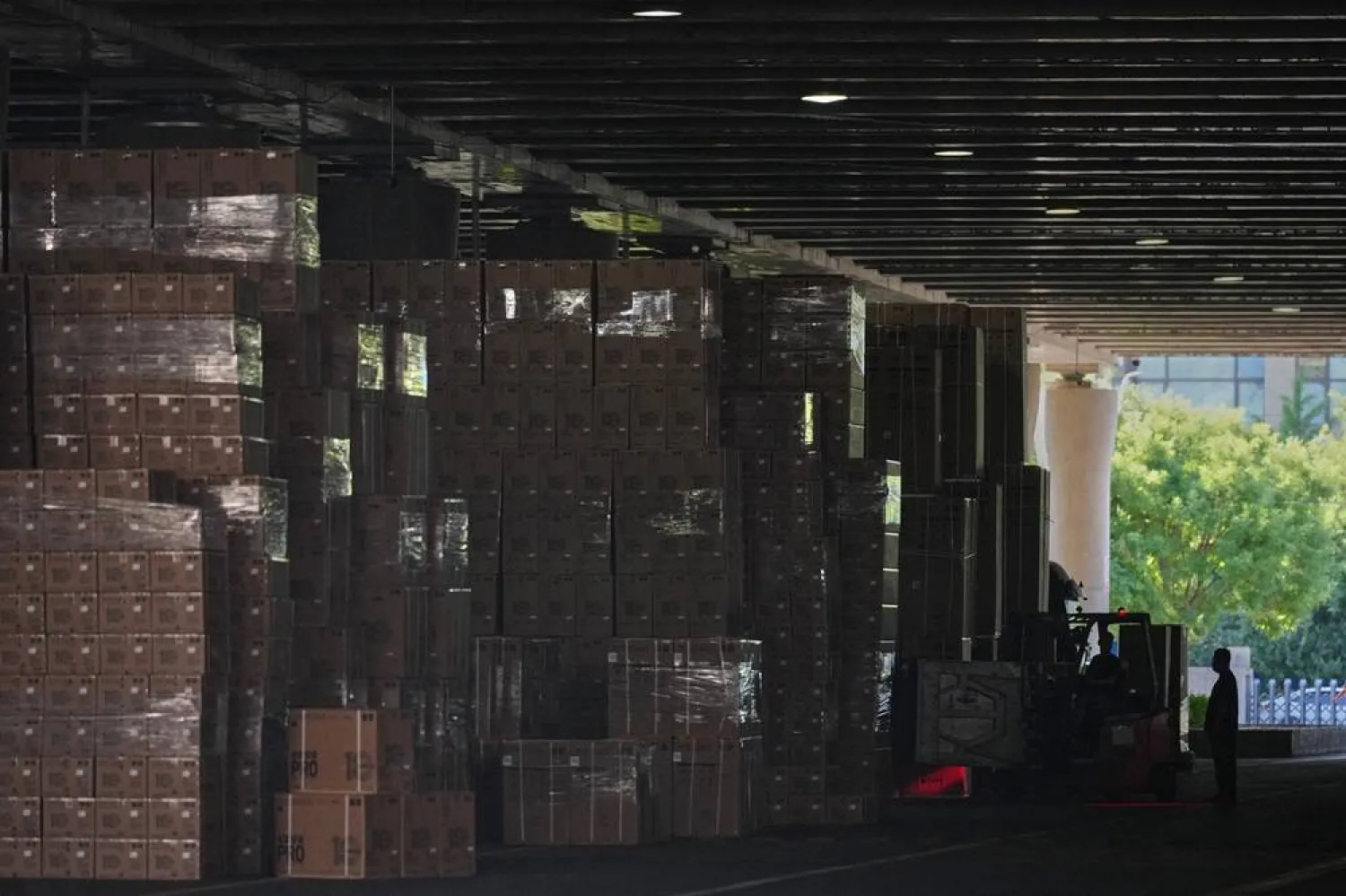
 Worker use a forklift to transfer goods at the Xiaomi logistic center, in Beijing, China on Friday, May 29, 2026. (AP)
Worker use a forklift to transfer goods at the Xiaomi logistic center, in Beijing, China on Friday, May 29, 2026. (AP)
TT

European Commission Vows Tougher Action on Trade with China

 Worker use a forklift to transfer goods at the Xiaomi logistic center, in Beijing, China on Friday, May 29, 2026. (AP)
Worker use a forklift to transfer goods at the Xiaomi logistic center, in Beijing, China on Friday, May 29, 2026. (AP)

The EU's trade and investment relationship with China is "not sustainable", the European Commission said on Friday, vowing a stronger response as commissioners discussed how best to shield Europe's industries from surging Chinese imports.

Commissioners were pitching ideas ahead of an EU leaders' summit on June 18 to 19, and possible proposals could include forcing EU firms to diversify supply chains or introducing new trade mechanisms to curb China's access to the EU market in chemicals, metals and clean energy technology.

"As economic and security interests become ever more intertwined, both dimensions will require a more robust and coherent response," the Commission said.

Any concrete proposals for the response ‌are not expected ‌to be announced until the third quarter of this year.

Western governments are ‌trying ⁠to reverse some ⁠of the offshoring to China that peaked in the early 2000s, depleting industrial know-how and hubs in their countries, particularly in the US and EU members.

China's commerce ministry said on Saturday in response that Europe should abide by World Trade Organization rules, uphold free trade and fair competition, and firmly oppose protectionism and unilateralism.

"Should the EU insist on unilaterally introducing new trade instruments and imposing discriminatory restrictions, China will resolutely take countermeasures and adopt effective measures to safeguard its own interests," it said in an online statement.

TRADE ⁠IMBALANCES, OVERCAPACITY IN FOCUS

The Group of Seven (G7) wealthy nations will ‌also tackle trade imbalances and overcapacity at a mid-June summit ‌as China increasingly flexes its dominance on rare earths and other metals that are critical for sectors including defense, ‌tech, energy and automotive industries.

US President Donald Trump has pitched "America First" and, early this year, the ‌EU proposed a new "Buy European" policy and RESourceEU to accelerate the development of critical mineral supply chains in the EU as well as partnerships with mineral-rich countries from Central Asia to Australia and Brazil.

China's Foreign Ministry accused the EU on Thursday of using trade data selectively to justify claims of imbalances, and it has repeatedly threatened "strong ‌countermeasures" should the EU adopt "Buy European" and revised tech sovereignty policies. China rejects the notion that its trade practices are unjust.

Europe's industry faces ⁠a tougher climate than ⁠US rivals, constrained by higher energy costs and stricter regulation.

Industry Commissioner Stephane Sejourne said this week he wants the bloc's existing trade tools such as import duties and quotas to be used "more systematically" across sectors, rather than targeting specific companies or materials.

The EU has tried to curb some Chinese imports, with mixed results.

The bloc imposed tariffs on heavily subsidized Chinese electric vehicles, but not hybrid models. Hybrids accounted for nearly 40% of new car registrations so far this year and China's market share in Europe continues to rise.

While the Commission is keen to adopt a tougher stance, it will have to navigate differences between France and Germany to pass major legislation.

"Paris argues that Europe's open market is absorbing the combined effects of Chinese subsidies and US protectionism," Carsten Nickel, deputy research director at Teneo, wrote in a report.

"Germany's position is more conflicted," Nickel said, with concerns about mounting pressure on German manufacturing constrained by the deep dependency of big industrial groups on China's market.



China's May Fuel Oil Exports Rise 42% Year-on-year

An attendant holds a petrol nozzle after refuelling a car at a PetroChina gas station in Beijing, China, March 10, 2026. REUTERS/Florence Lo
TT

China's May Fuel Oil Exports Rise 42% Year-on-year

An attendant holds a petrol nozzle after refuelling a car at a PetroChina gas station in Beijing, China, March 10, 2026. REUTERS/Florence Lo

China's exports of fuel oil, mainly for low-sulphur marine fuel bunkering, rose 42% year-on-year in May, customs data showed on Saturday.

Volumes totaled 1.76 million metric tons, or about 360,695 barrels per day (bpd), up 4% from April, according to General Administration of Customs data.

Some marine fuel demand had been diverted from regional hub Singapore to China's Zhoushan due to cheaper prices at Chinese ports during most of ⁠May, market sources ⁠said.

Fuel oil imports in May extended declines after plummeting last month to what was then the lowest level since customs data for them began in 2021.

Imports of fuel oil totaled 559,346 tons ⁠in May, down 43% from April and 57% from a year earlier.

The imports, mostly purchased by refineries for use as feedstock, remained capped this quarter as China's independent refineries trimmed runs amid weak domestic demand for products, market sources said, according to Reuters.


Saudi Arabia Expands Investment Prospects in Military Industries

The Saudi pavilion reinforced the Kingdom’s position as a leading investment destination in the military industry sector. (Asharq Al-Awsat)
TT

Saudi Arabia Expands Investment Prospects in Military Industries

The Saudi pavilion reinforced the Kingdom’s position as a leading investment destination in the military industry sector. (Asharq Al-Awsat)

Saudi Arabia used the Eurosatory 2026 defense and security show to open new investment horizons, showcasing promising opportunities and a regulatory environment designed to attract capital.

The participation helped sharpen the appeal of the Kingdom’s military industries and drew the attention of major global companies seeking strategic partnerships that support Saudi localization targets.

The Saudi pavilion, held at the Paris exhibition from June 15 to 19, reinforced the Kingdom’s position as a leading investment destination in the military industry sector.

Organized by the General Authority for Military Industries (GAMI), the pavilion brought together 10 government and private entities alongside the authority.

The participation underlined Saudi Arabia’s welcome to investors from around the world seeking opportunities in the military industries sector. It also highlighted the Kingdom’s efforts to localize more than 50% of military spending by 2030.

On the sidelines of the exhibition, GAMI Governor Ahmad Al-Ohali met Patrick Pailloux, French Director General for Armament (DGA), as well as representatives of major global defense companies.

The meetings focused on ways to strengthen cooperation in military industries and exchange expertise, supporting the development of a sustainable sector, improving the readiness of military equipment, boosting self-sufficiency and contributing to the national economy.

The Saudi participation also saw the signing of several agreements and memorandums of understanding, part of GAMI’s efforts to develop military industries, strengthen supply chains and enable strategic partnerships.

The authority organized a workshop titled “Developing Supply Chains in Military Industries,” which discussed how an attractive investment environment for local and international investors can help build a diversified and prosperous economy in the sector.

The pavilion showcased the integration of government efforts, national industrial and service capabilities, and the innovative technologies presented by participating Saudi companies. It also highlighted the country’s attractive investment environment and the rapid growth of its military industries sector.

The sector’s contribution to GDP rose from 2.2 billion riyals, or about $587 million, in 2021 to 6.6 billion riyals, or about $1.76 billion, in 2024. The localization rate of military spending also climbed to nearly 25% in 2024, as the Kingdom works toward localizing more than 50% of military spending by 2030.

GAMI said the Saudi pavilion’s participation strengthened the Kingdom’s position as a trusted international partner, expanded its network of relations with major global companies and enabled national firms to showcase their capabilities while exploring opportunities for growth and expansion in global markets.


Iraq Raises Southern Oil Output to 1.75 Million bpd

Technicians working at the Majnoon oil field in Basra, Iraq. (Reuters)
TT

Iraq Raises Southern Oil Output to 1.75 Million bpd

Technicians working at the Majnoon oil field in Basra, Iraq. (Reuters)

Iraq has increased crude oil production from its southern fields by 250,000 barrels per day to around 1.75 million barrels per day as more tankers load crude from the country's ports, Iraqi oil officials told Reuters on Friday, Reuters reported.


The officials said Iraq plans to raise production further to two million barrels per day in the coming few days.


Iraq, like other Gulf oil producers, has suffered the biggest drop in oil revenue as a result of the effective closure of the Strait of Hormuz amid the US-Iran War.