


FAO: World Food Prices Slip in May, Still Near Three-year High

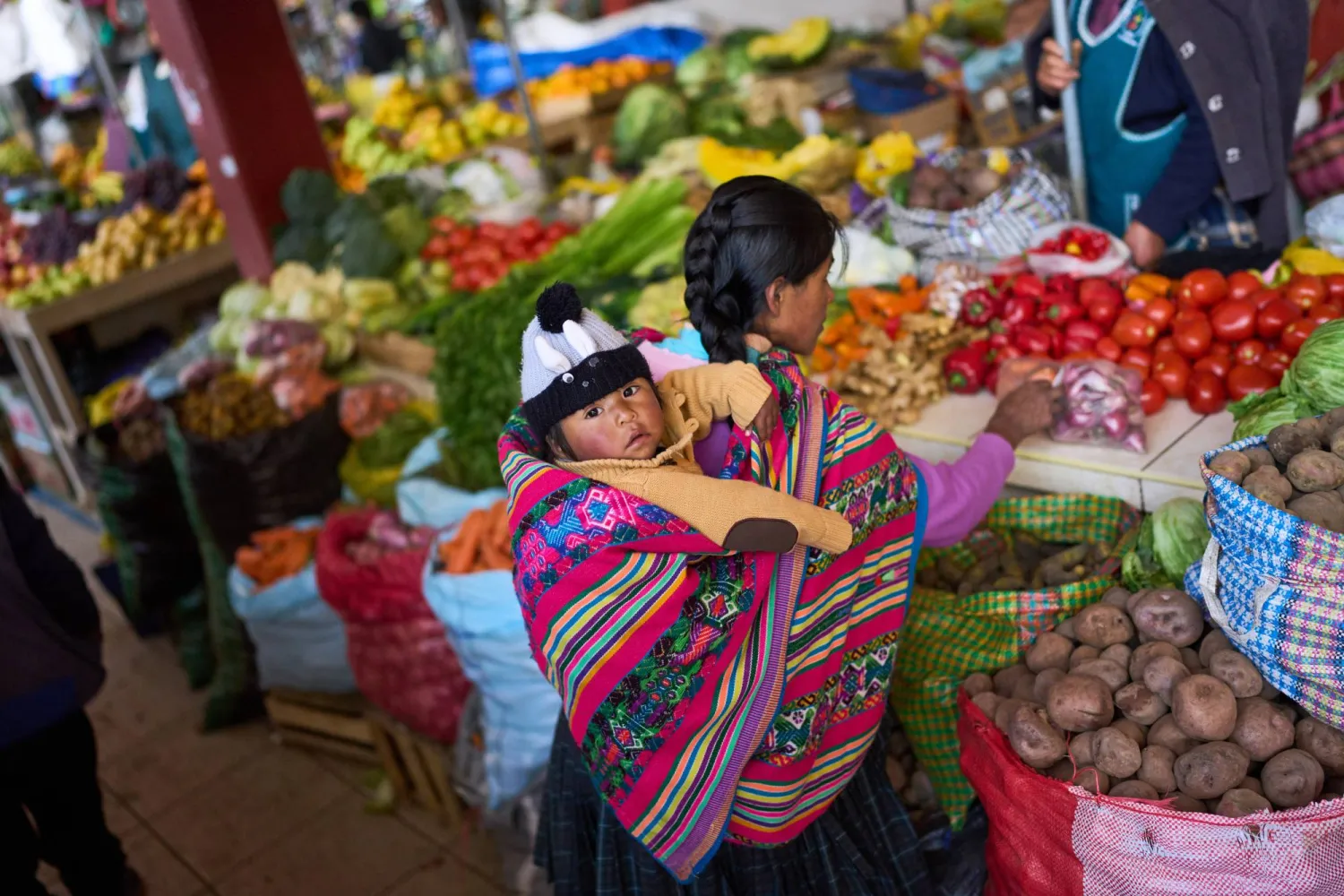
A shopper buys vegetables with her son at a street market in Urcos, Peru, Tuesday, June 2, 2026. (AP Photo/Rodrigo Abd)
TT

FAO: World Food Prices Slip in May, Still Near Three-year High

A shopper buys vegetables with her son at a street market in Urcos, Peru, Tuesday, June 2, 2026. (AP Photo/Rodrigo Abd)

World food prices slipped in May from a revised April level, with vegetable oil prices falling for the first time this year while cereals and sugar jumped, the United Nations Food and Agriculture Organization said on Friday.

The FAO Food Price Index, which measures changes in a basket of globally traded food commodities, averaged 130.8 points in May, ⁠0.2% down from ⁠its revised April level of 131.0, but up 2.9% from a year earlier, Reuters reported.

Despite the small downward correction for the April data, the index remained near its highest level since January 2023 and 18.4% below its March 2022 peak. Cereal prices rose more than 2.6% on the month, with wheat up for a fourth straight month on smaller export harvest prospects, including in ⁠the United States, and higher fuel and fertilizer costs linked to the Iran conflict.

Maize prices were also supported by stronger import demand and tighter supplies in Brazil and the US, the agency said.

By contrast, vegetable oil prices fell 4.6% from last month, their first monthly decline this year, as lower palm and soy oil prices outweighed gains in rapeseed and sunflower oil. After rising for five consecutive months, international palm oil prices declined, reflecting expectations of weaker global import demand and uncertainty in crude oil markets.

Vegetable oil prices on average were still more than 20% above last year, as ⁠elevated energy costs ⁠following the effective closure of the Strait of Hormuz raised demand for biofuels made using organic materials, such as oil-rich plants.

Sugar prices jumped 7.5% from last month to 95.1 points, but remained 13.1% below their level a year ago. The increase was mainly driven by concerns over an anticipated tightening of global sugar supplies in the coming months.

In a separate cereal supply report, the FAO said it expected world cereal production - including rice in milled equivalent - to shrink 2% in 2026/27 to 2.98 billion tons.

Production of all major cereals is anticipated to decline, albeit for many from record levels reached in 2025, with the largest year-on-year decrease in percentage terms forecast for wheat and the smallest for maize and barley.



EU-US Trade Deal to Take Effect Before Trump Deadline

European Commission President Ursula von der Leyen chairs the EU Commission's weekly College meeting in Brussels, Belgium, 24 June 2026. EPA/OLIVIER MATTHYS
TT

EU-US Trade Deal to Take Effect Before Trump Deadline

European Commission President Ursula von der Leyen chairs the EU Commission's weekly College meeting in Brussels, Belgium, 24 June 2026. EPA/OLIVIER MATTHYS

EU states gave their final approval Thursday to a year-old tariff deal with the United States, allowing it to enter into force ahead of a July 4 deadline set by President Donald Trump.

Struck between Trump and EU chief Ursula von der Leyen in July 2025, the deal sets levies of 15 percent on most of EU exports to the United States, and zero tariffs for US industrial goods coming into the 27-nation bloc.

But the EU had yet to fulfil its side of the accord -- after Trump's threats to Greenland and a US Supreme Court decision striking down many of his tariffs fueled months of delay.

The sign-off by member states -- who had already agreed the deal in substance -- clears the final legislative hurdle on the EU side, following parliament's approval earlier this month.

The deal's approval "confirms the EU's commitment to a stable, predictable and mutually beneficial transatlantic trade relationship, while preserving the necessary guardrails to protect European economic interests," AFP quoted an EU statement as saying.

Lawmakers added a series of safeguards, including giving the European Commission power to suspend the pact if the US side fails to meet its commitments or acts to disrupt trade and investment.

Parliament also introduced an expiration date of end-2029, unless the agreement is renewed by then.

"Openness must go hand in hand with safeguarding our interests," said Michael Damianos, the commerce minister for Cyprus which holds the EU's rotating presidency.

"These measures achieve both, supporting stable and predictable trade flows with the US while ensuring the EU can respond swiftly and proportionately when the deal is not respected or its interests are at stake," he said.

The two texts enacting the EU side of the accord -- removing duties on US industrial goods and introducing preferential access for certain seafood and farm products -- will formally take effect a day after publication in the EU's official journal.


Hormuz Disruptions Drive Saudi Re-Exports to Historic High

King Fahd Industrial Port in Yanbu, Saudi Arabia (SPA)
TT

Hormuz Disruptions Drive Saudi Re-Exports to Historic High

King Fahd Industrial Port in Yanbu, Saudi Arabia (SPA)

Preliminary data released by the General Authority for Statistics on Thursday revealed a remarkable positive shift in Saudi Arabia's international merchandise trade during April 2026.

The merchandise trade surplus doubled by 100.8 percent compared to the same month last year, reaching 25.4 billion riyals (approximately $6.77 billion), driven by an increase in total merchandise exports and a decrease in spending on imports.

According to the official bulletin, total merchandise exports grew by 9.3 percent to reach 101 billion riyals (approximately $26.93 billion), compared to 93 billion riyals in April 2025.

This growth was primarily driven by an 11.7 percent rise in oil exports, reaching a value of 69.6 billion riyals (approximately $18.56 billion), compared to about 62.7 billion riyals (approximately $16.72 billion) in the previous year, alongside a 4.5 percent growth in non-oil exports (including re-exports), reaching 31.4 billion riyals (approximately $8.37 billion). Among these, the "re-exports" item alone saw a historic jump of 20.4 percent, reaching 15.5 billion riyals (approximately $4.13 billion).

Conversely, a 5.2 percent decline in total merchandise imports, decreasing from 80 billion riyals (approximately $21.33 billion) to 76 billion riyals (approximately $20.26 billion), contributed to the Kingdom's trade balance gains; the merchandise trade surplus doubled by 100.8 percent, rising from approximately 13 billion riyals (approximately $3.47 billion) in April 2025 to expand to 25.4 billion riyals (approximately $6.77 billion) in April 2026.

Logistical Resilience

The re-export movement in the Kingdom recorded unprecedented historic performance; the value of re-exported goods jumped by 20.4 percent to reach a record level of 15.5 billion riyals (approximately $4.13 billion), which is the highest monthly level recorded by statistical data since 2017.

This strong performance was bolstered by a 74.0 percent increase in exports from the "machinery, electrical appliances, and equipment and their parts" sector, which alone accounted for 53.5 percent of total re-exported goods.

This intensive logistical activity occurred as the Kingdom benefited from diverting part of the regional shipping traffic to avoid navigation disruptions in the Strait of Hormuz, which accompanied the Iranian war.

Saudi Arabia enhanced the role of its ports as alternative routes by diverting shipping to Red Sea ports (Jeddah and Yanbu), while raising the readiness of eastern and western ports and activating the "East-West" pipeline to ensure the continuous flow of oil and goods. These efforts culminated in a rise in the ratio of non-oil exports (including re-exports) to imports, reaching 41.6 percent compared to 37.8 percent in April 2025.

Goods Structure and Trade Partners

Regarding non-oil trade details, "machinery, electrical appliances, and equipment" topped the list of non-oil exports with a share of 28.1 percent, followed by "plastics, rubber, and their products" at 17.1 percent. As for imports, the same group (machinery and electrical equipment) led the imported goods with a share of 33.3 percent, followed by transport equipment and parts at 10.2 percent.

In terms of international partners, China maintained its position as the Kingdom's main trading partner, accounting for 15.2 percent of total Saudi merchandise exports, followed by the UAE at 10.6 percent, and then South Korea at 9.7 percent. China also ranked first in the Kingdom's import list with 29.4 percent, followed by the UAE at 7.9 percent, and the United States of America third at 7.2 percent.

Jeddah Islamic Port played a pivotal role during this period, topping customs ports as the most important gateway through which 33.7 percent of imported goods passed, and also ranking first as the most important port for the Kingdom's non-oil exports with 23.3 percent.


SIRC: Waste Management to Add $32 Billion to Saudi Economy by 2040

SIRC headquarters in Saudi Arabia (company website)
TT

SIRC: Waste Management to Add $32 Billion to Saudi Economy by 2040

SIRC headquarters in Saudi Arabia (company website)

Saudi Arabia’s waste-management sector is set to evolve from a routine environmental service into an independent industrial and economic engine, potentially adding more than SAR120 billion ($32 billion) to the Kingdom’s GDP by 2040, according to Alwaleed Alzahrani, Business Development Manager at the Saudi Investment Recycling Company (SIRC).

Speaking to Asharq Al-Awsat on the sidelines of Riyadh International Industry Week 2026, Alzahrani projected the sector will create more than 77,000 quality jobs and cut carbon emissions by 73 million tons annually.

Waste in Saudi Arabia, he noted, is no longer merely an environmental challenge linked to urban expansion but an emerging economic and industrial pillar that recycles resources and transforms waste into productive inputs, reducing reliance on oil.

SIRC, wholly owned by the Public Investment Fund and established in 2017, is the main driver of Saudi Arabia’s waste-management sector. It serves as a platform to empower the private sector and develop the infrastructure needed to meet Vision 2030 sustainability and economic diversification goals.

Alzahrani described the shift as a fundamental move from the traditional service-based model of waste treatment to a standalone industrial sector built on circular-economy principles.

SIRC functions as a national arm and strategic investor, working with government entities and the private sector to build an integrated system for sorting, treating, recycling, and converting waste into value-added industrial resources.

The sector aims to divert 90 percent of waste away from landfills by 2040 while helping save more than 60 million barrels of crude oil through waste-to-energy and alternative fuel production.

The strategy, he added, goes beyond addressing a growing environmental challenge by creating a new industrial sector capable of generating added value, strengthening local content, and positioning Saudi Arabia among the world’s leading circular economies.

Investment opportunities extend beyond recycling plants to the entire value chain, including collection, sorting, digital solutions, logistics, and the development of stable markets for recycled materials.

These opportunities span municipal waste, construction and demolition debris, plastics, metals, and electronic and industrial waste.

According to Alzahrani, SIRC’s central role is to transform these opportunities into commercially viable projects by “reducing investment ambiguity,” providing accurate market data, ensuring stable supplies and economic feasibility, and creating a regulatory environment attractive to domestic and international investors.

On the broader economic impact, he explained that returning recovered materials to the production cycle keeps value within the national economy for longer. It also gives local manufacturers greater resilience against global market volatility and raw-material price swings by enabling them to rely on high-quality recycled domestic resources available in stable commercial quantities, while reducing environmental impacts and carbon emissions.

Official data from the General Authority for Statistics show total recorded waste in Saudi Arabia rose to 135.1 million tons in 2024, up from 111.4 million tons in 2023. Agriculture, forestry, and fishing generated the largest share at 46.9 million tons, followed by construction (32.2 million tons), households (20.5 million tons), and industry (26.7 million tons), with manufacturing accounting for 68.6 percent of industrial waste.

By material type, organic waste represented the largest share at 45.7 percent (about 61.7 million tons), followed by construction materials (22.8 percent) and plastics (5.8 percent).