


What is Expected from Today's OPEC+ Major Producers Meeting?

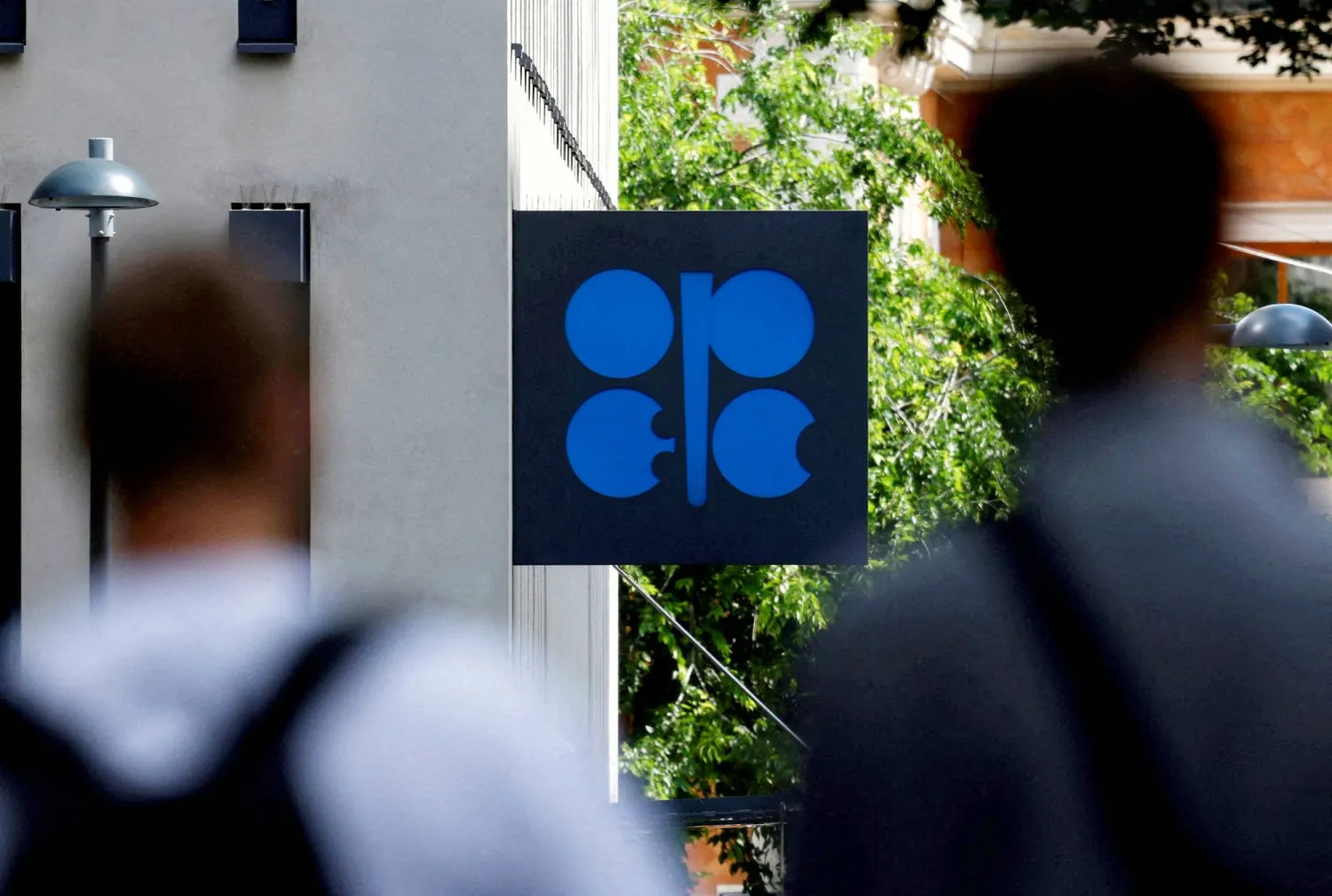
A view shows the logo of the Organization of the Petroleum Exporting Countries (OPEC) outside its headquarters in Vienna, Austria, May 28, 2024. REUTERS/Leonhard Foeger/File Phot
TT

What is Expected from Today's OPEC+ Major Producers Meeting?

A view shows the logo of the Organization of the Petroleum Exporting Countries (OPEC) outside its headquarters in Vienna, Austria, May 28, 2024. REUTERS/Leonhard Foeger/File Phot

All eyes turn Sunday to a series of intensive and simultaneous ministerial meetings of the Organization of the Petroleum Exporting Countries (OPEC) and the OPEC+ alliance. These meetings are taking place under exceptional circumstances in global energy markets, as producers strive through these multiple platforms to lay out the foundations for a new phase of balance and strategic certainty.

Three consecutive meetings will be held today, reflecting the precise institutional nature of managing this phase. It begins with the OPEC Administrative Conference, followed by the 66th meeting of the Joint Ministerial Monitoring Committee (JMMC), responsible for monitoring compliance levels, ensuring alignment, and approving current compensation plans, culminating in the 41st ministerial meeting of the broader OPEC+ alliance—a meeting the global investment community is eagerly anticipating.

This coordinated effort is driven by positive momentum and close coordination, epitomized by the important meeting that brought together Saudi Energy Minister, Prince Abdulaziz bin Salman, with Russian Deputy Prime Minister Alexander Novak on the sidelines of the St. Petersburg International Economic Forum a few days ago.

The meeting reflected great optimism about the alliance's ability to lead the market with a flexible vision, with discussions focusing on the following positive points:

* Securing Energy Supplies: The Saudi affirmation that the world today needs "every molecule of energy" possible, reflecting the Kingdom's and the alliance's commitment to their role as a safety valve for the global economy.

* Flexibility and Readiness: OPEC+'s high ability to adapt and confront emergent geopolitical and logistical changes, while precisely revising future demand forecasts to ensure investment sustainability.

* Preparing for the Future: Coordination between the two poles aims to prepare a solid ground for the smooth and gradual return of supply flows once temporary logistical factors in the region subside.

Expectations and Targets

Instead of focusing on transient fluctuations, observers expect today's meeting to affirm collective commitment and reaffirm full solidarity among the seven major alliance countries – Saudi Arabia, Russia, Iraq, Kuwait, Kazakhstan, Algeria, and Oman – to ensure long-term market stability through the approval of flexible production policies. Sources told Reuters that production targets are expected to increase by approximately 188,000 barrels per day for next July, reflecting a cautious and measured approach that allows for quick and gradual intervention options based on daily market data.

Fitch

This flexible move aligns with the in-depth analysis presented by Fitch Ratings in its latest reports. The agency affirmed that the current closure of the Strait of Hormuz represents "a temporary and transient logistical shock" and in no way indicates a structural or permanent shift in global oil market trends.

The agency maintained its strategic view that global supplies will collectively exceed demand throughout 2026, based on the absence of any severe damage to oil infrastructure in the region, and the exceptional ability to achieve a rapid and intensive recovery of production in the Middle East once the strait is expected to reopen by the end of next July – assuming an actual closure period of approximately five months.

According to Fitch's base scenario, the average Brent crude price will hover around $87 per barrel throughout 2026, noting that the absence of production capacity due to the temporary logistical disruption will reduce supplies by approximately 2.9 million barrels per day compared to 2025.

However, the agency anticipates a sharp market rebound towards a surplus starting in September, with the surplus (oil glut) reaching approximately 4 million barrels per day in the last quarter of 2026, supported by strong growth from non-OPEC producers. This will exert downward pressure on prices, restoring the market to its natural equilibrium.

Fitch concludes that this dynamic lends significant effectiveness to OPEC+ plans, as the alliance possesses the ability to exceed previous quotas and pump additional quantities to ensure demand is met and prevent any structural shortages, solidifying the alliance's role as a strategic institution that transforms geopolitical challenges into real opportunities to support energy security, global economic growth, and sustainability.



World Bank Approves $1.1 Billion Emergency Financing for Bangladesh

Mohammad Yusuf, a farmer, speaks on his phone as he arrives at a fuel station to buy diesel to irrigate his paddy field, but finds none available amid a fuel crisis, in Manikganj, Bangladesh, April 8, 2026. (Reuters)
TT

World Bank Approves $1.1 Billion Emergency Financing for Bangladesh

Mohammad Yusuf, a farmer, speaks on his phone as he arrives at a fuel station to buy diesel to irrigate his paddy field, but finds none available amid a fuel crisis, in Manikganj, Bangladesh, April 8, 2026. (Reuters)

The World ‌Bank approved $1.1 billion in emergency financing for Bangladesh to help secure food supplies, support vulnerable households and businesses due to the rising prices of fertilizer, fuel and food from the Middle East conflict.

Bangladesh is also seeking additional external financing from development partners, including the International Monetary Fund (IMF), to shore up foreign exchange reserves and ease pressure on public finances following a surge in ‌energy import costs and ‌broader economic challenges.

The World Bank ‌package ⁠comprises two projects ⁠aimed at helping the country manage external shocks and maintain economic stability.

Of the total, $300 million will be provided under the Emergency Support for Food Security Project to finance imports of 600,000 metric tons of fertilizer for the upcoming ⁠rice seasons. Bangladesh imports more than 85% ‌of its fertilizer requirements, ‌making it vulnerable to disruptions in global supply chains.

"Rising ‌food, fertilizer and fuel prices stemming from ‌the Middle East conflict, coupled with tighter fiscal space, have deeply affected Bangladesh's economy, particularly smallholder farmers and poor and vulnerable households," Jean Pesme, the World Bank's ‌division director for Bangladesh and Bhutan, said in a statement.

The project will ⁠support rice ⁠cultivation across 1.4 million hectares (3.46 million acres) of farmland.

The remaining $713 million, approved under the Contingent Emergency Response Project, will finance emergency expenditures, including cash transfers and livelihood support for affected households and small businesses.

It will also help fund fuel and energy imports needed to sustain essential services, including healthcare, food distribution, electricity and water supplies.

The World Bank said the financing would help Bangladesh respond rapidly to economic shocks while protecting jobs, livelihoods and critical services.


Trump Threatens 100% Tax on European Imports if Countries Impose Tax on Digital Services

US President Donald Trump speaks at a rally to kick off the 16-day Great American State Fair as part of Washington, DC's celebration of the nation's 250th birthday, on the National Mall in Washington, DC, USA, 24 June 2026. (EPA)
TT

Trump Threatens 100% Tax on European Imports if Countries Impose Tax on Digital Services

US President Donald Trump speaks at a rally to kick off the 16-day Great American State Fair as part of Washington, DC's celebration of the nation's 250th birthday, on the National Mall in Washington, DC, USA, 24 June 2026. (EPA)

President Donald Trump on Friday threatened a 100% tax on imports from any country that imposes a tax on digital services from United States companies.

In a post on social media, Trump took aim at European countries that he said are discussing “imminent” implementation of taxes on American companies.

“Please let this statement serve to represent that any Country that imposes such a Tax will immediately be met with a 100% TARIFF on any and all Goods sent to the United States of America,” Trump wrote.

He added that the new tax would supersede any previously negotiated trade deals. Trump said the penalty would apply to any country that moves forward with such a tax, but he singled out European nations in his post.

Trump has repeatedly pushed against foreign efforts to tax or regulate American tech giants. Last year he threatened new tariffs on any country that moved to do so. A post from last August said that digital taxes and regulation “are all designed to harm, or discriminate against, American Technology.”


US Goods Trade Deficit Hits 14-month High in May as Imports Surge

APM Terminals' facility at the Port of Los Angeles in California. (Reuters)
TT

US Goods Trade Deficit Hits 14-month High in May as Imports Surge

APM Terminals' facility at the Port of Los Angeles in California. (Reuters)

The US trade deficit in goods swelled to a 14-month high in May as businesses boosted imports, likely to avoid shortages and higher prices related to the Middle East conflict, suggesting trade remained a drag on economic growth in the second quarter.

The sharp deterioration in the goods trade deficit reported by the Commerce Department on Friday also reflected a decline in exports.

Recent business surveys have shown front-loading of orders by firms. Sponsors of the surveys attributed the behavior to the US-led war against Iran, which raised commodity prices, including for oil and fertilizers, and disrupted shipping in the Strait of Hormuz.

But after the United States and Iran last week signed a preliminary peace deal, shipments through the strait have picked up, driving oil prices sharply lower. Even if supply chains returned to normal, economists warned that the trade deficit would likely remain elevated because of an artificial intelligence investment boom that is largely reliant on imports.

"The widening trade deficit is bad news for national income growth, and it suggests that net exports might drag down real GDP growth too," said Carl Weinberg, chief economist at High Frequency Economics. "The AI boom had better generate a corresponding increase in services exports to offset the influx of equipment. If it doesn't, then this AI bubble is a losing proposition for the economy."

The goods trade gap increased 27.4% to $105.8 billion last month, the highest level since March 2025, the Commerce Department's Census Bureau said. Economists polled by Reuters had forecast the deficit at $85.0 billion.

Imports of goods increased $10.9 billion, or 3.6% to $313.4 billion, also a 14-month high. They were driven by a 6.3% surge in imports of automotive vehicles. Imports of consumer goods soared 5.7%. Despite high inflation, mostly stemming from the Iran war, consumer spending has remained strong, thanks to large tax refunds this year and a stock market rally.

BROAD INCREASE IN IMPORTS

Imports of industrial supplies, which include petroleum, increased 4.8%. Capital goods imports rose 0.4%. They surged 41.9% on a year-on-year basis, reflecting the AI spending spree.

Imports of foods, feeds and beverages increased 4.3%, while those of other goods advanced 11.5%. Overall imports have remained high despite tariffs imposed by the Trump administration.

Goods exports dropped $11.8 billion, or 5.4%, to $207.7 billion in May. They were weighed down by a 9.2% plunge in exports of consumer goods. Industrial supplies exports tumbled 7.0%, while those of capital goods dropped 5.0%. Exports of other goods decreased 6.8%. But food, feed and beverage exports increased 3.9%. Automotive vehicle exports rose 0.5%.

"Imports are moving sharply higher and this will subtract from GDP growth this quarter," said Christopher Rupkey, chief economist at FWDBONDS. "The import drag on domestic economic growth is back because factories here cannot make it here no matter how Washington economic officials try to spin it."

Trade had been a drag on gross domestic product for two straight quarters. Growth estimates for the second quarter were converging around a 2.5% annualized rate before the trade data.

The economy grew at a 2.1% annualized rate last quarter after expanding at a 0.5% pace in the October-December quarter.