Brent Crude Jumps More Than 5% on New Mideast Concerns

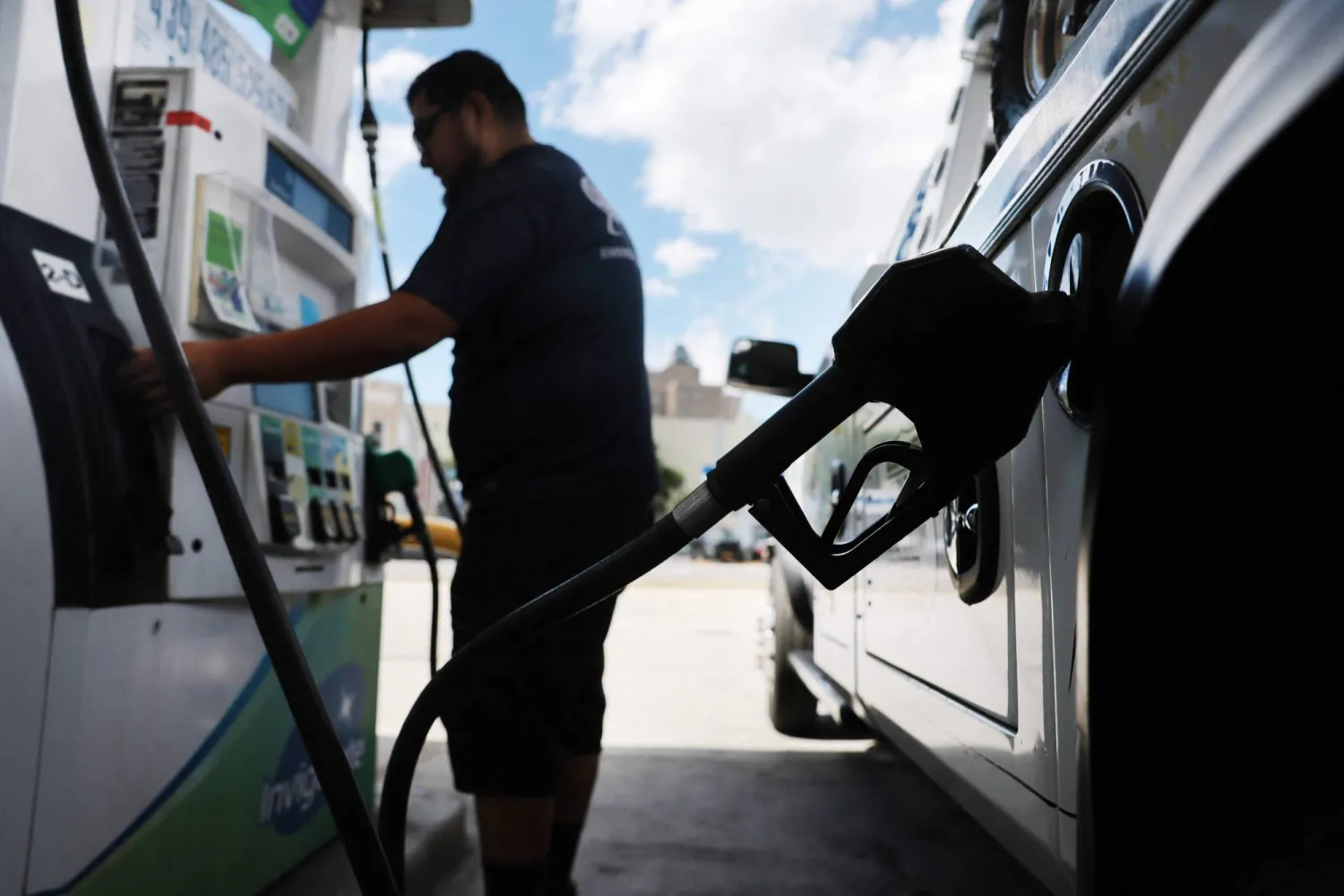
A man fills up his vehicle at a gas station in Brooklyn on June 01, 2026 in New York City. (Getty Images/AFP)
TT

Brent Crude Jumps More Than 5% on New Mideast Concerns

A man fills up his vehicle at a gas station in Brooklyn on June 01, 2026 in New York City. (Getty Images/AFP)

Brent crude prices surged more than five percent Monday after Israel and Iran exchanged strikes, testing a fragile truce and threatening hopes for a deal to end the Middle East crisis.

The contract for August jumped 5.1 percent to $97.83 a barrel, while West Texas Intermediate climbed 4.8 percent to hit $94.85.

Those gains erased Friday's losses, when prices fell on hopes of a de-escalation in the US-Iran conflict, which has seen oil prices rise over 50% since March.

Israel said on Monday it hit a petrochemical plant in Iran's southwest, along with strikes elsewhere on military targets, after US President Donald Trump reportedly told Israeli Prime Minister Benjamin Netanyahu to refrain from further attacks.

Trump has leaned on Israel to stop its attacks in Lebanon to allow room for a deal to end the wider war with Iran, including rebuking Netanyahu with obscenities in a phone call last week.

However, earlier on Sunday Israel launched strikes in the Beirut area for the first time since the U.S. announced a truce plan for Lebanon last week.

Iran fired salvos of missiles at Israeli targets in retaliation, but Trump insisted that an agreement to end the wider war remained within reach.

"It’s not going to have any ⁠impact on the ⁠deal," Trump told the Financial Times. "I call the shots. I call all the shots. He (Netanyahu) doesn’t call the shots."
A few hours later, Israel's defense forces said they had struck Iranian military targets. 


Saudi Arabia Identifies 100 Trade and Investment Opportunities in Global Markets

A meeting of the Saudi-French Business Council in Riyadh. (Saudi-French Business Council)
TT

Saudi Arabia Identifies 100 Trade and Investment Opportunities in Global Markets

A meeting of the Saudi-French Business Council in Riyadh. (Saudi-French Business Council)

Saudi Arabia has identified 100 promising trade and investment opportunities across international markets as it seeks to expand economic partnerships and strengthen the global presence of Saudi businesses.

The opportunities emerged from 23 reports prepared by the Federation of Saudi Chambers during the first quarter of the year, examining foreign economies, trade and investment ties with the Kingdom, and areas for further cooperation.

The findings will help Saudi-foreign business councils set priorities, organize economic missions and develop commercial partnerships.

According to a recent federation report reviewed by Asharq Al-Awsat, its 103 bilateral business councils are working to connect Saudi companies with overseas markets, address obstacles to their expansion and strengthen ties with international partners.

The councils reported SAR 14.25 billion in investments realized across seven foreign markets, 109 meetings and delegations connecting businesses with potential partners, and new cooperation initiatives under development in 80 markets.

Cambodia

Saudi company Shamsan opened a branch in Cambodia during the first quarter, building on an earlier agreement to acquire two agarwood forests covering 150 million square meters for more than $1 billion.

The investment followed a visit by a Saudi-Cambodian Business Council delegation in August 2026. The federation highlighted the establishment of a commercial presence six months after the visit as a model it hopes to replicate through other business councils.

Sweden

The Saudi-Swedish Business Council supported Swedish healthcare group Medicover’s entry into the Kingdom, culminating in the launch of a project with an initial investment of 8 million euros ($9 million).

The company plans to increase that amount to 50 million euros ($56.3 million) by 2028.

The federation cited the venture as an example of how bilateral business relations can generate tangible investments and attract international healthcare companies to Saudi Arabia.

Portugal

The federation organized a business delegation to Portugal between August and September 2026, coinciding with Health Minister Fahad Al-Jalajel’s visit.

The mission included 18 meetings and field visits involving government agencies, economic institutions, healthcare providers, investors and research organizations.

It resulted in two memorandums of understanding between the federation and Portugal’s investment agency AICEP and the Portuguese Industrial Association-Chamber of Commerce and Industry, alongside four agreements between private companies from both countries.

The visit also advanced healthcare cooperation, including a memorandum between the two health ministries and discussions on digital health, biotechnology, medical devices and technology transfer and localization.

The number of Portuguese companies operating in Saudi Arabia has increased from around 24 to 60, with the federation seeking to build on that momentum.

Italy

In September, the federation hosted a senior Italian delegation from CDP Group in Riyadh, bringing together representatives of the group, SIMEST, Italian companies and relevant Saudi institutions.

The visit produced a memorandum of understanding with CDP establishing a framework for cooperation, business networking and the exchange of commercial and investment opportunities, supported by coordination and follow-up mechanisms.

Both sides also agreed to strengthen ties with SIMEST to assist Italian companies seeking to enter or expand in the Saudi market.

Further plans include cooperation between SIMEST and the bilateral business council, as well as integrating CDP’s Business Matching platform with the federation’s network to facilitate direct contacts between Saudi and Italian firms.

These arrangements aim to move beyond individual meetings toward sustained, structured business cooperation.

Algeria

A Saudi-Algerian Business Council delegation attended the 57th Algiers International Fair alongside eight Saudi companies to explore trade and investment prospects.

Bilateral discussions identified six opportunities that remain under follow-up.

China

The Saudi-Chinese Business Council continued to engage with embassies, government agencies and companies to identify priorities, address challenges and strengthen economic ties.

A strategic partnership agreement was signed to establish a factory in Sudair Industrial City specializing in compressed natural gas solutions and technologies, supporting Chinese technology transfer and localization in Saudi Arabia.

The council is also coordinating with relevant authorities to attract Chinese real estate developers and bring their expertise and practices to the Kingdom. The initiative remains under implementation, according to the report.

India

The Saudi-Indian Business Council established direct channels with the Indian Embassy, its commercial office and Indian government officials, aligning its work plan with shared priorities.

Discussions focused on investment prospects, visa facilitation for Saudi businesspeople and opportunities linked to Indian trade exhibitions.

The council also introduced businesses in Saudi Arabia’s Eastern Region to the Indian market and worked to activate sector-specific committees, register members and raise concerns with Indian counterparts.

France

Saudi-French business relations saw specialized sector activities, including the fourth hospitality networking event in September.

The gathering brought together tourism, investment and hospitality stakeholders to facilitate direct contacts between companies and relevant institutions.

Uzbekistan

During Health Minister Al-Jalajel’s visit to Uzbekistan in July, the Saudi-Uzbek Business Council participated in the signing of eight agreements and memorandums of understanding involving public and private healthcare institutions.

The visit also featured the announcement of a digital virtual hospital in Tashkent and a Saudi investment project to establish an 800-bed multidisciplinary medical center in the Fergana region.



Gold Eases as Elevated Oil Prices Keep Inflation Risks in Focus

An Egyptian jeweller holds gold bars during an interview with Reuters in Cairo, Egypt, March 9, 2026. (Reuters)
TT

Gold Eases as Elevated Oil Prices Keep Inflation Risks in Focus

An Egyptian jeweller holds gold bars during an interview with Reuters in Cairo, Egypt, March 9, 2026. (Reuters)

Gold eased on Tuesday as firmer oil prices heightened inflation concerns, while investors awaited next week's Federal Reserve policy meeting for signals on the US interest rate outlook.

Spot gold slid 0.3% to $4,128.92 per ounce by 0621 GMT, while US gold futures for December delivery dropped 0.3% to $4,148.50.

"Some of the geopolitical issues that have ‌flared up ‌in the Middle East, are putting upward pressure ‌on ⁠oil and as ⁠a result that has kind of weighed on gold to kick off the week," said Kyle Rodda, senior financial market analyst at Capital.com.

Oil prices advanced, with Brent hovering around a five-month high. Higher ‌energy prices often raise expectations ‌that the Fed will keep interest rates higher for longer to ‌contain inflation.

While gold is typically seen as an inflation ‌hedge, higher interest rates tend to diminish its appeal by increasing the opportunity cost of holding the metal.

Recent comments from Fed officials signaling little urgency for further policy tightening have tempered expectations of ‌a rate hike at the central bank's October 27-28 policy meeting, but traders still see a ⁠92% chance ⁠of a hike in December, according to CME's FedWatch Tool.

"The interesting dynamic is that there's going to be a big move, no matter what the Fed does, and the initial reaction... might be supportive of gold if they keep interest rates unchanged," Rodda said.

Elsewhere, Bank of Japan Governor Kazuo Ueda said underlying inflation is "quite close" to the central bank's 2% target, with strong global AI demand adding to inflationary pressure from a tight job market, signaling scope for further rate increases.

Among other metals, spot silver rose 0.5% to $57.38 per ounce, platinum gained 0.4% to $1,647.05 and palladium fell 0.5% to $1,114.50.


World Bank Seeks to Boost Connectivity in Developing Countries

World Bank Group President Ajay Banga gestures during the Annual Meetings Plenary at the 2026 Annual Meetings of the IMF and the World Bank Group in Bangkok, Thailand, 16 October 2026. (EPA)
TT

World Bank Seeks to Boost Connectivity in Developing Countries

World Bank Group President Ajay Banga gestures during the Annual Meetings Plenary at the 2026 Annual Meetings of the IMF and the World Bank Group in Bangkok, Thailand, 16 October 2026. (EPA)

The World Bank on Monday announced a new strategy aimed at boosting connectivity and making digital access more affordable in developing countries.

"Digital technology can help countries create jobs and make scarce resources go further," said World Bank President Ajay Banga.

"Realizing that potential requires a comprehensive approach -- from reliable connectivity and affordable devices to digital skills and useful services," he added in a statement.

Developing countries face a crunch with limited resources and a rising need for employment, the Washington-headquartered institution said.

While 1.2 billion people are set to reach working age in such countries over the next 10-15 years, these economies are projected to create just 420 million or so jobs.

The bank's strategy aims to support infrastructure for connectivity and lower the cost of entry-level smartphone and broadband services.

It also wants to widen access to digital services and look into targeted uses of artificial intelligence.

The bank said only 23 percent of people in low-income countries used the Internet, a stark contrast against 94 percent in high-income countries.