


Unlocking the Shield: Saudi Arabia Expands Global Partnerships in Critical Minerals

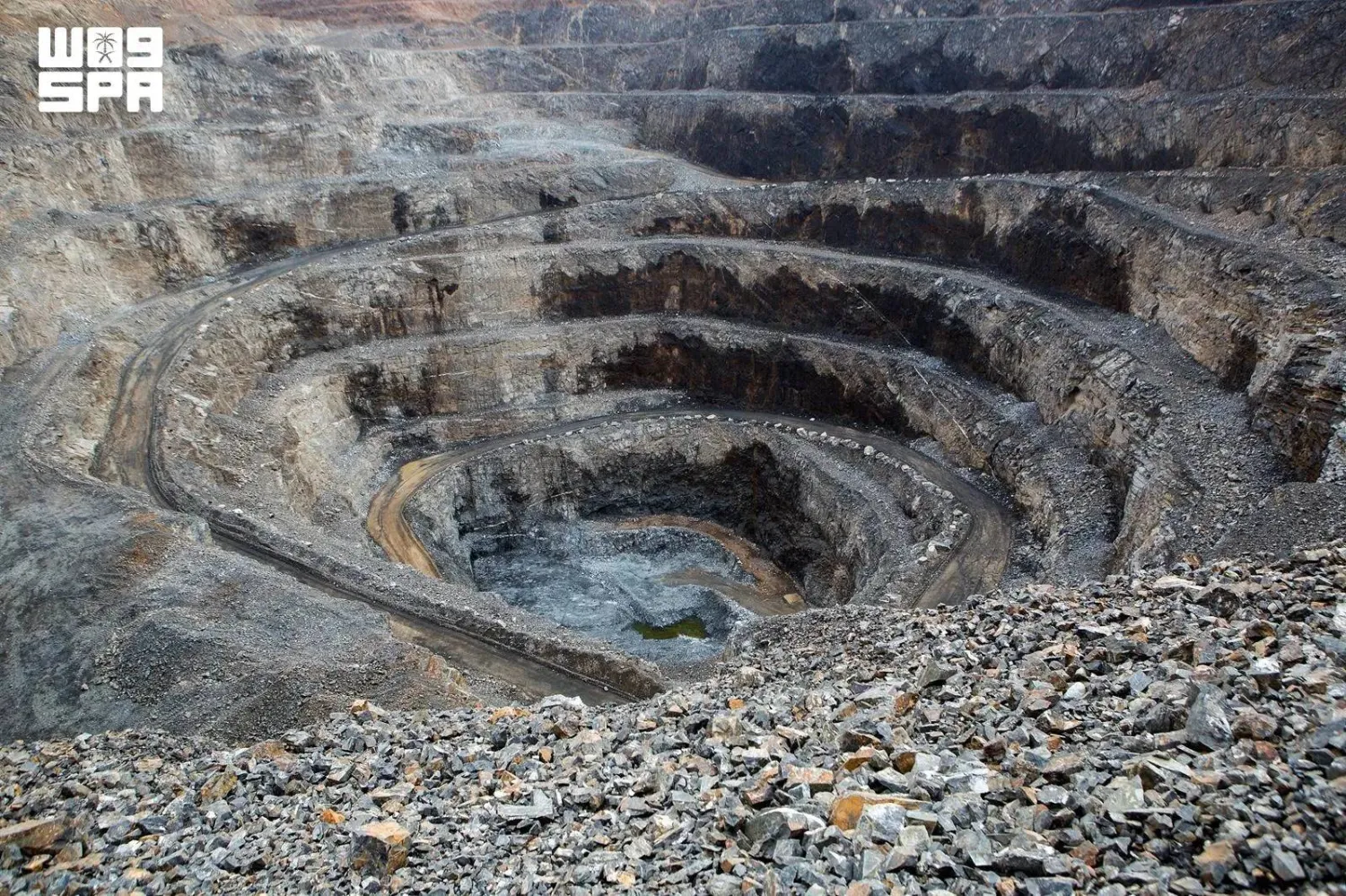
Spanning Saudi Arabia’s western coast, the Arabian Shield is among the world’s oldest geological formations. (SPA)
TT

Unlocking the Shield: Saudi Arabia Expands Global Partnerships in Critical Minerals

Spanning Saudi Arabia’s western coast, the Arabian Shield is among the world’s oldest geological formations. (SPA)

Long before Saudi Arabia emerged as an energy powerhouse, geological forces beneath the Earth’s surface were quietly enriching deposits of significant value.

Spanning Saudi Arabia’s western coast, the Arabian Shield is among the world’s oldest geological formations. Estimated to have formed between 500 and 900 million years ago through a series of volcanic, tectonic, and continental collisions, this craton preserves a remarkable record of the region’s evolution and hosts a rich concentration of critical minerals.

Today, the ancient landscape is home to some of the world’s most in-demand natural resources, further positioning the Kingdom as a rare-earth pioneer, the Saudi Press Agency reported on Monday.

Since the launch of Vision 2030, the importance of critical minerals has become a strategic priority, with the mining sector, led by Minister of Industry and Mineral Resources Bandar Alkhorayef, recognized as the third pillar of the Kingdom’s national economy. As Saudi Arabia accelerates efforts to expand renewable energy, advanced manufacturing, and digital infrastructure, critical minerals are becoming central to the nation’s industrial development and global competitiveness.

Although small in volume, rare earth elements—a group of 17 metallic elements—are indispensable components of Saudi Arabia’s $2.5 trillion mineral endowment and of modern technologies such as electric vehicles, wind turbine, aircraft systems, and data centers.

Therefore, as demand for advanced technology continues to rise, securing a consistent supply of critical minerals has become a global imperative for countries transitioning to clean energy and AI deployment. International attention is shifting beyond access to resources alone toward the development of a resilient, integrated value chain encompassing mining, processing, refining, and advanced manufacturing.

As a result, the Kingdom is uniquely positioned to benefit from this transformation, with substantial mineral discoveries reinforcing Saudi Arabia’s emergence as a premier hub for mining investments and multilateral cooperation.

This week, Alkhorayef concluded a high-level diplomatic visit to the Russian Federation, a country renowned for its vast reserves of critical minerals, including nickel, cobalt, platinum group metals, and rare earth elements.

For a century, Saudi Arabia and Russia have maintained warm bilateral relations, and the Minister’s attendance at the St. Petersburg International Economic Forum (SPIEF) this week follows a memorandum of understanding (MoU) signed between the two countries on the sidelines of the 2024 Future Minerals Forum in Riyadh.

The agreement aims to deepen collaboration across the critical-minerals value chain, while underscoring their shared commitment to joint exploration, technology exchange, and investment in mineral processing and advanced manufacturing.

Saudi Arabia’s visits to Russia over the past few years subsequently reaffirm the Kingdom’s intent to build enduring international partnerships. The country’s efforts to engage in high-level dialogue also highlight Saudi Arabia’s resolve to secure its own supply chains while equally contributing to the stability and growth of global markets.

In November 2025, the industry minister announced the value of rare earth element discoveries had reached $100 billion - an increase of 90% since 2018. He also revealed that studies conducted by the Saudi Geological Survey identified two advanced-stage exploration areas containing an estimated 644 million tons of resources, with an average grade of 0.3% total rare earth oxides.

Four additional locations have also been targeted for further evaluation, increasing the estimated resource from 364 million to 714 million tons, with concentrations up to 1.66%.

One of the most significant discoveries lies beneath the Jabal Sayyid and Jabal Quraiyah geological sites. Considered two of the world’s most auspicious mining prospects, the underground mines are located within a highly lucrative mineral belt valued at approximately $51.3 billion.

However, the Kingdom’s ambitions extend far beyond extraction. Recognizing that the greatest economic value is often generated further along the supply chain, the country is actively pursuing a blueprint to develop an integrated critical minerals ecosystem. The roadmap aims to expand Saudi Arabia’s capabilities in mining, separation, refining, and advanced manufacturing, enhancing economic value within the Kingdom while supporting global supply chain resilience.

Underpinning this strategy is a growing network of international partnerships and cooperation agreements aimed at advancing critical minerals value chains, attracting investment, facilitating technology transfer, and supporting the development of processing and manufacturing capabilities. These efforts are complemented by ongoing discussions with global industry leaders to establish processing and separation facilities that leverage both domestic and international feedstock.

By transforming the country’s mineral wealth into a catalyst for economic leadership, technological innovation, and supply chain security, Saudi Arabia is positioning itself as a key player in the global energy transition. Much like the vast Arabian Shield, these ambitions are rooted in ancient foundations that now drive a bold, forward-looking vision.

Saudi Arabia is not just shaping its own future — it is helping build the resilient supply chains needed to support global growth and development for decades to come.


Fitch Affirms Saudi Arabia at 'A+', Outlook Stable

A view of the Saudi capital, Riyadh. (SPA)
TT

Fitch Affirms Saudi Arabia at 'A+', Outlook Stable

A view of the Saudi capital, Riyadh. (SPA)

Fitch Ratings has affirmed Saudi Arabia's Long-Term Foreign-Currency Issuer Default Rating (IDR) at "A+" with a Stable Outlook, the agency said on Friday.

The rating reflects strong fiscal and external balance sheets, with government debt/GDP and sovereign net foreign assets (SNFA) considerably stronger than the "A" and "AA'" medians, and significant fiscal buffers in the form of deposits and other public sector assets, it added.

"Oil dependence and World Bank Governance Indicators (WBGI) have improved but remain weaknesses. Geopolitical risk is high, but the economy and public finances have been resilient to the US-Iran war," it stressed.

"Fitch forecasts real GDP growth will slow to 0.6% in 2026 due to disruption to trade caused by the closure of the Strait of Hormuz," it continued.

"Flows through the East-West pipeline supported oil production during the war and we expect output to be ramped up to meet external demand following the reopening of the Strait and to rebuild domestic stocks, but at an annual average of 9m b/d it will be below the 2025 level," it said.

"Non-oil growth will be hit by an inability to export petrochemicals during the closure of the Strait, but consumer spending held up and business confidence is recovering."

"Growth will rebound in 2027 as the normalization of flows through the Strait allows higher oil and petrochemicals production, before easing to 2.9% in 2028 The phased opening of gigaprojects (many of which have launched initial operations), the proximity of key events and guidance that the Public Investment Fund will keep domestic spending largely unchanged in its new five-year plan, will also support growth," Fitch noted.

The King Fahd Industrial Port in Yanbu, Saudi Arabia (SPA)

"The fiscal deficit is projected to narrow in 2026 owing to higher oil revenues, as prices will offset lower volumes. Spending will also rise, reflecting the impact of the war, but much of the jump in 1Q was the precautionary frontloading of spending from later in the year," it said.

Fitch forecasts that lower oil revenues will widen the deficit to 4.7% in 2027, consistent with a fiscal breakeven oil price of USD94/b.

Spending is expected to decline in 2027, due to an easing of war-related pressures, lower capex and ongoing efforts to reduce rigidities in current spending. Expenditure adjustment will allow the deficit to narrow in 2028 despite a projected further fall in oil prices.

"Our fiscal projections are consistent with a further increase in debt/GDP, which we project at 41.3% at end-2028 (projected peer median of 58.1%), from 31.8% at end-2025. based on deposits remaining around 10% of GDP," said Fitch.

"Fitch forecasts a small current account surplus for 2026 due to higher oil export revenues. Lower oil prices and ongoing domestic demand growth that has a heavy component of imported goods, services and labor, will lead to a deficit of 5% of GDP by 2028. Current account deficits will be financed by external borrowing and the ongoing reorientation of public assets to domestic from foreign investments," it continued.

"Banks have been resilient to the war and did not require any support measures from the central bank," it stressed. "At end-1Q, non-performing loans were 1.1% and the Tier 1 capital ratio 19.2%, both improved from end-2024. Credit growth has slowed, particularly mortgages, in response to policy measures, and is being outpaced by deposit growth."

Fitch maintained its mid-year 2026 sector outlook for Saudi banks at "neutral".


Renewed US-Iran Conflict Narrows Egypt’s Economic Growth Prospects

 A traditional market in Egypt’s Giza Governorate. (Asharq Al-Awsat) 
 A traditional market in Egypt’s Giza Governorate. (Asharq Al-Awsat) 
TT

Renewed US-Iran Conflict Narrows Egypt’s Economic Growth Prospects

 A traditional market in Egypt’s Giza Governorate. (Asharq Al-Awsat) 
 A traditional market in Egypt’s Giza Governorate. (Asharq Al-Awsat) 

The renewed US-Iran conflict in the Middle East is expected to further curb Egypt’s economic growth prospects as global oil prices are forecast to rise again, while several sectors of the economy continue to grapple with the effects of months of conflict, analysts say.

In its latest World Economic Outlook report released days ago, the International Monetary Fund (IMF) lowered its forecast for Egypt’s economic growth in fiscal year 2026-27 to 4.4 percent, down from the 4.8 percent projected in April. The IMF cited “the continuing impact of the Iran conflict — particularly the closure of the Strait of Hormuz — on the Middle East, weaker investment, higher financing costs, and persistent uncertainty.”

Economist Wael El-Nahas said the downgrade is “not limited to Egypt but reflects the global economy as a whole in light of the conflict’s repercussions,” describing the revision as both natural and expected.

Speaking to Asharq Al-Awsat, El-Nahas noted that the current period of skirmishes between the two sides could be viewed as a period of tacit understandings, allowing oil supplies to keep flowing while limiting sharp increases in food prices and other commodities. However, he warned that a renewed conflict would bring “a much worse period.”

Financial markets researcher Mohamed Mahdy Abdulnabi told Asharq Al-Awsat that geopolitical tensions are the main driver behind the weaker growth outlook.

He said Egypt faces several challenges under the current circumstances, including higher borrowing costs, greater reluctance among lenders to extend new financing, declining foreign investment, stagnation in the private sector, and continued losses at the Suez Canal.

President Abdel Fattah al-Sisi has previously estimated the canal’s losses at $10 billion, citing regional tensions and their impact on Red Sea shipping.

Abdulnabi warned that if the conflict persists, pressure on Egypt’s economy will intensify. “When global oil prices fell below $70 a barrel, the Egyptian government did not cut domestic fuel prices. But as soon as prices began rising again, discussion resumed over the automatic fuel pricing mechanism and the need to increase fuel prices,” he remarked.

The government raised fuel prices by between 14 and 30 percent last March, just 10 days after the US-Iran conflict erupted, amid rising energy import costs.

El-Nahas warned that global oil prices could climb above $100 a barrel, noting that Egypt’s current state budget is based on an assumed oil price of about $75 a barrel. Any increase, he said, would raise the country’s energy import bill and widen the budget deficit. He also cautioned that it could trigger another round of fuel price hikes, further worsening the cost-of-living crisis.

Egypt’s annual inflation rate stood at 14.3 percent in June, down slightly from 14.6 percent in May.

Despite the risks, El-Nahas stressed that some sectors, particularly tourism, still have strong growth prospects despite the renewed US-Iran conflict.


China Temporarily Bans Helium Exports as US-Iran Tensions Flare Again

Ships and containers at a Chinese port (Reuters)
TT

China Temporarily Bans Helium Exports as US-Iran Tensions Flare Again

Ships and containers at a Chinese port (Reuters)

China announced on Friday a temporary export ban on helium, effective immediately, as resumption of military conflict in the Middle East threatens to trigger new shortages of the gas critical for chip manufacturing.

Earlier this year, the US-Israeli war on Iran led to helium shortages, disrupting companies globally, including in China, where the AI industry increasingly relies on domestic chips for training and ⁠running AI models. Helium is essential for heat management in semiconductor production.

The helium ban is the latest example of Beijing seeking to prevent domestic shortages of critical materials by curbing exports. It has previously imposed similar measures on fuel, fertilizers and sulfuric acid.

China is also looking to boost domestic chip manufacturing capacity and reduce the industry's dependence on cutting-edge Nvidia semiconductors that fall under US export controls.

China is heavily ⁠dependent on overseas helium despite efforts to expand domestic production.

Still, the export ban could squeeze global supply further because Chinese companies have increasingly acted as intermediaries, importing Russian helium and re-exporting some volumes to overseas markets, including Europe.

According to Reuters, analysts ⁠estimate China imports around 85% or more of its helium requirements. Qatar accounts for a major share of global helium output and has supplied more than half ⁠of China's imports in recent years.

Helium is extracted from natural gas fields with unusually high helium concentrations and cannot be quickly manufactured from ⁠other industrial processes.

In chipmaking, it is used for wafer cooling, plasma etching, chemical vapor deposition, atomic layer deposition, lithography support and leak detection.
